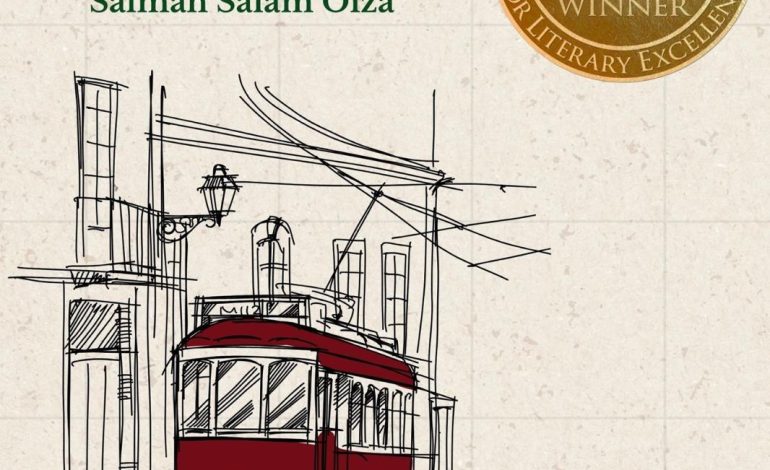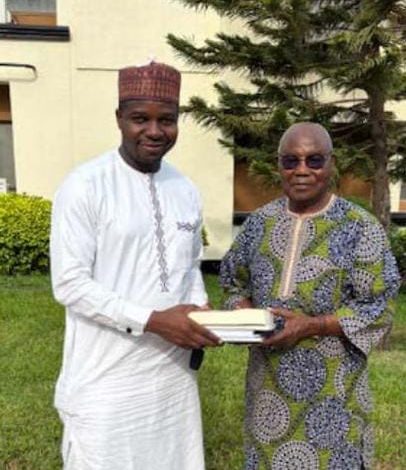
Uduma Kalu’s ‘The Merchants of Virgins’, Africa’s first poetic non-fiction, debuts

By Godwin Okondo
In this interview with the author of The Merchants of Virgins, Uduma Kalu details his new poetry collection and the historical and philosophical motivations behind it. The poet also says The Merchants of Virgins is a unique blend of genres, referring to it as “Nigeria’s, if not Africa’s, first poetic non-fiction book”. He likens it to the genre of “creative non-fiction”, and that the imagination is not fiction in the traditional sense, but rather a factual account that utilizes creative writing styles and techniques. As derived from true experiences, the work may focus on personal and historical realities, written with the flair of creative writing while remaining true to reality. Poetic Implementation: Kalu applies these creative non-fiction techniques within the structure of his new poetry book. On the research and inspiration, the author explains the extensive research that went into creating this work to challenge historical narratives about the role of the West and Arabia in Africa. In challenging those narratives, Kalu states his goal is to “prove the lie” that Europe and Arabia came to Africa solely to “civilize” or “save” it from “primitivity”. The poet explains that these poems are intended to challenge and “indict” the claims of Western and Arab salvation, using the central image of the “virgin” as a key theme
You just published a new poetry collection, The Merchants of Virgins. What is it about? Why the choice virgin as title?
THE Merchants of Virgins was published in March 2026. It is dedicated to my late sister, my only sister, Mrs. Mercy Okorie-Abbah. She passed away from breast cancer in February 4, 2026 and was buried in a public cemetery in Badagry, Lagos, on March 6, 2026. In a way, I am looking at the relationship between my sister’s death and the presence of Europe and Arabia in Africa from a metaphorical “cancerous” perspective.
I understand The Merchants of Virgins is part of a trilogy.
The Merchants of Virgins is just the first part of a trilogy. This project began in 2005, over 20 years ago, spurred by the foreign policy of U.S. President George W. Bush jr, which essentially suggested that Africa does not matter. I chose to prove that Africa does matter by first looking at the Igbo people’s contribution to the West—Europe and America. I discovered that the interconnectedness of the Igbo with the rest of the world shows their contribution to the West is massive, even before considering Africa as a whole.
The second collection is titled Middle Passage: Poems from Slaving Ships (formerly Roars of the Leopard). It focuses on enslaved Africans and their voices of resistance captured as poetry. The third volume is about renaissance Africa, exploring how Black people across the Atlantic can build an Africa beneficial to themselves. We need to reconcile Africans everywhere because there is currently so much suspicion and bitterness. For example, I believe Africans should apologize for slavery, not just white people, because our ancestors played a role in it. This final part is called Ife: Dialogue Across Waters.
You described your trilogy as Africa’s first poetic non fiction trilogy. What does that mean?
The Merchants of Virgins is Nigeria’s, if not Africa’s, first “poetic non fiction” book—from creative non-fiction. It uses creative writing styles to present true historical narratives based on archival research. To challenge the narrative that Europe and Arabia came to Africa solely to civilize us, I used historical records, letters, journals, declassified materials, and oral tales.
What’s the image of the virgin in this book?
The “virgin” motif is taken from these outsider missions. In European literature, knights defended the Church, which was personified as a virgin. In Christianity, the Virgin Mary is highly regarded as the Mother of the Church. Much of the exploitation in Africa was done in the name of “the Virgin”. Like the Crusaders who looted while claiming to recapture Jerusalem, much was done in Africa for gain in the name of the Virgin. You see the same in certain Islamic narratives regarding virgins in the afterlife, and even in Africa, where the virgin is sometimes viewed from a sacrificial perspective for a ritual to have an effect.
I see that the book has 25 poems with notes. Why these elaborate notes?
The collection consists of approximately 25 poems with notes explaining historical terms, personalities, local and professional terms etc. I discuss the role of the Arabs, who enslaved Africans even before Europeans arrived. The UN has categorized the Trans-Atlantic Slave Trade, as the worst crime against humanity, even more than the Holocaust.
Is there any specific part of your creative process you’d like to dive into further?
I explore stories like that of Mansa Musa, whose wealth I actually see as the major attraction of the West and Arabia to Africa. I also address the role of modern Western leaders and the endorsement of the slave trade by both the European kings and queens, Protestant and Catholic churches alike.
I use the legend of King Arthur’s Round Table to symbolize the Berlin Conference of 1884, where European powers demarcated Africa among themselves. I resonated this in the many global economic summits where the West still decides for Africa in the poem, ‘Africa Must Be Destroyed.’ I didn’t forget the Punic Wars and Rome’s insistent to destroy Carthage which represents Africa, because Carthage’s wealth threatened the existence of Rome. We still see this happening in the relationship between African and the West, and today, with the rest of the world. I remembered others like Mary Slessor, Dr. Baike, from whose name the Igbo learned to call white people Beke: Lord Lugard and his wife, and the circumstances behind their naming of Nigeria; King Leopold, Stanley and a whole lot more. I made these people speak in the first person or have then explained from their own works.
Finally, I do not forget the role of our own people, including my Ohafia people, in what I call “The Great Trek”. Ultimately, the image of the virgin is exploited for selfish interests, and this book explains how that image is abused in Africa.
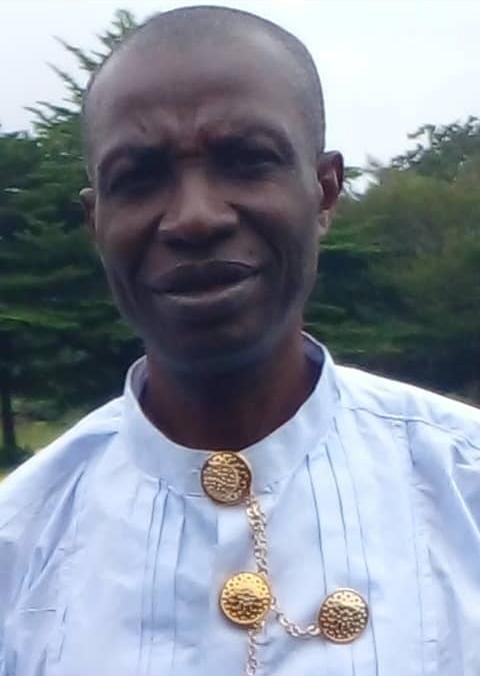
Uduma Kalu