Ifowodo proposes consolation prizes for The Nigeria Prize for Literature

By Anote Ajeluorou
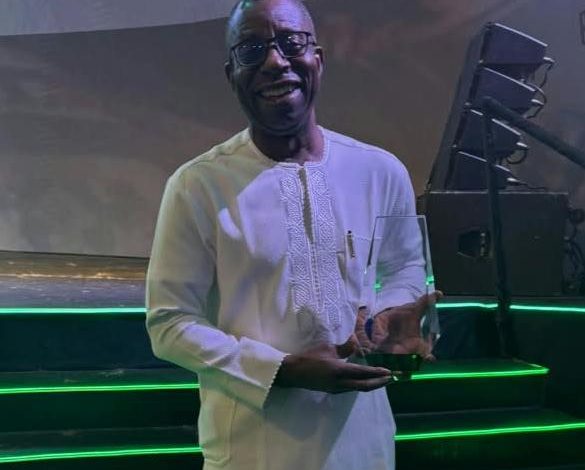
WINNER of The Nigeria Prize for Literature 2026 for poetry category, lawyer and activist, Dr. Ogaga Ifowodo, has again plucked at the strings many in the literary community have long played: the urgent need for consolation prizes both for writers in the longlist and the last two writers standing, who fail to win the ultimate USD$100,000 prize money. He won with his latest poetry collection, Why Does God Need a Gun? Ifowodo said this was the standard practice all over the world in literary prize awards, which prize organisers, NLNG, should also adopt.
Ifowodo was reflecting on the fate of the last two writers with him on the night of the award, a somewhat awkward position he had been once before without winning the prize. He said he would buy both James Ngwu Eze (Unbind Me Now) and Tares Oburumu (Flora’s Love Colony) beer as his own way of extending a consolation hand to them for not winning, a proposition he said he also made to both writers for his own benefit before the award night should any of them won.
Writers like Professors Oke Ndibe and Nduka Otiono, Mr. Maxim Uzoatu, Mallam Denja Abdullahi and many others had argued in the past either for consolation prizes or for the four genres of literature – poetry, prose, drama and children’s literature – to be awarded every year with the USD$100,000 split among them at USD$20,000 each or USD25,000 each. With the current winner lending his voice, it’s clear the various voices making a case for more writers to benefit each year have been further consolidated and amplified.
“I think it’s time NLNG introduced consolation prizes,” Ifowodo said, echoing the thoughts of many writers, especially in a country where writers are struggling with few reward systems and as standard in other climes where prizes are awarded to writers. “If they don’t want consolation prizes, they shouldn’t bring the other writers to one room. The prize should be announced ahead of time, so the winners is the only one who is there like they do for its counterpart Science Prize. They take writers through the wringer, and then the three of us are there. No, don’t do that. And what does it take to give consolation prizes? Even the Booker Prize gives consolation prizes.”
Ifowodo then made an irresistible proposal that he believes should appeal to the prize organiser, NLNG, to implement from the next circle in 2027 that will have drama as prize category up for contest.
“So, this is my proposal: at the longlist level, give each writer USD$3,000 – USD$5,000; USD$5,000 is my ideal. The shortlist is going to come out; that’s minus eight writers. USD$5,000 x 8 writers is USD$40,000. That’s nothing to NLNG. Then, of course, at the shortlist the winner gets USD100,000, and the other two get USD$10,000 each; that’s USD$20,000. That’s is about USD$160,000 in total prize money. That’s not much for NLNG,” Ifodowo said.
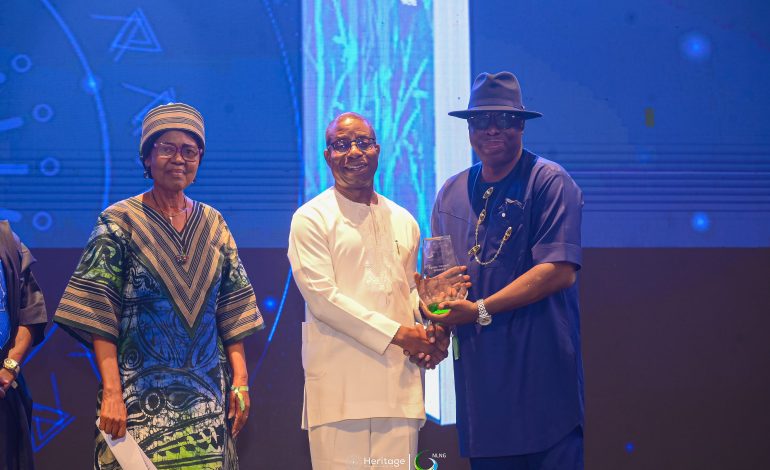
Ifowodo expressed delight at winning the prize that he had come close to winning in 2017 with his work, A Good Mourning, before fortune smiled on him on Friday, 9 October 2026 in Lagos. “I felt exhilarating for winning the prize. I have come close once before. Any writer who is not exhilarated should think of doing something else,” he said.
Asked if he was tensed moments before the announcement in the 5-hour long elaborate ‘Heritage’ themed celebratory event, Ifowodo said, “Interestingly, I had been calm all day. I told myself that there are three people left, and it’s going to be one of us. I have been in the shortlist before, I think I can weather the tension. I knew that all I could do was ask my brother poets, ‘Now that you have won, you must buy me a bottle of beer to console myself!” So, I’m going to buy James and Tares beer. I said they would buy me when they win. Now, I have to keep my own part of the bargain.’
He also reflected on the dramatic antics of the Chairman of the Advisory Board, Prof. Akachi Adimora-Ezeigbo, in stretching the moment longer that usual before finally announcing him winner. Ifowodo argued that any writer worth the name mustn’t write with the aim of winning prizes, but by that inner compulsion to write, saying that prizes are balms that reward writer’s labour but not the ultimate propulsion for writing.
“Then Akachi Ezeigbo decided to do that little dramatic thing, and for a moment, I became a little bit tensed,” Ifowodo said. “But it didn’t last; that was when I put my head down. As a serious writer, you don’t write to win prizes. If that is the reason you’re writing, throw away you pen; don’t write. And the simple truth is that you can never be a good writer. I can guaranty you that. If your only motivation is how to win a prize, you’re never a writer. As Wole Soyinka once said, ‘you’re born to your art or not.’ Just write. Be someone who enjoys writing. Writers need readers, cultivated readers.
“So, no writer writes for a prize. However, when you’ve done the labour… it’s like a labourer deserving of his wages. You don’t write to win a prize, but now that you’ve done it, you have expectations. And that expectation is two-fold. One is validation, that what you have done is worth the attention of the reading public. The other is that being worthy of the attention of the reading public, it means that you have actually laboured, and a reward awaits your work. If you don’t win, it doesn’t mean you should stop writing. That means writing is not a genuine calling for you.
“So, I did feel very much elated. I did feel validated; it’s validation time, because you have gone through the process of being the last work standing out of 233. That in itself is some kind of satisfaction. Then it becomes a spur, a kind of a double shot in the arm. By the time you get to the shortlist, it’s already a shot in the arm; winning it is a double shot in the arm. So, yes I can keep writing.”
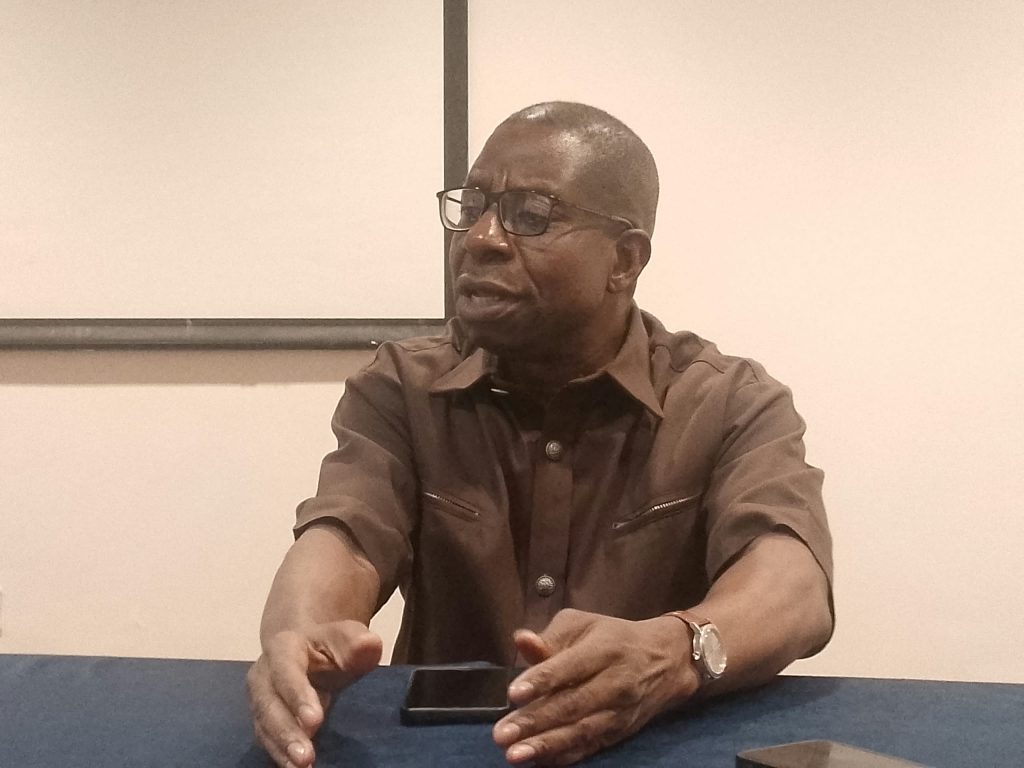
Dr. Ogaga Ifowodo
Why Does God Need a Gun? asks a difficult question in a country where religions is often a touchy subject, yet Ifowodo decided to treat it in his poetry. Didn’t he feel somewhat apprehensive that his book might be read the wrong way? Ifowodo said he didn’t experience apprehension any about writing it at all.
“The only curb on my imagination was that: is this something that cannot be plausibly said, thought, felt, imagined, dreamed by the poet-persona (Leah Sharibu) given her age, where she is in the forest, far from family or friendly face?” he asked. “Is there something that cannot be plausibly said by her, imagined by her? That was the only curb. Now, this is a precocious child. She is precocious, maybe not before she entered the forest, maybe the forest got inside of her, like the trials of life that can bring out an aspect of a person’s life (they didn’t know before). We need to know; maybe the strength to resist, to endure that we didn’t have before, trials can bring it out. It’s like the temptation of Christ, although he came to die; this is God who incarnated himself in order to die, but on the cross, facing the trauma of death, what did he do?: Father, why hath thou forsaken me? That is God himself. But then a mere child; I’m still overwhelmed by how awed I’m by her heroism and courage.”
Having won the coveted prize in his second attempt, will he apply for it again? “There will be a moratorium before I apply after the prize money is exhausted,” he quipped, “then I can apply again.”
IN his acceptance speech at the prize award event in Lagos, tagged ‘Soon, Our Better Angels Will Free Us – Or the Poet as Witness to Desolation and Dream’, Ifowodo laid out the writerly instinct that propelled him to write the collection: “In the poem subtitled “Soon, Archangel Michael Will Free Us,” the last of the sequence “From the Forest of a Million Demons (Leah Sharibu Lifts the Veil)” — which forms the spine of Why Does God Need a Gun? — the captive speaker dreams of regaining freedom. But that very hope unveils the predicament of theodicy, the idea of an Almighty, loving and merciful God in whose name unspeakable atrocities are routinely committed. The truth, however, is that it is our better angels that will free us. I mean that humanity’s hope lies in the unequivocal acceptance of the inherent and inalienable equality, dignity and freedom of thought and belief of all humans, irrespective of gender, race, class, creed, colour or social identity.
“The poet as witness seeks, through language, to keep alive the memory of the “impress of extremity,” of the relentless efforts of authoritarianism, secular or religious, to force us into one way of seeing, believing or being. In choosing to honour Why Does God Need a Gun?, the judges of The Nigeria Prize for Literature, sponsored by NLNG, bring attention to its summons to a re-examination of the language and tenets of religious belief in order to be worthy of our humanity.
“I thank NLNG for the great service to Nigerian and world literature it is doing. I dedicate this award to Leah Sharibu whose extraordinary, even inhuman, courage in refusing to renounce her faith for her captors’, as a Faustian bargain for her freedom, awed me into writing Why Does God Need a Gun? I am absolutely delighted by this honour. I urge NLNG not to relent in its immeasurable service to literature and culture. And I thank you all for being here to witness this moment.”