‘Unbind Me Now’ captures Nigeria’s anger and anguish, says Eze


By Godwin Okondo
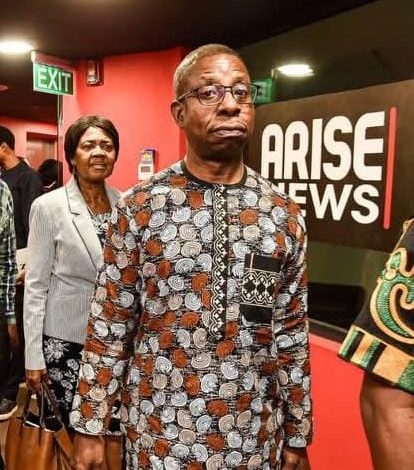
POET and culture advocate James Ngwu Eze has described his shortlisted collection, Unbind Me Now, as a poetic response to Nigeria’s anguish, violence, displacement and social dislocation. Eze, one of the three finalists for the 2026 Nigeria Prize for Literature, said he deliberately conceived the collection as a work through which he could speak in a representative capacity for Nigerians experiencing the consequences of the country’s difficulties.
The title, he explained, draws inspiration from Christopher Okigbo’s Labyrinth, particularly the poet’s invocation, “O mother Earth, unbind me”.
Eze said the Okigbo passage immediately came to mind while he was developing the emotional architecture of the collection. Unlike a work that emerges entirely from spontaneous inspiration, he said he approached Unbind Me Now deliberately, determined to use his artistic gift to speak for his people and, more broadly, humanity. “I wanted to write in the position of someone who has been given the gift of artistic expression, and whose gift must serve not just his people but mankind,” he said.
Eze said the collection was written at a time when Nigeria’s social realities appeared increasingly difficult to distinguish from fiction. He described a period in which disturbing events had become routine and said writers with the courage to confront uncomfortable truths had a responsibility to speak.
“If you read Unbind Me Now, you will encounter angry words, angry poems. You will encounter smoke, you will encounter fire,” he said, explaining that he believed the country needed such an expression of anger.
The poet said the collection captures what he regards as collective truths, anguish and pain, turning them into poetry that documents the experiences of Nigerians at a particular point in history.
Among the poems is “Voice of the Streets”, which he described as an attempt to speak for different sections of society, including workers, religious figures and ordinary Nigerians.
He also addresses terrorism, violence and the killing of civilians and public servants, arguing that euphemistic descriptions of violence can diminish the seriousness of what people experience.
Beyond violence, Unbind Me Now explores questions of identity, belonging, race, migration and the experiences of people left behind by the mass movement of Nigerians abroad. Eze said the collection reflects on the emotional consequences of the “japa” phenomenon, including the trauma experienced by those separated from friends and relatives who leave the country, noting that the poems also ask what those who leave Nigeria might bring back to the society they have left behind, including values, knowledge, influence and financial remittances.

James Ngwu Eze
The shift in subject matter also required a stylistic adjustment, according to the poet. Eze said he had previously written extensively about love but needed a different vocabulary for Unbind Me Now, arguing that “the vocabulary of outrage is different from the vocabulary of love”.
He deliberately constructed strong openings for the poems, while seeking restorative endings that would prevent the collection from becoming merely a catalogue of anguish.
He also experimented with call-and-response structures, drawing partly from Catholic litany and responsorial forms. According to him, the approach was intended to make some poems participatory and suitable for performance.
For Eze, however, the ultimate meaning of Unbind Me Now lies in its call for agency. He said the collection asks when Nigerians will move beyond expressing grievances to taking responsibility for their circumstances and demanding answers from those exercising power.
The poet also invokes Nigeria’s pre-colonial civilisations, including Benin, Oyo, Ife, Kanem-Bornu and Nok, as reminders of the depth of the country’s historical and cultural inheritance.
Eze said he remains hopeful about Nigeria’s future, pointing to historical struggles against slavery, segregation and apartheid as evidence that societies can change.
He argued that Nigerians have a collective responsibility for their freedom and said his literary work is part of that process.
If he receives the $100,000 prize, Eze said part of the money would go into reviving literary festivals in Southeast Nigeria.
He disclosed that plans were already underway for the return of the Coal City Literary Festival in Enugu, with the state government involved in the initiative. He said the prize money would provide momentum for the festival if he eventually receives it.
Eze said the proposed festival would build on his longstanding involvement in literary promotion, including his role in organising creative-writing programmes and literary events, and his efforts to make poetry accessible to wider audiences through performance and music.