The tricky task of book-to-film adaptations

By Wale Okediran
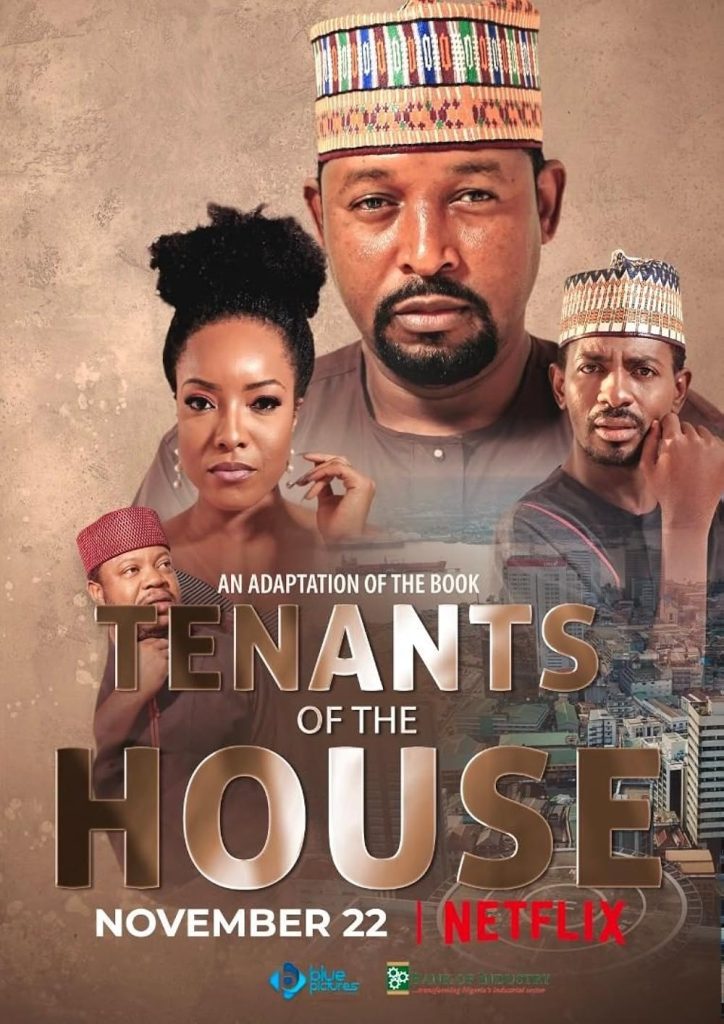
ADAPTING a beloved novel to the big screen is a difficult task. Whether or not critics praise the film, fans of the book are nearly always going to take umbrage with some aspect of the movie. Sometimes, even the authors themselves may not be happy with some of their book adaptations. Therefore, when the well known Nigerian Film Director, Kunle Afolayan who directed the film adaptation of my book Tenants of the House, decided to ‘kill’ the main actor towards the end of the film, some of the film audience, who had earlier read the book were aghast. “That was not how the book ended” was their complaint.
The same set of viewers were also surprised at the approximately 90 seconds salacious bedroom scene in the film, something that they also said was not in the book. Fortunately, a large majority of the audience was thrilled by the film’s high quality production, stupendous acting, awesome scenery, beautiful music and captivating narrative. These are the qualities of a film which, having completed a two-year run on Netflix global, is back on a major US streaming platform.
So moving were the scenes from the film that some ladies said they wept when the lead actor lost the bid to marry his beloved fiancee when he failed to endure the marathon flogging session during the traditional ‘sharo’ Fulani courtship ceremony.
Despite the above, the question still remains as to why some book-to-film adaptations disappoint audiences, especially those who have read the original text. This is because, many readers anticipate seeing their favourite books transformed into films, believing that movie adaptations will capture the essence of the original stories.
Yet, it is not uncommon for book-to-film adaptations to disappoint audiences and diverge from the original material. Factors such as changes in narrative structure, character development, and the limitations of screen time often lead to these failures.
Some authors of these books are sometimes not left out of this ill-feeling towards their book adaptations as can be confirmed by a growing list of disgruntled authors. Their positions can be understandable because having put in a lot into crafting their tales, they don’t like seeing their ‘beloved stories’ distorted in anyway.
Film experts, however, believe that the main reason for the complaint by some authors and movie goers is a misunderstanding of how storytelling works across different mediums. What many don’t know is that novels and films speak different languages. While one is internal and expansive, the other is external and compressed.
According to an adaptation expert, “Novels, by their very nature, are generally more substantial than films. How can a two hour film compete with the full depth of a writer’s ideas explored over hundreds of pages of words? Novelists have an unfair advantage over movie makers: they can directly describe and communicate to the reader absolutely anything they wish.”
Perhaps, the most important expectation from authors is for the adapted work to be faithful to its source, the original. Why this is often very difficult to achieve is because some film directors believe that they have the license to interpret any artistic work the way they perceive it.
While it is an accepted fact that ‘an adaptation’ cannot be the same as the original, many authors will still expect that the emerging film should be true to the book’s theme.
Thankfully, there are a many instances when authors have applauded filmmakers for the wonderful adaptations of their works. One of such authors is P.D. James, whose novel, Children of Men, was directed by Alfronso Cuaron who, from all accounts, took plenty of liberties with the novel. In spite this, the author gave her blessing to the film. According to the filmmaker, “P.D. James is a big endorser of the movie. She made a statement in which she says, ‘It’s obvious that this film departed from the book, but I’m so proud to be associated with this film.’ She really understood that in a way we took an elaboration of her own premise. So the core of everything is her book.”
Another example is Steven Spielberg’s Empire of the Sun which is based on J. G. Ballard’s semi-autobiographical novel of the same name. Ballard loved Spielberg’s adaptation and had a lot of appreciation for the casting. Critics, however, believe that the endorsement is not a surprise as the director had been very nice to Ballard, offering him a cameo role and even inviting him on set (though he declined the latter).
In the case of Tenants of the House, I consider myself as belonging to the group of authors who are satisfied with the film adaptation of their books. What I admire the most is that Afolayan’s adaptation stayed very close to my book’s themes of conflict resolution, cultural diversity and good governance. Despite the fact that the director made some changes to my book, I still love the end-product.
In his paper titled, ‘Tenants of the House as a Confluence of Literature and Film,’ Dr. Eden Benefit Jooda of the English Department, Redeemer’s University, Ede, Osun State, Nigeria, explained thus, “This study emphasizes adaptations as creative re-imaginings rather than faithful reproductions, providing insights into the cinematic techniques used to bring Nigerian literary works to life.
“Tenants of the House, in both its literary and cinematic forms, serves as a powerful reflection of contemporary Nigerian society, addressing critical issues such as corruption, abuse of power, and moral decay. Afolayan’s film, through the strategic use of visual symbolism and auditory cues, effectively translates Okediran’s literary critique into a compelling cinematic experience.”
Jooda further said, “The adaptation of Tenants of the House underscores the transformative potential of interdisciplinary artistic collaboration, demonstrating how creative re-imagining can enrich our understanding of both media.
“This research contributes to ongoing conversations about the relationship between literature and film, emphasizing the importance of creative interpretation over strict fidelity. Okediran’s work and its adaptation serve as a testament to the enduring power of storytelling to bridge mediums and illuminate the complexities of the human experience, contributing to a more nuanced appreciation of the arts as a vital force in shaping our understanding of the world.”
Just as Jooda stated in his paper, I strongly believe that film adaptations should be ‘creative re-imaginings rather than faithful reproductions’. It was for this reason that even though I was both the book’s author and the film’s executive producer, I did not interfere in the film’s production. I spent most of my time at the film set observing the shoot, asking questions and giving suggestions only when necessary.
Of course, Afolayan and I discussed the manner he ended the film. Having created a hero out of the lead actor ‘the Patriot’, the director was of the opinion that a happy ending may dilute the mystic aura around him, hence the decision to make him a martyr. This well-known style by film directors of ‘killing’ the hero, known as ‘hero sacrifice’, is often used in films that explore the themes of sacrifice or redemption despite leaving the audience with a bittersweet conclusion.
As for the bedroom scene of Tenants of the House, which some viewers found too suggestive, my ‘tongue in the cheek’ advice is for these ‘prudes’ to close their eyes when the scene is on. Losing 90 seconds out of 90 minutes is worth the sacrifice to watch a brilliant and captivating book to film adaptation.
* Dr. Okediran, a prose fiction stylist, is the Secretary-General of Pan African Writers Association (PAWA)