Masculinity and the violence of ego in Georgie Iortema’s ‘Clipping the Wings’


By Paul Liam
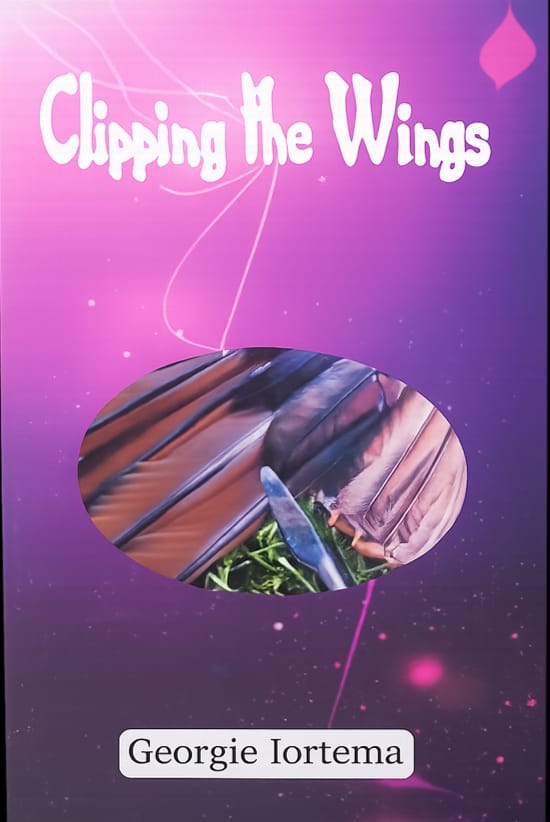
GEORGIE Iortema’s Clipping the Wings (Aboki Publishers, Makurdi; 2023) is a sharply satirical play that exposes one of the most disturbing moral failures of contemporary society: the transformation of intimate relationships into a theatre for male ego. Beneath its humour, witty dialogue, and comic exaggeration lies a profound critique of toxic masculinity and the commodification of women. The play demonstrates how patriarchy does not merely oppress women, it also produces emotionally impoverished men who derive pleasure from manipulation, domination, and the suffering of others. In this sense, Iortema’s drama is less a romantic comedy than a social warning about the consequences of a culture that equates masculinity with conquest.
The central figure, Wakbis, embodies this crisis of masculine identity. He develops a philosophy in which women become instruments for validating male importance. His shocking instruction to his friends is direct and unapologetic: “Fight! That’s the idea! Cause your babes to fight!!” (Act One, Scene One). The force of this declaration lies in its casual cruelty. Wakbis is not interested in love, companionship, or mutual respect. He is interested in spectacle.
His worldview becomes even more disturbing when he reduces women to economic objects. He argues that women have become so abundant that they have lost value, declaring that they have become “like bend down select, okrika (aka OK) stuff” (Act One, Scene One). This language of depreciation reveals the ideological foundation of his behaviour. Women are evaluated, compared, and consumed as though they were commodities in a marketplace. The play exposes the dangerous logic that often underpins misogyny: once a person is treated as an object, exploitation becomes easier to justify.
The most revealing aspect of Wakbis’s psychology is his confession that female conflict gives him a sense of greatness. He delights in imagining women destroying one another because of him: “Look at babes striking, whacking, smacking, and punching each other madly… And what for? To possess you! To monopolise you! Simply to have exclusive possession of you.” (Act One, Scene One). He concludes that such a spectacle “automatically accords you a towering sense of self-importance unimaginable.” The play therefore identifies toxic masculinity as a performance driven by insecurity. Wakbis needs women to fight because he cannot generate self-worth from integrity, achievement, or emotional maturity.
Jimmy functions as the moral conscience of the drama. He rejects the reduction of relationships to entertainment and insists that love should be reciprocal. His criticism of Wakbis is one of the play’s clearest ethical statements: “According to your own dictionary, a relationship between lovers is an adventure at the expense of the female party; it’s not a relationship that is supposed to be symbiotic; mutually beneficial, enjoyable, satisfying, and gratifying” (Act One, Scene One). Jimmy’s voice introduces an alternative vision of masculinity rooted in responsibility rather than domination.
The play reaches its intellectual height in Peace’s confrontation with the men. She dismantles their patriarchal assumptions with remarkable clarity. Challenging their belief in male superiority, she declares: “Whatever a man can do a woman can do, even better. Yes, even better!” (Act One, Scene Two). Her speech is significant because it moves beyond rhetoric and invokes women’s achievements in politics, education, law, and international leadership. Iortema gives Peace not merely anger but historical consciousness.
However, the play’s most devastating scene is the encounter between Peace and Favour. Wakbis’s manipulation culminates in physical violence between the two women while he secretly enjoys the spectacle. The stage direction that he watches them “feeling over the moon” (Act One, Scene Four) is deeply symbolic. The women become performers in a drama written by male ego. Their fight is not a spontaneous conflict but a manufactured competition.
What saves the play from becoming merely sensational is Peace’s moment of awakening. Exhausted by the violence, she cries out: “I say stop this madness. Stop! Stop!! Stop it!!! Can’t you reason for a moment? What’s wrong with you?” (Act One, Scene Four). This is the play’s emotional turning point. Peace recognises that the real enemy is not Favour but the manipulative structure that has turned them against each other. Her refusal to continue the fight transforms the play from satire into social critique.
Iortema’s language is one of the play’s greatest strengths. The mixture of Nigerian Pidgin, colloquial English, and exaggerated rhetoric creates a vibrant theatrical texture that captures the rhythms of contemporary urban life. The humour is often outrageous, but it serves a serious purpose. The audience laughs before it recognises the violence hidden beneath the laughter.
Ultimately, Clipping the Wings argues that a society that celebrates male domination inevitably breeds female suffering and collective moral decline. Wakbis’s dream of becoming the “happening guy” is not merely a personal fantasy; it is a reflection of a culture that rewards emotional exploitation. The play reminds us that when love becomes a contest for possession, everyone loses. The women are wounded physically and emotionally, while the men are diminished morally. In exposing this tragedy with humour, energy, and dramatic intelligence, Georgie Iortema has written a play that speaks urgently to contemporary Nigerian society. Finally, the play could have benefited from tighter editing.
* Liam is a culture writer and poet based in Abuja