
Jack Mapanje: The poet who refused silence

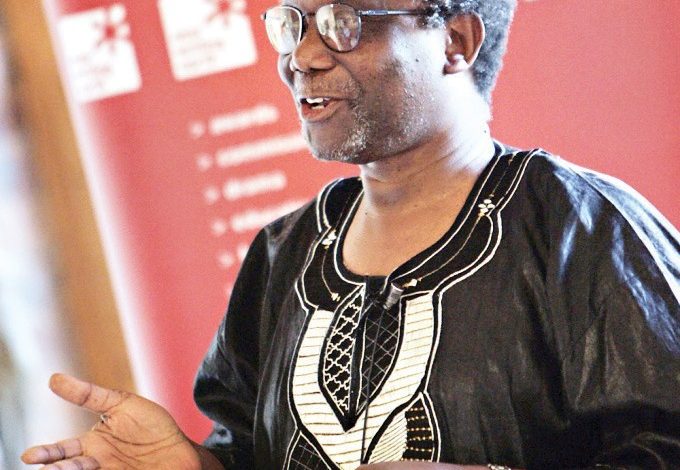
By Sola Adeyemi
THE death of Jack Mapanje on 4 November 2026 marks the end of one of the most remarkable literary journeys in modern African writing. Poet, memoirist, novelist, linguist, teacher and public intellectual, Mapanje occupied a singular place in African literature. His career was shaped by the often-dangerous intersection of artistic freedom and political power. Imprisoned by the regime of Hastings Kamuzu Banda, celebrated internationally as a prisoner of conscience, and later exiled to Britain, he transformed personal suffering into an enduring body of literature that continues to illuminate questions of freedom, memory, belonging and human dignity.
For many readers across Africa and beyond, Mapanje’s name became synonymous with resistance. Yet to remember him solely as a victim of dictatorship would diminish the richness and complexity of his achievement. Long before he became a political symbol, and long after the world recognised him as one, he remained fundamentally a poet: a craftsman of language whose writing drew upon folklore, oral traditions, satire, allegory and political insight in ways that broadened the possibilities of African poetry in English.
The news of his passing arrived with deafening force. One of my students, who happened to be among Mapanje’s adopted nephews, wrote to me on the evening of 4 November: ‘I don’t know if you are aware, but Jack Mapanje passed away yesterday. He was 82 and had been ill for some time.’ The message landed heavily. I was aware of his illness. In 2024, while organising events connected to the ninetieth birthday celebrations of Wole Soyinka at the Africa Centre in London, I had invited him to participate. He told me personally that his health would not permit his involvement. There was disappointment in his response because he had hoped to join in honouring a fellow African literary giant. I knew he was advancing in age. Yet knowledge of mortality seldom prepares us for its arrival. George, no, I was not aware that he had died. The news was devastating.
Born on 25 March 1944 in Mangochi District, Malawi, Mapanje emerged from a cultural environment shaped by Yao and Nyanja traditions, storytelling, song and communal memory. These traditions never left him. They became the imaginative reservoir from which much of his literary work flowed. Before becoming an internationally recognised poet, he worked as a secondary school teacher and pursued his studies through the University of London system. Later he completed advanced studies in linguistics at University College London before returning to Malawi, where he became an influential academic and eventually Head of the Department of Language and Linguistics at the University of Malawi.
His literary reputation was established with the publication of Of Chameleons and Gods in 1981. The collection remains one of the landmark achievements of African poetry. Within its pages one encounters many of the qualities that would come to define Mapanje’s writing: inventive animal imagery, layered symbolism, sly humour, biting irony and a profound moral seriousness. The collection demonstrated how poetry could remain aesthetically sophisticated while simultaneously engaging pressing social and political realities.
The title itself is revealing. The chameleon, a recurring figure in African folklore, became a vehicle through which Mapanje explored themes of adaptation, disguise and survival. In retrospect, it seems an apt emblem for the strategies available to writers working under repressive regimes. Through indirection, metaphor and allegory, Mapanje found ways to articulate truths that could not safely be expressed in direct political language. It was precisely this subtlety, however, that attracted the suspicion of the Banda government.
To understand the significance of Mapanje’s persecution, one must recall the political climate of Malawi under Hastings Kamuzu Banda (1906-1997). During the one-party era, criticism of the government was often treated as a threat to the state itself. Journalists, academics, artists and public intellectuals operated under constant scrutiny. Open dissent was dangerous. Consequently, literature often became a coded language through which alternative visions of society could be imagined and dissent indirectly expressed.
In September 1987, the tension between literature and power reached its most dramatic point in Mapanje’s life. He was arrested and detained without charge. No convincing explanation was provided to his family, friends or academic colleagues. Like many victims of authoritarian rule, he simply disappeared into the machinery of state repression. His detention sent shockwaves through literary and academic circles across Africa, Europe and North America. Amnesty International declared him a prisoner of conscience. Writers, scholars, human rights activists and international organisations mobilised on his behalf. Distinguished figures, among them Wole Soyinka and Harold Pinter, campaigned vigorously for his release. During his imprisonment, he was awarded the Rotterdam Poetry International Award and later the PEN Freedom to Write Award, honours that ensured his case remained visible to the international community.
Mapanje remained imprisoned from 1987 until May 1991, spending more than three years in detention before mounting international pressure contributed to his release.
The prison most closely associated with his incarceration was Chichiri Prison in Blantyre, officially known as Blantyre Central Prison. During the Banda years it had acquired a reputation as one of Malawi’s most feared detention centres. For many African writers and intellectuals, the very name “Chichiri” became emblematic of the attempt by authoritarian power to silence independent thought. In literary circles across the continent, Chichiri became inseparable from the name of Jack Mapanje.
Yet prison proved unable to extinguish his creativity. Indeed, one of the paradoxes of Mapanje’s career is that imprisonment deepened rather than diminished his literary voice. The experience became the foundation of some of his most important writing. Out of suffering emerged poetry of extraordinary imaginative vitality.
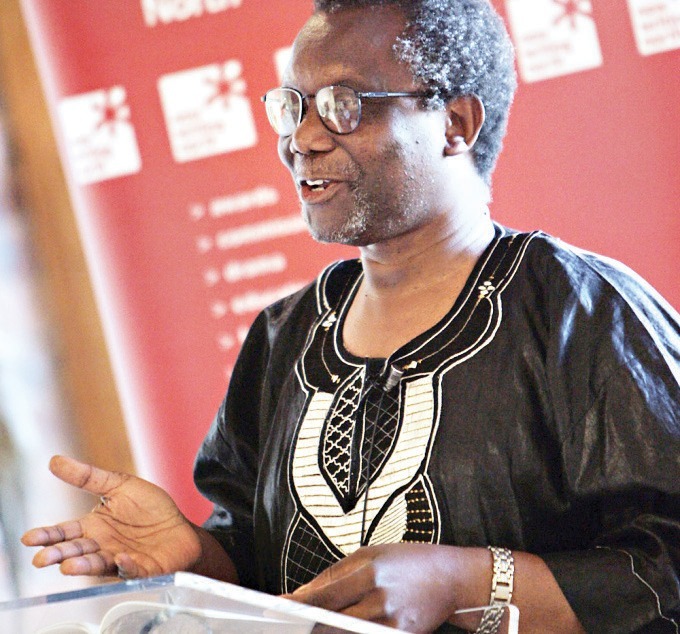
Prof. Jack Mapanje
His collection The Chattering Wagtails of Mikuyu Prison stands as one of the finest poetic responses to incarceration in modern African literature. Rather than producing simple documentary accounts of prison life, Mapanje transformed experience into art. Birds, animals, memories, dreams and remembered voices inhabit these poems. The prison becomes both a physical and symbolic space through which larger questions of freedom, endurance, hope and human dignity are explored. The work transcends the specific circumstances of Malawi in the late twentieth century to speak to universal experiences of confinement and resilience.
More than two decades later, he revisited these experiences in prose through his memoir And Crocodiles Are Hungry at Night (2011), published by Ayebia Books. The memoir deserves comparison with classics of African prison literature such as Wole Soyinka’s The Man Died (1972) and Ngũgĩ wa Thiong’o’s Detained: A Writer’s Prison Diary (1981). Like those works, Mapanje’s memoir offers insight into the psychology of imprisonment and the methods by which authoritarian regimes seek to break the individual spirit. Yet it also possesses a distinctive voice shaped by memory, irony and cultural reflection.
Part memoir, part political testimony and part meditation on survival, And Crocodiles Are Hungry at Night remains one of the most significant prison narratives produced by an African writer. It records the bewilderment of arrest, the uncertainty of indefinite detention, the emotional strain placed upon family and community, and the sustaining power of imagination. Above all, it demonstrates how literature can preserve identity in circumstances designed to erase it.
Release from prison, however, did not mark the end of Mapanje’s ordeal. The transition from incarceration to freedom proved far from straightforward. Upon release, he found himself confronted by bureaucratic obstacles and professional uncertainty. He was informed that he would need to reapply for his former university position. The delays and ambiguities that followed made clear that a genuine return to intellectual life in Malawi would be difficult. Gradually, exile became unavoidable. What began as imprisonment evolved into displacement.
Exile would become another defining theme of his life and work. Living far from Malawi, he confronted questions familiar to many displaced writers. What does it mean to belong to a country one can no longer inhabit? How does memory preserve home when physical return is impossible? What responsibilities does an exiled intellectual owe to the society left behind?
The answers to these questions emerged repeatedly in his writing. Distance sharpened rather than diminished his engagement with Malawi. His later work remained deeply connected to the landscapes, traditions, histories and political realities of his homeland.
Far from retreating into silence, Mapanje entered an extraordinarily productive phase of his career in Britain. His literary output expanded beyond poetry into memoir and fiction. Among his notable works were The Last of the Sweet Bananas (2004) and Beasts of Nalunga (2007), novels that explored social transformation, memory, power and the lingering consequences of authoritarian rule. These works revealed a writer determined to understand not only the experience of oppression itself but also its long-term effects on individuals and communities.
Alongside his literary work, Mapanje established a distinguished academic career in Britain. For many years he was associated with the School of English at the University of Leeds, where he taught African literature and continued his research and writing. At Leeds he became much more than a lecturer. He served as a cultural ambassador, introducing generations of students to the depth and diversity of African literary traditions.
His presence enriched both literary studies and African studies. Discussions of censorship, imprisonment, exile and cultural memory acquired a unique immediacy in the classroom because he had lived the histories being studied. Students encountered not merely a scholar of African literature but one of its principal practitioners.
Those who worked with him frequently remarked upon his generosity, humility, intellectual rigour and understated humour. He combined scholarly distinction with personal warmth. In lectures and seminars he moved effortlessly between linguistics, poetry, history and politics. Outside the classroom he remained approachable, encouraging younger scholars and writers while never seeking the status that his achievements had earned.
What distinguished Mapanje from many politically committed writers was his unwavering commitment to literary complexity. He refused simplification. His writing never descended into propaganda. Even when addressing injustice and oppression, he preferred metaphor to proclamation, irony to accusation and ambiguity to certainty. Animals, birds and folktale figures populate his poetry not as decorative flourishes but as participants in moral and political dramas. Through them he exposed the absurdities of authoritarian power while preserving the imaginative freedom essential to artistic creation.
For that reason, his influence extended far beyond Malawi. Across Africa, younger poets found in his work a model of artistic courage balanced by formal sophistication. He demonstrated that writers need not choose between political commitment and aesthetic achievement. The two could coexist and indeed strengthen one another.
The honours and recognition he received during his lifetime reflected this broader significance. He came to be regarded as one of Malawi’s foremost literary figures and one of the leading poetic voices to emerge from post-independence Africa. Yet despite these distinctions, he remained deeply attentive to ordinary lives, local speech patterns, village memories and the textures of everyday cultural experience. His international standing never severed his connection to the worlds that had first nourished his imagination.
The tributes following his death have highlighted precisely these qualities. Writers, academics and cultural organisations have remembered him not only as a literary giant but also as a moral voice whose commitment to truth never wavered. The Malawi Union of Academic and Nonfiction Authors described his passing as a major loss to Malawi, Africa and the wider literary community. Commentators have repeatedly emphasised his ability to transform suffering into art and to use language as an instrument of both beauty and resistance.
Ultimately, the significance of Jack Mapanje’s life lies in the convergence of several extraordinary narratives. He was a poet who brought Malawian experience onto the world stage. He was a prisoner whose captors failed to silence him. He was an exile who carried his homeland within memory and imagination. He was a scholar who transformed teaching into cultural stewardship. Above all, he was a writer who never lost faith in the power of words.
His death closes a major chapter in African literary history, but his voice endures. It survives in poems that challenged tyranny through metaphor, in memoirs that documented the human cost of repression, in novels that explored the complexities of postcolonial society, and in the countless students, readers and younger writers whose lives he touched.
The true measure of Mapanje’s achievement lies not only in what he wrote but in what he represented: the conviction that imagination can outlast fear, that language can survive imprisonment, and that the human spirit, sustained by art, can endure even the darkest forms of confinement. Long after the prison walls of Chichiri have faded into history, and long after the political order that sought to silence him has passed away, the voice of Jack Mapanje will continue to speak.
Prof. Adeyemi teaches at the University of East Anglia and has research interest in Global Theatres, Postcolonial Theatre and Literary Studies; African Theatre and Performance (with special emphasis on West Africa and South Africa), and Contemporary British and Black British Theatre