The Arts Stampede @LABAF ’26 mulls what the future holds for the creative industry

By Jeremiah Alabi
THE final stretch of LABAF 2026 brought together a number of stakeholders in the creative industry to examine a subject that has remained relevant for years: the relationship between government and the arts. The session provided a platform for artists, administrators, cultural advocates and other industry practitioners to reflect on the challenges confronting the sector and, more importantly, what the incoming political dispensation could do differently.
The conversation was not entirely about what the government keeps failing to do. It also examined the responsibilities of artists themselves, the need for stronger industry structures, the importance of policy implementation and the question of whether creative professionals were doing enough to secure a better future for themselves through their work.
The Secretary-General of Committee for Relevant Art (CORA) Mr. Toyin Akinosho opened the floor by giving a brief introduction of CORA and then called on Mr. Tunde Lanipekun, one of CORA founding members, to start the conversation. Mr. Lanipekun opened the conversation by taking the audience back to the early gatherings that brought artists together to discuss the place of art in society. He recalled how practitioners from different areas of the creative industry were invited to participate, explaining that those gatherings were created to give artists an opportunity to discuss how their work could contribute to society. However, reflecting on the years that followed, he expressed concern about the level of government’s support available to the industry. He made a particularly important observation when he said, “If we are running away from politics, we may not get there in time.”
His statement struck at one of the central issues of the discussion that would later be amplified: artists’ aloofness to the political processes around them while still expecting support that comes from it. For too long, artists have expected the government to recognise their contributions without necessarily taking an active role in the political spaces where decisions affecting their profession are made. Mr. Lanipekun also drew attention to the poor state of arts education, particularly the shortage of art teachers in schools, and suggested that government could learn from countries such as Finland, where grants are provided to support artists. His position was clear: the creative industry needs to engage more with government rather than remain at a distance from the political process.
“Tunde failed to do the job he was called up to,” Mr. Akinosho joked and followed with a broader reflection on the history of The Arts Stampede, describing it as a “parliament of artists” where people from different creative backgrounds could come together to discuss issues affecting their profession. He revisited the economic difficulties that followed the Structural Adjustment Programme (SAP) instituted in 1996 by the military administration of Gen. Ibrahim Babangida, explaining how the programme affected publishing, the visual arts and the wider creative industry. One of his observations was particularly striking: “The creative industry was the first to take (the impact), and it’s the last to recover.”
Beyond the challenges of the present, Mr. Akinosho wondered what the next government (after the 2027 election) would do for the creative sector. He raised concerns about the lack of exhibition spaces, inadequate support for artists and the removal of public sculptures that had previously been commissioned by the Lagos State Government. It was difficult to ignore the contradiction he highlighted: public funds could be used to commission artworks, only for those same works to be neglected or removed by subsequent administrations. He also questioned the poor maintenance of cultural spaces and the absence of structures that would allow such facilities to serve the public effectively.
This was one of the strongest contributions of the session. It is not enough for a government to commission an artwork, construct a cultural centre or make promises about supporting the creative industry. What happens after the commissioning, construction or announcement is equally important. An industry cannot thrive on occasional gestures of recognition; it needs consistent investment, maintenance and policies that survive changes in political leadership. Mr. Akinosho then called artists to speak truth to power as a reminder that cultural development requires more than applause at festivals and public events.
Dr. Kola Odutola of Florida State University, US, who joined virtually, sought to know the state of cultural policy and the promises made to the creative industry. He drew attention to the National Endowment for the Arts recently pronounced by President Bola Ahmed Tinubu last February and the need for government to move beyond announcements to actual implementation. His question, “What has the soft power gotten us?”, and challenged the audience to examine whether the country’s cultural influence was being translated into meaningful support for its creative professionals.
Odutola also expressed concern about the condition of cultural institutions, particularly the National Theatre, which he criticised for losing its identity as a theatre and becoming an events centre. His remarks raised an important question about the future of culture infrastructure in Nigeria. What is the purpose of establishing institutions meant to preserve and promote the arts if the very people they are designed to serve cannot access or benefit from them? His contribution reinforced the need for the government to develop clear policies and establish structures that can support the industry beyond political speeches.
“We should not come here every year to whine and complain. What are we doing? What steps are we taking?” a former arts and culture commissioner in Oyo State, Mr. Toyin Arulogun, asked, offering a different perspective. While acknowledging the challenges raised by previous speakers, he argued that artists must also examine their own approach to securing support. He questioned the tendency to return to the same conversations every year without taking practical steps towards change.
He explained that artists needed to understand how decision-makers think, package their proposals properly and identify the people who could influence the kind of support they sought. Drawing from his experience in government and marketing, he shared an example of how he used a creative approach to secure support for a Twins Festival. Even as a commissioner serving in government, he said rather than relying solely on a formal proposal, he presented an idea in a way that appealed to the decision-maker, governor, who had earlier dismissed the proposal as not meriting support. His argument was that artists needed to understand their audience and learn how to communicate the value of their projects.
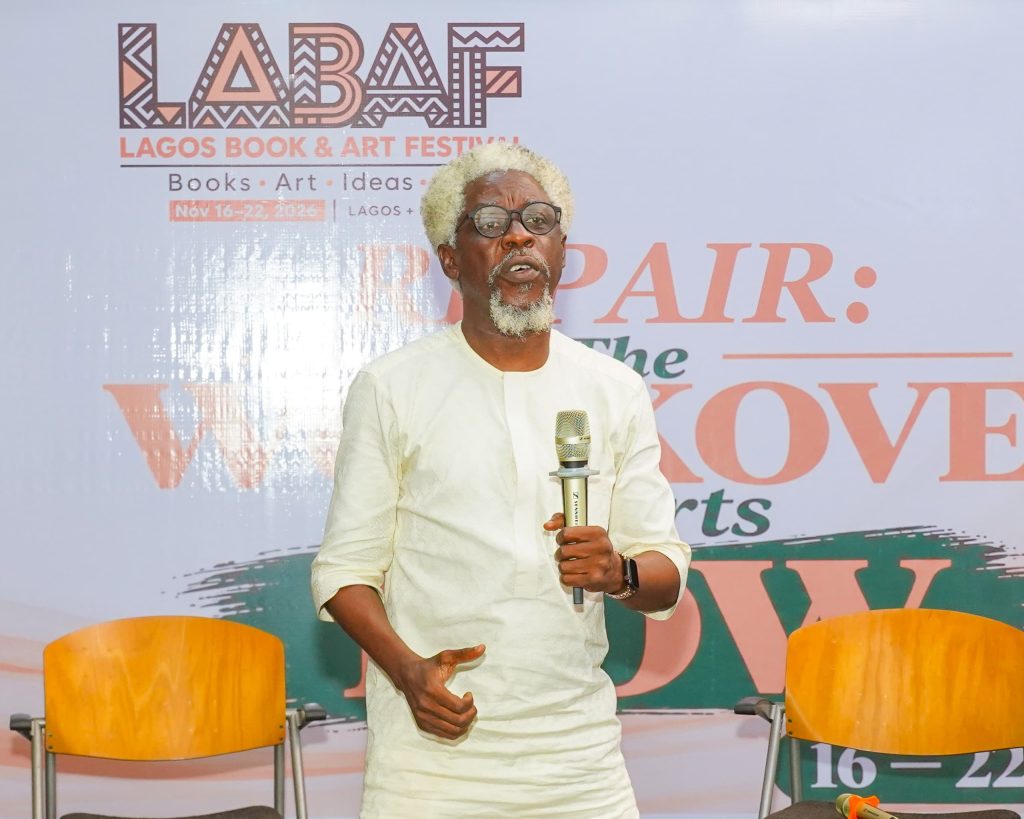
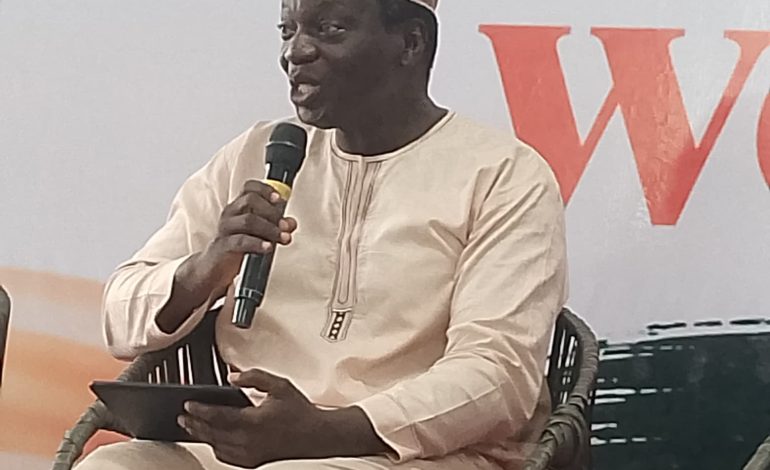
Mr. Adeniran Makinde
Although his contribution introduced a different angle to the discussion, because it challenged the audience to look inward. The government has a responsibility to create enabling environment for the arts, but creative professionals must also develop the capacity to present their work, build partnerships and engage institutions effectively. However, this should not become an excuse for government to abandon its responsibilities. Both sides have a role to play.
“A system that depends heavily on individual connections cannot guarantee fairness or accountability,” CORA Programme Chair Mr. Jahman Anikulapo countered Mr. Arulogun. “Instead, funding should be channelled through credible institutions with proper oversight and participation from people who understand the creative industry.”
Mr. Anikulapo brought the discussion back to the importance of institutional structures and cultural policy. He argued that relying on individual grants and personal relationships could expose the industry to corruption and unequal access to opportunities. He made his position clear when he stated, “There is need for structure.” His contribution also reflected the frustration of someone who had witnessed similar conversations take place over several decades without the necessary changes being implemented. The issue, as he presented it, was not simply whether the government had money to support artists, but whether there was a dependable system through which that support could reach the people who needed it. His argument was particularly relevant in a country where access to opportunities can sometimes depend more on who one knows than on the quality of one’s work.
Founder of Crown Troupe of Africa Mr. Segun Adefila offered a practical example of the problem through his experience as a theatre practitioner. He questioned why artists had to depend on personal connections to gain access to public facilities that are meant to serve them. Referring to the difficulty of accessing the National Theatre for performances, he observed, “But here, you have to know somebody. You need somebody to let you have it.”
His contribution brought the discussion from the level of policy and political promises to the everyday experiences of creative professionals. What is the point of having theatres and cultural facilities when theatre companies cannot gain access to them? The situation he described reflects a wider problem in the industry: infrastructure may exist, but without accessibility they cannot fulfil their purpose. For practitioners who depend on these spaces to create and present their work, the absence of access becomes another obstacle to an already difficult situation.
Ace actor Mr. Bimbo Manuel shifted the conversation towards the responsibility of artists to uphold professionalism and recognise the value of their craft. He argued that creative practitioners sometimes contribute to the way their profession is treated by accepting conditions that undermine their work. One statement that stood out was, “Dress as you wish to be addressed,” explaining that this went beyond physical appearance and extended to the manner in which artists presented themselves and demanded respect for their profession.
He further encouraged practitioners to explore opportunities for private-sector support, drawing attention to the existing policy that requires businesses to allocate a percentage of their profits to the arts. He concluded with a statement that captured the urgency of his message: “I think it is not time, honestly, for us to sit together and mourn together. I think it is time for us to confront one another with truth, with facts, and challenge ourselves to go to the next level.”
Mr. Manuel charged his colleagues to look towards corporate support instead by understanding project pitch language that corporate entities understand. He mentioned three production houses – BAP, KAP and the Duke of Shomolu – that routinely secure funding support from corporate bodies for their work, arguing that such support was open to others as well if they did due diligence required for such support.
President of National Association of Nigerian Theatre Arts Practitioners (NANTAP) Mr. Adeniran Makinde approached the issue from the perspective of policy implementation and the economic survival of creative professionals. He argued that policies must be translated into laws if they are to provide lasting protection and equal opportunities for practitioners. He explained that many artists continue to work under unfavourable contracts that leave them without adequate security for their future. Referring to the conditions attached to some contracts in the creative space, he said, “When you read those contracts, you see that that is slavery.”
He also highlighted the need to recognise creative practitioners as small and medium-sized enterprises that require sustainable income to survive, and called on financial institutions that fund SMEs to look the way of the creative sector. His contribution extended to the quality of arts education and the need for serious leadership within the industry. Towards the end of his remarks, he offered a perspective that helped balance the conversation: “So it’s not a question of blame for me. It is a question of understanding how we take the world from this point onwards to next year.”
Mr. Makinde’s position was important because it moved the discussion beyond identifying problems to considering how the industry could build a sustainable system. His emphasis on legislation, fair contracts, education and business development showed that the future of the creative industry depends on more than funding announcements. It requires an environment where practitioners can earn a living, protect their work and build businesses that can survive.
Culture journalist and writer Mr. Anote Ajeluorou added an international perspective by sharing an example of how Brazil supports its creative industry through a structured grant system. He explained that producers could receive grants after submitting proposals for assessment, with beneficiaries expected to give back to their communities through performances and educational activities in communities. He contrasted this arrangement with the Nigerian situation, where practitioners often have to depend on personal connections to secure funding.
He also stressed the importance of documenting the conversations and recommendations that emerge from platforms such as The Art Stampede. In his words, “We can’t just talk and talk all the time. We should also attempt to be in government. too. So maybe we will nominate my boss, Mr. Akinosho to represent his constituency.” He strongly suggested that creative professionals should also consider entering political spaces where they could influence decisions directly since those holding levers of power have become tone deaf to the yearnings of the creative sector. His contribution was a reminder that conversations must eventually produce documents, proposals and practical actions if they are to create lasting change.
Perhaps one of the most personal contributions came from Esosa, a former member of Crown Troupe of Africa. Unlike other speakers who approached the subject from policy, administration and institutional experience, she shared what it meant to pursue a career in the arts while struggling to meet basic financial responsibilities.
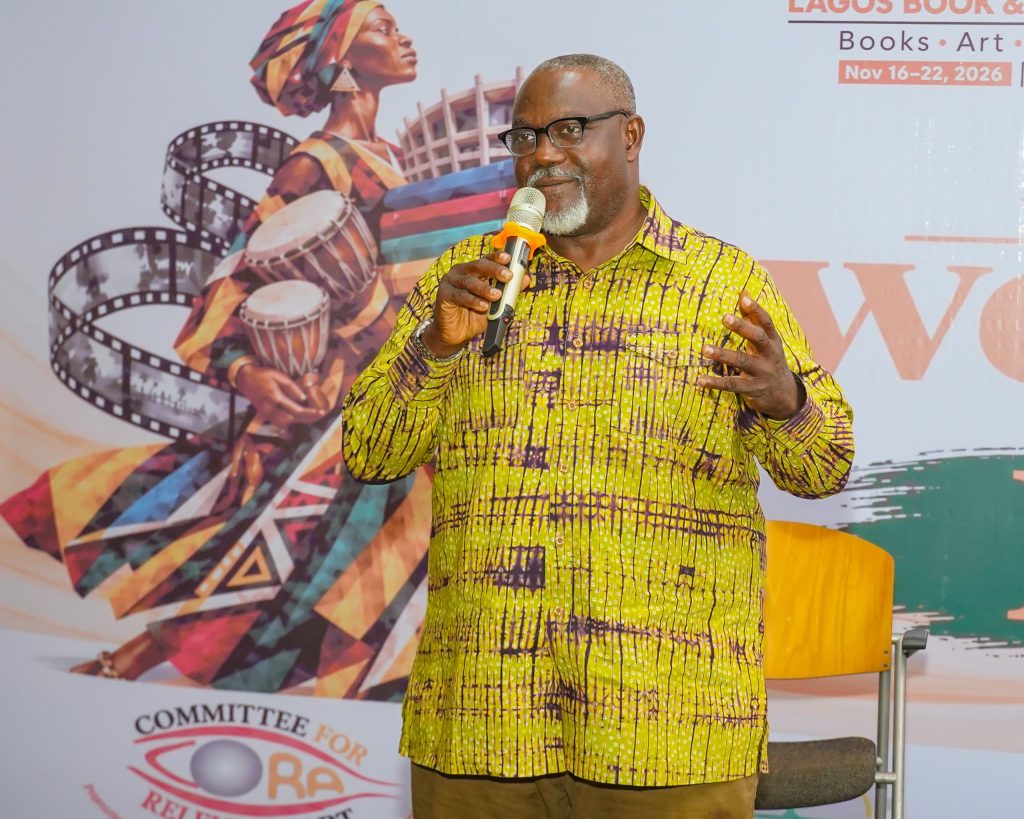
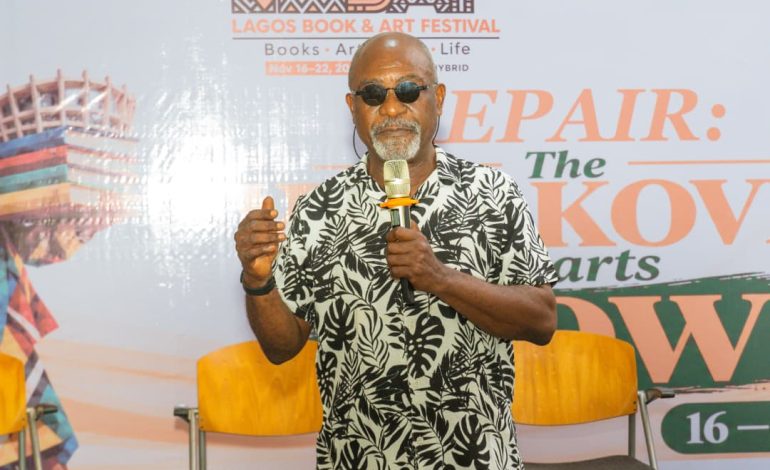
Mr. Toyin Arulogun
She spoke about returning to Nigeria after her studies abroad and becoming actively involved in the creative industry. Although she enjoyed performing and participating in production management, the financial realities of the profession eventually became too difficult to ignore. As a young mother, she struggled to provide for herself and her child despite the passion she had for the arts. Her words were simple but powerful: “Passion is great, but I should be paid for the thing I enjoy doing as well.”
Her experience gave the conversation a human dimension that could not be captured by discussions about policy alone. Behind every conversation about grants, cultural institutions and government support are people who depend on their creative work to survive. It is easy to encourage young people to pursue their passion, but what happens when that passion cannot provide for their most basic needs? Esosa’s contribution reminded everyone that artists are workers, and their labour deserves fair compensation. She also explained how she had taken her experience in theatre into the nonprofit sector, where she is able to apply those methods and receive payment for her work.
Also to speak was elder statesman, culture critic, playwright and director Pa Ben Tomoloju. He raised an issue that he has expoused over the years: state governments should build cottage theatres in all local governments in their states while local governments should build same in every ward. That way theatre practitioners are guaranteed jobs all your round.
The Art Stampede was more than a conversation about what the next political cycle holds for the arts. It was a reminder that the future of the creative industry cannot be left entirely in the hands of politicians. Those who work within the industry must be willing to participate in shaping the policies, institutions and systems that affect their profession. The question is no longer simply what the government intends to do for the arts, but what the industry is prepared to do to ensure that its demands are heard and its proposals are implemented.
As the discussion came to an end, there was a sense that the issues raised deserved attention beyond the walls of the session. After seven days of conversations, performances, exhibitions and reflections, The Art Stampede served as the final session of LABAF 2026 before the closing ceremony. It was a fitting way to bring the festival’s intellectual engagements to a close: not with the assumption that every question had been answered, but with a renewed call for responsibility, action and a better future for the arts and creative industry.
And perhaps that was what made the session memorable. The festival was drawing to a close, but the conversations it had thrown up were not meant to end with it. If anything, the real work begins after the microphones are switched off and everyone returns to their respective spaces. The challenge is to ensure that these conversations do not become another set of words remembered only during the next edition of LABAF.