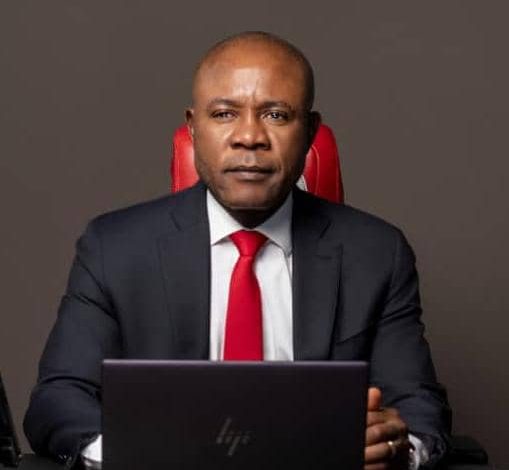
Bukar Usman renews call for local police, says community-based policing is Nigeria’s missing link

By Godwin Okondo
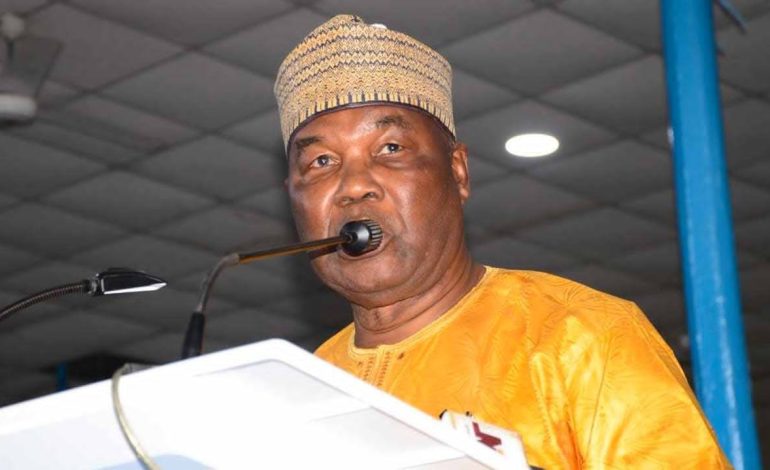
HISTORIAN, cultural archivist and security expert, Dr. Bukar Usman, has renewed his longstanding advocacy for the establishment of local police, arguing that community-based policing, rather than the creation of state police alone, offers the most effective solution to Nigeria’s worsening security challenges. Usman made the case at the ARISE News/THISDAY Town Hall on Building a National Consensus for State Police and National Security held recently, where policymakers, security experts and other stakeholders gathered to discuss the future of policing in Nigeria.
While much of the discussion centred on the growing campaign for state police, Usman maintained that meaningful security reform should begin at the grassroots through locally rooted policing structures.
“I have been an advocate for local police, not necessarily state police,” he told participants, stressing that policing would be more effective when security personnel possess a deep understanding of the communities they serve, including their geography, culture and social dynamics.
Usman’s intervention reflected a position he has consistently advanced for more than a decade. His first published article advocating local police appeared in 2012, years before the current constitutional debate over decentralised policing gathered momentum. The article was republished in 2018 and 2025, while the subject was further explored in his books My Literary Journey and Restructuring Nigeria: An Overview. In 2026, he expanded the argument in a full-length publication titled A Case for Local Police.
Drawing on his childhood experiences in Biu, Borno State, Usman recalled the effectiveness of the former Native Authority Police, which, he said, maintained law and order largely because officers possessed intimate knowledge of the communities they protected. That experience, coupled with decades of service in public administration and national security, continues to shape his position on policing reforms.
He argued that Nigeria’s security problems cannot be attributed solely to constitutional arrangements, insisting that the country’s legal framework already provides for security structures from the federal level down to local governments.
According to him, the more pressing issues are whether the statutory security bodies at various levels are properly constituted, meet regularly, act on intelligence reports and respond promptly to emerging threats.
Usman also noted that state governors already possess constitutional authority to issue lawful directives to commissioners of police, subject to constitutional safeguards, suggesting that effective implementation of existing provisions deserves as much attention as constitutional amendments.
A central theme of his presentation was the importance of local intelligence in combating crime. He argued that criminals often exploit their superior knowledge of local terrain, while security personnel posted from distant locations struggle to operate effectively.
Illustrating his point, he likened deploying officers unfamiliar with riverine communities to sending non-swimmers into deep water. He also repeated his familiar assertion that “distant hose cannot put out local fire,” saying sustainable security depends on community participation and early intelligence gathering at the grassroots.
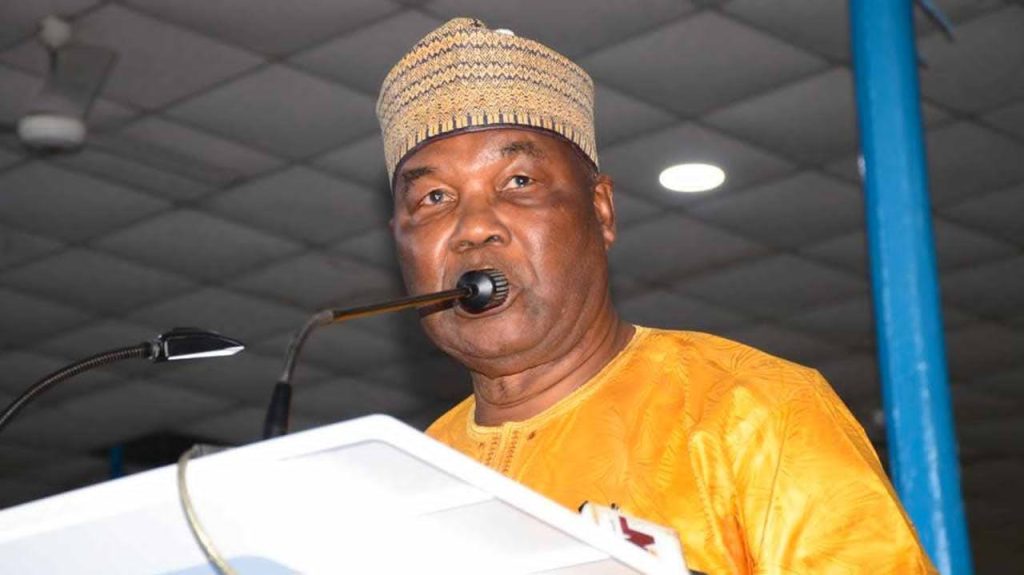
Dr. Bukar Usman
Addressing concerns that decentralised policing could be abused for political purposes, particularly by state governors, Usman acknowledged the risks but argued that they should not prevent the country from pursuing reforms.
He proposed constitutional and legal safeguards, including clearly defined operational standards, federal supervisory mechanisms, regular oversight reports to the National Assembly and the Federal Government’s constitutional authority to intervene where abuse threatens public order.
Ultimately, he maintained that abuse is a matter of individual conduct rather than institutional design. “If you use or misuse a political instrument, it is you and your conscience,” he said.
Usman’s views are informed by an extensive career in public service, during which he held several strategic security-related responsibilities, including serving as Secretary of the Committee on Public Safety, participating in internal security reforms, contributing to Commonwealth security conferences and serving on the Presidential Panel on National Security and other security committees and organisations inside and outside the country.
Observers note that although his advocacy for local police initially attracted little attention when it was first brought up in 2012, Nigeria’s worsening security situation has gradually brought decentralised policing to the centre of national discourse.
As lawmakers and policy experts continue deliberations on possible constitutional reforms, Usman insists that the focus should extend beyond creating state police formations to building policing institutions rooted in local communities, where intelligence is generated, trust is fostered and security threats can be addressed before escalating into wider crises.