My Thursday column, ‘Line of Sight,’ touches on how and why I wrote my latest novel, ‘Damage’

By Abubakar Adams Ibrahim
Damage Done
THIS week, my latest book, Damage, was published by my Nigerian publisher, Masobe Books. The feeling of seeing my fifth book sailing into the hands of readers who have been waiting patiently to read it is incredible. I hope the book journeys well and finds its audience.
Damage, my third novel, is only published now but, like the River Niger grafting a delta in Nigeria’s crotch, it travelled far to get here. It meandered and slalomed, journeyed through the land of forgetting before finally arriving at the sea of hands awaiting its publication.
At the time I started writing this novel, my country was barely clocking twenty years past its last dictatorship. Nigeria had gone through various phases of transition, from the shock demise of Abacha himself and his regime, which, as of June 1998, was building the infrastructure to perpetuate itself in power, to the phase where we were startled by a spontaneous democracy, to that phase where every misstep and act of national sabotage was blamed on the nascency of our democracy, and to the phase where that excuse was no longer tenable, and the system simply carried on with its habitual abuse of the country and its people without the need for any pretence.
Throughout these phases, I realised none was devoted to truly exploring and navigating coping with the realities, truths and myths that decades of military rule and incursions into civil spaces have entrenched in our national psyche and how it has impacted both civil spaces and the military itself.
Yes, we had the Oputa Panel and the over 10,000 petitions it drew, to investigate human rights violations between 15 January 1966, when the military first struck, to 29 May 1999, when they finally left—well, there was a foiled plot to reinstate another dictatorship about a year ago—1 October 2025—but since then we have enjoyed stable democracy.
Many Nigerians chronicled the abuses and the pains they suffered during years of dictatorships. Millions of others never knew how, or had the courage to go to that panel to document their experiences. In this crack, this liminal space, exist people like my character, Nasrin Amin, who has carried her secret pain for decades, until she no longer could and brought three generations to confront that history with varying consequences for each.
When I decided to write this novel, I principally wanted to tell the story of a woman who decided to confront her biggest and darkest secret and the person she believed inflicted that pain on her. This presented the opportunity to explore the various ways our system, power structures, culture, and orientation aid and abet perpetrators.
I finished the novel, and as I tend to do sometimes, abandoned it for years and never really quite got back to it. I went on to write other books and had them published while this one sat in some digital space somewhere, waiting and gathering electronic dust.
In the course of my doctoral research at the University of Iowa, I was exploring how journalism practice in Nigeria has been significantly shaped by a history of authoritarian regimes—and this influence is significant and continues to manifest today in various ways, from the way journalists function to the way the law and law enforcement function around journalists and journalism—I recalled that I had written a novel that explored how that authoritarian legacy had manifested and shaped families and our culture of silence.
So, I returned to the novel, dug it up, polished it, and decided to give it a chance to meet the world and for the world to have the chance to see how these characters carried this burden for decades.
In this story—in the Nigerian story—there are many victims, many survivors. They are, each, bold, daring and resolute in their own ways. What struck me the most in the course of writing this is that, often, the perpetrators themselves do not realise that they are victims too. Victims of the system, victims of the power they serve and sometimes victims of their own avarice and depravity. This is not to absolve them of culpability for their actions. It is just putting things into context that the abuse we meted out sometimes damages us as well.
In other words, the Nigerian military, which has victimised the entire country, is itself a victim of its own interventions in the civic space and continues to suffer the consequences. I make this argument more extensively in a forthcoming essay for Granta.
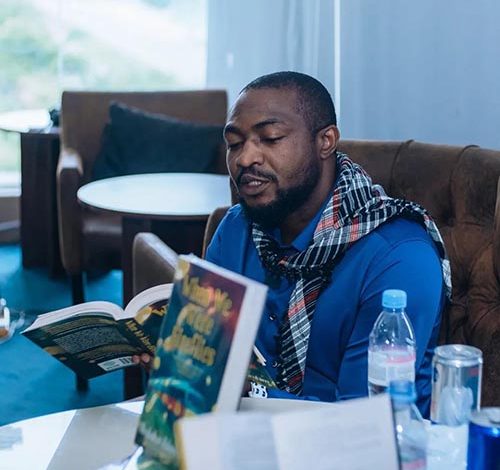
Abubakar Adams Ibrahim reading from his last novel, When We Were Fireflies
While this novel might seem to be about the grand issues of our time, at the heart of it, it is really the story of three generations of Nigerians trying to cope with a secret history that is almost on the verge of being forgotten, because we have never really processed it, even while its impacts and influences continue to shape how we live and act and the pains we continue to suffer as individuals, institutions, and a nation.
It has been 27 years of uninterrupted democratic rule in Nigeria. They may not have been the best years in our nation’s history, but we must never forget where we came from to be here. Today there is an entire generation who were born under democratic rule and grew up and are raising their families without ever having to experience the precarity and arbitrariness of military rule.
We are at that sweet spot in time where the idea of romanticising the past is going to seem appealing to this generation that is oblivious to the injuries we carry because of those interventions and political misadventures, those who wished the plot of 2025 had succeeded because the pains of yesterday seem distant, almost pleasant in the way that memories numb certain agonies and leave us with scars we boast of.
Damage is my attempt to document that history, that pain, and the resilience of the people who suffered those pains and are still quietly living with its consequences, as well as the bravery and boldness of those who chose to rattle the silence.
So what does it feel like to have authored five books of fiction? I feel incredibly gratified that these books have breathed and exist, that they continue to have resonance with readers from across the world, some of them years and even a decade or more, after they have been published. I feel moderately content that I have played a small part in documenting us—our contemporary history, our dreams, aspirations, failures, pains, joy and triumphs, and our humanness, for both our sake and for posterity.
I feel content that in writing these stories, through them, we are able to look at ourselves in the mirror and recognise us, with our flaws, the scars on our skins, the power and strength in our eyes, the beauty in them, the mess in our background, and what we have gone through to stand here, now, to look in that mirror that literature avails us, and recognise ourselves for who we really are, as individuals, and as a people, and to know what needs fixing and what needs patting. A storyteller cannot hope for more than that, can they?
* First published in Daily Trust, October 22, 2026