The Caine Prize and the rest of us


By Majekodunmi Oseriemen Ebhohon
WINNING a literary prize should ordinarily be the end of a competition, not the beginning of another examination. Yet that is precisely what happened when Zimbabwean writer Simbarashe Steyn Kundizeza won the 2026 Caine Prize with his story ‘The Blue Fighter’. An American magazine, The Atlantic, questioned the authenticity of his story, and the prize organisers, instead of standing behind the rigour of their own selection process, launched a formal investigation. Interviews were conducted. Drafts were examined. Digital forensic experts were brought in. Eventually, the writer was cleared, and the award stood. Everybody can now return to their seats. But who appointed the magazine as the literary immigration officer? At what point did an external insinuation become an inspection notice? And why was the legitimacy of an African story being tried, forensically examined, and cleared inside Western rooms?
Simbarashe Steyn Kundizeza deserved to have his integrity defended. That is not in question. What is indefensible is the institutional capitulation of entertaining the allegation at all. The 2026 judging panel, chaired by Nigerian veteran broadcaster Bola Mosuro alongside accomplished African cultural figures, had already read, vetted, and crowned a winner. Scrambling to run forensic tests the moment an outsider raised an eyebrow was a vote of no confidence in that entire process. Had an obscure blog made the same claim, it would have been ignored. Coming from The Atlantic, however, a British prize, long branded as the global arbiter of African short fiction, put its own African-led jury on trial to satisfy the skepticism of its Western ally, while African writers and readers watched from the sidelines. There is a larger joke here, and unfortunately, the rest of us are in it.
The Caine Prize was established in 2000 in memory of Sir Michael Harris Caine, a British businessman who chaired Booker plc and the Booker Prize management committee. Following his death, his widow, Baroness Emma Nicholson, and others established the prize to recognise African writing. Its contribution to the visibility of African writers is considerable. Many writers have found international readership through it. That history deserves acknowledgement. But so does the history of its origin.
The prize was conceived and established within a British literary and philanthropic establishment. This is not to suggest that a British individual or institution had no prerogative to establish a prize for African writers. Anyone can establish a prize. The more important question is why Africans have not built and sufficiently sustained their own institutions of literary recognition, with the resources and authority to determine the value of their work without constantly looking elsewhere for validation. This irony becomes harder to ignore when we consider the Nigeria Prize for Literature. It is a Nigerian prize, funded by Nigeria LNG, with a panel of distinguished Nigerian judges. Yet the official procedure provides for an international consultant, a literary scholar from outside Nigeria, to review the judges’ assessment to ensure that the result meets international standards. One is inclined to ask why the judgement of Nigerian literary experts requires an additional external review before it can be considered sufficiently credible? Who defines these international standards, and why must their approval form part of the process?
Then there is the Association of Nigerian Authors. Here, at least, we have a literary institution formed by Nigerian writers, administering prizes within an African literary setting. It resembles the kind of home-grown recognition mechanism one would expect to see strengthened and supported across the continent. Yet the financial rewards attached to several of its prizes remain strikingly modest. The ANA Prize for Drama, for instance, carried a reward of ₦100,000; the poetry prize offered ₦200,000. This is not to imply that a writer’s achievement can be priced, or that a small cash award makes the recognition worthless. But writers have lives beyond the page. They need time, books, research, equipment, publishing opportunities and other means to continue writing. A prize that recognises literary excellence should also reflect some understanding of the material conditions required to produce it. When the financial backing of our own literary institutions remains so limited, while other prizes offer substantially larger rewards, we should not be surprised that writers look beyond the continent for opportunities. The problem is not that they do. It is that our institutions have so little to offer them.
Having briefly turned our attention to the material conditions of literary production, let us return to the question of who gets to recognise and validate African achievement. And this brings us to the rest of us. The same question follows us into the university, where a lecturer may spend years researching, teaching and publishing. But where must that work appear before it is considered sufficiently distinguished? Increasingly, the answer involves international journals and citation databases such as Scopus and Web of Science. In their 2024 paper, “Does the African Academy Need Its Own Citation Index?”, David Mills and Toluwase Asubiaro reported that, among roughly 2,200 active academic journals from sub-Saharan Africa listed in Ulrichsweb, only 169 were indexed in Web of Science and 178 in Scopus. More than 100 of those were based in South Africa, a country that has established a government-funded research-output subsidy system supporting publications in both internationally indexed and approved domestic journals. Meanwhile, promotion guidelines across many Nigerian universities mandate publication in ‘reputable international journals’, shorthand for titles indexed in these Western commercial databases. The result is a self-reinforcing trap in which African scholars send their work abroad to secure promotion, drawing submissions and citations away from local journals that need both to build their visibility and recognition. It is the intellectual equivalent of an African football federation telling its players that they can only play for the national team if they first join a European club—and then complaining that the local league has no stars. Quite impressive, isn’t it, making the recognition of African scholarship dependent on foreign indexing corporations while failing to adequately fund and support the journals we have at home?
And does the dependence end with the recognition of African intellectual work? Not at all. It extends to the resources needed to produce and sustain it. African research centres, publishing organisations and NGOs often rely on external grants to finance their work. In the process, the priorities attached to available funding shape the very work these organisations undertake. A research centre redirects its inquiry towards a funder’s preferred area of study; a publishing organisation finds that certain themes attract more support than others; an NGO recasts a community’s concerns in the language of a donor’s programme. The proposal is revised, the objectives are rearranged, and local priorities are made to fit an external agenda. By the time funding is secured, the work has drifted considerably from the needs that first gave rise to it. But does that matter, when everybody is happy, especially the person approving the budget?
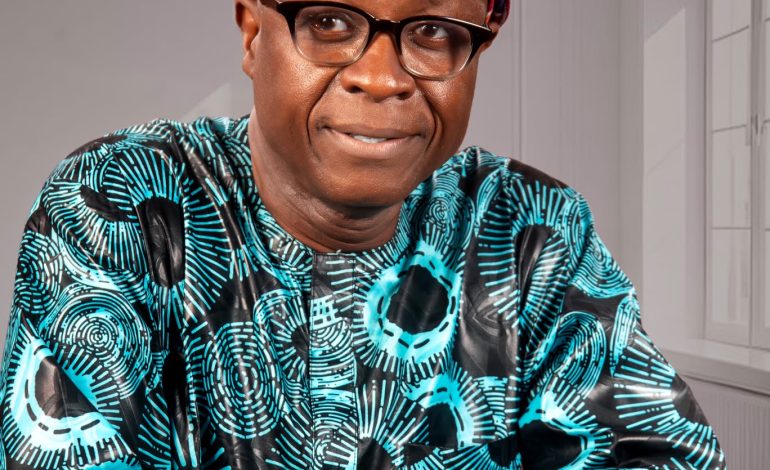
Simbarashe Steyn Kundizeza
But where does the money come from, and why must Africa keep looking elsewhere for it? The continent is richly endowed with mineral resources, agricultural land, energy and human capacity. Its resources sustain industries and economies across the world. Yet it continues to celebrate grants, loans and “development assistance” as though its own wealth were permanently unavailable for its own development. The IMF and World Bank, meanwhile, have had considerable influence over the economic choices available to African governments, often through loans and the policy conditions attached to them. Apparently, we must first borrow our own money’s equivalent, agree on how to spend it, and then thank somebody for the privilege.
And, of course, sovereignty has its limits when the money comes from elsewhere. African countries are expected to seek external approval for their economic priorities, while the international financial institutions prescribing those priorities remain largely beyond the reach of the people whose lives are affected by them. And when African governments attempt to pursue a different economic direction, the consequences of challenging that arrangement can be severe. Patrice Lumumba, Thomas Sankara and Muammar Gaddafi are among the African leaders whose resistance to imperialist interests ended in violent circumstances. But this struggle for African sovereignty is not confined to the political arena.
In scholarship, E. O. Nwagwu’s advocacy for an African citation index and the work of African Journals Online challenge the idea that African research must wait for Scopus or Web of Science to certify its worth. In literature, the ANA prizes are examples of Africans creating independently governed platforms to recognise their own writers. And in development work, the #ShiftThePower movement is challenging a funding arrangement in which those who provide the money determine the priorities.
The Caine Prize controversy is therefore a small window into a much larger arrangement. In literature, an external publication questions the credibility of an African writer, and a British prize feels obliged to answer. In Nigeria, local judges have their assessment reviewed against international standards. In our universities, foreign indexes determine academic credibility. In community-based advocacy, external funding priorities shape the direction of local institutions. Different offices, different letterheads. Yet the question of who has the authority and who controls the resources keeps recurring.
None of this changes until African states treat cultural and intellectual sovereignty as a baseline duty of governance rather than an afterthought. That means investing in state and independent publishing industries alongside public libraries that actually buy local books. It means endowing serious national literary prizes and writer residencies instead of relying on occasional ceremonies and token cheques. It means universities funding their own journals, building regional citation indexes, and dismantling promotion rules that treat foreign databases as the sole measure of scholarly worth. Above all, it means providing transparent, publicly funded research grants shaped by local priorities rather than the preferences of foreign donors. Until we build and finance our own rooms of recognition, we have little right to complain about how we are judged in someone else’s.
The Caine Prize investigation is over. The writer has been cleared. The award stands. It is time we turned the investigation towards ourselves.
Ebhohon, a Nigerian playwright, poet and theorist, author of The Great Delusion, winner of the 2025 ANA First Prize for Drama, is the recipient of an Honorable Mention at the 48th Annual Conference of New York African Studies Association (NYASA) / sankara101010@gmail.com