Odugbemi urges filmmakers to prioritise professionalism, production excellence, global standards

* ‘Nigerian embassies don’t show Nigerian films; outsiders encounter our art by accident’
By Godwin Okondo
‘THE world is ready for our stories. But are our production systems ready for the world?’ When veteran filmmaker Femi Odugbemi ended his masterclass with the above words that still echo days after they were uttered at MUSON Centre, Onikan, Lagos, it was clear that Nollywood has arrived at a critical junction in its cinematographic journey. And it must decide where it is headed next if it is to perform beyond its current level. After 30 years of self-applause in terms of production size, he asked, what next? Does the prduction success of Nollywood equate globally recognised cinematic artistry?
“We have talked about our size for 30 years. We need to begin to talk about artistic success. 30 years is a long time to have built what we have built, but the talk shouldn’t be about numbers now. Not every country has the kind of numbers, resources, quality of people that we have. So by right, we should be dominating. How do we transit into global artistic excellence?”
The need for artist excellence that rivals or equals what is on offer at the global level that neighbouring South Africa operates was at the heart of Mr. Odugbemi’s treatise in a hall packed full of Nollywood greats. They had come to listen but could only have been somewhat disappointed at the level the industry is and its seeming lack of aspiration for global cinematic excellence. Odugbemi did not leave any gaps. He also pointed out the remedies that nollywood must adopt if the industry is to aspire to the heights that America (Hollywood), South Korea (K-Movies) and Chinese films have attained through consistent investment in personnel training, institutional help and following the rules of the game.
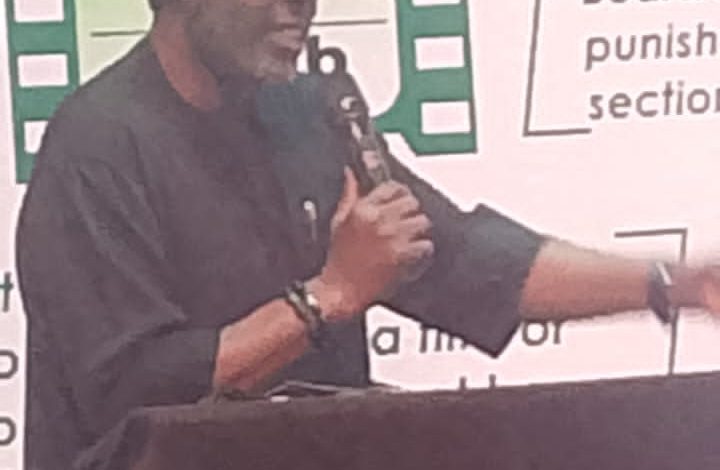
Odugbemi gave the charge while delivering a presentation on production standards and best practices at the maiden edition of the National Film and Video Censors Board (NFVCB) Masterclass Series held at the Agip Recital Hall of the MUSON Centre, Onikan, Lagos.
The masterclass, organised by the National Film and Video Censors board (NFVCB), was launched as part of the board’s commitment to strengthening professional development and building capacity within Nigeria’s film and audiovisual industry.
Speaking at the opening of the programme, the Executive Director and Chief Executive Officer of NFVCB, Dr. Shaibu Husseini, said the initiative was conceived following requests by participants at the fifth PAO Nigerian Digital Regulatory Conference for a platform that would provide practical engagement on issues affecting the creative industry.
He said the rapidly evolving digital landscape, driven by artificial intelligence, streaming platforms and new business models, demands continuous learning and professionalism.
“In such an environment, talent alone is no longer enough. Success today demands continuous learning, adaptability, professionalism, and an understanding of both the creative and business dimensions of our industry,” Husseini said.
According to him, the board’s responsibility extends beyond content classification and compliance to encouraging professional excellence, deepening industry knowledge and creating opportunities for stakeholders to acquire skills needed to thrive in a changing creative economy.
He described the masterclass as “an investment in people” and “an investment in the future of Nigeria’s creative industry,” adding that the sessions were designed to help creatives “create professionally, protect their work, and profit sustainably.”
While delivering his presentation titled ‘Production Standards and Best Practices for Global Competitiveness’, Odugbemi described film production as an ecosystem in which every contributor plays a vital role, stressing that no aspect of filmmaking is more important than another because success depends on teamwork.
He noted that films are no longer produced solely for local audiences, explaining that once content is uploaded to platforms such as YouTube, it immediately becomes available to global audiences. Consequently, he said, every stage of production must meet international standards.
“The world is waiting for Nollywood to tell stories that reflect their originality,” he said, urging filmmakers to draw more inspiration from Nigeria’s rich cultural heritage and traditions.
Odugbemi also identified accountability, capacity building and skills development as the foundations of sustainable production standards, adding that quality should take precedence over the volume of films produced.
“What matters in the end is not the number of films produced but the quality of those films,” he said.
He also stressed the importance of understanding target audiences, investing in story development and engaging professional writers to produce compelling scripts. He observed that many successful films emerge from a structured development process rather than spontaneous production.
According to Odugbemi, filmmakers should complete essential pre-production processes, including research, story development, story bible, audience identification, distribution planning and digital security before seeking production approval or investment.
“The stronger the package, the lower the perceived investment risk,” he said.
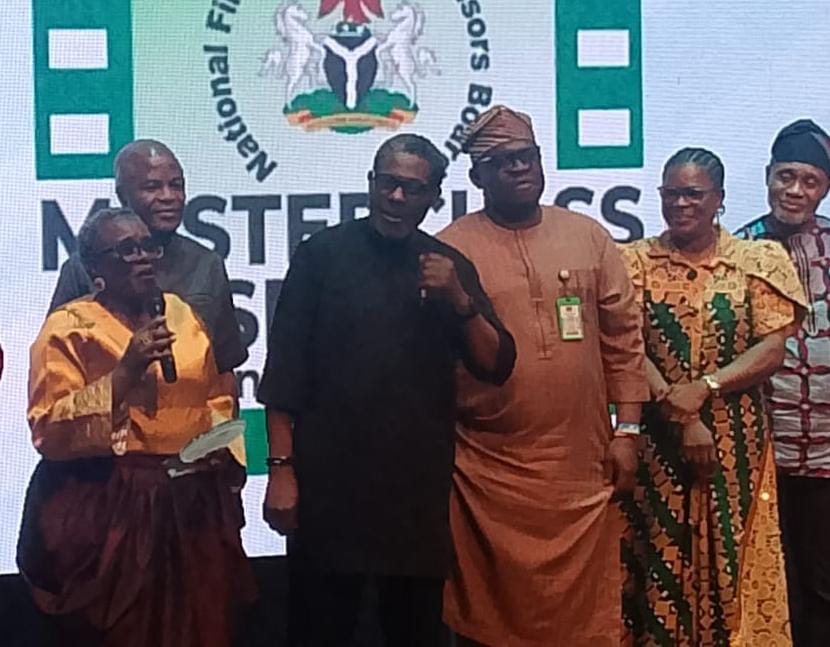
Keynote speaker and veteran actress, Joke Silva (left) presenting appreciation award to Mr. Femi Odugbemi while Dr. Shaibu Husseini and Iyen Agbonfo-Obaseki look on at NFVCB Masterclass 0.1.. in Lagos
On technical standards, Odugbemi urged practitioners to master visual language, composition, colour management, camera movement, sound design and production consistency, noting that compliance with global best practices inspires confidence among investors and international partners. He further encouraged filmmakers to embrace artificial intelligence as a tool for improving efficiency, stressing that success would depend on how intelligently the technology is deployed rather than simply adopting it because it is fashionable.
Calling for a shift from isolated productions to sustainable business models, he advised industry practitioners to “build companies, not just productions, and to build assets, not just projects.”
He added that Nigeria’s quest for global recognition would require practitioners to excel across every stage of production, build industry influence and invest in prestige films capable of competing internationally.
On story ideas, the producer of Tinsel, an emotionally engaging love story, said the love-story theme has been over-flogged. He added a love story didn’t have to be between a man and woman, asking, “What about between a mother and daughter or son and father, son and mother and daughter and father. We want to create an industry that doesn’t need magic. You will never see a love story film in Nigeria that really travels, because there is no resonance.”
Odugbemi also singled Nollywood’s visual language that is yet to catch up to standard, noting now a friend of his said, “‘We just plant the camera and allow it to record the performance.’ The visual language needs to be taught. We must teach craft. Government can’t do that. There’s an education that we need to have; we can to develop expertise in these things. We cannot leave our filmmakers to make their own way, to find their own way. The most important thing is the creative process itself. We tell amazing story, but how we tell those stories is the problem. Best practice is not something we already have; we have to be humble about it. So imagine if we have it on addition to our stories?”
Odugbemi was emphatic on the poor global outing of Nigerian films and how there is obvious lack of intentionality, especially in global award systems that require strong lobbying and presence at higher levels of contacts. He recalled what the South African establishment did to their Totsi for it to gain international recognition, saying these things don’t come cheap or by chance. He noted the embarrassing absence of Nigeria’s institutions in the global promotion and positioning of Nigerian films and other cultural products, lamenting that Nigerian embassies don’t show Nigerian films abroad and that those outsiders, who encounter Nigerian art do so accidentally. He canvassed the need for “strategic international visibility and strategic national industry institutions like NFVCB and Nigerian Film Corporation (NFC), etc getting engaged in promoting Nigerian art. There’s no connection between our art and our embassies. Our embassies don’t show our works. People encounter our films, arts accidentally. We need to be intentional.”
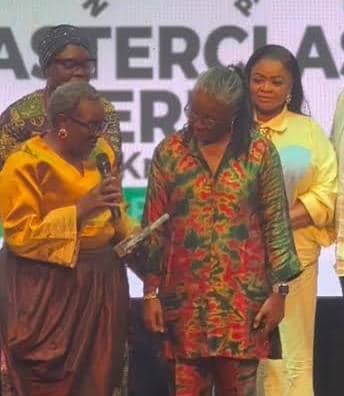
The presentation concluded with the NFVCB presenting Odugbemi with an award of recognition in appreciation of his contributions to the growth and development of Nigeria’s film industry. Veteran actress Joke Silva, who gavee the keynote, made the presentation while Husseini and other industry leaders watched.
The Masterclass had the support of Co-creative Hub Africa (CcHub) and Ojie Production Studios Ltd.