DG Holloway to British Museum: Don’t insult us by offering looted bronzes to us as loans

By Godwin Okondo
THE Director General of the National Commission for Museums and Monuments (NCMM), Olugbile Holloway, has described proposals by the British Museum to loan the Benin Bronzes back to Nigeria as unacceptable, insisting that Nigeria should not be expected to borrow artefacts that were looted from the country.
Holloway spoke during a session titled “Loot, Restitution and African Heritage” at the 2026 Quramo Festival, held at Eko Hotels and Suites, Lagos, where he joined Director General of the Centre for Black and African Arts and Civilization (CBAAC), Aisha Adamu Augie, and award-winning journalist and author Barnaby Phillips to discuss the history, ownership and restitution of the Benin Bronzes. The session was moderated by Ore Ogunbiyi, African Correspondent for The Economist.
Phillips, who spent 27 years reporting for the BBC and Al Jazeera, said his interest in the Benin Bronzes and Britain’s colonial legacy in Nigeria began during his first visit to Benin City in 1999.
According to him, while reporting on the trafficking of girls to Europe, people in Benin City repeatedly asked whether he was related to James Phillips, the British official whose death in 1897 became one of the events that led to the British invasion and looting of Benin.
“I wasn’t quite sure what they were talking about,” Phillips said, noting that the story remained with him long after he left Nigeria. His interest in Britain’s colonial legacy later informed his documentary, “Burma Boy”, which examined the experiences of a Nigerian man who fought for the British in Burma during the Second World War.
Phillips explained that the events of 1897 occurred at the height of the European “Scramble for Africa”, when Britain and other European powers were increasingly seeking territorial and commercial influence on the continent. He said the British commercial interests, particularly in palm oil, brought the British into increasing conflict with the Oba of Benin, whose kingdom was regarded as an obstacle to British ambitions.
According to him, Phillips led an expedition to persuade or pressure the Oba into accepting a treaty, which was probably signed by the Oba or one of the Oba’s chiefs. When Phillips later returned to enforce the terms of the agreement, he and several members of his party were killed.
Phillips said the incident provided the British with the justification they needed to launch a military expedition against Benin, amid rivalry among Britain, Germany and France over territories in Africa. The British eventually captured Benin City, deposed the Oba and sent him into exile in Calabar.
Phillips said the British soldiers who entered the palace were not art historians or anthropologists but nevertheless discovered the extensive collection of objects now commonly referred to as the Benin Bronzes, including bronze plaques, sculptures and ivory tusks.
“These are trophies of war that were taken back in 1897 to Britain,” he said, adding that many of the objects subsequently found their way into institutions such as the British Museum.
Augie said the loss went beyond the physical removal of artefacts, arguing that the objects represented a repository of history, language, culture and storytelling. “Imagine having all your books stolen and you have no way to access them,” she said.
She noted that the bronzes, sculptures and ivory objects contained stories and historical meanings that their removal also deprived generations of Nigerians and Africans of access to aspects of their own heritage.
“For us at the centre, we tend to see a lot of conversations happening and on which country it’s coming from. You have people looking at the financial aspect of it, and others are looking at education and history,” Augie said.
She noted that the restitution debate must therefore go beyond the question of physical ownership to address the loss of languages, history and traditional storytelling, adding that the ongoing conversations should eventually translate into policies that provide clearer frameworks for restitution.
The question of whether Nigeria has the capacity to properly house returned artefacts also featured prominently during the discussion.
Holloway rejected the argument that Nigeria should first demonstrate its capacity to preserve the objects before they are returned. He used the telling anology of a child that is kidnapped, and wondered what moral right the kidnappers have to impose any condition at all for returning the kidnapped child back to the parents. Insisting that proper musuems be set up first, Holloway subtly argued, would mean that the objects were not found in good stead when they were stolen years ago.
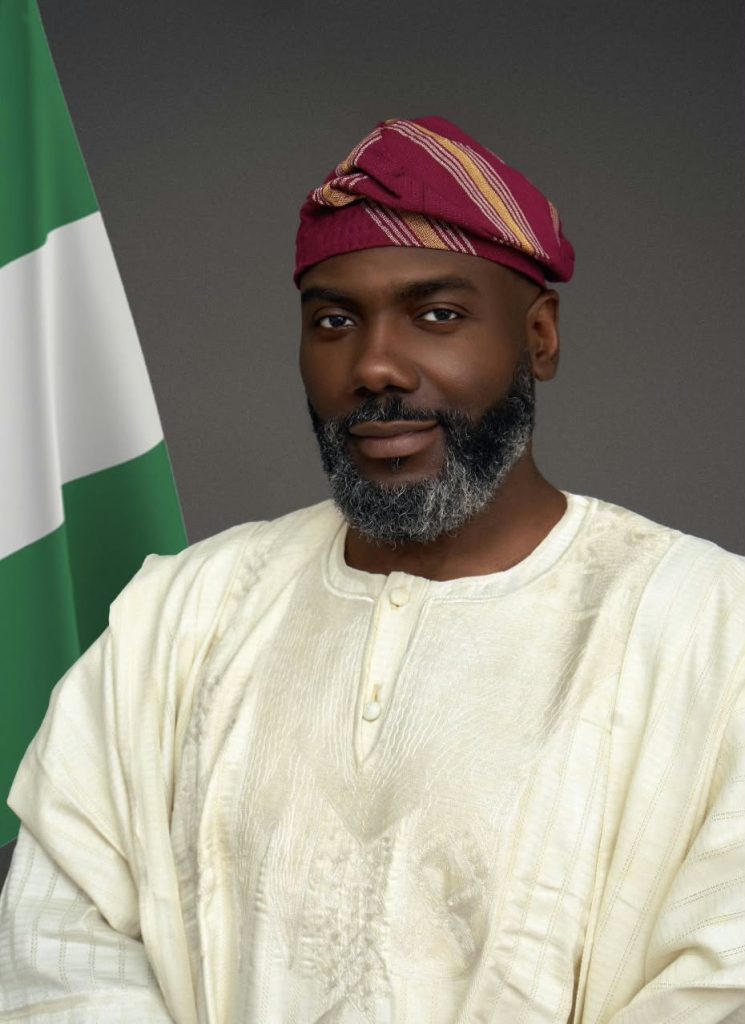
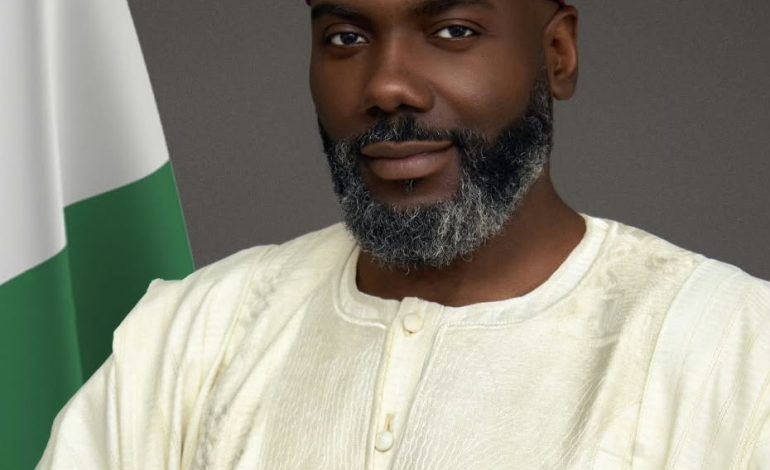
D-G, NCMM, Olugbile Holloway
“You don’t take a person’s object and have the moral right to ask what they will do with it when you return it,” he said. “Even if Nigeria doesn’t have a single museum, we would still be in our rights to ask for our objects back.”
He also challenged the assumption that the Western concept of a museum should determine how African societies preserve their heritage. “The concept of a museum itself is foreign, so you don’t get to take everything a white man does and force it on a black man,” Holloway said.
He argued that African societies had their own systems of preserving cultural memory long before the modern museum emerged, citing shrines and festivals as examples. “We have to imagine what a museum means in the African context,” he said.
Holloway pointed to the national museum at Onikan, Lagos and its renovated gallery and the new exhibition, “Echoes of the Past”, as evidence that Nigeria possesses the capacity to care for returned artefacts. He noted that it was a deliberate effort to offer a counter-narrative.
Augie similarly argued that the definition of a museum should not be limited to a building where objects are physically stored. She recalled visiting a museum in Germany, where many culturally significant objects were kept away in storage and were only made accessible to her through the intervention of a curator.
“We tend to project that we do a lot of rituals in Africa. We do have the spaces to store these artefacts,” she said.
According to her, the more important question is whether museums are being used to preserve the stories and connections between African people and their cultural objects. She also pointed to the emergence of digital museums as a potential way of reconnecting Africans with heritage that remains physically outside the continent.
“How do we use these items that are ours, even if they are not with us, to reconnect that power back to say who we were?” she asked.
Phillips acknowledged that Nigeria inherited a colonial model of the museum which, in many cases, had gradually weakened. He said the current restitution debate had placed Nigerian institutions in an unexpected position because they had spent decades being told that the objects could not be returned, only to now be told that their return was possible but subject to certain conditions.
“The challenge is to rise to this new, unexpected situation,” he said.
On Britain’s continued retention of some of the Benin artefacts, Phillips said the British Museum was constrained by legislation governing its collections. He said the British Museum is governed by the 1969 British Museum Act, which makes it extremely difficult for the institution to permanently deaccession objects from its collection.
Phillips argued that the museum had used the legislation to justify its failure to return the artefacts and predicted that it would continue to controversially offer loans of some objects for the foreseeable future.
Holloway, however, said Nigeria should reject the idea of borrowing its own heritage, noting, “We are constantly in communication with the British Museum, and in one of our meetings, I clearly told them that insinuating you want to loan us our artefacts, I find it quite insulting. So, let’s not entertain the thought. I’d rather you keep them till the end of time than for you to loan something that was looted. The loans should be us agreeing to loan you, not loaning us what you looted.”
He likened the proposal to allowing a kidnapped person’s child to visit the parent temporarily while insisting that the child must eventually return to the kidnapper. “It comes down to our pride and dignity as a people. It has to stop,” Holloway said.
He also distinguished between the physical return of an artefact and the transfer of legal ownership, arguing that restitution could begin with a transfer of ownership even where the physical object remained temporarily outside Nigeria. He said a situation when a Benin bronze bears the name of a Captain McArthur as original owner, was distasteful, emphasising that while such object remains outside, it should correctly bear the name of the owner, a Bnein bronze.
Holloway stressed that it was not possible for all objects to be returned, as many Nigerians and Africans have become international citizens, who shouldn’t be denied the right and access to see what belonged to the ancestors. He, however, said the correct naming and ownership was imperative to the restitution question to indicate proper provenance, and not what currently obtains.
Augie disclosed that CBAAC itself had experienced the consequences of the continued absence of the Benin artefacts. She said the centre was inspired by an ivory mask from Benin that is currently held by the British, but when CBAAC sought to borrow the original for its activities during FESTAC ’77, the British denied permission and they had to create a replica instead that has remained he sybmol of FESTAC till date.
Augie said the issue demonstrated why African countries needed to strengthen their collective policy advocacy. She rejected the idea that existing laws in Britain should be treated as permanently immutable, noting that laws could be changed through political will and sustained public pressure.
“This is why Africa Reconnecting is where policy comes in. We need to push policies with a stronger voice, together. It doesn’t happen overnight. It takes a lot because there are too many things to consider, but that fight must happen. We don’t have a choice.”
For Holloway, however, the restitution question is ultimately bigger than the physical return of the Benin Bronzes. He described the objects as symbols of African civilizations and periods when African societies demonstrated confidence in their own institutions, cultures and identities.
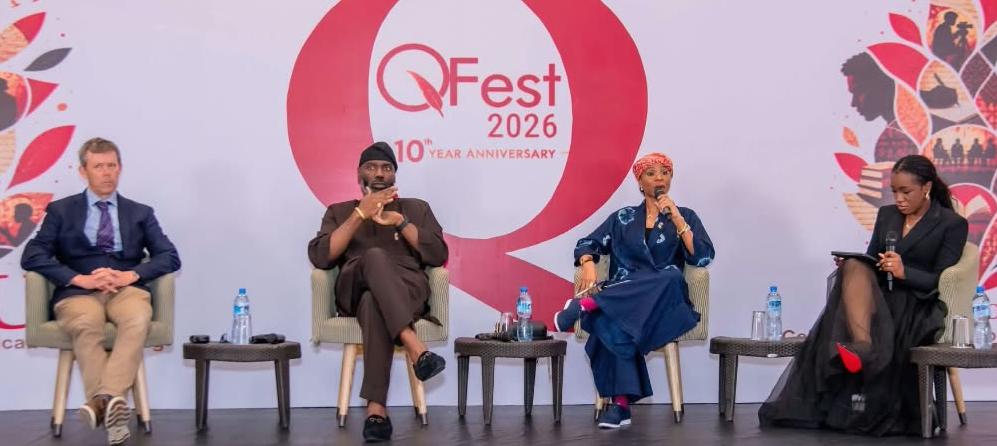
British journalist and writer, Mr. Barnaby Philips (left); D-G, NCMM, Mr. Olugbile Holloway and D-G, CBAAC, Aisha Adamu Augie and the moderator, Ore Ogunbiyi speaking on ‘Loot, Restitution and African Heritage: A Conversation inspired by ‘Loot: Britain and the Benin Bronzes’ at the 10th edition of Quramo Festival of Words that ended on 3 October 2026 at Eko Hotel and Suites, Lagos
“When the chains of the colonial masters fell, those chains moved from physical to mental chains,” he said, referencing Bob Nester Marley’s ‘Mental Slavery’ song as the proper awakening Africans needed to liberate themselves from colonial mental prison.
According to him, the objects represent “a time when we believed in ourselves, a time when we were on track, a time when we were not perfect, but we were trying.”
He said the restitution campaign should therefore be understood as part of a broader effort to redefine Africa’s image and the way Africans present themselves to the world. “It’s about how we show up everywhere, it’s not just about restitution,” Holloway said.
He criticised the manner in which African officials sometimes approach international engagements, arguing that inadequate preparation and poor presentation reinforce negative perceptions of the continent.
“The world is watching us,” he said, stressing that restitution was only “a small part of the bigger problem the continent has,” noting that Africa continued to suffer from a perception problem, citing international portrayals of the continent as a place defined primarily by poverty and humanitarian needs.
“There are ads they see on TV, that with $3, they can feed a child in Africa. Of course, they are not going to give you your artefacts back, because they think African people are starving, so they don’t need those objects,” he said.
He urged Africans to take responsibility for changing such perceptions and projecting greater confidence in their history, institutions and achievements.
“Each and everyone of us need to start changing our perception, because we are only making it harder for the world to take us seriously,” he said.