
Dance should unite people, build discipline, inspire pride in our heritage, says Chikamso Adinde

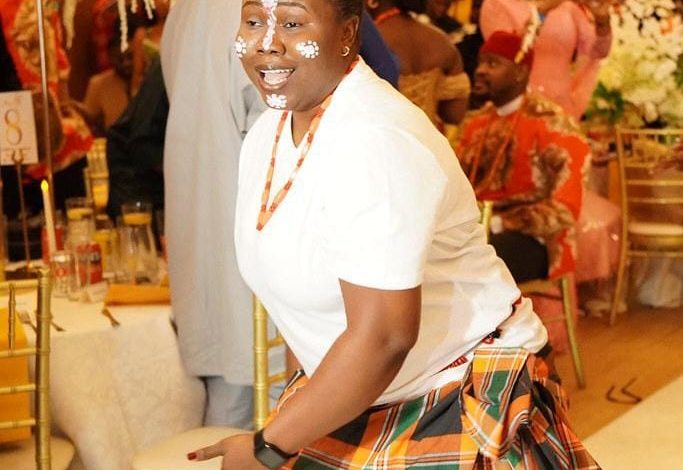
By Anote Ajeluorou
Every once in a while, performance encounters rare finesse that fosters global connections, striking hot in a vibrant mix of sound, costume, colour, and pulsating gestures. And that is what happens when Chikamso Jacinta Adinde steps on the stage for a cultural performance. In this interview, Chikamso speaks on developing her artistic passion, the significance of dance to worldwide sustainability as much as cultural preservation, and the journey to founding Achikolo Global Limited, the renowned cultural organisation focused on showcasing African heritage to global audiences
Months ago, in July 2024 to be precise, you led the Enugu State Association UK dance troupe to an enviable second-place finish at the Igbo Festival of Arts and Culture (IFAC) in London. This is just one of your many laurels. Take us back to the very beginning of Chikamso, the performer. Growing up, what role would you say music, dance, and culture played in your family and community?
GROWING up in Nigeria, I was surrounded by a rich cultural environment where music and traditional dance were part of everyday life. It started from my family. My parents were dance leaders in their respective groups and my grandmother was also a dancer, so dance has been a familiar terrain since childhood. Most times when we had family time, that is when everyone comes outside into the main compound, my mum starts singing and clapping her hands while my siblings and I hold a dance competition to know who dances best and who needs more coaching. Community celebrations, cultural festivals, weddings, churches and similar events created opportunities to experience tradition firsthand. These experiences nurtured my appreciation for Igbo culture from an early age. I got several scholarships when I won dance competitions, from my nursery classes to university level.
How did dance become more than just a hobby, and how did you realise that it could become your life’s calling?
My passion developed naturally over time. What started as family fun nights and participating in cultural performances in church and festivals gradually became something bigger, as I realised the impact dance could have on audiences. Over time, dance became more than entertainment to me; it became a way of expressing identity, celebrating our heritage, and connecting with people. Performing on larger platforms and being trusted to choreograph routines made me recognise that dance wasn’t simply a hobby; it was a platform for cultural storytelling, leadership, and inspiring others and I do it with ease. Every performance strengthened my commitment to preserving and promoting African culture.
Before becoming a recognised cultural dancer and choreographer, what experiences helped shape artist you are today?
Every artist’s journey involves learning and growth. Developing my skills required discipline, consistency, and the willingness to keep improving. Working with different groups, preparing choreography for various events, and adapting performances for different audiences taught me resilience and creativity. Those experiences helped shape both my confidence as a performer and my ability to lead and mentor others.
You are well known as a dancer, yet you have also built a career outside the performing arts. Tell us a bit about your professional journey beyond dance, and how that has influenced your creative practice?
Alongside my artistic career, I pursued higher education, earning a Bachelor’s degree in International Relations in Nigeria and I am completing an MSc in Business with Human Resource Management in the United Kingdom. My academic background has strengthened my organisational, leadership, and communication skills, which are invaluable when leading dance groups, organising rehearsals, coordinating performances, and managing cultural projects. It has helped me approach dance not only as an artist but also as a professional who understands teamwork and strategic planning.
Moving from Nigeria to the United Kingdom is a significant transition. Has living in the diaspora changed your relationship with your culture, or influenced your work as a cultural performer?
It never changed my relationship with my culture; rather, living in the UK has deepened my appreciation for my cultural heritage. Being part of the diaspora has made me realise how important it is to preserve traditions for younger generations and introduce them to wider audiences. Every performance is an opportunity to celebrate African identity, educate people about Igbo culture, and build bridges between different communities through music and dance.
What does Igbo cultural dance mean to you beyond entertainment? How do you see your performances contributing to the preservation and promotion of African heritage?
Igbo cultural dance represents our history, values, traditions, and identity. Every movement tells a story and reflects generations of cultural knowledge. Through my performances, choreography, and workshops, I aim to ensure these traditions remain relevant and appreciated by both Africans and non-Africans. For me, dance is a form of cultural preservation and education as much as it is artistic expression. And any song I dance to, I interpret the lyrics of the song through my dance steps.
You have performed on major stages and led cultural dance troupes at high-profile events. Which performance or experience has had the greatest impact on your journey, and why?
Performing at the OVO Arena Wembley during Flavour’s ‘African Royalty Experience’ stands out as one of the most significant milestones in my career. Sharing such a prestigious stage demonstrates how far African cultural performance has come internationally. Also, leading the Enugu State Association UK dance troupe to a second-place finish at the Igbo Day Festival was equally rewarding because it reflected teamwork, dedication, and our commitment to representing our culture with excellence.
Your achievements really speak to a bundle of talents, driven by fierce commitment to excellence. As CEO of Achikolo Global Limited, you have built your own dance group while mentoring other performers. What inspired you to take on this leadership role, and what values do you hope to pass on to the next generation of dancers?
Leadership came naturally because I wanted to help others develop their confidence and appreciate the importance of cultural performance. I believe dance should unite people, build discipline, and inspire pride in our heritage. I encourage younger dancers to value teamwork, professionalism, continuous learning, humility, and respect for tradition while also embracing creativity and innovation.
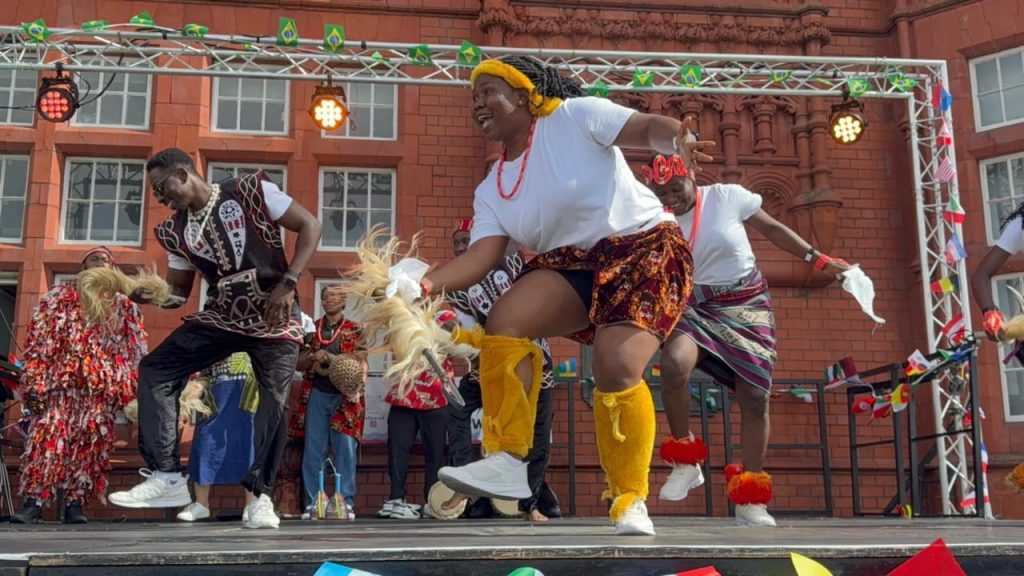
Chikamso Jacinta Adinde performing with her group
AEvery great performance has a story behind it. Walk us through your creative process, from ensuring synchronised performance, to selecting costumes and preparing for the stage?
My creative process always begins with understanding the purpose of the performance. I carefully select music that reflects the story we want to tell and then develop choreography that balances authenticity with audience engagement. Costumes are chosen to represent the cultural significance of each performance while maintaining visual impact. Rehearsals focus not only on technique but also on synchronisation, energy, expression, and ensuring every performer understands the cultural meaning behind the movements.
Has there ever been a moment when you considered stepping away from dance? If so, what kept you motivated to continue pursuing your passion?
Balancing education, professional responsibilities, and performance commitments has certainly required sacrifice. However, every opportunity to perform, teach, or inspire others reminds me why I started. Seeing audiences connect with our culture and watching younger dancers grow gives me renewed motivation to continue using dance as a positive force within the community. I have never thought of stepping away or even stop dancing for any reason whatsoever. I can dance anywhere and anytime; it just comes.
Outside dance and your professional career, what are you passionate about? How do your personal interests and experiences shape who you are as an artist and as a person?
I enjoy learning, personal development, travelling and working with people from different backgrounds. My academic studies have broadened my perspective on leadership, communication, and community engagement. These experiences help me become not only a better organiser and mentor but also a more thoughtful artist who values collaboration and cultural exchange.
In terms of future plans, what legacy do you hope to leave? When people think of Chikamso Jacinta Adinde years from now, what do you hope they will remember most about your contribution to African culture and the performing arts?
I hope people remember me as someone who used dance to preserve, celebrate, and elevate African culture. My goal is to continue creating opportunities for cultural education, mentoring future performers, and presenting Igbo traditions on international stages with excellence and authenticity. If my work inspires young people to embrace their heritage with pride and helps African culture reach even wider audiences, then I will consider my journey truly meaningful.
Chikamso, Achikolo, and the Global Value of Cultural Authenticity: A Review
BLENDING culture with synchronised body movements to tell stories that leave audiences with memories which last a lifetime takes a special kind of passion, discipline, commitment and consistency. For Chikamso Adinde, this artistic endeavour is more than just a performance, it is a way of bringing culture to life, preserving heritage and connecting people through dance, a universal language. Be it performing solo or alongside members of her dance organisation, ‘Achikolo Global Limited’, or even collaborating with other dance communities like ‘Nganga Performing Arts’, Chikamso brings a special energy and identity to the stage. She has the ability that combines expressive movements and cultural elements which gives each performance its own character that makes her work both engaging and memorable. There is a certain authenticity in her approach, one that reflects not only an understanding of the art form but also a genuine appreciation of the cultural stories and traditions behind it.
Beyond the choreography and carefully synchronised movements, what makes Chikamso’s performances particularly remarkable is her ability to communicate beyond language and cultural boundaries. Through dance, she creates moments of connection, inviting audiences from different backgrounds to her stage to appreciate, understand and celebrate cultural diversity.
Through her performances, she proves over and over again that culture, expressed through dance, holds an important place in promoting global unity, fostering enlightened perspectives, and contributing to wholesome sustainable development. In her hands, dance becomes more than entertainment, it becomes a powerful medium for storytelling, cultural preservation and human connection.
* Ajeluorou is a renowned Arts and Culture Critic, and a celebrated journalist in Arts, Culture, Lifestyle and Entertainment with many publications to his name including Igho Goes to Farm (children’s book – 2019), Libations for Africa (poetry – 2022) and Moonbeam (Ed; short stories – 2025)