
Bukar Usman’s ‘A Shared Identity’ affirms Bura cultural, linguistic heritage

By Anote Ajeluorou
VERY often and with the onslaught of globalisation and rapid urbanisation, many are quick to dismiss the place of cultural celebration. This is most common among many Africans, who are in a hurry to distance themselves from what they term to be local or even primitive practices. The overly-religious go as far as labelling such celebrations ungodly or idolatry to soothe their sense of piety. But when they travel out of their own country, they joyfully participate in such ‘primitive’ and ‘idolatrious’ practices of Europeans or Americans in the form of ‘Halloween’ and other quaint practices, whose roots have dubious origins. But because such practices take place in the west, they’re cool and acceptable.
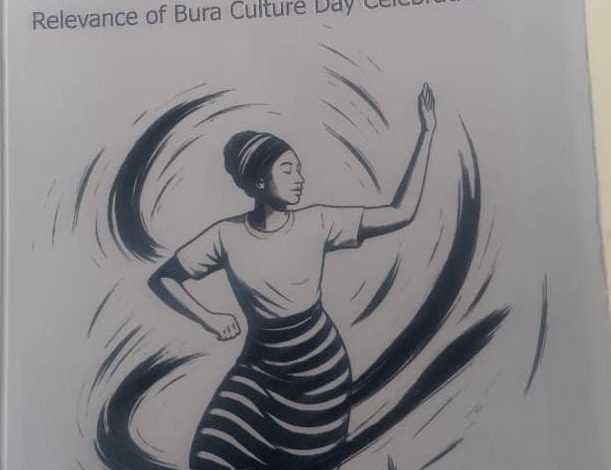
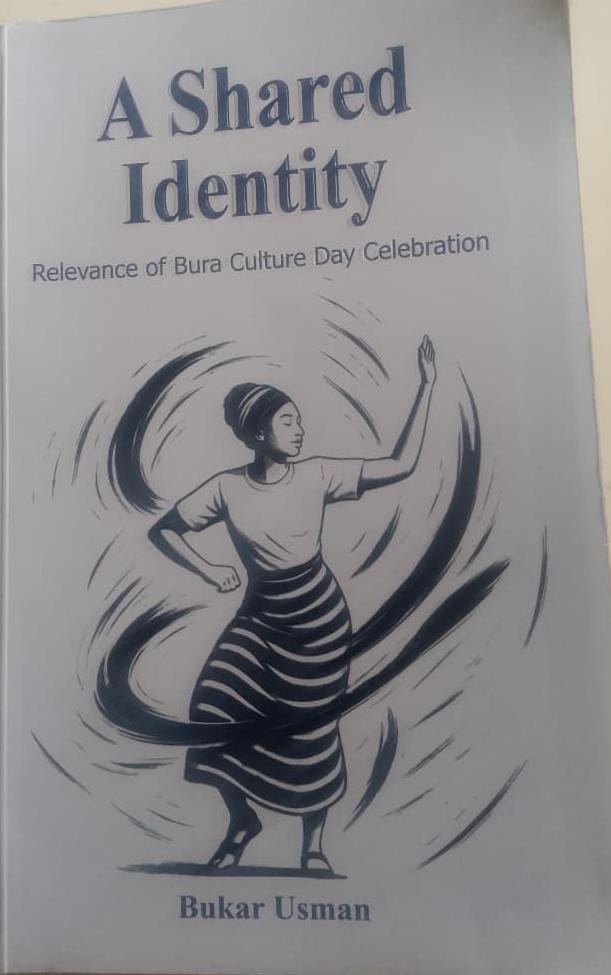
In A Shared Identity: Relevance of Bura Culture Day Celebration (Klamidas Communications Ltd, Abuja; 2026), Dr. Bukar Usman does not only play up the cultural practices of his Bura people, he uses it as a touchstone to highlight the endangered language issue facing many minor language groups in Nigeria and across the world. Usman, a retired federal permanent secretary, who has written extensively about his Bura and Biu Emirate people in his multi-faceted writing that spans memoir, policy, history, security, culture and folk narratives, takes every opportunity to amplify with pride aspects of his people to the world to celebrate. In each of his writings, there’s something for everybody to take away to make better his own part of the country.
Although A Shared Identity is an affirmation of his Bura language-speaking people of Biu, it has resonance that cuts across many ethnic nationalities and the need for them to celebrate the culture and traditions they inherited from their ancestors, as identity markers in a world rapidly evolving. He affirms that it is only by celebrating such identity markers that they distinguish themselves from the rest of the world. He also asserts that preserving the language of any group, with minor or major populations, is imperative for the significant knowledge and identity languages carry.
Usman traces a brief history of Biu Emirate and the language groups that make it up. Among them are his own Babur/Bura people, who are widely dispersed in the Biu Emirate landscape of Borno State. Usman also plays up the Babur and Bura as one people, whose homogenuity of culture and language is unmistakable. He quotes Diggira, a foremost educationist who said, “those who were born in a predominantly Babur area would claim to be Babur tribe while those born in a predominantly Bura area would say they are Bura,” with Usman adding, “He (Diggira) said that although some languages of Biu Kingdom are similar to Bura, only Bura and Babur have certain words in common – and cited “aburwa”, meaning “listen”, as an example.” Like most language groups, Babur/Bura people are widely dispersed across Nigeria, especially states in the north, with the core clan numbering over 100 Babur/Bura communities in Biu Kingdom alone.
Having given a historical overview of Biu and his Babur/Bura people, Usman, in Chapter 2, turns his attention to the subject of his new book: Bura Culture Day celebration, its origin and scope. Before the modern-day Bura Culture Day celebration, Bura-Pabir Festival had been the dominant culture festival of Bura people that pre-dated colonial times. According to Usman, “Bura-Pabir Festival takes place during the harvest season when staple crops, especially maize and guinea corn, are harvested amidst drumming and singing.” While not so dominant, it’s still held in “Hawul local government area, as an annual customary event.”
However, modern Bura Culture Day celebration started in 2004 as Marama Day – “a local culture festival initiated by some elites from Marama, who saw the need to foster community togetherness and promote their culture and traditions. That first extensive celebration of Bura cultural heritage took place in Marama. Subsequently, the annual event became known as Bura Culture Day… Held annually on New Year Day, Bura Culture Day has become Bura people’s way of stepping into the New Year with a rich and deep sense of their cultural identity, worth and oneness. The sense of unity is reinforced by the fact that the Marama event is attended by all Bura elites and indigenes from diverse geographical locations irrespective of their religious or political leanings. The rich and fascinating tapestry of Bura culture displayed on Marama Day has made the event an annual tourist attraction that attracts not only Bura indigenes and their neighbours, but visitors from outside Nigeria.”
Bura Culture Day celebration has caught on so much that Borno State Government frequently attends and makes contributions to its continuity and effectiveness. This is particularly encouraging, as most state governments do not care about such celebrations. While both men and women take part in organising Bura Culture Day, 2014 became a turning point after the formation of Bura Women Development Association (BUWDA) more or less took over its organisation and even exporting it to places outside of Borno State where Bura people reside and make a living. And as Usman notes, “Since there is need to revive Bura cultural consciousness in these and other areas, BUWDA thought of and executed the idea of holding Bura Culture Day, as an annual event, in other parts of Nigeria, where it has vibrant branches and membership, more so as many may not be chanced to travel home during festive periods.”
Usman describes Bura Culture Day 2025 as a memorable one, with important dignitaries in attendance and forms the basis of this book, A Shared Identity. Sadly, barely two weeks after successfully supervising the 2025 event, BUWDA’s president Mrs. Mary Madu Hamman, passed away at 64, with many hailing “her as someone who was a goal-getter and kind to all and sundry. Organisers of Bura Culture Day often displayed our material artefacts as tangible evidence of our people’s knowledge, skill, and creativity… We see such items on display during Bura Culture Day celebrations.”
The events of the day enabled Bura people to display their material artefacts for the admiration of attendees. These include cuisine, handcrafts, farm produce, traditional textiles and many more. As Usman argues, there is need to revive and continue to use some of the material artefacts of Bura people that “include our arts and craft, hand-made cooking utensils, hand-woven clothing materials, local musical instruments, traditional hairstyles and ornaments of beauty, traditional architecture, customary cuisines and hand-made storage facilities, among others.”
A Shared Identity allows Usman to return to a familiar subject – language endangerment. Realising that Bura is a minor language on account of its relatively small population compared to Kanuri, for instance, Usman is concerned that it should not be allowed to go from ‘endangered’ tag to one of ‘extinct’. This is a subject he is passionate about. Chapter 6 of this book lays out signals of an endangered language and what must be done to halt it sliding into extinction. Usman dismisses as lame those who blame major languages for the extinction woes facing their minor languages, arguing that preserving minor languages takes concerted efforts by all its speakers and their attitude to it. Usman then sues for language diversity not isolation, stating that both minor and major languages can co-exist without one edging out the other, adding, “No language is superior to another, but some languages can reach more people than others.”
“Bura-Pabir language, according to Ethnologue, and as the reality on the ground (whereby many young people can no longer speak it) confirms, is endangered. When a language is classified as “Endangered”, the next level downwards is “Extinct” (i.e., no longer exists). No language rings a bell before it becomes extinct. If you are expecting that to happen, you are simply deciding to do nothing about your disappearing mother tongue. Languages make no announcements when they are dying but they leave clues which any interested person can understand by noting the diminishing number of old speakers and the fewer number of new (young) speakers.”
Usman makes a list of eight Nigerian languages that have disappeared altogether across the country, with many on the queue to being extinct in no distant future if nothing is done by those still speaking those languages. He then lists four ways to stem the tide of language disappearance by its native speakers if they feel so challenged to preserve their mother tongues. Usman advocates that old people should actively speak the language to children. The mother is important in this regard, saying it’s why it’s called mother tongue. Fathers are not exempt from this but mothers play more active role right from when they are pregnant by speaking to their child in the womb. He also cites the language of immediate community policy, arguing that instructions in the first six years of a child’s primary school should be in a child’s mother tongue.
Providing avenues whereby young people are made to speak a mother tongue is key. Young people hold the key to the longevity of any language. Once they cannot speak a language, it dies in no distant future. Community leaders must device means to make the language cool for young people to be interested in speaking it. Usman also advocates setting up a ‘Bura-Pabir Language Promotion Committee’, “as a non-governmental organisation dedicated to the preservation and promotion of the language. This is important, especially now that pressure needs to be mounted on appropriate authorities to ensure that they quickly implement in all affected primary schools the teaching and learning of Bura-Pabir language, in line with the new National Language Policy of Nigeria. The committee may also be involved in coordinating programmes and activities aimed at advancing Bura-Pabir language and culture.”
Usman strongly canvases the need for the sustenance of Bura Culture Day for its ability to stem the declining use of Bura language among most young Bura people. He argues that “each event creates a suitable environment during which signs of negative attitude, such as language shift, can be addressed during a brief conference designed as part of the event’s official programme. Although the decline of Bura language, especially among the youth, calls for a more sustained effort, including Bura language revival as part of Bura Day events would arouse the sympathy and support of more Bura people for the revitalisation of the language. The Babur/Bura language is in a poor state of health today.”
Finally, Usman suggests ways that Bura Culture Day can be made better. He canvases that activities should be conducted in Bura-Pabir language, including speeches on the day, and where they are written in English, they should be translated in Bura-Pabir. He suggests that farming and food production should be encouraged among Bura people by instituting annual awards at the event, including best performing artist groups, with event sponsors also being sought to ease organisational expenses.