‘Moonbeam’: Revisiting the culture of anthology in Nigerian literature

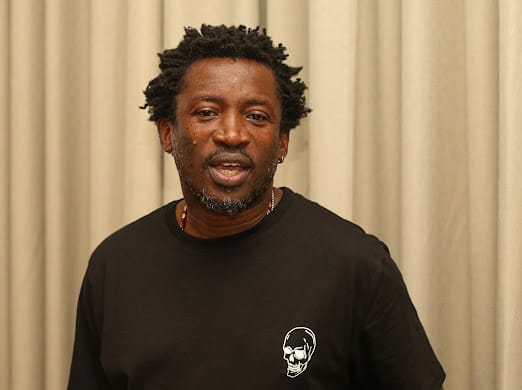
By Paul Liam
A few years ago, I was in conversation with Odoh Diego Okenyodo, a former literary journalist and poet who has since left the sphere of literary journalism and established himself as a development communication and media expert, about the dying culture of literary anthologies in Nigerian literature. Our conversation was triggered by my recollection of the vital role anthologies play in fostering the appropriation of the collective vision and ideologies of literary generations, which are often scattered across individual publications. This perception was induced by the deeply rooted culture of anthologies in the broader context of African literature, exemplified by renowned collections like West African Verse: An Anthology (1967), edited by Donatus I. Nwoga, and Poems of Black Africa (1975), edited by Wole Soyinka—two of the most outstanding anthologies that have shaped the discourse and understanding of African literature, particularly African poetry, for decades.
Through these anthologies, readers were introduced to the soul and foundation of modern African literary consciousness, as well as the leitmotifs that foreground the institutionalisation of what is today regarded as the literary vision of African literature, marked by the problematisation of the crisis of decoloniality and the postmodern conundrum of Africa’s social realities.
Similarly, my mind was cast to equally famous anthologies such as Voices from the Fringe: An ANA Anthology (1988), edited by Harry Garuba, and Camouflage: Best Contemporary Writing from Nigeria (2006; revised edition 2021), edited by Nduka Otiono and Odoh Diego Okenyodo. Like the earlier anthologies, these collections offer an insightful basis for appraising the evolution of African literature within the context of Nigerian writers’ experiences. In Voices from the Fringe, we encounter the formation of the protest aesthetics that characterised the firmament of the third generation of Nigerian writers. In Camouflage, we witness a shift in focus towards existential social upheavals and the individualised quest for agency. Each anthology assembles the leading active voices of the generation it represents. There have been other anthologies across the length and breadth of Nigeria; however, these remain among the strongest collections of literary voices produced over the decades.
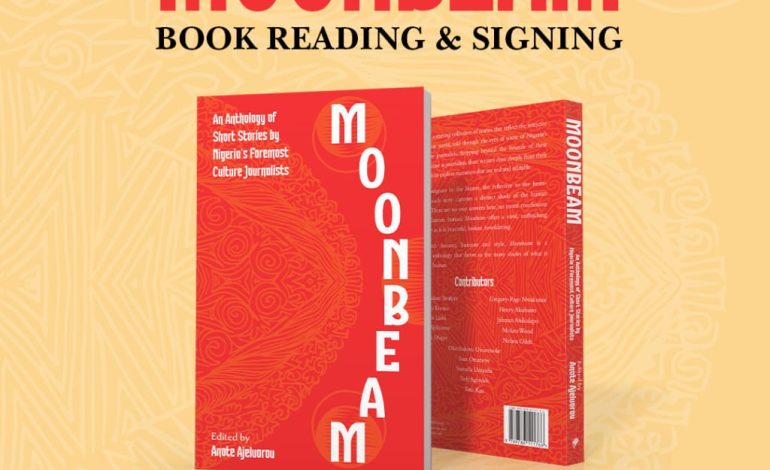
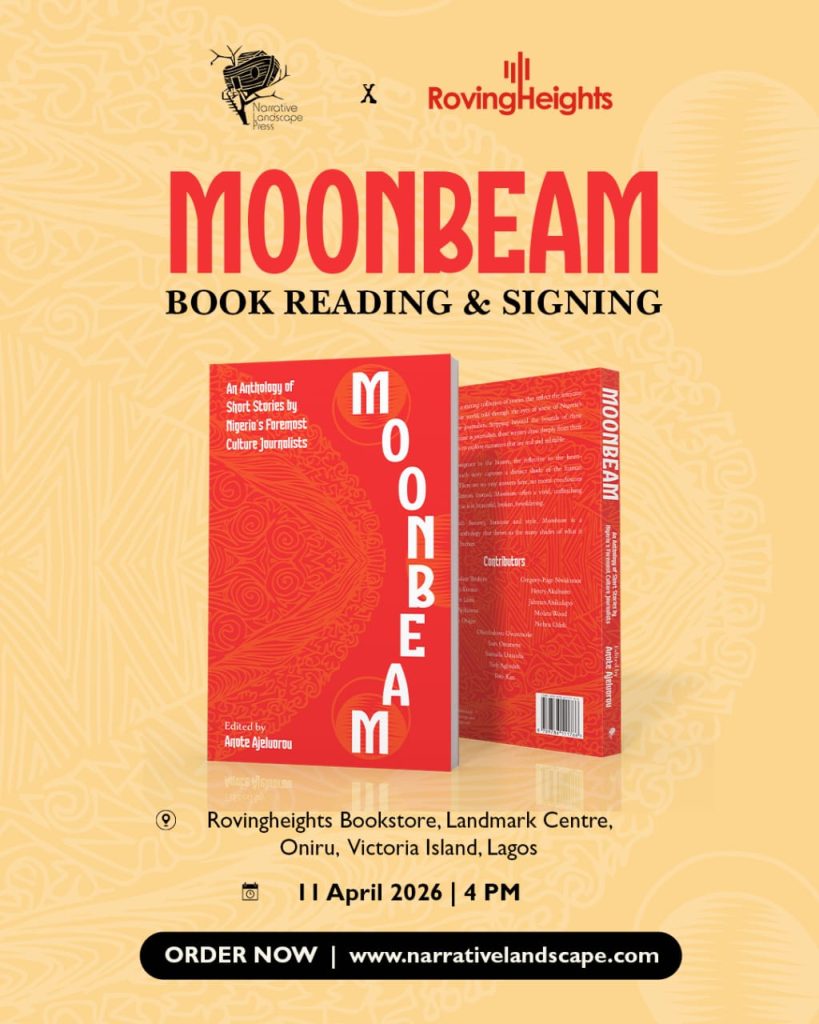
The foregoing premise highlights the strong tradition of anthologies in Nigerian and African literature. Although there appears to have been a decline in anthology publication over the past twenty years, with later anthologies less successful than earlier ones, this narrative has shifted with the release of the latest short story anthology by Nigeria’s leading cultural journalists: Moonbeam: An Anthology by Nigeria’s Foremost Culture Journalists (2025), published by Narrative Landscape and edited by Anote Ajeluorou.
This collection features Nigeria’s top cultural journalists and critics whose careers have focused for decades on documenting and exploring the development of Nigeria’s literary and cultural sectors, while also giving voice to often-overlooked members of society—writers. While literary journalists and critics are sometimes not regarded as highly skilled creative writers, this anthology demonstrates that many are among Nigeria’s most talented storytellers. The collection showcases some of the finest writers, most of whom have established themselves over the years as exceptional wordsmiths.
The 224-page anthology features the works of notable culture journalists, including Abubakar Adam Ibrahim, Adeniyi Kunnu, Akeem Lasisi, Anote Ajeluorou, Evelyn Osagie, Okechukwu Uwaezuoke, Sam Omatseye, Umaisha Isah Sumaila, Terh Agbedeh, Toni Kan, Gregory-Page Nwakunor, Henry Akubuiro, Jahman Anikulapo, Molarad Wood, and Nehru Odeh. The anthology contains fifteen short stories with varied themes and artistic nuances, ranging from the mundane to the profound, indicating the diverse depths of artistry among the contributors. Each story possesses its own uniqueness, offering a mosaic of colours and flavours. However, the shared contemporaneity of the stories is unmistakable, as each reflects one of the many contradictions of life and the social realities that govern human existence—death, love, tradition, patriarchy, longing, insecurity, poverty, lust, hypocrisy, among others. Each story evokes something familiar in us, something we have felt or grown accustomed to living with in Nigeria. It portrays our many truths and lies as a society.
For example, in “Boda Alani and the Hawks: Diary of a Teen” by Anikulapo, we encounter the consequences of stereotypes reinforced by historical imbalances and misrepresentation. The story is narrated by a teenage protagonist conflicted by the expulsion of Ghanaians from Nigeria in the 1970s as a result of the government’s “Ghana Must Go” policy, which saw the mass exodus of Ghanaians and the confiscation of their properties. In the rush, the teenager questions the justification for such cruelty, especially because some of those affected were Ghanaians he knew personally, including his teachers and neighbours. The narrator’s innocent bewilderment is instructive:
I watched the vultures buying up everything these people had. My neighbours, all of whom I had always respected and whom my unlettered mum insisted I called masters because they had big, big books.
The narrator is astounded by Boda Alani’s heartlessness as a leading confiscator of Ghanaian assets. Years later, now an adult, he faces a similar rejection from Ghanaians when he chooses to marry a Ghanaian woman—a promise he had made in childhood as recompense for what he considered an injustice. He is rejected when his lover’s family bluntly informs him that they cannot allow their daughter to marry a Nigerian because Nigerians are known for using women for money rituals. His would-be in-laws refer to Nollywood films in which women are used for blood money.
Similarly, in Abidjan, he is rejected and treated as an outcast for being Nigerian. Nobody accepts his naira notes or speaks to him, as it is considered socially ambitious to be seen associating with a Nigerian. He meets Felicita, who initially attempts to help him but abandons him for fear of ostracisation. Set between Agege (Lagos), Kumasi (Ghana), and Abidjan (Ivory Coast), the story highlights the implications of stereotypes and the dangers of a single story. Fast forward to 2025, when Ghanaians rose against Nigerians demanding that they leave their country, accusing them of criminality—echoing the accusations Nigerians once levelled against Ghanaians. The story re-echoes the maxim that what goes around comes around. Though instructive, its prosaic style and the unnamed protagonist slightly diminish the intensity of the narration. Perhaps this oversight may be excused, since the author explains that it is an excerpt from his autobiography in progress.
In “Communal Wife” by the editor, Ajeluorou, the narrator explores a harsh patriarchal tradition in some African cultures that forces a female child to bear heirs for her father in the absence of a male child. Edeki finds herself in this predicament after the death of her wealthy father, when she is compelled to sleep with different men in order to produce a son who will perpetuate her father’s lineage. Without a choice, she and her helpless mother comply with this dehumanising tradition. As the only female child, she is blamed for her father’s lack of a male heir. After giving birth to a son, she runs away from the village to seek a better life and eventually relocates her mother and child as well. She later becomes a successful woman upon whom the village depends for support—including those who squandered her father’s wealth and rendered her and her mother destitute.
Edeki succeeds in building a life outside the patriarchal dictates of her village, becoming a symbol of hope and strength to other women. She shares her story at the behest of Edero, coordinator of the Women Development Centre, which supports women who have experienced violence. Beyond the indignity associated with such traditions, the author situates the practice within the complicated dualities that define many women in traditional societies. This is corroborated by Edeki’s admission:
I could have opted out, but I decided to abide by traditional obligations… It sounds crazy but it seemed like an exciting prospect: for a woman to remain a woman and act as a man, too.
Her words reveal both contradiction and complexity. Ajeluorou’s story is striking and rooted in documented cultural practice. However, it occasionally risks sounding like advocacy rather than fiction because of its layered commentaries and fluid narrative structure.
“Selfie” by Kan is a powerful rendition of a family’s struggle to come to terms with the loss of their only daughter, whose mysterious death at school leaves lingering doubt. It is both a tragic account of loss and a meditation on parental guilt. Teni, a final-year university student with a bright future, dies in an accident while taking selfies with her friend, Steph. Her father later repairs her broken phone and discovers a video clip documenting the incident. It becomes clear that Steph may have been responsible.
Kan’s story is among the most artistically ingenious in the collection. It blends Gen Z idiom with formal narration and situates its conflict within the digital age. It explores the consequences of a selfie-obsessed culture and the fragile boundaries of friendship. The story ends in suspense, leaving readers to question whether Steph’s push was accidental or deliberate. What lingers is the fine language, quality suspense, and deft characterisation.
As already established, Moonbeam is a remarkable collection of short stories. It serves the important purpose of gathering in one volume some of Nigeria’s finest contemporary voices. It is a worthwhile contribution to Nigerian literature, especially to the culture of anthologies, which is gradually waning. We need more anthologies to showcase the diversity of Nigeria’s creative enterprise. I wholeheartedly recommend this anthology to lovers of quality short fiction.
(Today, Saturday, April 11, 2026 @4.00pm at Rovingheights Bookstore at Landmark Place, Oniru, Victoria Island, Lagos, contributors will engage in reading and conversations with book promoter and moderator, Faith Nwani, to walk audience through the intricacies of Moonbeam stories. Lovers of short stories and all things creative fiction are invited to this special literary feast.)
* Liam is a poet and culture writer based in Abuja