Theatre traditions in the age of digital media

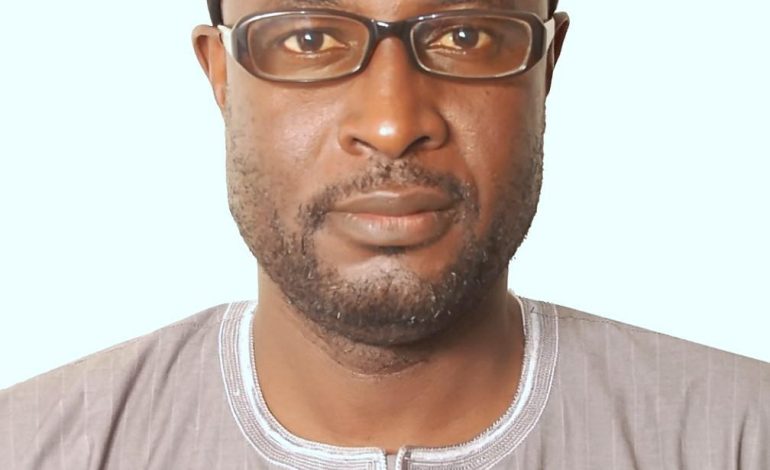
By Abubakar Aliyu Liman
IT is important to note that traditional theatre takes different forms in the cities and the villages, hence when we bring in the concept of the digital age, how can rural and marginalized communities participate in digital theatre revival without being exploited?
In your view, would theatre in the digital age lose its oral, ideological, and participatory essence in favor of what is today’s Euro-American visual spectacle shaped by western aesthetics?
First, we need to come to terms with the differences in cultural environments between rural and urban spaces.
The rural community is run on the basis of traditional socio-cultural logic. This is because the rural environment is stubbornly tradition bound in forms, texts, cultural practice and performance. As is the case with all indigenous oral cultures across the world, the concern is mainly to conserve and preserve inherited traditions of the people. Culture in such an environment is in its form and content viewed as the collective heritage of the people. Culture from this perspective, especially in practice, belongs to the entire community. It is an art form that collectively belongs to the people. Hence, the ascription of the notion of collective heritage to most tradition bound theatrical performance. The production line of traditional theatre, for instance, involves the participation of some members or even the entire community.
Again, in practice every member of the community is expected to actively participate in various theatrical performance, such as folk performance in the village square; songs and dances, local festivals, market square comedy, pantomime, muppet shows, mimicry, etc. This is because such a performance is owned by the entire members of the community. Theatre is in this sense participatory, a popular culture in its own right. Theatrical performance is therefore collectively created, owned and authored by the community for both edification and entertainment purposes. Individual authorship or ownership of specialized performance is rare, but is present even if not well pronounced. Until recently, it is indeed not a regular occurrence in traditional settings.
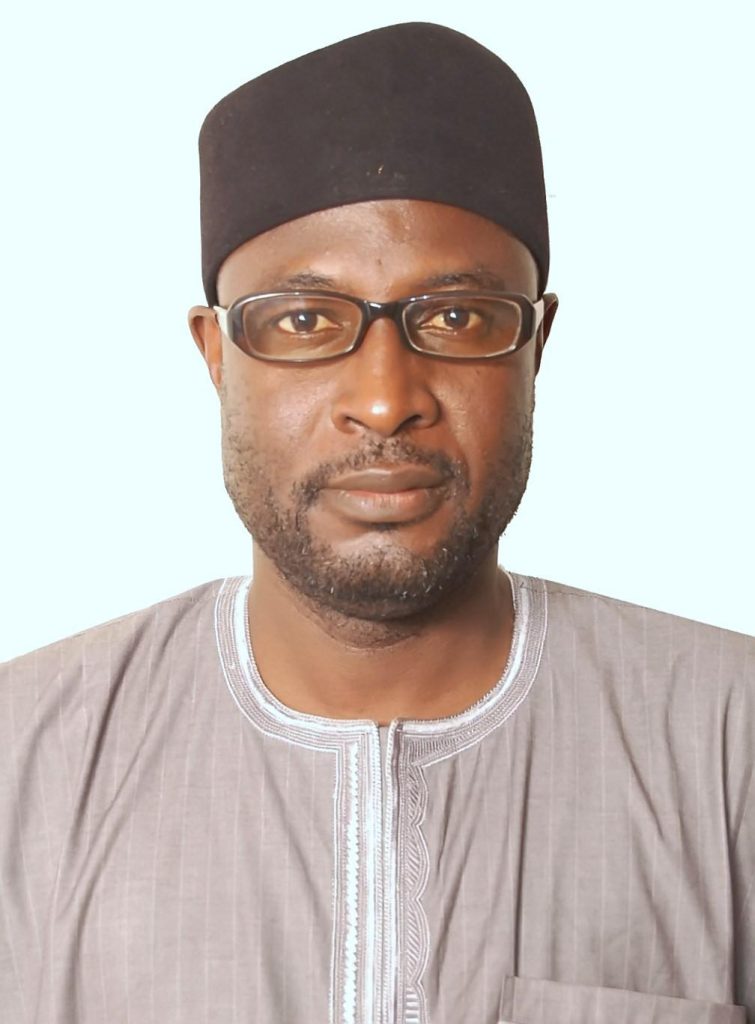
Prof. Abubakar Liman
Exclusive ritual performance is usually characterized by restrictive taboos and limits on public participation. To some extent, there is also some degree of gender exclusion in some communities. But in the case of popular community based theatrical performance no such restrictions are placed on participants. Such restrictions are not welcome. They are indeed not applied in popular performance situations in which every community member is expected to participate.
What about theatre in modern urban space? The urban location is the abode of cultural modernity, science and technology. That is to say, lived experience in a modern society is characterized more by the logic of individuality, avariciousness and materialism. Every member of urban community is defined by the prescriptions of dominant global liberal ethos, bequeathed to Africa by colonialism and transnational capitalist system of social ordering, structures, institutions and cultural values. However, in postcolonial African context, the driving force of human activity is paradoxically the desire by individual rooted in their African cultural essence. Culture is a mixed bag of influences; it is a hotch-potch of traditional and modern forms and contents through the phenomenon of cultural hybridity as dictated by postcolonial cultural realities.
Every individual aspires to be self-sufficient in the pursuit of legitimate means of livelihood under the dominant exploitative system of capitalism. Even though extended family structures and values are persistent, the veneer of modernity has been completely abandoned in the face of miserable living conditions of isolated and individuated nuclear family settings in the sprawling urban spaces of postcolonial African townships and cityscapes. In such an atmosphere, nobody is the other person’s brother’s keeper as is found in most rural and semi-urban locations. Community spirit is also consigned to the background in densely populated urban settlements.
However, in a modern urban setting, cultural production is mediated by media and communication technology. In modern society, cultural and artistic productions are a function of technological mediation of human experience. Every aspect of modern existence is somehow smothered by technology. This is how mechanical production of goods and services replaced manual labor and old-fashioned handicraft and traditional arts. In this context, cultural and artistic production have not been spared from the influence of technology. Technological mediation of artistic and cultural production, such as theatrical performance under discussion, can be understood by merely looking at the ways in which traditional African oral culture is emasculated, and in effect overwhelmingly substituted by scientific rationale and technological ascendency that are everywhere mediating modern culture.
Under the omnipresent modern culture, traditional cultural forms and texts have gradually lost their essence. Culture is no longer treated as the collective heritage of the people. Both traditional and modern cultural forms and contents have eventually become appropriated by capitalism. Cultural production has brazenly become commodified and commercialized for individual consumption and entertainment, and a means of profit making by the producers. As modernity gains ground, dramatic performance on radio, television and cinema has completely displaced traditional tales by moonlight, village square burlesque and rural market theatrical performance.
Despite concerted efforts to preserve African tangible and intangible cultures, modern culture is gradually creeping into rural communities where mass communication technological devices such as radio, television, and television viewing centers, powered by petrol generators, solar panels and inverters, have become very popular as sources of public enlightenment and entertainment. In those television viewing hubs, individuals have been made sit down in symmetrical sitting arrangements on benches and chairs to watch electronically mediated performance for purely entertainment purposes. Now individuals are left with no choice but to sit back and passively view artistic and theatrical performance on television screen, overhead projectors and via other electronic media devices. In this regard, live performance is also in retreat in rural and urban communities.
Now to shift focus slightly to a new reality in which digital technology is everywhere displacing or replacing analogue systems. Of course, this new reality has ushered in the digital age. The computer and digital communication devices instantly processed information dissemination with the speed of light. The computer is indeed the harbinger of digital revolution, which has rapidly opened up enormous potentials and possibilities in all facets of life, especially in the area of knowledge and cultural productions. In other words, digital culture, through its ubiquitous electronic communication devices and gadgets, has since dominated all aspects of human endeavors.
Our major interest is in how disciplines in the humanities and traditional normative systems of cultural production, distribution and consumption, including traditional theatre and other forms of oral performance, have been significantly affected by digital technology in culturally rich postcolonial Nigeria. In the preceding analysis, attempt has been made to sketch how western technology and cultural modernity are jointly making inroads into rural and marginalized communities of Nigeria. In the process, cultural forms, texts and practice are appropriated. The phenomenon of cultural appropriation has become more acute with the spread of cultural globalization, especially under postmodern conditions.
At structural levels, postcolonial African nations have always been victims of imperialist plunder of Africa’s natural resources. Correspondingly, while the economic exploitation is taking place without let or hindrance, there also followed the stealing of Africa’s cultural heritage. Perennially, artifacts and other intangible cultural forms are being smuggled out of the continent. Archeological artifacts and objects of historical significance from monuments found in ancient kingdoms, such as Egypt, Benin and other ancient locations, have always disappeared from their original cultural hubs through the nefarious activities of antique cartels. The name of the game is cultural theft.
The aspect of the question concerning the interplay of traditional theatre and digital resources, there are obvious advantages as well as disadvantages. Everything is subjected to the motion of the universe, the solar systems, the planets, including animate and inanimate creatures in our own planet. As time passes everything changes, such as the atoms that constitute the human body and everything crafted by humans to sustain their existence. But we must realize that nothing is absolute or fixed in life. Every phenomenon in nature or in culture is permanently subject to the laws of change.
Beyond the question of cultural exploitation, as traditional African theatre and digital communication devices come together in the name of digitization or digitalization, there is bound to occur some noticeable changes. Traditional theatre forms are bound to acquire something new or even to experience something new. Traditional performance is also bound to lose some of its essential ingredients. Some scholars of oral culture such as Walter J. Ong, Ruth Finnegan and our own Isidore Okpewho have since observed that when oral forms and texts are technologically mediated, they tend to lose their “authenticity” and “originality. As a matter of fact, they somehow lose their essence in the processes of technological mediatization, transposition and adaptation, especially via electronic media devices.
In fact, this development can be understood as part of the long historical steps towards cultural globalization. In any case, any nation or culture that refuses to consciously create its own space in the great cultural flows of the age of globalization is bound to disappear from the surface of the earth. This is so, because every living culture survives the vicissitudes of time and space only on the diet of borrowing and adaptation or localization from other cultures of the world.
Now, what exactly are the expectations of the second question? First, I don’t see the difference between the first and second questions. Question two has perfectly dovetailed the first question. Can we confidently argue that “theatre in the digital age lose its oral, ideological, and participatory essence in favor of what is today’s Euro-American visual spectacle shaped by western aesthetics?”. As far as I am concerned, the answer is paradoxically yes and no.
First, looking at what happened to various modes of African oral performance and cultural heritage through the avenues of colonial and postcolonial modernity, the dominant forms of print and electronic media, such as the book medium, radio, tape recorder, television and cinema, have encouraged cultural diffusion processes of all aspects of African oral performance, and archival preservation of African oral traditions. The modern media outlets have tremendously helped popularized the rich African theatre traditions by opening them up to the world outside Africa. This is how most of the vibrant African traditional theatre forms attained global prominence as they attract the attention of the world beyond the shores of Africa.
However, under postmodern conditions knowledge economy is privileged over and above any type of factory processed commodity. the digital media reigns supreme as information is considered as the most important value. As argued earlier on, the multimedia smart technologies and digital communication devices have completely revolutionized data processing. Today, it is much easier to use Internet Apps to create special effects for all types of performance.
In a book titled The Fourth Industrial Revolution (2016) by one of the leading elite of the Davos club of globalists, Klaus Schwab, he sketched the realities of the postmodern world. Schwab has not only explained the potential of smart technologies and quantum computing that are coming out of our digital age, he is also able to highlight the implications of hyperrealist character of virtual reality itself, which would eventually facilitate human transition to a synthetic moment where nature is completely de-natured; where machines, high-tech nano chips and particles are implanted into the human body to create the phenomenon of man-machine synthesis. This unfolding hyperreal conditions are undoubtedly the harbinger of a world defined by utopia, posthumanism and transhumanism projects.
From all indications, what is becoming very clear from the postmodern stage where human beings are in a gradual transition mode to cyborg culture is the attempt by those global elite, who have such abiding faith in technological transcendence, to completely displace human agency. This development is everywhere gathering momentum with attendant implications for the very survival of human species.
As things stand today, even the Fifth Industrial Revolution has already been inaugurated. The cyborg realities that are rearing themselves before our eyes have been accentuated now by another form of gargantuan revolution occasioned by Artificial Intelligence (AI). To achieve total deconstruction of humanity, the AI is being deployed to replace all the normative qualities that have so far distinguished human beings from other creatures, including. Ability to reason, creative impulse, free will, ability to make independent choices and to construct knowledge to minister to our human needs and aspirations. The axiom being promoted everywhere in the cyber spaces is that technology can solve all conceivable human problems.
The implications of attempts to freeze human agency, human creativity, reasoning and ability for knowledge construction can be seen in the way in which virtual technologies are summoned to do all that for human beings. As it is, the AI is being engineered to replace us in all forms of creative pursuits, including the writing and intellectual vocation we engage ourselves in as writers.
By way of conclusion, what then is the fate of our vocation as burgeoning writers, authors and theatrical performers (modern and traditional) in a situation where hyperreal technologies like the AI are on rampage. On social media platforms, we are being bombarded with propaganda over the power of technology to replace human creative endeavors. For instance, Artificial Intelligence (AI) and ChatGPT are now deployed for cartoon animation and action movies, especially in the area of special effects. In short, I have observed in a forthcoming book chapter on popular culture in northern Nigeria as follows: “AI and ChatGPT can be used to generate animated videos”, and turn “texts into video contents” (AOA 2024; FAIAG 2024).
In postmodern culture industry, practitioners are everywhere showing keen interest over the need to experiment with digital technology. Film producers and directors are beginning to appropriate high-tech resources for the creation of content and special effects in visual transposition of both oral and written folktales with stunning results. These efforts are showcasing remarkable achievements in quality content creation through the infusion of special effects. Increasingly, there is high degree of realism and precision in digitally processed animated characters, automation of actions and even transformation of static images into animated images. Northern Nigeria is not left out from the initiative to digitally produce a home-grown Janguro comedy series in Hausa, using the AI generated animation technique. Janguro comedy series are very popular especially on the Internet, and on social media platforms like Facebook, TikTok and Instagram. Another AI generated animation skit is Dan Sane A Kasuwa. The future is here!
* Prof. Liman, who teaches at the Department of English and Literary Studies, Faculty of Arts, Ahmadu Bello University Zaria, Kaduna State, presented this paper at Authors’ Hub’s critical literary dialogue