
Theatre traditions for revival through digital media

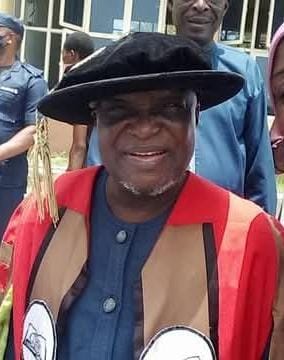
By Olu Obafemi
IT is with great and profound delight that I accept to take part in this all- important discussion. The crucial aspect that we engage in are; a) Reviving Nigerian theatre traditions, b) Nigeria’s theatre deployment of folklore, folk narratives, folk tales, folk songs, etc, c),digital storytelling
Let me begin by recalling the 3rd Annual Olu Obafemi International Colloquium held in September this year. It’s focus is germane to this exercise on the deployment of indigenous knowledge in my theatre as eloquently canvassed by the key speakers: Emeritus Prof. Omofolabo Ajayi Soyinka, Prof. Rasheed Olaoye, Prof. Bamidele, centring their examples on some of my plays like Nights of a Mystical Beast, Ogidi Mandate and Naira Has No Gender. It will benefit our audience to get these presentations as subtext to this discussion, since the thrusts of their discourse is the instrumentation of African indigenous knowledge for social transformation.
I believe that as a playwright, stage director, and theatre scholar, theatre is on stage, alive and unable to die, from the residual to the emergent stages of theatre history and traditions (as I have cognized elsewhere, 1986), resuscitating or reviving theatre traditions is thus a welcome ideal.
Theatre traditions are, among others in the West, the Greek and Roman classics, Stanislavsky’s Realism, the Absurd championed by Beckett, etc: On the Eastern flank, you have the Noh and Kabuki in Japan, India’ s Kathakali and the total theatre aesthetics carved out of the Yoruba Travelling theatres of Nigeria and the Ugandan variety, the Concert Parties of Ghana, and so on.
Essentially, theatre traditions are definitive and distinct performance forms, formats and aesthetics, and techniques, enunciating cultural practices in the performative arts, which, as I have just exemplified, are denoted in Greek tragedies, the models of Shakespeare, the Yoruba Alarinjo and Egungun dramaturgies, storytelling forms, masks, rituals, and community performances all over Africa.
The salient events of theatre traditions are found in the direction on the stage, in the dramatic scripts of the playwright, in acting, the designed set, and audience interaction and participation. The key interest, as proposed by the organizers here, is the preservation of culture, the generation and sustenance of dialogue and social intercourses for artistic evolvement. But as it must be obvious, my choice and focus on a specific theatre tradition must be on the Nigeria theatre tradition and its deployment of Nigerian indigenous knowledge and performance forms.
We must also ginger this discussion in the direction of digital media, which is the kind of content created and distributed in space through digital technology, such as video, audio, and the interactive format. The key instances of these are, a) Film shooting/ streaming through Netflix, YouTube, b) Social Media, which I’m least excited about, such as Tik Tok, Instagram, Reels, digital storytelling etc.
This may be a point of the cautious deployment of AI, its tools of editing, its interactive narratives, and its being globally accessible with its obvious challenges. Nollywood, our greatest cultural ambassador and entry into globalization, has shifted to streaming through, among other instruments, Netflix, IROKO TV. The careers of this tradition are no longer writers but content creators, editors, animation, and digital marketing.
An example of the revival effort is the National Theatre in Lagos named recently after Wole Soyinka. It now hosts theatre festivals such as the Lagos Theatre Festival and showcases indigenous traditional plays in Yoruba, Hausa, Igbo. There are also other groups like Theatre 1969 that embarked on the adaptation of literary classics like Woke Soyinka’s s The Lion and the Jewel and Tunde Kelan’s filmic enterprise which features filming many of Femi Osofisan’s literary creations.
Challenges. These reinventing innovations face critical challenges such as funding, digital shift, nonchalant attitude of the youth and the aesthetic problem of balancing trational and modern forms in the same production fare. There are fascinating examples of Nollywood’s shift to deployment of short films to streaming. Vibrant examples are Living in Bondage: Breaking Free (2019). This is a follow-up of the 1992 classic. Another example is The Delivery Boy, a satirical swipe on the nation’s economy in doldrums.
Deployment of folklore in performance can enunciate the power of folklore to facilitate identity preservation and retrieval from the stranglehold of colonial hegemony. It can also catalyze the process of reshaping modern narratives/stories in Nigeria. Examples to draw from include Afolayan’s Anikulapo (2022), an epic rooted in Yoruba cultural subsoil themed in the exploration of corruptibility of power, infidelity and supernatural fantasy and Mami Wata (2023), again preoccupied with issues of power, modernity and gender in Nigeria, inspired by a water goddess folk narrative, directed by C. J. Obasi.
A possible impact of these recreations is that they provide historical instruction and counter-narrate to colonial expressive rhetorical format. Folklore promotes continuum between the past and the future.
It also aids broader, aiaspora access and reaches global audience. The problem, of course, is the possible loss of indigenous language nuances. There is always the obvious cultural dilution and oversimplification of linguistic symbols. The only alternative is what I think Nollywood is attempting now by giving priority to films with local/indigenous language expression.
There is also the knotty issue of piracy and its negative impact on intellectual property in spite of the effort of NCC – the Nigerian Copyright Commission – and the collective bargaining associations and societies such as Reproduction Rights Society which I once chaired. There is also the tendency to pander to and pamper foreign audiences through narrative oversimplification to give access to western audiences.
Yes, Nigerian folklore and narratives – myths, legends, folklore, dances – will help shape identity if enabled to shape the modern stage. As is being experienced, digital adaptation leads to loss of oral nuances in the written scripts, in a clime which wishes to preserve oral traditions. Issues of funding challenge must be tackled, the Nigerian government must keep fidelity with its constitution which provides for the Endowment of the Arts, possible grants from UNESCO, Ford Foundation and so on.
Thanks for listening.
* Obafemi, an Emeritus Professor of English, University of Ilorin, Ilorin, presented this paper at Authors Hub’s monthly critical dialogue