
The real treasure of reflections in Bukar Usman’s ‘Looking Back, Looking Forward’

By Khalid Imam
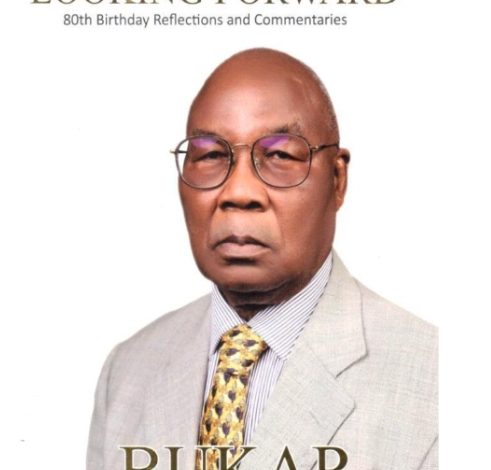
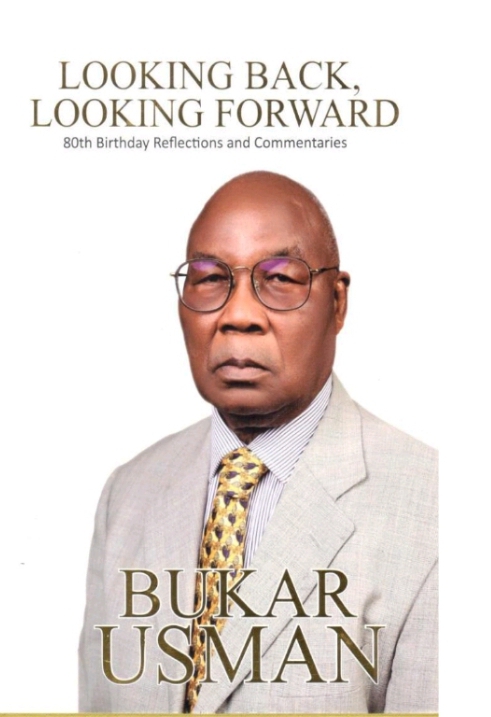
LOOKING Back, Looking Forward: 80th Birthday Reflections and Commentaries (Klamidas Communications Ltd., Abuja; 2026), succinctly penned by Dr. Bukar Usman, contains insightful reflections and evocative ruminations from an octogenarian privileged to travel the personal, public, social, literary, national and international podiums as a doting grandfather, an astute administrator, a seasoned policymaker and a prolific author. Dr. Usman, a true son of Biu Town, an ancient mountainous city inhabited mainly by the Bura/Babur tribe in Borno State, is arguably a well-known public intellectual, an enthusiastic folklorist, and a committed historian who is famed as a grassroots philanthropist and unmatched book patron, among many other roles. An octogenarian widely acknowledged by people as a man with sterling personal traits and fabulous accomplishments, Dr. Usman, a former permanent secretary in the presidency and a brilliant author of dozens of books, turned 80 on December 10, 2022. As an author, instead of throwing a grand birthday party, drawing the who’s who among his wide chain of friends and associates, as is the normal practice by most of the powerful and mighty, he opts to be a different celebrant. Since 2022, he wisely invested both intellect and resources in coming up with this unique compendium that would enrich our understanding of the past, the present, and the future, as well as outlive the ephemerality of mundane birthday feasts many squander millions, partying.
In Looking Back, Looking Forward, Dr. Usman returns with what reads less like his earlier, handsomely crafted autobiographical accounts and more like introspective additions and follow-ups plus testimonials and tributes. This voluminous 973-page hardback spans two main parts containing seven chapters, appendices I–VIII, postscripts in English and Hausa, and a full index. It continues the rich and divergent stories of Dr. Usman’s most recent life, not necessarily narrated in his prior titles: Hatching Hopes; My Literary Journey and My Public Service Journey, as if to offer light into his glowing post-retirement life with some updates. A recipient of multiple awards and recognitions, Dr. Usman takes readers through his wonderful 80-year journey with thoughtful reflections and invigorating commentaries. The book also features straightforward feedbacks from longstanding colleagues, steadfast admirers, contemplative readers, and informed journalists and book reviewers.
As if to draw the reader in from the very first page, Looking Back, Looking Forward opens with a striking graphic portrait bearing the title “About the Author.” In crisp and compelling strokes, it traces the arc of Dr. Usman’s life — naming his birthplace and formative years spent laying a foundation through education, a distinguished and cherished career in public service, and the constellation of accomplishments and awards he has garnered over the course of eight remarkable decades. That apt portrait gives way to the “Note from the Author,” where his unmistakable voice turns personal, reflective and thoughtful. He openly confides that part of his many reasons for compiling this new volume is to “put down something in writing to record some things about my life over the past eight decades, and record my view of the world — the environment of my past, present and, by the grace of God, the future.” Beyond this, the book also gathers the dozens of warm felicitation messages sent to the author by well-wishers, generously preserving their goodwill between the book’s commemorative pages. Then, the “Publisher’s Note” steps in to frame the work, boldly stating the author’s three major literary goals that anchor his entire literary undertaking since 2005, the year he first published a set of his thrilling tales rooted in his Bura culture in English.
In Chapter 1, the author dwells quite briefly, if not ostensibly, on his “Biodata and Early Leadership Lessons,” clearly pointing out that when he served as Head-boy between 1962 and 1963 at the Provincial Secondary School (now known as Borno College), he was made to understand that schooling provides fertile ground for feeding learners with knowledge and life skills, especially leadership lessons, by exposing them early in life to appreciate that flouting school rules may attract consequences. The first lesson Dr. Usman learnt about leadership is what, citing Razzetti (2021), the author refers to as “Leadership immunity”: that wrong notion held mostly by people holding leadership roles that “rules don’t apply to them.” And to avoid falling into the trap of feeling he is immune from obeying the school rules, a mistake that cost his predecessor his position, the young Bukar learnt that “a leader should not only be an enforcer of rules but also an exemplary observer of such rules” who is also willing to help the led understand that the rules were made for their own collective interests or overall good. Another early leadership skill the author highlights is the one sports taught him as a keen sportsman while in school: that of teamwork. One has to be a team player to be a good leader because teamwork unites people and pushes them to bond, to overcome challenges, and to pursue a common goal or success collectively as one force, especially if the team is given the right motivation and incentives to perform well. Reflecting on the role of incentive in sports while in King’s College, Lagos, the author recalls how the school sports teams were given a huge special table in the dining hall serving them with “a special diet called obrokoto, a Yoruba term that meant fat, ample, or surplus,” to give each player good nourishment so as to compete well in sports. Now reflecting on his days as an athlete back then, the author suggests that to enhance the performance of civil servants, there is an urgent need “to make room for performance-related pay (PRP), a scheme widely used in many public services elsewhere.”
The perceptive author, in Chapters 2 and 3, deepens his introspective ruminations, simultaneously looking back with the clarity of hindsight and looking forward with the urgency of a seasoned policymaker so occupied and concerned with what the pregnant future holds, especially as clouds of uncertainty seem to hold it captive. He dissects his years serving at the highest levels of government, representing the federal authority across diverse postings, to extract hard-won insights about power, governance, security and responsibility. Turning his gaze to Nigeria’s protracted security challenges, he argues with conviction that the absence of “local knowledge” stands as one of the most crippling root causes. This vacuum, he contends, blinds security personnel on the ground and, by default, emboldens criminal networks to thrive in the shadows. As a remedy, the author makes a forceful case for Nigeria to re-introduce local policing. In his words, “there is no substitute for the establishment of a local security institution whose personnel could interact freely with the community as well as possess local knowledge of the nooks and corners of their environment.” For him, security without closeness with the terrain or locality leaves much to be desired.
From the national to the global, Dr. Usman widens the lens of his reflective interventions. With a policymaker’s precision, he reflects on the fragile state of the international system, critically dissecting the roles of the African Union (AU), United Nations (UN), and security alliances like North Atlantic Treaty Organization (NATO). His assessment is unsparing. He seems to stress that in a world where powerful nations increasingly behave like untamed bullies, multilateral bodies are being tested, and the smaller states must navigate carefully to preserve their sovereignty. Today, even as the UN and other international bodies appear increasingly helpless, he insists they still have a vital role to play. They must prioritize, above all else, the pursuit of global peace over the corrosive patterns of unhealthy competition and the relentless quest for political dominance and economic subjugation that some powerful states are hell-bent on enforcing on weaker nations at all costs.
Part II of the book, subtitled, Birthday Anniversary & Commentaries, comprises four of the seven chapters and swiftly shifts the tone from reflection and policy suggestions to immediate celebration. Chapters 4 and 5, titled, “80th Birthday Anniversary” and “Commentaries and Goodwill Messages,” respectively span pages 22–53. They read like a confluence flooded with heartfelt anniversary messages and a galaxy of congratulations, drawn from the celebrant’s vast array of friends, colleagues, readers, and beneficiaries of his philanthropy and book donations. “Response to Specific Comments” and “Diverse Requests, Acknowledgements and Responses,” which are Chapters 6 and 7, begin on pages 54 and 60 respectively, while the expansive appendices start on page 241.
The appendices alone are a treasure trove, as they hold a myriad of book reviews — some authored by Dr. Usman himself, such as ‘A Review of Boko Haram and Other Security Challenges in Nigeria’ on page 337, and others written about his works by an impressive roster of journalists and literary critics including Khalid Imam, Bashir Yahuza Malumfashi, Henry Akubuiro, Anote Ajeluorou, Yemi Adebisi, Deborah Chinonyerem Uzoma, among others. One particularly fascinating feature is the book’s dialogic structure: reviews, poems, and songs are juxtaposed with a rich array of reader responses and informed comments that the author deliberately preserves. The section also includes numerous media reports, especially on his Nigerian Academy of Letters (NAL) Fellowship, and other moving tributes, notably by Agi Onda, Evelyn Osagie of blessed memory and Oluwashindara Oso, among many well-wishers. Furthermore, readers may find some intimate “Happy Birthday” poems like the one by Abubakar Dauda Muhammad of ANA Yobe thrilling, all dedicated to honouring Dr. Usman. Appendix VC, on page 441, rounds this out with outstanding interviews, praise songs by artists, and curated online links in both Hausa and English — a fitting testament to Dr. Usman’s bicultural influence. The book is laced with full-colour pictures of the author himself, his parents and family, Biu landmarks, and the immediate past and present Emirs from Biu Emirate, the author’s birthplace, as well as other historical sites and artifacts.
Finally, this voluminous new book is, without doubt, a compelling read for anyone seeking to understand how reflection becomes legacy. It unfolds like a cinematic universe, mapping the author’s over eight decades of rich, and consequential life — at once a rigorous case study in public service and a mirror held up to us all. Looking Back, Looking Forward: 80th Birthday Reflections and Commentaries is not nostalgia. It stands as a vital, timely addition to the body of work especially on Nigeria’s socioeconomic development, political and security discourse. I therefore recommend it, unreservedly, to all perceptive readers, scholars, students, researchers and policymakers alike.
* Imam, a Kano-based bilingual author, educator, arts administrator, the President of Kano Literary Space, can be reached via email: khalidimam2002@gmail.com