
SNA hails MTU’s Elizabeth Olukoya Centre for Fine and Applied Arts as ‘landmark investment in arts, artists’

By Otunba Nkang Ini Dan
THE Society of Nigerian Artists (SNA), as well as the Ogun and Lagos State Chapters, has welcomed the commissioning of the Elizabeth Olukoya Centre for Fine and Applied Arts at Mountain Top University (MTU), Ibafo, Ogun State, describing the landmark facility as a significant development for art education and the future of the Nigerian creative industry. The commissioning, held on Monday, 10 August 2026, brought together the university authority, academics, artists, art professionals, parents and other stakeholders in the creative sector. The centre houses the Department of Fine and Applied Arts and provides purpose-built facilities for teaching, studio practice, research, creative production and exhibitions.
For the SNA, however, the significance of the occasion goes beyond the commissioning of another university building. It represents a tangible investment in the training, professional development and future of Nigerian artists.
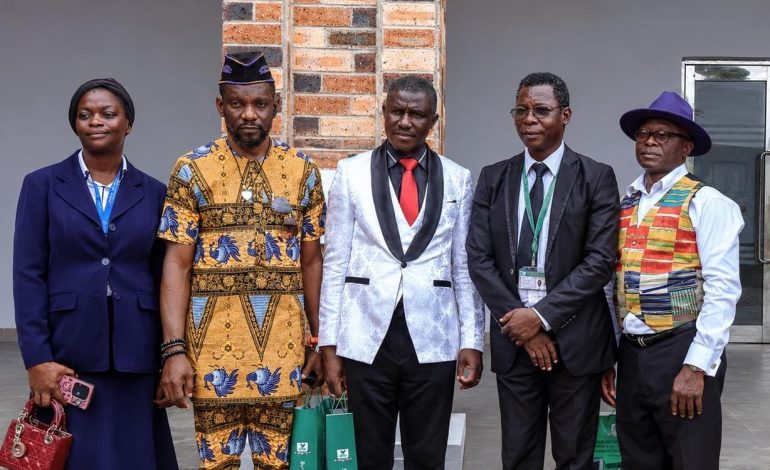
The Society of Nigerian Artists was strongly represented at the ceremony by Otunba Nkang Ini Dan, who is SNA National Vice President South-West Zone, alongside the leadership of the Ogun State Chapter: the former chairman, Mr. Oluwagbemiga Isaac Oladimeji, the current Chairman, Mr. Olufemi Ogunseye, Vice Chairman, Dr. Doyin Labode and Treasurer, Mrs. Kemi Opanusi. The presence of SNA leadership at the commissioning underscores the society’s recognition of the centre as an important development in the Nigerian visual arts ecosystem.
The SNA team joined other distinguished guests, including the Professional Consultant, Tai Solarin University of Education, Professor Abiodun Banjo; Tai Solarin University of Education, Prof. Olatunji Idowu; Dr. Martins Omotunde Adekoya; a former Rector of Redeemed College of Technology and Management (RECTEM), Dr. Stella Awoh; Director of Programmes, Shodex Art Gallery, Lagos, Dr. Peacemaker Efeoghene; Head of Computer Science, Vision University, Ogun State, Dr. Ben Onuoha; Founder and Creative/Managing Director, Fobally Artworld Africa, Lagos, Mrs. Folasade Abiola; MD/CEO, Aletz Communications Limited, Mr. Olatunde Aleilo; Managing Director, Seabreeze Art Studio, Mr. Stanley Finomo, and other artists, academics, parents and creative-industry stakeholders.
Their collective presence reflected the growing convergence between art education, professional practice, creative enterprise and the organised Nigerian art community.
The SNA and the wider Nigerian art community specially commended the Head of Department of Fine and Applied Arts, Mountain Top University, Dr. Kehinde H. Shobukonla, for deliberately extending the invitation to the Society of Nigerian Artists and members of the wider Nigerian art community to participate in the historic occasion. The society considered the gesture significant because it demonstrated a clear understanding that university-based art education must maintain a strong relationship with the professional art community. By inviting SNA leadership and practicing artists to witness the commissioning, Shobukonla created an important platform for professional artists to identify with the achievement, celebrate the students and staff and envision future collaborations around the centre.
The SNA particularly appreciated the fact that the Department’s students are already financial and registered members of the Society of Nigerian Artists. This existing relationship provides a strong foundation for continued interaction between the students and the professional body. The society therefore commended Shobukonla for his inclusive vision, professional networking and commitment to connecting emerging artists with the wider Nigerian art ecosystem.
For decades, the SNA has played an important role in bringing Nigerian artists together, promoting professional development and strengthening the visibility and welfare of practitioners in the visual arts. The Elizabeth Olukoya Centre presents an opportunity to deepen that relationship between professional artists and university-based art education. The hope is that the centre will create a physical and intellectual platform where that relationship can grow. Its studios, specialised workshops, exhibition galleries, lecture halls and conference facilities can facilitate interaction between emerging artists and established professionals.

Dr. Stella Awoh with Mrs. Elizabeth Olukoya (middle) and members of the Society of Nigerian Artists (SNA) as well as members of the university community… in Ibafo, Ogun State
The centre’s specialised facilities include spaces for painting, textile and fashion design, visual communication design, drawing, printing and art history, alongside dedicated 100 and 200-Level studios. Its facilities also extend to purpose-built external workshops for sculpture and pottery. The Sculpture Studio accommodates heavy-duty artistic processes, including welding, carving, construction and assemblage, particularly for large-scale works that require space beyond the main building. The Pottery Studio provides an environment for moulding, glazing, firing, ceramics, glass art and related material experimentation.
For SNA, these facilities represent more than infrastructure. They represent opportunity. They provide young artists with the environment to develop technical competence, experiment with materials, discover their artistic identities and prepare for professional practice.
Of particular importance are the centre’s two art exhibition galleries. The galleries create an avenue through which students can experience an essential dimension of professional artistic practice: presenting their work to an audience. The journey from studio production to public exhibition is central to the development of a professional artist. Through exhibitions, students can learn how to curate, present, document, interpret and communicate their work, skills that complement studio competence and prepare them for participation in the wider art world. The SNA sees enormous potential for its members to engage with the centre through exhibitions, critiques, mentorship programmes, workshops, lectures, artist talks and other professional activities.
The commissioning of the centre presents an opportunity to strengthen the bridge between the university art classroom and the professional art sector. SNA’s involvement can help ensure that students understand that becoming an artist extends beyond acquiring a degree. It involves developing professional networks, understanding the art ecosystem, participating in exhibitions, building sustainable creative practices and contributing to society through art. The centre can therefore become a fertile ground for collaboration between SNA members, academics, students, galleries, curators, designers and other creative-industry stakeholders.
The significance of the Elizabeth Olukoya Centre extends beyond MTU because it is the first private institution in Nigeria with a Department of Fine & Applied Arts. At a time when Nigeria’s creative economy is increasingly recognised as a significant source of cultural influence, employment and entrepreneurship, investment in quality art education is an investment in the nation’s future. For Nigerian artists generally, the centre represents a positive development because every properly trained and professionally connected young artist adds strength to the nation’s visual arts ecosystem. The centre can contribute to producing artists who are not only technically competent but also capable of engaging contemporary issues, technology, culture, entrepreneurship and global creative platforms.
The Society of Nigerian Artists views the commissioning as an invitation to deepen its engagement with emerging artists. With MTU’s Fine and Applied Arts students already registered and financially committed members of SNA, the foundation for this relationship has already been established. The society can build on this foundation through mentorship, professional development, exhibitions, networking, workshops, career guidance and greater interaction between practising artists and students. The presence of SNA representatives at the commissioning was therefore not merely ceremonial. It was a reaffirmation of the society’s commitment to the development of the next generation of Nigerian artists.
The Elizabeth Olukoya Centre for Fine and Applied Arts stands as a powerful symbol of what can happen when institutions invest deliberately in creativity. For Mountain Top University, it is a major academic and infrastructural achievement. For the Department of Fine and Applied Arts, it is a new home for teaching, research, studio practice and exhibition. But for the Society of Nigerian Artists and Nigerian artists generally, it is something even broader: an investment in the future of the profession itself. The SNA therefore celebrates the commissioning of the centre and commends all those whose vision, commitment and resources made it possible.
The society especially acknowledges the Head of the Department of Fine and Applied Arts, Shobukonla, for recognising the importance of professional inclusion and for opening the doors of this historic occasion to SNA and the wider Nigerian art community. As the students of Mountain Top University’s Fine and Applied Arts programme continue their journey from the classroom into the professional world, the Society of Nigerian Artists looks forward to walking alongside them.
Therefore, from the studio to the gallery, from the university to the professional art world and from emerging talent to established practice, the Elizabeth Olukoya Centre has the potential to become an important bridge in the continuing story of Nigerian art.