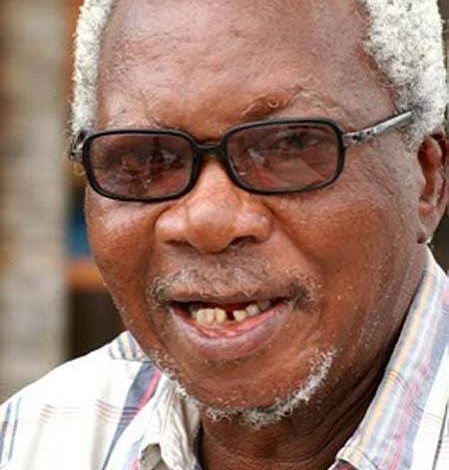
‘Our stories matter’ as Evaristo highlights African voices at Ake Book and Arts Festival 2025

By Godwin Okondo
AT Ake Book and Arts Festival 2025 held last month in Lagos, the 2019 Booker Prize–winning novelist Bernardine Evaristo offered an expansive reflection on her life, craft and creative evolution, tracing the long journey that led to her becoming one of the most influential literary voices of the 21st century. In a wide-ranging conversation with Kenyan culture curator, Angela Wachuku, the author of Girl, Woman, Other discussed the personal histories that shaped her artistic identity, the emotional and formal experiments that define her writing, and the urgency that compelled her to publish her memoir, Manifesto: On Never Giving Up, two years after her Booker Prize win.
Evaristo began by recounting the transformative aftermath of the 2019 Booker Prize, a moment she describes as “revolutionizing” her career after decades of slow but persistent work. Before the prize, she noted, her books typically sold a few thousand copies, and only one — Hello Mum — had reached 70,000 copies, largely because it was sold cheaply to encourage reading among people with limited access to books. In contrast, Girl, Woman, Other has now sold more than 1.5 million copies in English. “I’ve always wanted a big audience for my work,” she said. “And I never had it until I won the Booker, and then suddenly everybody knew me.”
Far from feeling overwhelmed by the sudden shift, Evaristo admits that she relished the visibility. “Some writers say it becomes difficult because people are stopping them in the street, but I actually really enjoyed it… because I wanted to reach as many people as possible.” It was at that height of attention, she said, that she realised the importance of telling her story in her own voice. “When you reach a level of success, you find people put words in your mouth. It’s annoying,” she said. Manifesto, published in 2021, became her way of clarifying the journey that shaped her creativity, her craft and her perseverance over 40 years of finding her voice.
For Evaristo, the memoir was also a necessary intervention in a literary landscape that has historically excluded Black women’s stories. “There aren’t many literary memoirs told from the perspective of Black women,” she explained. “We are just not there in the literature world—enough of us—for publishers to want to publish a memoir.” Her decision to write Manifesto was therefore both personal and symbolic: a reclamation of a story frequently overshadowed by the mainstream’s preference for more familiar narratives.
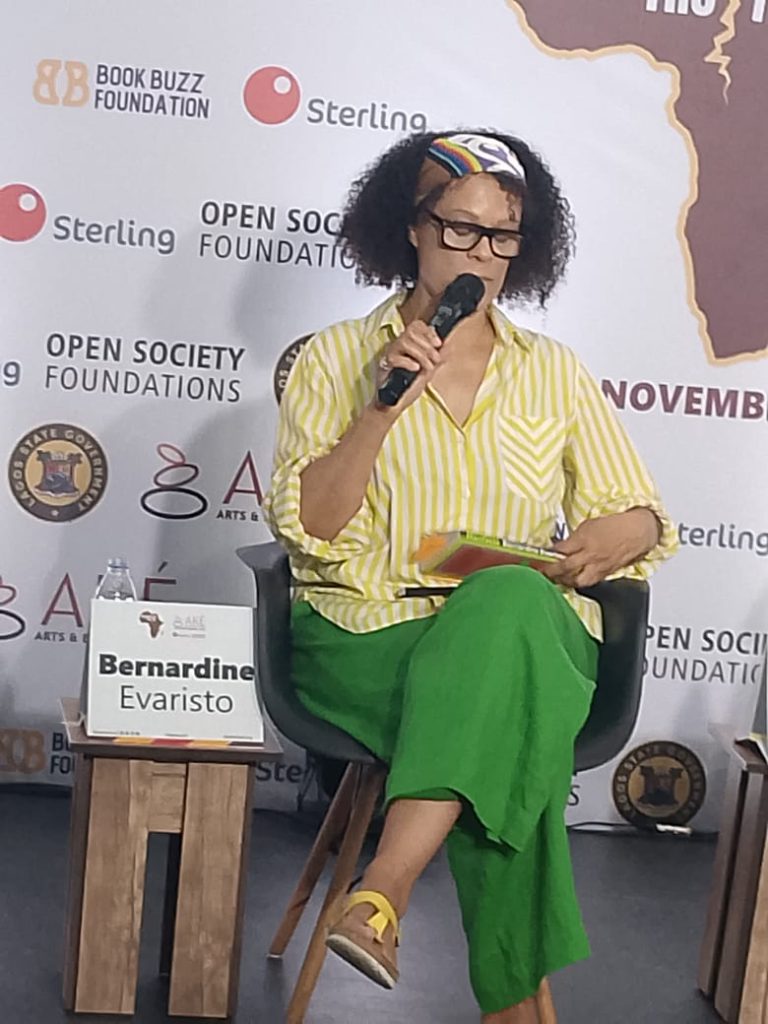
Bernadine Evaristo PHOTOS: ANOTE AJELUOROU
One of the most compelling sections of the conversation centred on her family history, a complex transcontinental story that spans Nigeria, Brazil, Ireland, Germany and Britain. Evaristo described her father’s departure from Nigeria in 1949, when he boarded a ship at Apapa docks and travelled alone to the United Kingdom. His father had died before he was born, his twin sister had passed away, and he left without even telling his mother goodbye — a discovery Evaristo made only years later. He arrived at a time when racism in Britain was not only widespread but legal. “It was very hostile,” she said. “People had been raised on a diet of colonial bigotry… Africa seen as uncivilized, Britain as superior.”
Her parents’ relationship was also shaped by the tensions of the time. Her mother, a young Catholic woman training to be a teacher, faced fierce resistance from her family, who were climbing the British class ladder and did not want her to marry a Nigerian man. Nevertheless, the couple married and went on to raise eight children in 10 years. They lived in a predominantly white area in London during the 1950s, 60s and 70s, where the family faced open racism, hostility, and visits from far-right groups. These experiences, Evaristo said, form part of the foundational narrative she explores in Manifesto.
The conversation later shifted to her artistic beginnings. Evaristo recalled attending drama school at a time when institutions typically admitted no more than one Black student per year. In her cohort, there were five Black women — an anomaly that led them to bond and eventually form a theatre company. They toured the United Kingdom, performing plays based on their experiences as Black women. “There was no work for us,” she said, explaining that this brought out audaciousness in their spirit. “So we created our own (jobs).” That period, she said, was formative in cultivating a creative philosophy rooted in self-determination. “Rather than accept that we are not in (the literature)… we created our own world.”
She also spoke candidly about the role of her personal relationships in shaping her writing, particularly the emotional awareness that came from her romantic experiences in her 20s. She described falling in love as the first time she truly confronted the depth of her emotions. “Before then, I skimmed over my emotions,” she said. “But falling in love showed me how profoundly I could feel.” Some of those relationships were loving; others were painful or toxic, with one partner beginning as her greatest supporter but later tried to prevent her from writing. These experiences, she said, honed her understanding of human psychology and helped her develop the emotionally vibrant characters readers now associate with in her work.
Evaristo also traced the technical evolution of her writing across multiple decades, beginning with poetry, then experimenting with hybrid forms, polyphonic structures and eventually moving toward more traditional prose. Her journey, she said, has been marked by years of trial and error. She recounted spending three years on an early novel before discarding the manuscript entirely and reworking its remains into a hybrid of poetry and prose. Another project required discarding more than 40,000 words, ultimately salvaging only a short story out of it. “The process is always about rewriting,” she said. “Poets do that all the time, but I was rewriting a hundred times.”
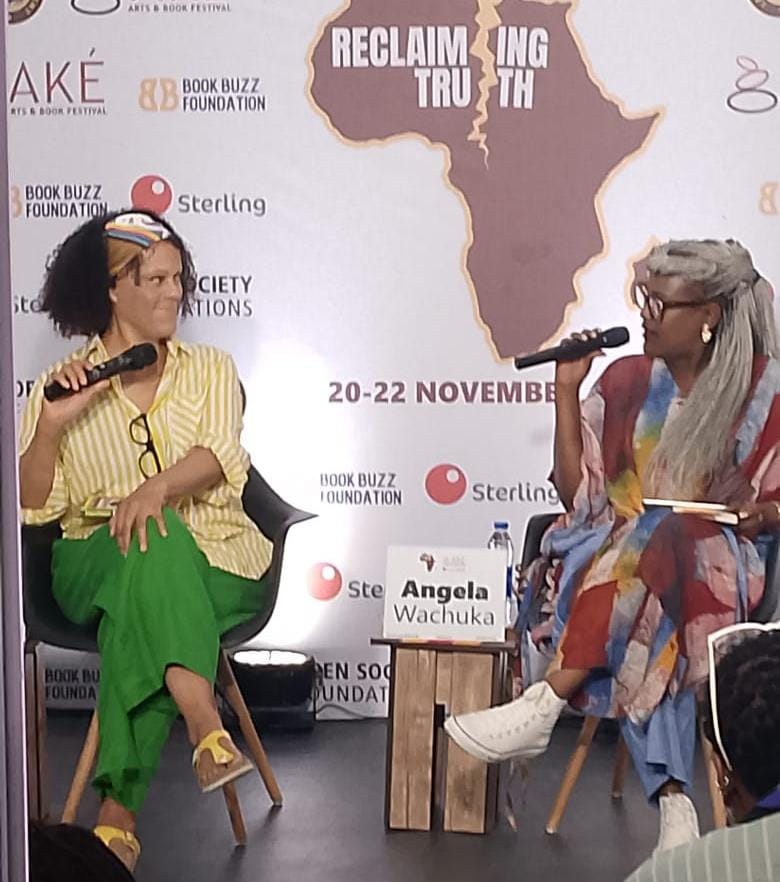
British-Nigeria writer, Bernadine Evaristo (left) and her interviewer, Angela Wachuku at Ake Book and Arts Festival 2025… in Lagos
This would eventually lead to Mr. Loverman, a novel her publisher recognized immediately as a natural direction for her voice. Later, Girl, Woman, Other represented the culmination of decades of experimentation, using flowing, unpunctuated prose to tell the intertwined stories of twelve characters across a century of Black British history. She described form as a tool that must constantly adapt to the needs of the story, whether illuminating ancestral histories in Lara or opening up multiple perspectives in her Booker-winning novel.
Toward the end of the conversation, Evaristo reflected on the challenges Black writers continue to face in publishing, noting that publishers often assume such books will not sell. Digital publishing, she said, has improved access by ensuring books stay available longer. She emphasised the importance of self-promotion, recalling her early years of “doing the hustle” by distributing flyers, sending hundreds of letters, and contacting institutions directly to seek opportunities. “I did not wait for them to come to me,” she said. She encouraged emerging writers to embrace boldness rather than fear, noting that even global stars like Nicole Kidman still proactively campaign for roles. “You have to keep your energy flowing,” she said.
As the discussion concluded, Evaristo was commended for her contributions to expanding the possibilities of Black British writing. From a marginalised young writer determined to create space for her voice to an award-winning author shaping global literary conversations, her story stands as both a testament to persistence and a guidepost for younger writers seeking to define their place in contemporary literature.