Oburumu turns Nigeria’s colonial history into poetry, linking past, present and future

By Godwin Okondo
TARES Oburumu has said his shortlisted collection, Flora’s Love Colony, was conceived as an attempt to revisit Nigeria’s history and interrogate the forces that shaped the country’s identity before, during and after colonial rule. Oburumu, one of the three finalists for the 2026 Nigeria Prize for Literature, said he was particularly struck by the fact that the name “Nigeria” is associated with Flora Shaw, who coined the name, and Lord Lugard, who was central to the 1914 amalgamation.
He said he felt the history deserved to be captured in artistic form and settled on poetry as the appropriate medium. “It started from 1914 when it was amalgamated, but before then, we had the slave trade which is also in Nigerian history,” he said.
Oburumu said Flora’s Love Colony attempts to trace what he considers a missing link between Nigeria’s pre-colonial past, the colonial period and the post-colonial experience. He argued that despite the apparent differences between the three periods, they can be examined through the recurring relationship between the oppressed and those who exercise power over them.
He said the collection consequently seeks to recover aspects of Nigerian identity that he believes have been obscured by colonial influence. “I tried to trace back to that identity and see if we were unique people before the invasion,” he said.
The poet said research became the first stage of his creative process, particularly because he did not have access to a large personal library. His discovery of a slim newspaper publication edited by Flora Shaw provided information that widened his understanding of his subject and became a springboard for the collection.
“That book alone widened my horizon of what I want to write. Inasmuch as it was slim, that information I got widened my imagination, so I think my book came from a little research and a wide imagination,” he said.
Oburumu explained that transforming historical material into poetry required a combination of research, imagination and empathy. He had to place himself imaginatively within the historical circumstances surrounding Flora and Lugard, asking questions about their thoughts and motivations while attempting to reconstruct the circumstances surrounding the naming and amalgamation of Nigeria.
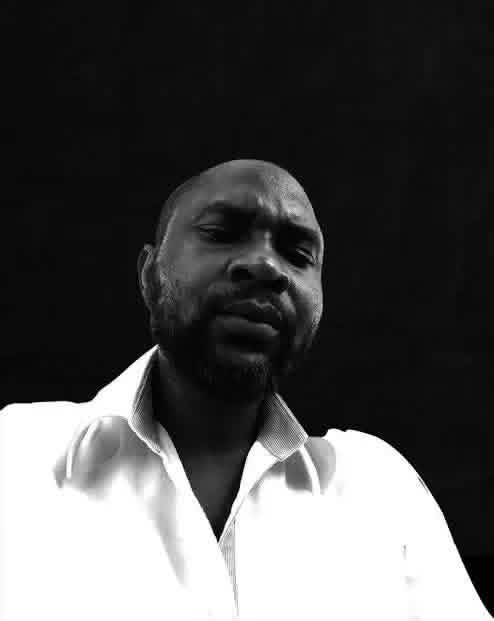
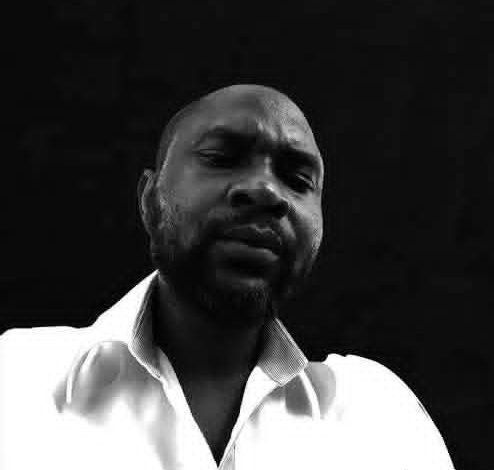
Tares Oburumu
He described the process as a “tortuous movement” from imagination to paper and from history to a collection of poems capable of communicating a broad historical narrative.
For Oburumu, however, the collection is not confined to the past. He said it connects Nigeria’s history with its present and possible future, arguing that the past and present are intertwined in shaping what comes next.
He predicted that the critical questions being raised by Nigerian writers and readers could contribute to what he described as a “mental revolution” in the coming years. He also used the collection to examine what he sees as the continuing influence of British colonialism on contemporary Nigerian society, including language, cultural preferences and the desire of many Nigerians to relocate abroad.
He described the contemporary “japa” phenomenon as a form of neocolonialism and called for what he termed mental emancipation through a renewed engagement with Nigerian origins and identities.
Oburumu said poetry was deliberately chosen because he wanted a form capable of communicating complex historical ideas to readers in an accessible manner. “The challenge was how to put these things in a way that the target audience will understand. That is the reason I chose poetry,” he said.
He also expressed strong reservations about artificial intelligence, saying he prefers to write his words by hand before transferring them to a computer.
According to him, originality and human feeling remain central to creative writing, and he is reluctant to embrace AI because he believes the distinction between human emotion and machine-generated material is important to artistic expression.
Should he receive the USD$100,000 prize, Oburumu said he would devote part of the money to improving access to books for children.
He recalled growing up in difficult circumstances and discovering books such as Treasure Island, Chinua Achebe’s Chike and the River and Charles Dickens’ Oliver Twist at age 14. The experience, he said, drew him into the world of books.
He disclosed that he had already been involved in a project to build and stock a library for children in his village, and indicated that such efforts would remain a priority.