
Nobel Prize in Literature no longer interested in grand narratives?

By Mina A. Gayed
I have noticed that, in recent years, the Nobel Prize in Literature has tended to favour literary experiences that are far from many readers’ expectations. These readers still expect winners to be writers whose works aspire to present grand narratives, establish new literary worlds, chronicle their societies and ages, or try to summarise the world.
But in recent years, the prize has tended to celebrate writers whose literary works are based on very personal human experiences, and also on the small space in which the writer moves, whether in terms of characters, events, places, or the human experiences they address. Maybe without the Nobel Prize, many people would not have paid much attention to these works.
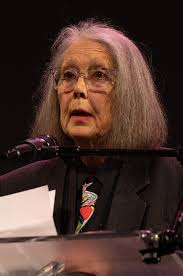
I have read works by Annie Ernaux, Jon Fosse, and Han Kang in recent years. I have not read Anne Carson, the Canadian writer who won the Nobel Prize in Literature this year, 2026, but I have read about her work.
The writing of the French author Annie Ernaux is based on revisiting personal experience, the body, and memory (or the memory of the body) in short books.
The Norwegian writer Jon Fosse’s works take place in worlds dominated by silence, repetition, loneliness, and meditation.
The South Korean writer Han Kang is not very different from them. Maybe we can add poetic language and an existential touch.
As for this year’s winner, Anne Carson, the Swedish Academy praised her for her bold and inventive work, which, through a playful dialogue with the classical tradition, has created new forms for contemporary literature.
Even in terms of length, I asked AI to calculate the average number of pages in a sample of books by these four writers. The results were 126 pages for Annie Ernaux, 176 for Anne Carson, 228 for Han Kang, and around 200 for Jon Fosse, excluding his novel Septology, which has 872 pages in some editions.
When we think about the Nobel Prize in Literature, we still think of writers such as Gabriel García Márquez, Ernest Hemingway, Thomas Mann, Naguib Mahfouz, and Albert Camus. We think of these names as writers who created major literary works and tried to build grand narratives. Through their writing, they tried to express the human condition as a whole, including the changes, conflicts, and wars that humanity has experienced. Some of these writers really succeeded in doing that.
For example, the Nobel Prize citation for Albert Camus reads:
“For his important literary production, which with clear-sighted earnestness illuminates the problems of the human conscience in our times.”
About Jean-Paul Sartre, who refused the prize, the Academy said:
“For his work which, rich in ideas and filled with the spirit of freedom and the quest for truth, has exerted a far-reaching influence on our age.”
And about André Gide:
“For his comprehensive and artistically significant writings, in which human problems and conditions have been presented with a fearless love of truth and keen psychological insight.”
Anne Carson
Of course, I have chosen these examples partly because these writers are famous and partly because of what the Nobel Prize said about them. These examples are not enough to prove that the prize has changed from one literary direction to another. But the citations seem to focus more on how these writers influenced the world and how important their works were to humanity.
They also suggest that, in many cases, the Nobel Prize was given to writers who had already achieved something important in literature and had already left their mark on the world. The prize came as a recognition of what they had achieved.
But in recent years, the announcement of a Nobel Prize winner has often surprised many people around the world. Only after the announcement do many readers begin to discover the writer and read their works. It seems that the Nobel Prize no longer only recognises writers who are already well known around the world. It also helps introduce writers to new readers and makes their works more widely known.
Of course, this subject needs more research and a deeper analysis. These are just some thoughts that come to my mind every year when the Nobel Prize in Literature is announced. I wanted to share this observation and think about what seems to be a new direction.
Personally, in recent years, I have also become more interested in smaller literary works. These works do not try to describe the whole world, but instead try to discover it through one small part of human experience.
And congratulations to Canadian writer Anne Carson!
Gayed is an Egyptian writer based in Canada – article culled from his Facebook wall