Eze, Ifowodo, Oburumu in race for USD$100,000 2026 The Nigeria Prize for Literature

By Editor
THE field has narrowed and the race for The Nigeria Prize for Literature 2026 has reached a decisive stage, as the Advisory Board announces the three shortlisted poetry titles in contention for the prestigious prize. Following the longlist of 11 titles announced in July from the initial pool of 223 submissions, the shortlist of three works has emerged, bringing their authors one step closer to the coveted USD$100,000 prize money.
According to the Advisory Board, “James Ngwu Eze, in Unbind Me Now, uses language that is fluid and aesthetically captivating. This collection decries the sociopolitical dysfunction of the nation and the world at large, interrogating the human condition, and charting a path for redemption. Ogaga Ifowodo, in Why Does God Need A Gun?, depicts religious and political violence in Nigeria, couched in a rich allegorical style. Delivered with the tripartite structure of body, mind and spirit, Ifowodo interrogates those forces that emblematise the world’s challenging ethos. While Tares Oburumu’s Flora’s Love Colony is written in a densely poetic style on Nigeria’s troubled history. It challenges mainstream narrative and is an inspiring socio-historical collection, captured in lucid imagery and evocative language.”
The shortlist marks the culmination of an intensive judging process that has placed the works under close scrutiny for their language, form, originality, craftsmanship and lasting literary value. Commenting further on the shortlist, the Chairperson of the Advisory Board of The Nigeria Prize for Literature, Professor Akachi Adimora-Ezeigbo, said the selection reflects the depth and quality of contemporary Nigerian poetry, noting that arriving at the final three from 223 submissions was a demanding task for the judges. She said the shortlist represents works that have distinguished themselves through their literary output, originality and ability to engage readers and the world around them.
While ruminating on the jury processes that she has sat on for many years days to the unveiling of the shortlist, the creative impulses that drive poets and writers generally and what comes through in this year’s prize, Manager, Corporate Communications and Public Affairs, Anne-Marie Palmer-Ikuku, made a telling post on her Facebook wall that deserves attention.
According to her, “There is a particular kind of silence in the room when judges are deciding which writers’ work will change their life. I have sat in that room. Not as a judge; my job is different, but close enough to watch it happen. Close enough to see a panel member go quiet mid-sentence because a line from a book stopped them, and they needed a second before they could speak again. That silence is not indecision. It is respect.
“This year, 223 poets sent us their work. Most of them will never know how far their book actually travelled, how many hands it passed through, how many late nights someone spent with it, trying to be fair to what the poet was reaching for. From those 223, eleven collections made the longlist. In a matter of days, that eleven will be cut down to three.
“I keep thinking about what it means to write poetry in Nigeria right now, to sit with grief, or memory, or a history nobody wants to revisit, and turn it into something exact enough to survive a stranger’s scrutiny. The eleven names on this year’s list are doing exactly that. Some are voices we’ve followed over the years. Others are announcing themselves for the first time. All of them are being read the same way: word by word, without shortcuts. With Excellence being the watchword.
“This is the 22nd year The Nigeria Prize for Literature has done this. Recognition and prize money (grown to USD$100,000) to a single winner after a cycle runs its course. It is arguably one of the richest prizes in the world. But the number was never really the point for me. The point is what it does to the ecosystem around it: publishers taking a chance on a debut writer because the prize exists, young writers in Nigeria believing a poetry collection can be a serious act, not a private indulgence. There is reward for the hard work done.
“The shortlist of three is coming soon. I don’t know who will be on it yet. However, I do know whoever it is has already survived something most people never see: the quiet, relentless scrutiny of judges who took their work as seriously as the poet did when they were writing it alone! I will be there when the judges reach a decision and the Advisory Board challenge and ratify their decision. I always am. And believe me, it doesn’t get any less moving.
“Congratulations to all eleven. Whatever happens next, you have already done something rare: you made a roomful of very hard-to-impress people go quiet!”
The 2026 edition of The Nigeria Prize for Literature is dedicated to poetry, continuing the prize’s annual rotation among four literary genres: prose fiction, poetry, drama and children’s literature. Now in its 22nd year, The Nigeria Prize for Literature is sponsored by Nigeria LNG Limited (NLNG) as part of its commitment to recognising literary excellence, encouraging creativity and contributing to the growth of Nigeria’s literary culture. As the competition moves into its final stretch, the question is no longer who made the cut, but who will ultimately claim the prize. Three voices remain.
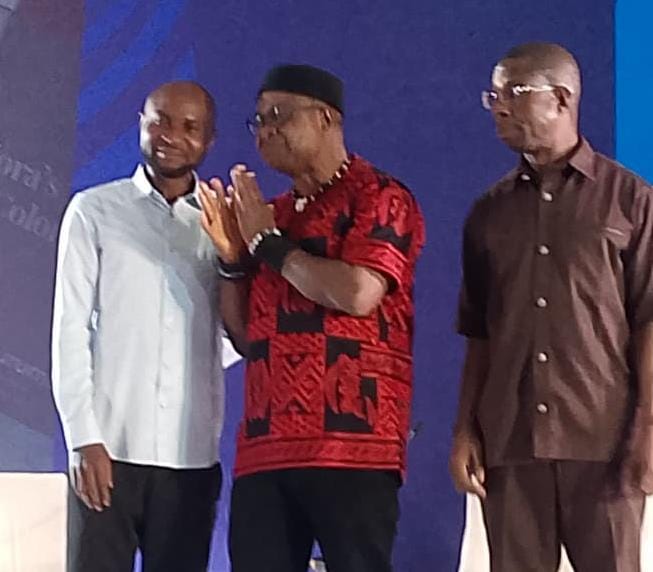
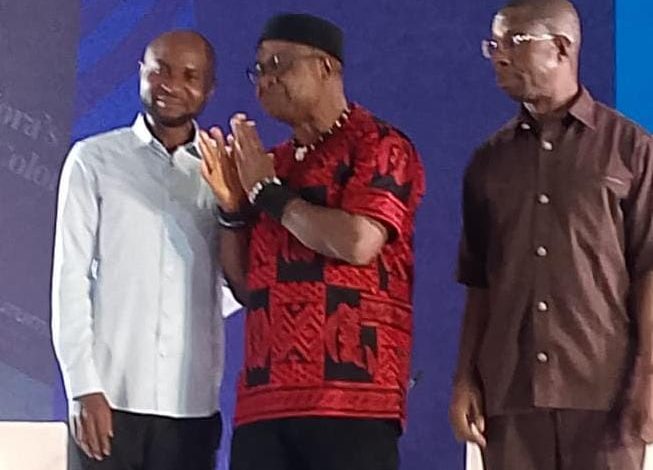
Tares Oburumu (left); James Ngwu Eze and Dr. Ogaga Ifowodo shortly after the Sunday, 2 August 2026 CORA-NPL Book Party conversation… in Lagos