
Carson, Kundizeza, Ifowodo shine in a week of top literary honours

By Godwin Okondo
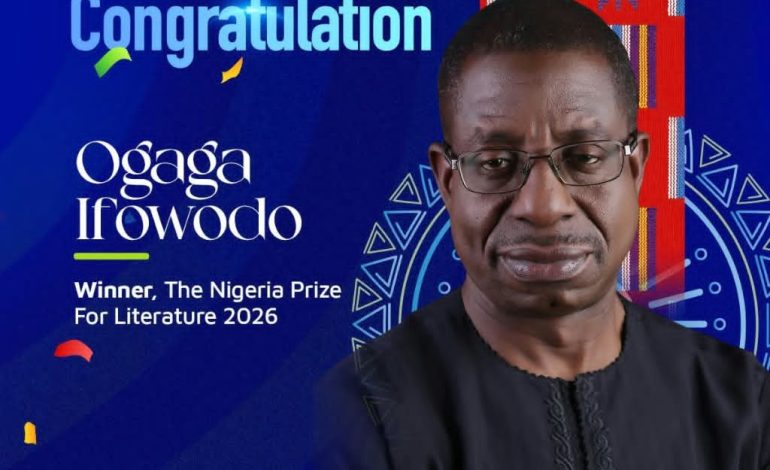
CANADIAN poet, essayist, translator and classicist Anne Carson has won the 2026 Nobel Prize in Literature while Zimbabwean writer Simbarashe Steyn Kundizeza has emerged winner of the 2026 Caine Prize for African Writing. In the same week, Nigeria’s Ogaga Ifowodo emerged winner of Africa’s biggest literary prize, The Nigeria Prize for Literature 2026 in Lagos.
Carson was announced as the Nobel laureate by the Swedish Academy in Stockholm on Thursday, October 8, for what the academy described as her “bold and inventive oeuvre that, in playful dialogue with the classical tradition, has created new forms for contemporary literature.”
According to the Nobel Committee, Carson has throughout her career combined poetry, translation and teaching, with much of her literary work centred on the intersection between the philologist’s fascination with words and the poet’s search for new meaning.
“Almost all her literary production has centred upon the intersection between the philologist’s obsession with words and the poet’s desire for new meaning,” the Nobel Committee said, noting that Carson has identified the etymology of words as the starting point for her work.
Born in Toronto, Canada, in 1950, Carson studied Classics at the University of Toronto, where she obtained her bachelor’s, master’s and doctoral degrees. Her fascination with ancient Greek literature began in high school after a Latin teacher offered to teach her ancient Greek during lunch breaks.
Her academic and literary interests subsequently became closely intertwined. In 1981, she published her doctoral thesis in Classics, “Odi et Amo Ergo Sum”, and went on to establish an international reputation through a body of work that moves between poetry, prose, translation, criticism, drama and the novel.
Among her best-known works are Eros the Bittersweet, Glass, Irony, and God, Autobiography of Red, The Beauty of the Husband, Men in the Off Hours, Nox, Red Doc and Float.
Her 1998 work, Autobiography of Red: A Novel in Verse, is regarded as one of her landmark achievements. Drawing on fragments by the sixth-century BC Greek poet Stesichorus about the winged red monster Geryon, Carson reworked the classical material through contemporary language and experience.
The Nobel Committee also highlighted ‘The Glass Essay,’ published in Glass, Irony, and God in 1995, as an example of Carson’s ability to use the long poem while blurring conventional genre boundaries.
Her translations of Classical Greek texts have also been recognised as literary works in their own right. They include interpretations of fragments by Sappho as well as Sophocles’ Electra and Antigone and Euripides’ Bakkhai.
Carson’s experimentation continued with Float, published in 2016 and made up of 22 chapbooks on different subjects that can be read in any order. Her 2024 work, Wrong Norma, similarly brings together different forms of writing with a strong performative element.
The Nobel Committee said Carson’s collaborations with visual artists, choreographers, opera and theatre directors demonstrate her freedom from conventional literary expectations and have contributed to the importance of her work on the international art and literature scene.
The award caps a career that has earned Carson several major honours, including the Lannan Literary Award, Guggenheim Fellowship, MacArthur Fellowship, Griffin Poetry Prize and T.S. Eliot Prize. She is also a Member of the Order of Canada and a recipient of the Princess of Asturias Award for Literature and the PEN/Nabokov Award.
Carson succeeds Hungarian writer László Krasznahorkai, who won the 2025 Nobel Prize in Literature. She will formally receive the Nobel Prize, which carries an award of 12 million Swedish kronor, at the Nobel ceremony in Stockholm in December.
Dr. Ogaga Ifowodo
Meanwhile, Zimbabwean writer Simbarashe Steyn Kundizeza has won the 2026 Caine Prize for African Writing for his short story, “The Blue Fighter”, published by The Shallow Tales Review in 2025.
The £10,000 prize was announced in London on October 7, following an awards ceremony held the previous evening at The October Gallery.
“The Blue Fighter” follows Tinashe, a young boy whose family falls into financial difficulty after his father abandons his profession to pursue his passion for building fish tanks. The decision leaves Tinashe’s mother caught between keeping her family financially afloat and supporting her husband’s dream.
The judging panel, chaired by journalist and broadcaster Bola Mosuro, praised the story for its treatment of denial, frustration, loyalty and quiet strength.
“Simbarashe Steyn Kundizeza draws readers in from the opening lines and never lets go,” Mosuro said. “Gripping, moving and beautifully crafted, Simbarashe captures the complexities of family, denial and devotion with remarkable emotional power. It’s a brilliant and unforgettable piece of storytelling told in a deceptively simple manner, but which has a profound and lasting impact.”
Kundizeza, who is based in Harare and serves as Associate Editor at African Writer Magazine, said the recognition had given new meaning to years spent writing alongside other responsibilities.
“I’ve been writing for several years, often without knowing where the work would take me, just fitting it around everything else in my life,” he said. “To have a story drawn from my own experiences recognised at this level makes all those everyday compromises feel worthwhile. Most of all, it gives me a little more belief that I can keep making room for this life as a writer.”
Ellah Wakatama (OBE), Chair of the Caine Prize Board of Trustees, congratulated the Zimbabwean writer, saying he had demonstrated “an exceptional command of craft” with “The Blue Fighter”.
Kundizeza’s win came from a record 407 submissions representing 27 African countries, including Nigeria, South Africa, Kenya, Ghana, Zimbabwe, Sudan, Egypt, Cameroon, Senegal and Mozambique.
The judging panel also included author and editor Nana Ekua Brew-Hammond, curator and Stuart Hall Foundation Executive Director Orsod Malik, writer and academic Siphiwo Mahala, and actress, singer, composer and playwright Sheila Atim MBE.
Kundizeza was shortlisted alongside Kenya’s Gladwell Pamba for “The Last Shop”; Cameroon’s Melara Mvogdobo for “Dieu Merci!”; Nigeria’s Akinwande Jordan for “So Long Now It’s Starting To Look Like Eternity”; and Egypt’s Yasmine Zohdi for “The Absence of Stains”.
Each of the four runners-up receives £500, while all five shortlisted stories will be published in the 2026 Caine Prize Anthology, “Felix Never Died and Other Stories”, by African Books Collective in the United Kingdom and United States.
Kundizeza’s debut novel manuscript, “Freelance”, won the 2024 Island Prize for Debut African Fiction. He is also an alumnus of the 2025 LOATAD Black Atlantic Residency, while his work has appeared in Transition Magazine, “The Wrong Patient and Other Stories from Africa” and The Shallow Tales Review.
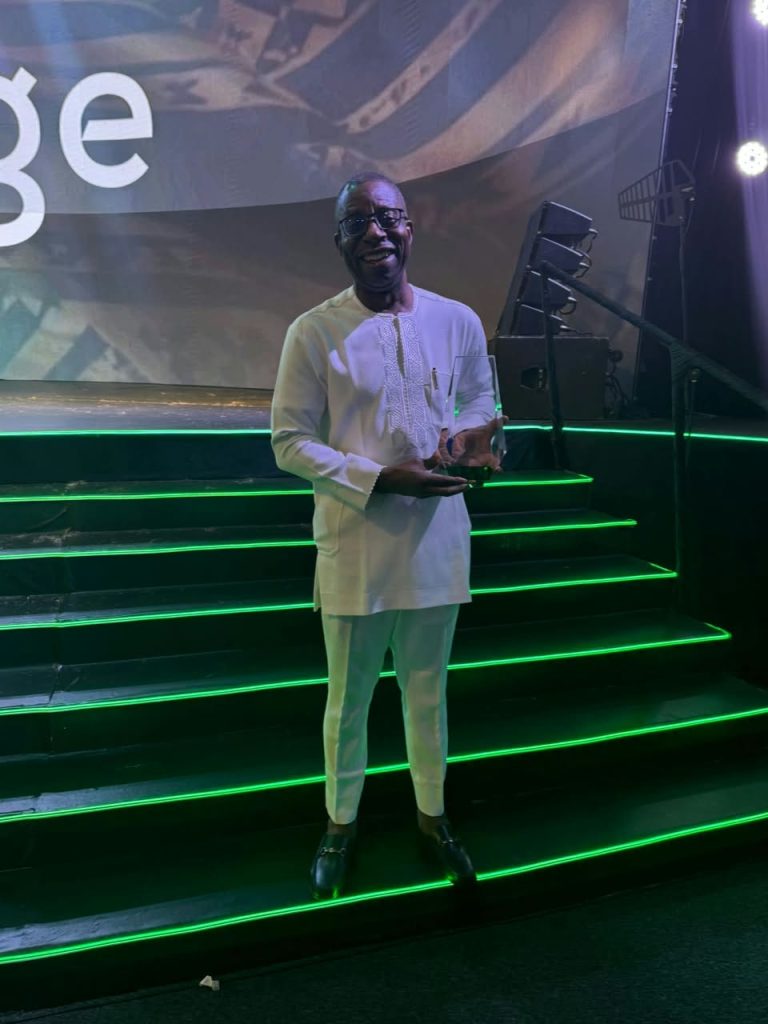
Also, Ifodowo was announced winner at NLNG’s Grand Award Night tagged ‘Heritage’ in Lagos on Friday, 9 October 2026 in a week of high literary honours. The winning poetry collection was selected from 223 entries. Chairman of the Advisory Board for The Nigeria Prize for Literature, Professor Akachi Adimora-Ezeigbo, described Why Does God Need a Gun? as a sensitive portrayal of religious and political violence in Nigeria, told through the voice of an imagined victim.
Her praise extended to all three shortlisted collections, which she said stood out for the poets’ technical skill, confidence and mature use of language. Beyond their individual strengths, she highlighted the shared themes connecting the works:
“Equally compelling is the conversation that unfolds across the three books. Though distinct in voice and style, they engage with related concerns: questions of identity and belonging; the promises and disappointments of nationhood; the consequences of extremism and displacement; and the enduring impact of conflict on individuals and communities. These are works deeply rooted in the Nigerian experience, yet they reach far beyond our borders.”