ANA Convention 2026: Akume, Adedimeji, Akanbi, Omatseye task writers on reshaping Nigeria’s security narrative

* Adedimeji proposes ‘narrative security’ and ‘narrative sovereignty’
By Godwin Okondo
WRITERS, policymakers and the Federal Government have been urged to recognise literature as an important instrument for addressing Nigeria’s security challenges, strengthen national cohesion and reshape the country’s image internationally. The call was made at the 45th International Convention of the Association of Nigerian Authors (ANA), held at Mamman Vatsa Writers’ Village, Mpape, Abuja, under the theme, “Literature, Security and the Place of Nigeria in the World.”
Perhaps, the most overlooked form of national security breach in a diverse cocuntry like Nigeria is the security of language and how it is deployed such that national flames do not erupt. The use of language in its inflamatory form is just as potent as those carrying arms and committing havoc on a national scale. This was the submission of writer, journalist and Editorial Board Chairman of The Nation Mr. Sam Omatseye in his contribution to the dialogue on security when he presided over the closing dinner and prize award event.
He recalled that Boko Haram “happened because of the distortion of language, of scripture” by those who wanted to coerce others into their fold in the pursuit of a thoecratic doctrine and political order. “We cannot talk about language without the security of language,” Omatseye said, then gave the instance of former President Muhammau Buhari, who after the mass murder of innocent villagers in Benue by his Fulani brothers, asked the victims to embrace them as their “neighbours.”
He then said what emerged after that “became an issue if national discussion, and how to classify those criminals on national rampage, whether Fulani killer herdsmen, Fulani militias, bandits or Fulani terrorists and all sorts while victims bled across the country.”
While delivering the keynote address the previous day, the Vice Chancellor of African School of Economics, Prof. Mahfouz A. Adedimeji, argued that literature should not be regarded merely as an artistic pursuit or an ornament of national life, but as an important resource for national consciousness, social stability, peacebuilding and international influence.
He maintained that national security was not limited to the protection of territorial boundaries, government institutions and critical infrastructure, but also involved the narratives through which citizens understood their identities, history, grievances and relationship with one another.
According to him, conflicts are often preceded by stories that encourage suspicion, exclusion and hostility, making the ability to interrogate such narratives an important part of preventing violence. He identified terrorism, violent extremism, banditry, kidnapping, communal conflicts and organised crime among the challenges confronting Nigeria, arguing that the consequences of insecurity extended beyond casualties and destroyed property to include displacement, disrupted livelihoods, weakened social trust and the erosion of citizens’ sense of belonging.
Adedimeji cited an August 2026 estimate by SBM Intelligence, which he said put the number of people abducted in Nigeria between July 2025 and June 2026 at 7,825, to illustrate the scale of the country’s security difficulties. He also drew attention to the broader concept of human security, explaining that security should encompass economic stability, food, health, environmental protection, personal safety, community welfare and political freedom.
For him, literature provides a means of understanding these dimensions because it records the experiences of individuals and communities, exposes injustice and gives expression to grievances that might otherwise be ignored.
“Literature is not an ornament to national life,” he said, describing it as a repository of collective memory, an advocate of justice and an early-warning system capable of drawing attention to social tensions before they develop into larger crises.
He illustrated the relationship between literature and national security through the works of prominent Nigerian writers. Chinua Achebe’s Things Fall Apart, A Man of the People and The Trouble with Nigeria, he noted, offered different perspectives on cultural disruption, political corruption and the challenges of nation-building.
He also cited Wole Soyinka’s writings on authoritarianism and state abuses, Ken Saro-Wiwa’s Sozaboy, which explores the experience of war through what the author described as “rotten English”, and Helon Habila’s Oil on Water, which examines the human and environmental consequences of conflict in the Niger Delta.
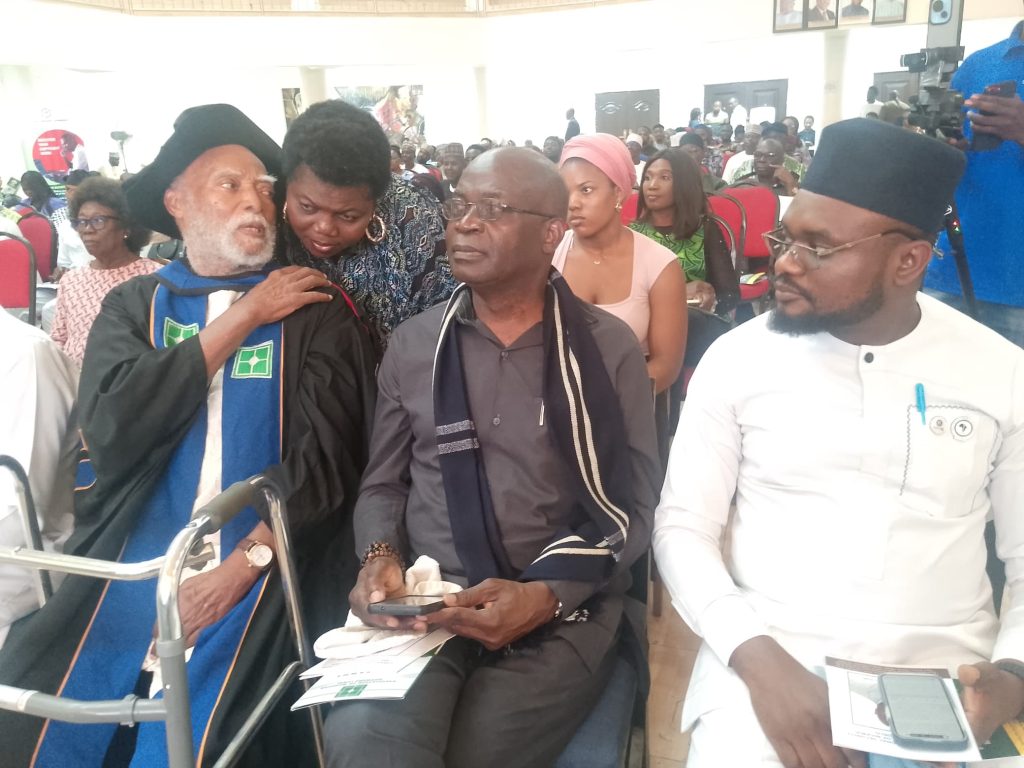
Elder statesma, writer and photographer Lindsay Barrett (left); culture communicator and former Editor of The Guardian on Sunday Jahman Anikulapo and Acting Executive Secretary of REPRONIG, Mr. Tosin Akeredolu at the convention… in Abuja
Adedimeji further referenced Chimamanda Ngozi Adichie’s Half of a Yellow Sun, which revisits the Nigerian Civil War and its human consequences, and Elnathan John’s Born on a Tuesday, which explores the social and political circumstances surrounding religious radicalisation.
He said such works demonstrate how literature could preserve difficult histories, humanise people caught in conflict and help readers understand the circumstances that produce violence.
However, he cautioned that understanding the roots of extremism should not be confused with justifying it. Rather, literature could help society examine the conditions that make individuals vulnerable to manipulation, radicalisation and violent ideologies.
The professor also raised concerns about the growing influence of social media, disinformation and artificial intelligence in shaping public perceptions. He said manipulated images, fabricated videos and synthetic audio could be deployed to inflame ethnic and religious tensions, making critical reading and interpretation increasingly important.
He argued that literary education could help citizens question information, recognise prejudice and distinguish evidence from propaganda.
Adedimeji warned, however, that literature must not be reduced to government propaganda or a tool for promoting a single official version of national identity. He insisted that writers must retain the freedom to criticise public institutions, question government policies and expose failures.
According to him, criticism should not automatically be interpreted as disloyalty, as writers often perform a patriotic responsibility by drawing attention to problems that authorities and society would rather overlook.
He used the metaphor of a smoke detector to illustrate the point, arguing that no sensible householder would destroy the device simply because its warning was uncomfortable.
On the relationship between literature and young people, Adedimeji said extremist groups often attracted recruits by offering them narratives of injustice, identity, belonging and purpose. Such groups, he argued, presented themselves as providing answers to personal and societal grievances, sometimes offering young people a sense of significance that they felt was missing from their lives.
He therefore called for alternative narratives that promote dignity, opportunity, citizenship and inclusion, stressing that efforts to prevent radicalisation should go beyond prohibition and security operations. Adedimeji also highlighted the role of literature in peacebuilding, citing research on community radio in Ife-Modakeke, Osun State, which examined how conflict-resolution programmes and alternative dispute-resolution messages could improve public awareness and encourage peaceful approaches to disputes.
He said drama, poetry, fiction, memoirs and oral traditions could provide platforms for dialogue, preserve community memories and help people confront difficult histories.
Adedimeji particularly advocated the use of indigenous languages and literary traditions, noting that national cohesion could not be achieved exclusively through English. He argued that Nigerian stories in Yoruba, Hausa, Igbo, Nupe and other languages should be preserved, translated and made accessible to wider audiences.
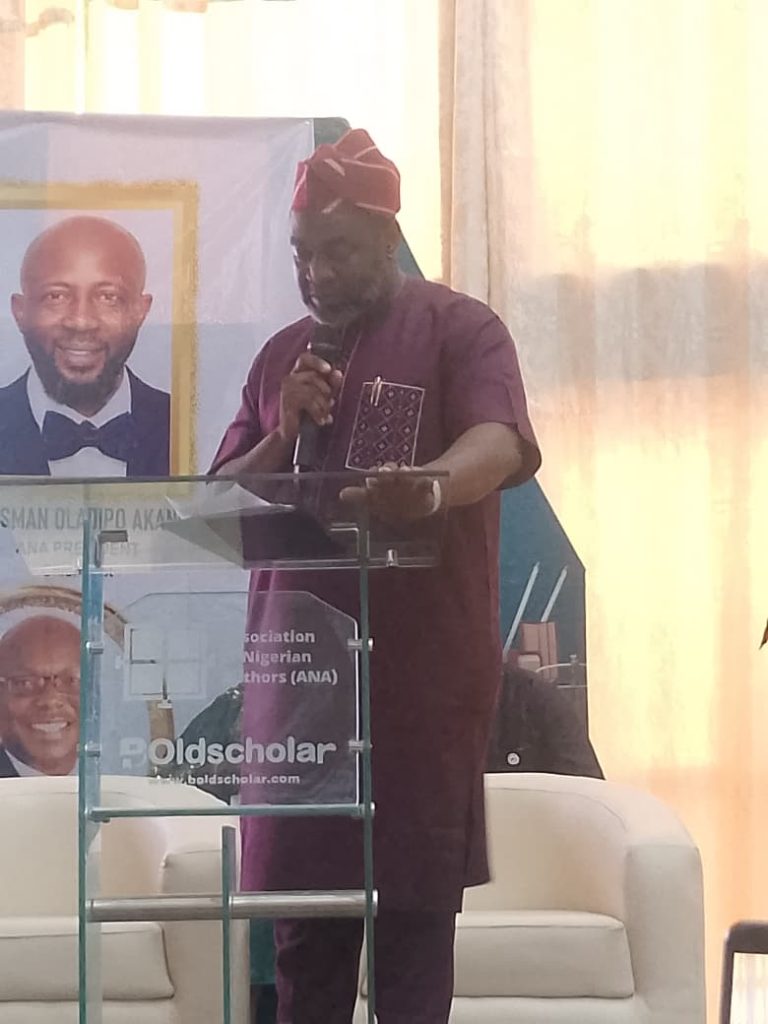
Prof. Mahfouz A. Adedimeji
Introducing the ideas of “narrative security” and “narrative sovereignty”, he said Nigeria needed the capacity to sustain inclusive accounts of its identity while participating actively in the production and international circulation of stories about the country.
He explained that narrative security did not require Nigerians to share one uniform account of their history or identity. Rather, it involves creating room for different experiences and perspectives without allowing diversity to become a source of hostility.
Narrative sovereignty, he added, meant that Nigeria should not surrender the power to define itself to external accounts that reduce the country to insecurity, corruption and dysfunction.
He argued that literature could strengthen Nigeria’s soft power and cultural diplomacy, pointing to the international influence of writers such as Achebe, Soyinka, Ben Okri and Adichie.
Describing writers as informal cultural ambassadors, he said books and other creative works could reach audiences and establish connections in places where conventional diplomacy might have limited influence.
“A nation can export petroleum and import narratives about itself. That arrangement is strategically unsustainable,” he said.
He called for greater investment in the creative economy, including publishing, film, theatre, music, digital storytelling, gaming and literary festivals, arguing that these sectors could generate employment, expand opportunities for young people and strengthen Nigeria’s cultural presence abroad.
Among his recommendations were the integration of literature and the humanities into national security and peacebuilding policies; stronger support for libraries, publishing and intellectual property protection, the revival of reading clubs and literary activities in schools, and greater collaboration between universities, security institutions and policymakers.
He also stressed that no literary or cultural intervention could replace good governance, urging authorities to address poverty, unemployment, corruption, injustice and institutional failures that contributed to insecurity.
IN his opening address, ANA President, Dr Usman Oladipo Akanbi, similarly described the writer as “a citizen, a witness, and a conscience”, arguing that the security of the country was essential to the survival of literature, creativity and intellectual freedom.
He characterised insecurity as “the greatest censor of the Nigerian imagination,” saying that fear and instability could undermine not only the ability of writers to create but also the freedom of citizens to read, discuss ideas and participate in cultural life.
Akanbi said the association, founded in 1981 by Chinua Achebe and other writers, had survived several difficult periods, including harassment during military rule, threats to its property, the deaths of members such as Mamman Vatsa and Ken Saro-Wiwa, and internal disputes that once threatened its institutional existence.
He said ANA was determined to strengthen its institutional capacity and expand its contribution to national development.
Among the association’s priorities, he listed the completion of the Mamman Vatsa Writers’ Village as an international literary resort and sanctuary, the empowerment of writers through workshops and publishing support, and the revival of literary clubs in schools.
He also called for greater government engagement with the literary community, particularly in national orientation, cultural diplomacy and the development of the creative economy.
While acknowledging government’s efforts in infrastructure and economic reforms, Akanbi urged the authorities to ensure that policies should reflect well on the living conditions of ordinary Nigerians. He expressed concern about the cost-of-living crisis and falling living standards, arguing that economic reforms should not be experienced by citizens as punishment.
The ANA president also drew attention to the condition of roads linking rural communities, farms, markets and towns, warning that poor roads and insecurity in hinterland routes undermine economic activity and national integration.
“A nation is fed and held together by its hinterland,” he said, calling for greater attention to rural infrastructure and the safety of people travelling across the country.
Akanbi further urged politicians to ensure peaceful conduct of the 2027 general elections, warning against the treatment of politics as warfare.
He thanked the Federal Government for the land allocated to the association in 1986 for the Writers’ Village and commended the government for enabling writers to benefit from the Reproduction Rights Society of Nigeria Act 2022.
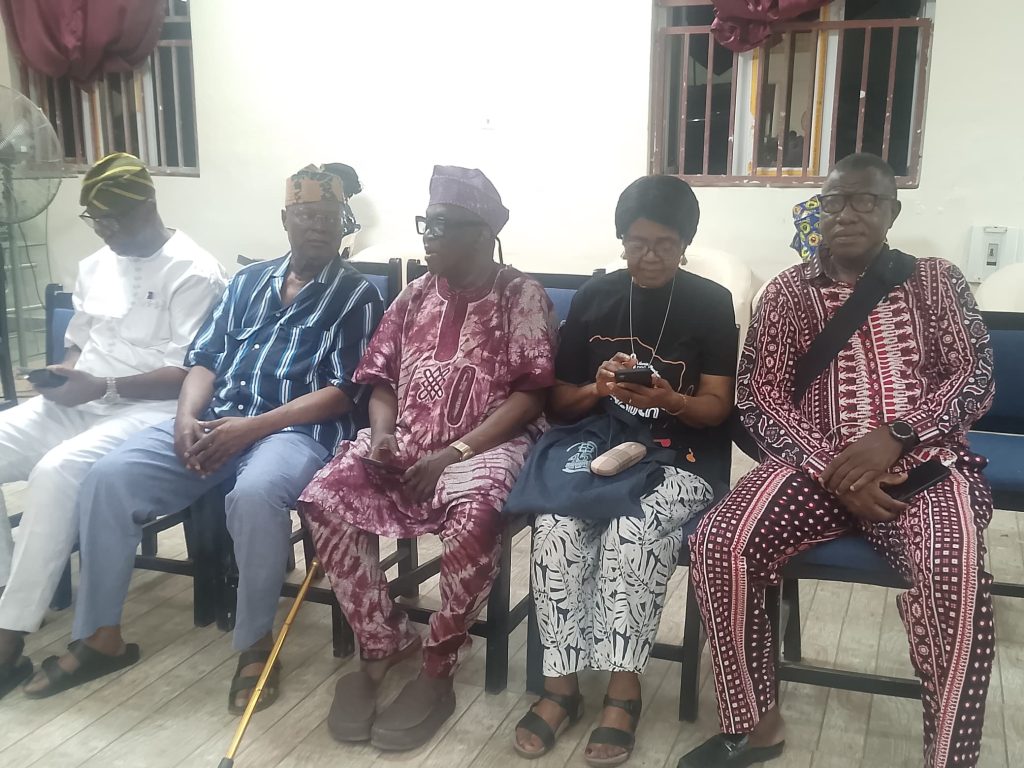
Mr. Sam Omatseye (left); Emeritus Professor Femi Osofizan; Prof. Olu Obafemi; Prof. Akachi Adimora-Ezeigbo and Prof. Remi Raji at the convention
IN his goodwill address, the Secretary to the Government of the Federation, Senator George Akume, described literature as a vital means of preserving national experiences, interrogating assumptions and drawing attention to issues that might otherwise remain unnoticed.
He said writers play an important role in helping society understand itself, noting that a novel could bring hardship to public attention, a poem could articulate shared feelings, while a play could expose injustice. Akume said Nigeria’s diversity required deliberate efforts to promote understanding and guard against prejudice, misinformation and political manipulation.
He maintained that writers should be free to examine public policies, question government decisions and expose institutional failures, stressing that informed criticism was necessary for national development.
According to him, the country’s security challenges, including terrorism, banditry, kidnapping and communal violence, had affected lives, livelihoods, farmers and entire communities.
He said literature could help society understand the human cost of insecurity by documenting the experiences of displaced people, giving voice to affected communities and encouraging young Nigerians to reject violence.
The SGF also warned against the spread of false reports and inflammatory messages, particularly on social media, saying such content could heighten tensions in an already fragile environment.
While acknowledging the importance of freedom of expression and the right of citizens to question those in authority, he cautioned against the deliberate spread of falsehoods and incitement, noting, “Nigeria needs honest voices, not silence.”
Akume also acknowledged the contribution of Nigerian writers to the country’s international reputation, describing the literary tradition as an important part of its cultural heritage and global identity. He noted that the creative sector offered opportunities for publishing and the development of readership, but acknowledged the challenges facing aspiring writers, including access to publishers, limited readership and difficulties of earning sustainable incomes from their work.
He said expanding access to books and supporting the creative sector were important to ensuring that literary talent translated into wider cultural and economic benefits.
The SGF reaffirmed the government’s willingness to engage professional bodies such as ANA and announced plans for the launching of an anthology in honour of Ken Saro-Wiwa, who was judicially murdered by the Sanni Abacha military regime on 10 November 1995, further underscoring the importance of preserving the country’s literary heritage.