National Theatre is not a political campaign hall: Our cultural disposition and the culture of abuse

* A nation that mistakes access for entitlement will eventually abuse everything it claims to cherish
By Adeniran Makinde
THERE is a peculiar Nigerian talent for turning privileges into entitlements, public assets into personal conveniences, and national institutions into extensions of political ambition. We have perfected the art of taking what belongs to everyone and treating it as though it belongs to whoever can gain access to it. And tragically, we rarely stop to ask whether access is appropriate, whether the precedent is dangerous, or whether the symbolic value of the institution we are exploiting is worth more than the temporary convenience we seek.
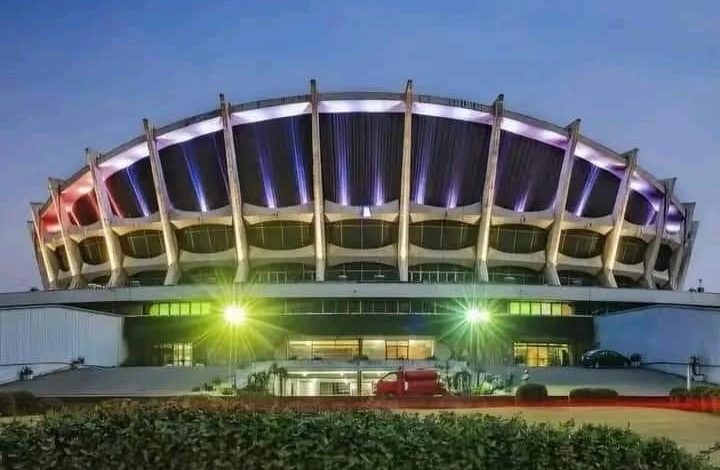
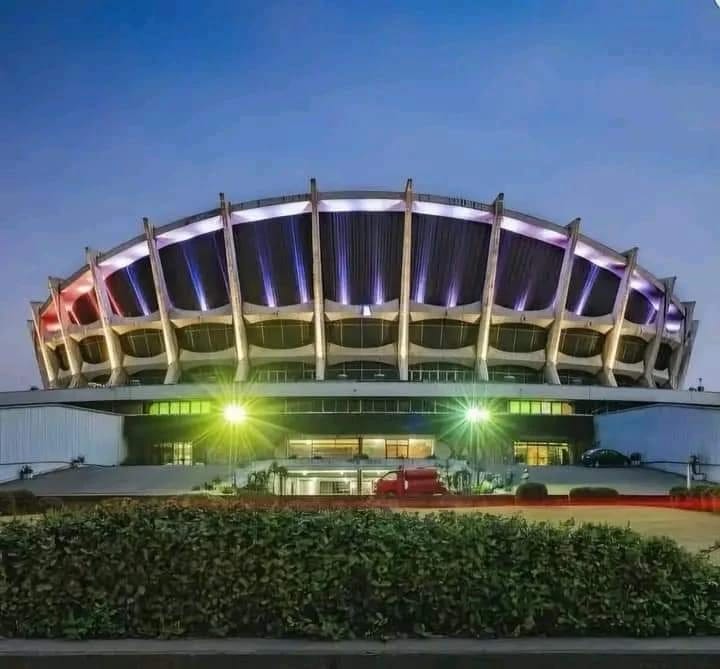
The National Theatre, Lagos, is becoming another casualty of this national disposition.
For the second time, the All Progressives Congress (APC) has brought a political campaign activity into the indoor spaces of the National Theatre. And while some may dismiss this as a harmless commercial transaction, or argue that the management is simply maximising revenue from the facility, I find the development deeply troubling. Not because the APC is the party involved, but because of what this represents for the cultural identity, institutional dignity and symbolic value of one of Nigeria’s most significant cultural monuments.
The National Theatre is not a hotel ballroom. It is not a convention centre that exists principally to accommodate whichever political party, corporate organisation or interest group can afford its rental fee. It is a national monument. It is an architectural and cultural statement of Nigeria’s aspirations, artistic heritage and collective identity. It was conceived as a space that would celebrate, preserve and promote the cultural consciousness of a nation.
Yet, increasingly, we appear to be approaching it with the same transactional mentality with which we approach everything else in this country.
The question is not whether the APC has the right to rent a space. The question is whether the National Theatre, as a monument of national cultural significance, should become an indoor campaign destination for political parties in the first place. And if one party is permitted to do so, what institutional principle will prevent every other political party from making the same demand?
Tomorrow, the PDP may book the same hall. Labour Party may insist on its own campaign gathering. Another political formation may demand access. And quite frankly, on what grounds should they be denied if the precedent has already been established? Will the management suddenly discover cultural sensitivity when a different political party makes the request? Or will we simply continue to surrender the cultural identity of the National Theatre to the convenience of partisan politics?
This is the slippery slope we are creating.
The National Theatre ought to be one of those rare Nigerian institutions that stand above partisan political interests. It should be a space where the nation’s artistic, cultural, intellectual and creative aspirations are expressed without the intrusion of political ownership. Political parties may be part of our national life, but they are not the custodians of our cultural identity. Governments come and go. Parties rise and fall. Political fortunes change. The National Theatre must outlive all of them.
What is particularly disturbing is the ease with which we abuse institutional privileges in Nigeria. We have a culture of entitlement that often masquerades as pragmatism. If an institution can generate money, we assume every activity must be accommodated. If a public asset is accessible, we assume it is ours to exploit. If no one has explicitly forbidden an action, we presume that no cultural, ethical or institutional consideration should stand in our way.
This is not pragmatism. It is a culture of abuse.
We abuse public office. We abuse public infrastructure. We abuse public spaces. We abuse institutional authority. And when we are challenged, we often invoke economic necessity, political relevance, commercial viability or the convenient argument that the institution must make money.
Of course, the National Theatre must generate revenue. Its maintenance, operations and sustainability cannot be funded by sentiment alone. But the imperative to generate revenue must not become a justification for institutional recklessness. There is a difference between commercialising a national monument responsibly and surrendering its identity to every commercial or political opportunity that presents itself.
The restoration of the National Theatre, now known as the Wole Soyinka Centre for Culture and Creative Arts, was supposed to represent a renewed national commitment to the arts, culture and creative economy. It was supposed to signal a new chapter in the relationship between Nigeria and its cultural institutions. But what is the point of restoring a monument physically if we have no intention of protecting its institutional character?
A refurbished monument without a cultural philosophy is merely a renovated building.
The Ministry responsible for culture, the National Theatre management and relevant cultural stakeholders must urgently develop a clear policy on the use of the monument. A policy that defines acceptable engagements, protects its cultural character and establishes boundaries around partisan political activities. Such a policy must be transparent, consistent and applicable to every political party, regardless of its proximity to power.
This is not an APC issue. It is a Nigerian issue. It is a cultural governance issue. It is a question of whether we still understand that national monuments are not simply assets to be monetised but heritage to be protected.
And perhaps the bigger tragedy is that we may not even recognise the abuse until the damage has become irreversible.
Nigeria has a habit of waiting until institutions are compromised before we begin to mourn their loss of significance. We are often more interested in the immediate benefits of access than the long-term consequences of misuse. We celebrate the opportunity to use a space, but rarely consider the precedent we are establishing. We applaud the revenue, but ignore the cultural cost.
The National Theatre deserves better than this transactional approach to heritage.
It deserves a management philosophy that understands the difference between a venue and a monument, between commercial opportunity and cultural responsibility, between access and entitlement.
The APC may have successfully brought its campaign activity into the National Theatre for the second time. But the more important question is whether Nigeria is willing to allow the National Theatre to become a revolving door for partisan political activities simply because we have failed to establish the boundaries that should protect it.
If we cannot protect the sanctity and cultural identity of the National Theatre, then perhaps our problem is not the politicians alone.
Perhaps the problem is us.
We have become so accustomed to abusing privileges that we no longer recognise abuse when it is dressed up as business as usual.
And that, perhaps, is the most dangerous culture of all.
* Makinde, a Fellow of Theatre Arts, is the President of the National Association of Nigerian Theatre Arts Practitioners (NANTAP)