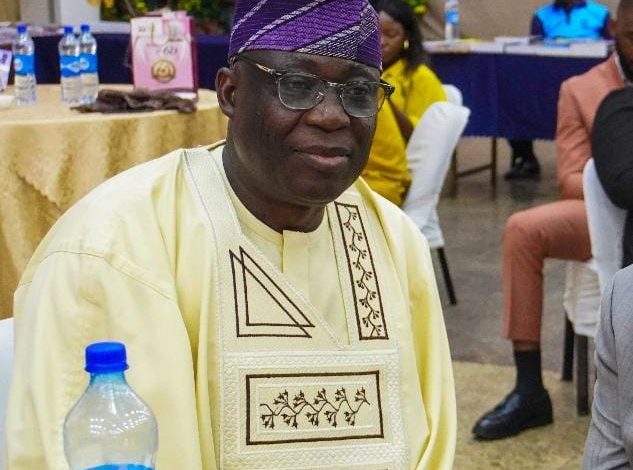
A review of Otuedon-Arawore’s ‘Philip Chikwuedo Asiodu: A Legacy of Dedication and Service’

By Bukar Usman
Introduction
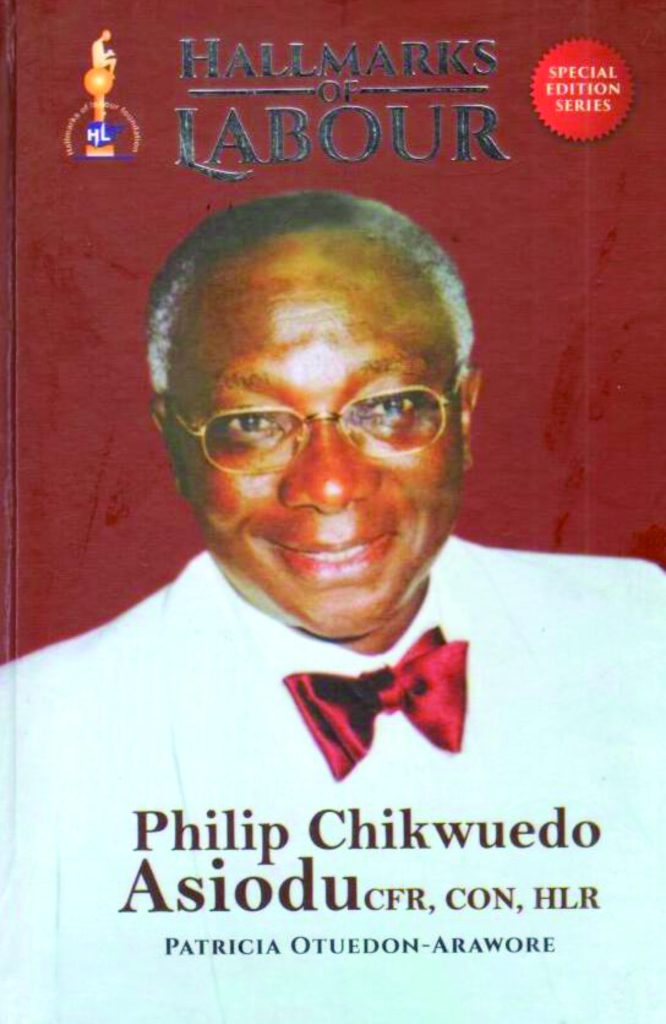
THE 91st birthday of the distinguished Nigerian veteran public servant, Philip Chikwuedo Asiodu (Izoma of Asaba), celebrated in Lagos on December 3, 2025, was crowned with the presentation of a book published in his honour by Hallmarks of Labour Foundation (HLF). Titled Philip Chikwuedo Asiodu: A Legacy of Dedication and Service (Mahogany Limited, Lagos; 2025), the book was authored by Patricia Otuedon-Arawore, a veteran broadcaster who founded HLF in 1996 as a platform for realizing, among others, the goal of issuing a series of books on exemplary public figures. The book was presented at the famous Metropolitan Club, Victoria Island, Lagos. Although I couldn’t attend the event, I got a copy of the publication in Abuja courtesy of Dr Adegoke Adegoroye, former federal permanent secretary and the reviewer of the book at the grand occasion.
Dr. Adegoroye did a yeoman’s job in reviewing the book in great details. However, I felt obliged to also review it not only to honour my former boss in the Ministry of Mines and Power way back in 1971, but also to join in extolling his virtues and the exemplary leadership he gave to the entire public service of Nigeria. I sincerely believe that given Izoma Asiodu’s esteemed stature, the review of a book on him cannot be excessive. The dissemination of the narrative of his 91-year experience and knowledge which he selflessly placed at the disposal of our dear country and humanity cannot be overdone.
The 584-page book is made up of 35 presentations and commentaries authored and issued by Asiodu from 1997 to 2022, a period of 25 years. 14 presentations took place in Abuja; eight in Lagos; two in Asaba, the celebrant’s home town, while one presentation each was done in Ibadan and other towns. He made four presentations, the highest in any year, in 2017.
Although the papers and speeches were not chronologically presented, fairly identifiable themes run through the book. All focused on good governance and how to bring about development and enhance the welfare of the people of Nigeria; some harped on the need to maintain a high status of Nigeria among the comity of nations.
The ‘Foreword’ to the book was written by our highly revered former Head of State, Dr Yakubu Gowon, who was also present in person as Chairman of the occasion. In the Foreword, he described the celebrant, Izoma Asiodu as ‘one of the men that providence has used to help define the course of Nigeria’s history’. He also stated that managing Nigeria after the turbulence of the Nigerian Civil War of unity required efficient leadership and dedicated civil service, noting that the Civil Service of the time was the ‘engine room of government’ and was staffed by individuals of the highest integrity, whose loyalty was central to the survival of Nigeria and the unity of her people. Dr. Gowon declared that Philip Asiodu a ‘Super Perm Sec’ was one of them. He acknowledged that collectively with other civil servants of the time contributed immensely in shaping the policies of his administration.
Social welfare
IZOMA Asiodu lamented severally that, given the enormous human and material resources God has endowed her with, Nigeria should have advanced higher than what it is today, in terms of the welfare of the people and her image in the world. He noted that Nigeria, at independence, started with high expectations but somehow faltered along the way such that its peers in 1965 among the ‘Asian Tigers’ (Hong Kong, Singapore, South Korea and Taiwan) and elsewhere, including Brazil, India and Malaysia, have since left her far behind. He recalled with pride how at independence a whole day was devoted, with fanfare, to admitting Nigeria into the world body – the United Nations Organization – and how Nigeria not only championed the decolonization of other countries but was also in the forefront in the formation of regional bodies.
He declared that it is a national shame that Nigeria, with all the manpower available locally and in the Diaspora, cannot maintain and operate petroleum refineries properly for decades and that we have had to rely on imports for the bulk of petroleum products consumed locally. He attributed the anomaly to corruption and unpatriotic political interference in management, selection and deployment of personnel in NNPC. He revealed that even when agreements reached in 1993 with three reputable international oil companies paved the way for them to take over the three refineries, the agreements were not executed.
Asiodu called for serious self-examination and urgent redemptive action on the part of Nigerians.
Political reflection
WHILE some Nigerians still harbour the notion of a new political system for the country, Izoma Asiodu is of the view that what matters, in the final analysis, is not necessarily the system put in place but how the leaders and politicians of the day choose to operate it. He said it is what public office holders think they can get away with that determines how much is spent, the form of government, presidential or parliamentary, notwithstanding. He compared Nigeria and the US, noting that while the latter has 12 departments at the Federal level and six at the State level, Nigeria has much more departments or ministries at both federal and state levels. Earnings ratio of the rest vis-a-vis the politicians in the US is in the region of 1:20 whereas in Nigeria it is about 1:140, the higher figure resulting from the earnings of the legislators.
He attributed these shortcomings, above other reasons, to the shallow nature of our political parties and to lack of visionary political leadership for the whole country. Political parties have not genuinely articulated their vision of what Nigeria should be. They have published no real manifestos to guide their actions. They are not issues-oriented. They have not spelt out in the various States detailed goals or objectives regarding the improvement of the welfare of the masses or the exaltation of the Nigerian State. Inevitably, all efforts seem to be directed to the pursuit of self-interest and unrestrained greed. He acknowledged, however, that noticeable positive differences may be seen in one or two States.
Asiodu is of the view that it is possible to develop a bold united National Vision and Agenda for Nigeria, even in our current circumstances. According to him, what the ordinary man desires are security, shelter, food, educational facilities to ensure his children’s advancement in life and, of course, adequate and improved availability of power, health and transportation infrastructure. He said that good patriotic visionary leadership and good governance, not power struggle among politicians, are what would produce national cohesion and stability. And a united and stable polity will lead to rapid economic and social progress and improved standard of living and quality of life for the great majority of the people.
Economy
IZOMA Asiodu is piqued by Nigeria’s mono-economic status, in spite of various efforts at diversification, and traced the problem to feeble manner of national planning, policy formulation and execution. Plans and visions, he said, were being conceived and executed without the necessary discipline that ensures strict adherence to laid-down processes until envisioned outcomes are realised. He said the deviation started from about 1975-80 Plan. According to him, some governments hardly adhered to party manifesto, if at all there was one, and succeeding governments invariably abandoned what was conceived by previous government due to lack of consensus on what constituted national goals and aspirations. All of these frequently led to abandonment of Plans and policies, and even projects, such as the Lagos Metroline Project, conceived by Lateef Jakande Governor of Lagos State (1979 – 1983).
The situation was said to have worsened after the decimation of the Civil Service in 1975, an event that disastrously led to demoralisation, abandonment of checks-and-balances and the discipline and controls of planning, rent-seeking and escalating corruption among heads of ministries and parastatals, and other officials.
Various past regimes, he recalled, had taken power or were thrust into power without adequate understanding of what they intend to do with power. As he stated, confusion in objectives, discontinuities in policies and programmes, and lack of national consciousness have been the Nigerian experience of governance, resulting in lack of progress in developing the economy to lift our-richly endowed country out of poverty.
Asiodu, a strategic insider during the period, stressed that if only after the removal of Gen. Gowon in 1975 his successors had continued with the disciplined implementation of the 1975-1980 3rd National Development Plan, and that if under subsequent National Plans 10%+ average annual growth rate was maintained for the next decades, Nigeria would have escaped from poverty and under-development and would have today become an African Lion comparable to the ‘Asian Tigers’. He passionately called for a return to detailed planning and disciplined execution of set goals enhanced by transparent pursuit of previously identified national priorities.
Public Service and Civil Service
OUR forefathers were said to have undertaken, during the constitutional conference held in London in 1954 that preceded Nigeria’s Independence, to ensure a Non-political Independent Public Service. They commendably pledged their support thus: “We fully support the principle that all public service questions including appointment, promotions, postings, dismissal and other disciplinary matters, should be kept completely free and independent of political control. We hope that the traditional system of promotion according to qualifications, experience, merit, without regard to race will be maintained.”
Putting things in historical and comparative perspective, Asiodu said that the Civil Service system in operation in Nigeria was first developed successfully by the British colonial authorities in India, another large and diverse country like Nigeria, before it was exported to the mother country Britain, in the middle of the 19th century, and later to other countries like Australia. There is no reason, Asiodu emphasized, this same system that serves other countries well till date should not work in Nigeria, more so when our founding fathers, prior to and after our independence, had solemnly pledged and indeed upheld the system.
He testified that the Civil Service system worked well in Nigeria until about 1975 when it was tampered with; he said more anomalies were introduced into the system in 1988. He was referring to the ‘purge’ of the Federal Civil Service by the Gen. Murtala Mohammed administration in 1975 and to the Gen. Ibrahim Babangida administration Civil Service ‘reform’ of 1988, two major events I had described as ‘earthquakes’ that severely shook the system. According to Asiodu, the purge that affected about 10,000 civil servants in all, including him and eight other permanent secretaries, deprived the Civil Service of able hands and guardians of the Civil Service practices inherited from the colonials. Security of tenure was no longer guaranteed and the seed of corruption was sown; civil servants thenceforth resolved to ‘make hay while the sun shines’, a euphemism for corruption which now threatens the future of the country.
Asiodu advised that, to ameliorate the dampening effects of the mass purge of 1975/1976 and the ‘reform’ of 1988, there is need to re-motivate the Civil Service by according a proper status to the leadership of the Civil Service and by giving them opportunity to coordinate policy advice. It is also necessary to restore full inter-Ministerial consultations in order to make government policies more coherent and ensure speedy implementation of agreed policies. Government should also avoid setting up expensive and often not so competent parallel bureaucracies comprised of scores of Special Assistants.
The ‘politicization’ of the Civil Service, in particular, led to recklessness in financial administration and appointments to public offices that subsist to this day. Some have argued that the rot in the Civil Service started even much earlier with the hurried departure of some able and experienced civil servants to Biafra on the onset of the Nigerian Civil War. Even though some later returned and were reabsorbed, things were never the same. Added to that was the legacy of military administration’s summary disciplinary actions, typically meted out ‘with immediate effect’, that dispensed with time-honored ‘due process’ in dealing with erring public officers, thereby jeopardizing security of tenure.
Foreign Policy
AT independence, Nigeria’s foreign policy was largely executed by well-trained career diplomats. Subsequent dilution by non-career diplomats coupled with stagnation and weakened economy had adverse effect on Nigeria’s rating. The successful execution of the Nigerian Civil War was both a test of skillful diplomacy and resilience of Nigeria’s economy. Asiodu recommended that not more than 20% of principal posts should be held by non-career officers.
Personality profile
BORN in Lagos in 1934 to a parent who hails from Asaba in present day Delta State of Nigeria, Izoma Philip Chikwuedo Asiodu, CFR, CON, is a product of Sacred Heart School, Calabar (1939-1942); Hope Waddell Training Institute, Calabar (1943); St. Paul’s School, Ebute-Metta, Lagos; King’s College, Lagos (1946); Oxford University, England, graduating with B.A. Honours degree in Politics, Philosophy and Economics.
Soon after graduation, Asiodu began his career as a public servant by enlisting as a junior officer into the Nigerian Foreign Service in 1957 on Assistant Secretary grade, making him part of the nucleus of independent Nigerian Foreign Service. He served briefly in Nigerian mission in London (1958), on attachment to British High Commissions in Australia and New Zealand (1959), in Nigerian mission in New York (1960), and at OAU Secretariat in Addis Ababa (1963). He transferred to the Home Service and got appointed to Permanent Secretary status where he served for 11 years (1964-1975). He was posted to several Ministries in that capacity before he was prematurely retired by the Gen. Murtala Mohammed military administration in 1975 at about the age of 42.
According to Mr. Allison Ayida, former Secretary to the Federal Government and Head of the Civil Service, and a colleague of Asiodu’s who insisted on knowing why the permanent secretaries were retired, Gen. Mohammed told Asiodu that he was retired simply to show that the administration could deal with any servant however powerful. To quote Ayida, Gen. Murtala Mohammed had told Asiodu, “You, Philip, we know your record, we like you very much. This government will like to continue with your service, but as a government of resolution we have planned to show example that nobody is so powerful that he cannot be removed so we want to use you as an example.” That perhaps was a pointer to how influential and authoritative the Civil Service and Permanent Secretaries were deemed to be in those days.
After his retirement from the Civil Service, Asiodu served variously as adviser and minister. Apparently out of frustration, he declined ministerial post under Gen. Sani Abacha administration. However, he later offered himself as a presidential candidate probably out of the belief that, as president, he could demonstrate leadership by example and harness Nigeria’s enormous potentials for development and welfare of its people.
Way forward
HAVING had the privilege of serving in Foreign and Home Services of Nigeria, elder statesman Izoma Asiodu has a unique overview of what it takes to move Nigeria forward and has made several recommendations, some of which (aside from those earlier mentioned in this review) include:
• Addressing the disparity and imbalance in capital and recurrent expenditure in favour of the former.
• Addressing the inadequacy of power and energy supplies.
• Closing the wide gap in legislators’ and other political office holders’ earnings vis-à-vis the lowest salary earners in the country.
• Re-enthronement and respect for Public Service core values of honesty, integrity, transparency, courage, patriotism and the desire to serve the wider public.
• Industrialization with priority given to modernized agriculture and agro-allied industries as well as value-added projects in the oil and gas sector for local market and export.
• There should be a language policy to promote national integration whereby each child is required to learn to read and write in the local language where he/she is born and begins schooling and at a later stage should make a choice out of the three major languages in Nigeria.
• Measures should be taken to strengthen the independence of the judiciary and to equip it with modern technology for speedier dispensation of justice.
As a permanent secretary, Asiodu was quite innovative but graciously allowed junior officers to make policy initiatives, thereby enhancing their growth. As a young administrative officer working under him in the Ministry of Mines and Power in 1971, I was tasked to draft a memorandum to the Council of Ministers over constant bickering between the Electricity Corporation of Nigeria (ECN), with Mr. Hsu a Taiwanese as General Manager, and Niger Dams Authority (NDA) under Engr. Yahaya Dikko. The bickering was over electricity supplies and non-payment by ECN that was disrupting power supplies to the whole country. The eventual outcome was the merger of the two bodies to form the National Electricity Power Authority (NEPA), which later became Power Holding Company of Nigeria (PHCN), the predecessor of the current multiple companies charged with electricity generation (GENCOs), distribution (DISCOs) and transmission (TCN).
Izoma Asiodu’s creativity should no less be appreciated. He served in the Ministry of Industry before being deployed to the Ministry of Mines and Power. It was during his tenures in both ministries that Nigeria as an oil exporting nation joined the Organization of Petroleum Exporting Countries (OPEC) and the Nigerian National Oil Corporation established.
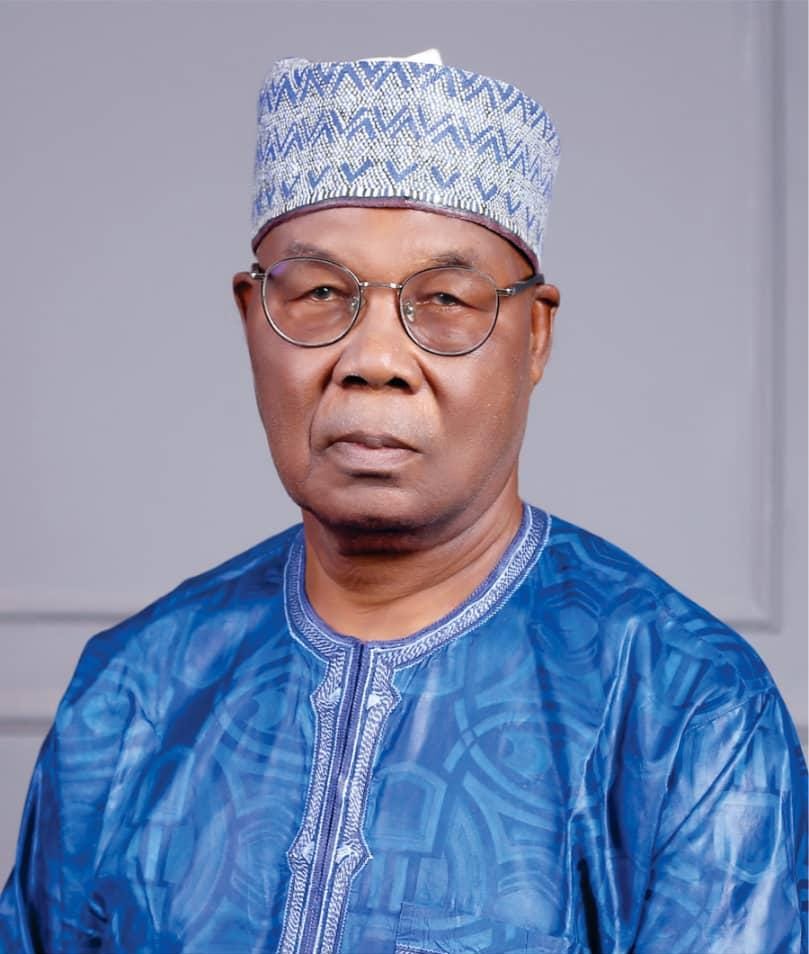
Dr. Bukar Usman
Personal relations
ON a personal level, I seize this opportunity to further express my deep gratitude to Izoma Asiodu for sparing time to go through the manuscript of my 456-page book, My Public Service Journey: Issues in Public Policy Administration in Nigeria (Klamidas: 2019). He wrote the ‘Foreword’ where he recommended the book as a very good primer for those interested in the study of the evolution of the Nigerian Public Service, and noted, inter alia, that ‘the prime goal of all these policy instruments is to solve public problems efficiently, effectively and in fairness to all’.
Besides, Izoma Asiodu has financially supported my foundation, The Dr. Bukar Usman Foundation, and encouraged my literary activities. His dear spouse, Jumoke Asiodu, closely associated with my first spouse, Mrs. Adekemi Usman, nee Badejo of blessed memory, with whom she shared a warm mother-child relationship.
Conclusion
IZOMA Asiodu, based on his personal experiences, urged civil and public servants to serve with honesty and integrity, asserting that there is reward in being honest in service. Provided you have enough life, he said, you will find that when you leave, even people you did not know that you had helped or that they had benefited from your services, will invite you to many things; and companies and Governments which are stable usually find post-retirement employment for retired public servants in parastatals and in other capacities. He stressed the need for complete re-orientation in the attitude of the leaders and the elite towards national, political, social, and economic development of the country.
* Dr. Usman (OON), a former Permanent Secretary in the Presidency, is the President of Nigerian Folklore Society