Why Nigeria cannot establish culture centres like Goethe, Alliance Francaise abroad, says Usman

By Anote Ajeluorou
CULTURE diversity, poor funding and lack of strategic global vision are some of the reasons Nigeria cannot effectively promote her culture abroad much less establish corresponding centres to promote the country’s diverse cultures. Only recently, notable filmmaker Mr. Femi Odugbemi said Nigerian embassies hardly promote Nigerian culture products abroad, noting that foreigners encounter them accidentally instead. Odugbemi frowned at this untidy situation, arguing that other countries strategically position and promote their culture products abroad by giving them institutional backing for global visibility and recognition.
Now, historian, culture archivist and retired permanent secretary in the presidency, Dr. Bukar Usman has corroborated Mr. Odugbemi’s position when he said individuals rather than government have taken on the responsibility of promoting the country’s culture as its ambassadors in the global arena. In a brief conversation reflecting on FESTAC ’77 and what it means to promote Nigeria’s culture globally, Usman says the country’s linguistic and cultural diversity, multiplicity of culture organisations and funding were major constraints hindering such efforts even at local level.
“Historically, when the Nigeria Folklore Society (NFS) was formed we were getting small funding from government to stage our programmes,” Usman says. “But I reasoned that the bodies promoting culture have multiplied and probably government could not keep up. In the last week or two, I heard the head of one organisation saying they were organising something on copyright and government had given them some money and they wanted to promote it in some states. Probably, government has woken up; you know that sustaining policy is different, difficult. Otherwise, in those days you had small money being extended to people; even UNESCO would come in, but today multiplicity of bodies has emerged and some are not properly organised. Well, I don’t know where the problem is. If you budget some money now, sharing it is very difficult. So, government has provided some money, but will future government sustain it?”
While some view organisations like the Geothe Institut, Alliance Francaise and the British Council as neo-colonialism outposts, using cultural soft power to propagate their countries’ languages and culture to young Africans, Usman says funding constraints would not allow reciprocity on the part of Nigeria to have similar culture outposts abroad.
“During the period of Regional Governments (Eastern, Western and Northern Governments) in Nigeria,” Usman recalls, “each of the regions had offices (embassies) in different countries, but we collapsed those into one with the centralisation of government. But each embassy has a cultural attache to handle culture. So it’s countries that can spare the money like the French (Alliance Francaise), Germany (Geothe Institut) or the UK (British Council) that are able to do it, because it takes a lot to maintain these structures. You realise that even where Nigeria is supposed to have embassies, we don’t have, and the embassies we have we cannot fund them properly. So the ministry of culture now has the opportunity to either mount an exhibition there for people to see or when there is an exhibition somewhere we participate.”
Instead, the elder statesman is consoled that individuals rather than government have been at the heart of promoting Nigerian culture abroad.
“Somebody like Fela Ransome-Kuti was a cultural advocate of his own,” Usman recalls. “Many other artistes like Burna Boy have become culture ambassadors for Nigeria; he participated in the World Cup with the name of Nigeria. Individuals have done a lot, but in terms of solid structures like Goethe Institut, of course, I must admit that we don’t have it. But we do have cultural attaches who ensure that we participate in shows abroad. So it depends on the level, but admittedly we can’t perform at the level of Alliance Francaise and the likes. Cultural diversity counts here; if you want to present Nigeria properly the scale it would take is not like what Goethe Institut can do; theirs is monolithic. Our own has to reflect our diversity in a way.”
Usman says the Mr. Mike Adenuga example with Alliance Francaise, where the business mogul gifted the French a world class centre, can only work when government has visionary people who can ask such philanthropic individuals to recreate similar culture projects abroad to promote Nigerian culture with clear-cut understanding.
“Establishing Nigerian cultural centres abroad by enlisting our rich men depends on leadership that can approach these people and drop these ideas in their minds,” Usman argues. “For example, we had people like MKO Abiola (Abiola Babes), Iwuanyanwu (Iwuanyanwu National) and Stationery Stores promoting football clubs as individuals. Today, you hardly have any team attached to individuals. If government can approach Aliko Dangote, and say, ‘sir, can you promote something like this?’, he would probably buy the idea. You have to float the idea (first), you have to point the direction you want to go for people to follow. But if you leave it to people, it may not occur to them. You need some push somewhere.”
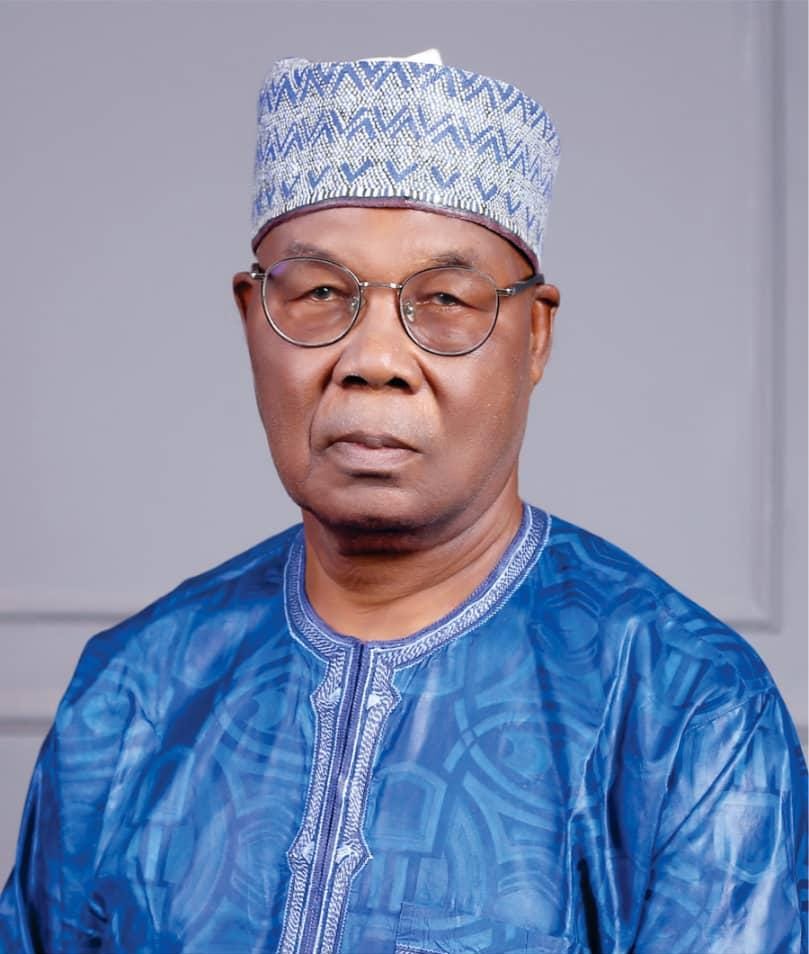
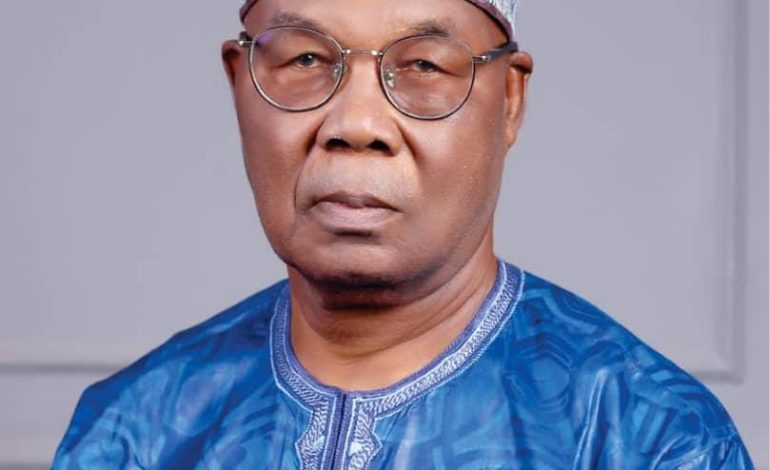
Dr. Bukar Usman
Usman says accessing the newly renovated Wole Soyinka Centre for Creative Arts (formerly National Theatre), Lagos, would not be the same considering what was expended to put the theatre right again.
“Well, the Central Bank of Nigeria organised a lot of money to renovate the National Theatre and put it back to form,” he says. “So, it might have been priced out of the reach of creatives. It’s true that our maintenance culture is very poor. Also, today a lot of entertainment centres have sprung up, where people can go. In Lagos in those days, apart from Glover Hall, JK Randle and the National Theatre, there weren’t many places for people to stage a play or shows.”
Usman is not convinced that a legal instrument like an endowment fund for the arts would work in Nigeria given the entrenched attitude of breaching established laws among leaders. He cites recent examples to indicate why.
“Even if the policy goes through legislative process by way of a bill passed into an Act, I’m still not sure, from my experience,” he confesses. “Take governors saying they have no powers to order commissioners of police to do anything about security in their states. Go to Section 213 (old) and 215 of the new Constitution; it’s there. So, it’s not a matter of provision in the law; it’s just that people don’t pay attention to the law. Take a look at the Local Government Autonomy law; governors of the ruling party are opposed to it, and some have to go to court. It’s in the law, but it’s not being observed.”
Usman, who was part of a committee that saw to the preparation towards successfully hosting of Festac ’77, recalls his involvement in hosting of Festac ’77 with fondness even if he was not in the mainstream of organisers.
“I was not in the mainstream of those who conceived and organised Festac ‘77 that invited the world’s black and Africans to perform in Nigeria,” he recalls. “But where I participated was in getting its infrastructure right for the festival. We had all these edifices, the Festac Village, being built along Badagry Road. Then you have the hotel, also around that place. There was another hotel built in Kaduna, in Ibadan and in the East, all infrastructure was provided. But there was incapacity of Nigeria to furnish all these facilities being provided; accommodation was being built but there were not enough furniture companies to supply interior decor materials.
“One of the contractors was engaging people and putting up infrastructure quick-quick; that was how they named that place after Mile 2 ‘Mazamaza’ in Hausa – quick-quick! That contractor was very fast in putting up the buildings given to him among other contractors. We had Coker & Cooer and others. But how do you furnish what was being built? One Fawhehinmi furniture company couldn’t meet up, because of the scale of what was required – beddings, side cabinet and so on. And Nigeria was so buoyant; so, a committee was formed. Contracts were advertised and we had interests from all over the world. So, we decided to go and shop for these to meet the requirements.”
“So, we took off to Milan in Italy, Yugoslavia, which was still one country in those days; from there to Finland, Finland, France and the UK. This was under the leadership of one Alhaji Abubakar Alhaji. That was our own part in terms of participation in Festac ’77, to get the furniture and beddings for the facilities being built. So, I cannot claim to be part of the mainstream of organising Festac ’77. And that was the little I did. Ours was primarily to furnish Festac Village. We went to furniture makers, and we found that they’d gone very far; they had gone mechanised as far back as that time.”