Achebe’s statue and the real meaning of immortality

By Sumaila Isah Umaisha
SINCE the unveiling of Chinua Achebe’s statue on 18 July 2026 in his hometown of Ogidi, Idemili North Local Government Area of Anambra State by Governor Chukwuma Charles Soludo, there has been palpable excitement across literary communities. While many have hailed the gesture as timely and befitting, others consider it undeservedly late, pointing out that Achebe died about 13 years ago. Some have also argued that the state government ought to have erected the monument at a major public square or roundabout in Awka, the state capital, rather than at the Ugwunwasike Roundabout in rural Ogidi.
These sentiments are understandable, given Achebe’s stature in world literature and the enduring influence of his works on generations of writers and readers across the globe. He is, without question, a global literary icon. Statues are often erected as enduring symbols of excellence, authenticity, courage and timeless values embodied by such figures.
This perhaps explains why William Shakespeare is commemorated by dozens of statues, busts and memorials across the United Kingdom and many other countries. Particularly striking is the Shakespeare Memorial unveiled in 1888 at Bancroft Gardens in Stratford-upon-Avon, his hometown. Standing prominently in public view, it is surrounded by statues of four of his most memorable characters: Lady Macbeth, Hamlet, Prince Hal and Falstaff.
Achebe undoubtedly deserves similar honour. Indeed, those who believe he deserves even more than a statue are justified, considering the monumental nature of his contribution not only to African literature but also to humanity.
The discussion about what honours Achebe deserved reminds me of a debate I had with my media colleagues while covering his burial as Arts Editor of Blueprint newspaper. The debate resurfaced intermittently throughout our journey from the Nnamdi Azikiwe International Airport in Abuja, where Achebe’s body arrived from the United States, to Awka and finally to Ogidi. We speculated on the forms of national recognition that would immortalise the literary giant.
Some predicted that several highways would bear his name. Others mentioned institutions and landmarks that they believed would soon be renamed in his honour. I remained rather conservative in my expectations, having observed the disposition of successive Nigerian governments towards honouring literary figures. My argument was that the naming of roads and public institutions is usually reserved for politicians and, when governments choose to honour writers, they often do so reluctantly.
Time soon proved that assessment correct. Achebe did not have any prominent road or major public institution named after him until 2024, when President Bola Ahmed Tinubu inaugurated the M18 Road in Guzape District, Abuja, and named it the Chinua Achebe Expressway.
Against this backdrop, the Anambra State Government’s decision to immortalise Achebe, however little, deserves commendation. Especially commendable is the establishment of the Achebe Prize for Literature by the Anambra State Government, administered annually by the Association of Nigerian Authors. These are meaningful efforts to preserve the memory of one of Africa’s greatest literary voices.
Yet, there is a monument greater than any statue cast in bronze or carved in stone: the writer’s work itself. Therefore, rather than living in anticipation of statues or other posthumous honours, every writer should strive to produce works that can withstand the test of time like Achebe’s works do. With or without a monument, Chinua Achebe lives on in his books, in the minds of readers, in the imaginations of writers, and in the intellectual life of humanity. No earthly honour surpasses that.
Every time a writer creates something of lasting value, another stone is laid in an invisible monument that neither weather nor politics can destroy. Each page written with sincerity, skill and vision raises an everlasting statue in the collective memory of humanity. That is why every writer must always give his or her very best.
Achebe’s best known fictional works include Things Fall Apart, Arrow of God, No Longer at Ease, Girls at War and Other Stories, Beware, Soul Brother and Other Poems, Anthills of the Savannah, A Man of the People, Chike and the River (children’s books) and Christmas in Biafra (poems). His non-fiction works and essays are Hopes and Impediments, Morning Yet on Creation Day, There Was a Country: A Person History of Biafra, The Trouble with Nigeria and The Education of a British-Protected Child.
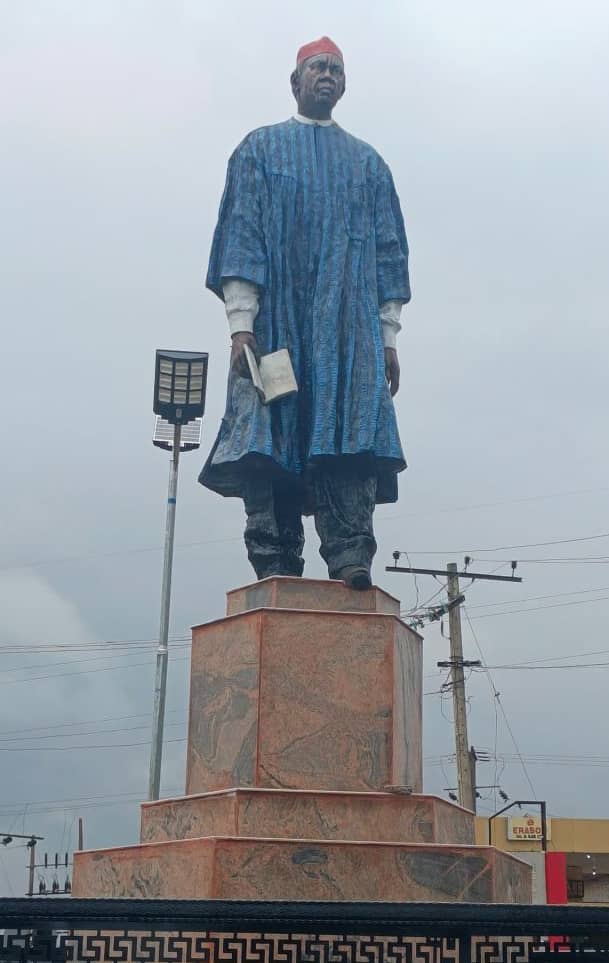
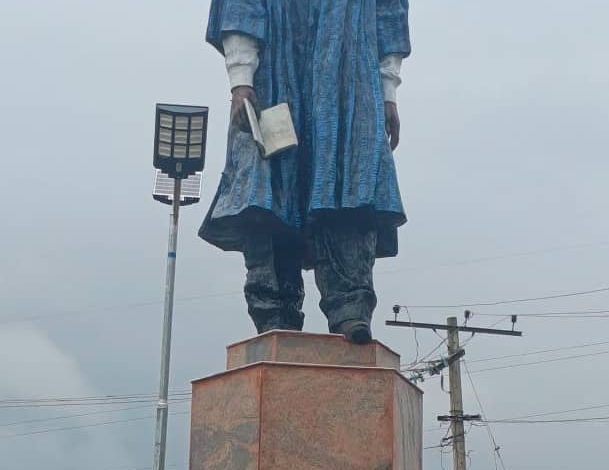
Chinua Achebe statue in his hometown Ogidi