National Theatre Festival, endowment art fund, others proposed as roadmap for creative sector

By Godwin Okondo
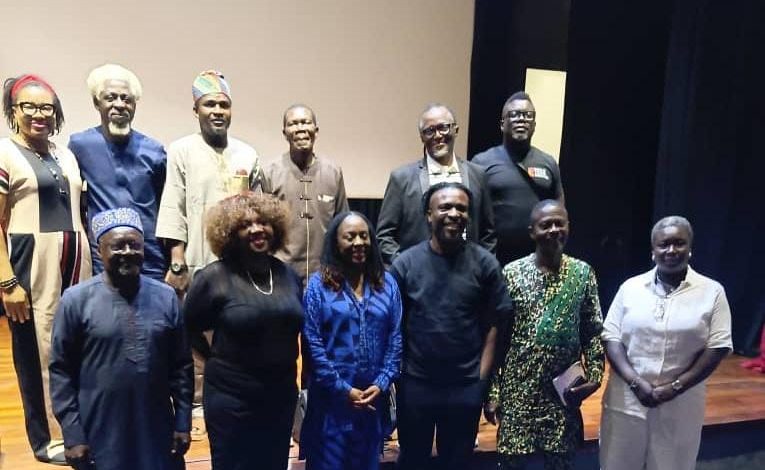
NIGERIA’S theatre practitioners have called for the urgent repositioning of the Wole Soyinka Centre for Culture and Creative Arts (National Theatre), Iganmu, Lagos, as a cultural and creative hub, rather than a purely commercial event centre. The call was made at a stakeholders’ meeting held on March 27 at Alliance Française, Lagos to commemorate World Theatre Day. The meeting was jointly organised by the National Association of Nigerian Theatre Arts Practitioners and the National Theatre Iganmu.
The event brought together key figures in the industry, including NANTAP President Adeniran Makinde, Chief Executive Officer of the National Theatre, Tola Akerele, alongside practitioners such as the CEO of J. Randle Centre for Yoruba History and Culture, Qudus Onikeku, Pawstudios director, Kenneth Uphopho, former NANTAP President, Israel Eboh and Tony Okuyeme, among others.
Discussions at the meeting centred on the current realities, challenges and future direction of theatre practice in Nigeria, with particular focus on the management of the National Theatre under a public-private partnership arrangement.
Participants raised concerns over the governance and operational structure of the facility, noting the need to balance commercial viability with cultural responsibility. They also highlighted the high cost of accessing the theatre’s facilities, warning that such barriers could stifle artistic production and reverse gains in the sector.
Stakeholders further stressed that the National Theatre must not be reduced to a venue for commercial events but should remain a centre for cultural programming, artistic development and the preservation of Nigeria’s heritage.
The meeting also underscored the need for practitioners to move beyond individual-led initiatives by establishing structured theatre companies capable of attracting funding, partnerships and ensuring sustainability. Concerns were equally raised about gaps in capacity-building programmes, particularly the absence of a clear pathway linking training to employment and production opportunities.
On market development, participants emphasised the importance of improving audience engagement and visibility, urging that the National Theatre should function as a marketplace for creative works capable of attracting investors and fostering international collaborations. In addressing funding challenges, stakeholders explored options including increased private sector sponsorship, investment vehicles for productions, ticket pre-sales and strategic partnerships. They also strongly backed the creation of an independent endowment or trust fund to ensure long-term financial sustainability for the National Theatre.
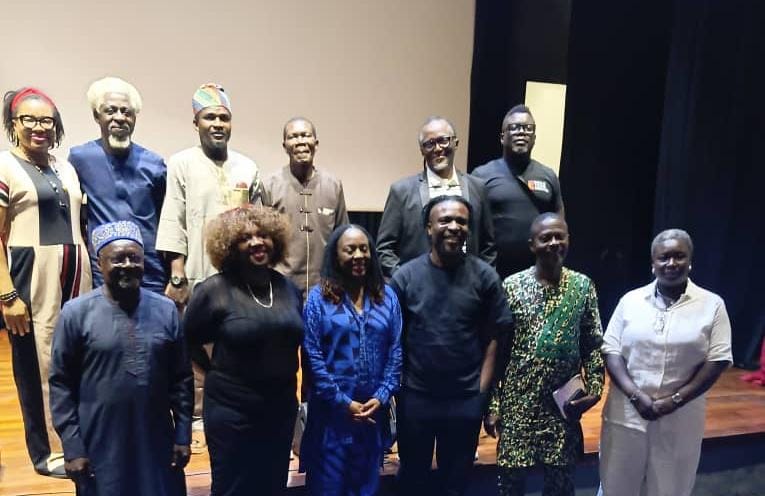
Theatre practitioners on World Theatre Day… in Lagos
Participants called for more consistent government policies and greater stakeholder inclusion in decision-making processes, noting that policy instability continues to hinder the growth of the sector. They further stressed the need for aggressive public awareness campaigns to improve visibility and public engagement with theatre activities.
At the end of the deliberations, stakeholders adopted several resolutions, including the repositioning of the National Theatre as a creative hub, the development of frameworks to improve access for practitioners, and the establishment of structured capacity-building pipelines.
They also advocated the institution of a flagship annual National Theatre Festival as a unifying platform for practitioners and a driver of industry growth, the creation of an endowment fund, and strengthened engagement with governments to promote inclusive and sustainable policies for the creative industry.
The meeting concluded with a renewed commitment by stakeholders to collaborate, innovate and take strategic actions aimed at unlocking the potential of Nigeria’s theatre sector.