Indigenous Art Festival 2026 to spotlight memory, healing around 1967 Asaba Massacre

By Godwin Okondo
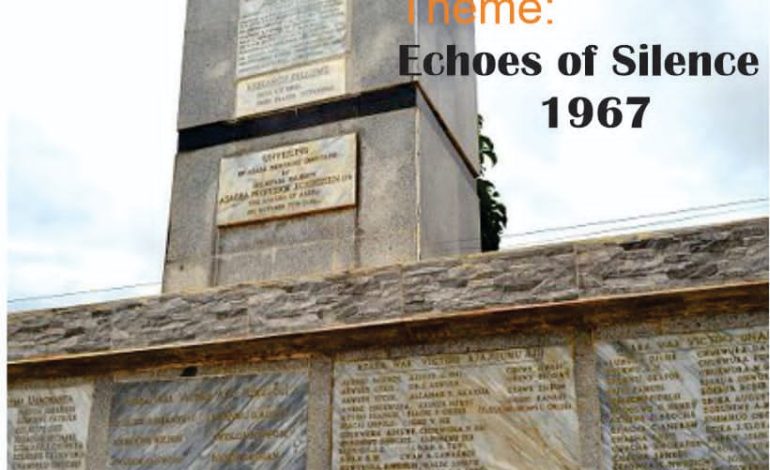
THE organisers of the 3rd Indigenous Art Festival, Asaba, have dedicated this year’s edition to the victims of the 1967 Asaba massacre, using art as a medium to explore memory, loss and collective communal healing. The festival, scheduled to hold from September 25 to 27 at the Indigenous Cultural Center, Delta State Film Village, Anwai, Asaba, comes with the theme ‘Echoes of Silence 1967,’ a concept designed to provoke reflection on one of the most tragic episodes of the 30-month long Nigerian Civil War.
Organisers say the theme underscores what remains after violence has passed—silence, absence and the enduring weight of memory—while encouraging audiences to confront overlooked histories and engage in deeper introspection.
The festival draws historical context from the events of October 7, 1967, when federal troops entered Asaba during the civil war and reportedly opened fire on unarmed civilians, who had come to welcome them as liberators from the Biafran soldiers that briefly occupied the town by the banks of the River Niger. The incident, widely referred to as the Asaba Massacre, remains one of the least investigated and most painful chapters of the conflict.
Historical accounts indicate that Asaba’s strategic position along the River Niger, opposite the then Biafran-held city of Onitsha, placed it directly in the path of advancing federal forces under the command of Murtala Mohammed. Following intense battles in the region, tensions escalated, culminating in widespread violence against civilians accused of sympathising with secessionist forces.
Eyewitness reports and later studies recount how residents, dressed in white and chanting “One Nigeria,” gathered in a peace welcome of federal forces as liberators, only to be met with mass shootings after being separated at Ogbe-Osowa Square. While casualty figures remain disputed, estimates range from several hundred to over 2,000 victims, most of them men and boys, after the women had been seperated from them.
The violence reportedly extended beyond the initial gathering, affecting multiple locations across the town and leaving lasting scars on families and the community. Decades later, the trauma continues to shape collective memory, with many survivors recounting loss, displacement and years of silence.
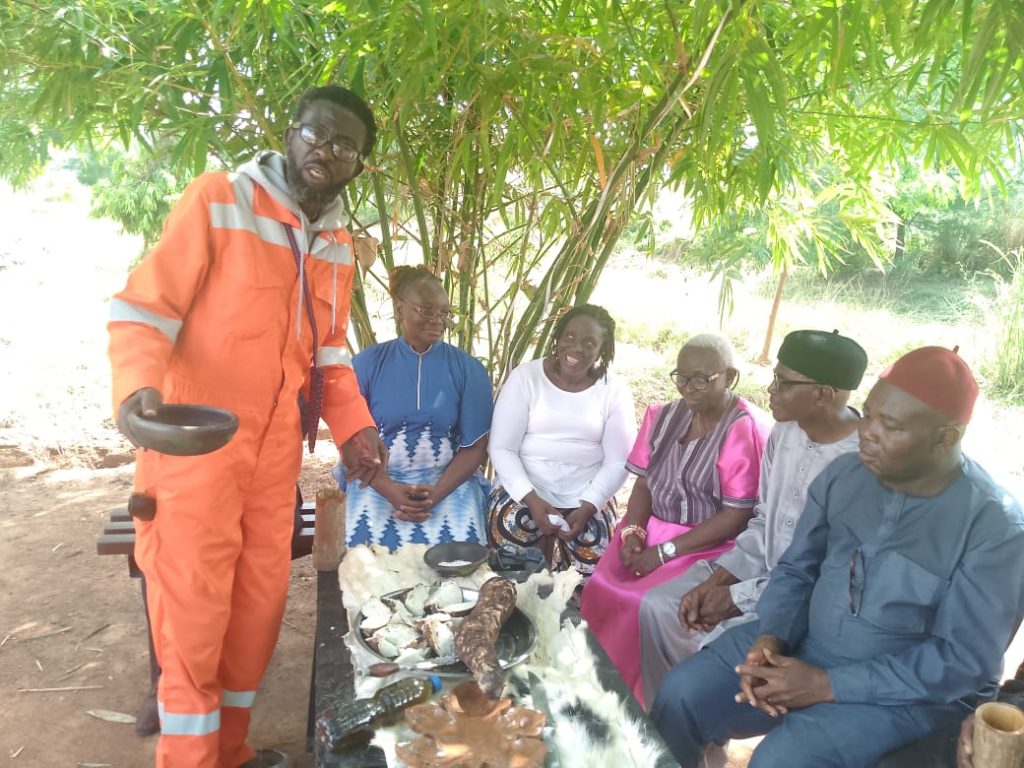
Among family elders, Indigenous Art Festival director, Mr. Washington Uba presides over the new yam festival ceremony during last year’s edition… in Asaba
Scholarly works, including The Asaba Massacre: Trauma, Memory by S. Elizabeth Bird, The Nigerian Civil War by Fraser Ottanelli and Blood on the Niger by Emma Okocha have documented the events through archival research and survivor testimonies, bringing renewed attention to the tragedy. In 2017, a memorial arch was inaugurated in Asaba to mark 50 years since the killings, serving as a cenotaph where victims are honoured and remembered annually.
Festival organisers note that this year’s programme is not only about remembrance but also about education and reconciliation. Through performances, visual arts, and cultural exhibitions, the event aims to create space for dialogue on the human cost of conflict and the importance of peace.
They emphasised that remembering victims of mass violence is part of a broader global effort to acknowledge historical atrocities, provide closure for survivors, and ensure such events are neither forgotten nor repeated.
“Asaba today is a thriving city, but its history cannot be separated from the events of 1967,” Festival Director, Washington Uba, said, adding that the festival seeks to transform remembrance into a tool for unity rather than division.
They further noted that the theme “Echoes of Silence” reflects not only the lives lost but also the stories left untold, urging a new generation to engage with history thoughtfully and responsibly.
The 3rd Indigenous Art Festival, Asaba, is expected to attract artists, historians, cultural practitioners and members of the public, all united by a shared commitment to preserving memory and promoting peace through artistic expression.