Biodun Jeyifo: The exit of the voice for the Talakawas

By Wale Okediran
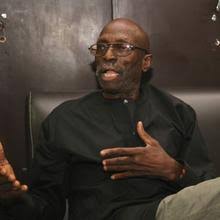
BARELY one month after his eightieth birthday, Biodun Jeyifo, Professor Emeritus of English at Cornell University and Professor Emeritus of Comparative Literature at Harvard University, US passed away on February 11, 2026. Despite his long battle with ill health, the courageous and charismatic scholar, teacher and first President, Academic Staff Union of Universities (ASUU) never lost the boldness and passion that has characterized his well spent life.
Jeyifo’s passing was not just the loss of family, friends and legatees, it was also the loss of a vociferous voice for the oppressed, the poor, the less privileged, in short of the downtrodden ones, Talakawas, Hausa for the common people, poor, or less-privileged class, often used in Nigerian political discourse to represent the masses. Historically championed by figures like Aminu Kano, it denotes the ordinary citizen, the working class, and the underprivileged.
For a period of six years (2007-2013) BJ (as he was well known) maintained weekly columns titled ‘Talakawa Liberation Forum’ (TLF) and ‘Talakawa Liberation Courier’ (TLC) in two of the leading Nigerian newspapers, The Guardian and The Nation. This extension of his political activism might have crested in Nigeria’s Fourth Republic, but it began during his time as a postgraduate student at the University of Ibadan in 1971, when he wrote drama and theatre reviews for the now-defunct Daily Sketch.
My first personal contact with the universally acclaimed academic, critic and author was in 2006 when, in my position as the National President of the Association of Nigerian Authors (ANA), I had invited him to give the keynote address at the conference on the 20th Anniversary of Wole Soyinka’s Nobel award in literature. In his response to my letter, BJ had sent me an email, “Dear Wale. Thank you for your invitation to give the keynote address at the 20th anniversary of the Nobel Prize for Literature. As for the topic of my address, I hope to be exploring the existence – or, as some would argue, the non-existence – of dialogues between different generations of African and Nigerian writers and critics, focusing on the factors that impede these dialogues. And I will be using the Nobel prizes to Africans at home and in the Diaspora as a point of departure for this exploration.”
As expected, BJ gave a good account of himself at the historic and successful event which was attended by the likes of Nadine Gordimer, the 1991 Nobel Laureate in Literature as well as the pioneer Secretary General of the Pan African Writers Association (PAWA), Prof. Atukwei Okai, among other dignitaries.
Again in 2013, I had another important reason to again call on the eminent scholar during the US Book Reading Tour of my book, Tenants of the House which took me to 12 states in the US. During the tour, my schedule took me to the Harvard University at Cambridge, Massachusetts where BJ was the Professor of African and African American Studies and of Comparative Literature. Apart from helping to mobilize a quality attendance at my reading, the eminent professor later took me to dinner at the end of my reading on September 30, 2013.
Even though affable and accommodating, BJ did not allow his closeness to any writer to affect his work as a highly cerebral critic. Thus, in his ”Talakawa Liberation Courier 131”, BJ expertly handled the review of Tenants of the House under the heading, ‘Patriotism, Democracy and Fractured Storytelling in and around Wale Okediran’s Tenants of the House.’ He even went on to add the essay to his collection of journalistic writings between 2007 and 2013 entitled, Against the Predators’ Republic: Political and Cultural Journalism.
In his review of the book, Richard Joseph, John Evans Professor of International Politics and History, Northwestern University, had this to say, ‘’In this wonderful book, Biodun Jeyifo provides an engrossing collection of his public essays. He seeks to separate predation from democracy. But how do you create a “cognitive map” of the hallucinatory? How do you capture in words the irrepressible “thing that is Nigeria”? Jeyifo splashes words on the canvas like an expressionist painter: “chaotic, anarchic energy and resilience” alongside “turbulence, misdirection and brutal inequities.” Then he slows the pace with beguiling haikus.
“He also describes key moments and personalities in Nigerian politics, thereby creating an analytical volume that is destined to become a standard reference work. He draws from a vast quiver: cultural theory, social criticism, lyricism, and humor. And quite often, the arrows strike their ever-moving target’’.
This highly cerebral book, a collection of essays analyzing social inequality, corruption, and the intersection of “predation” and “democracy” in Nigeria and Africa was published in 2016 by Carolina Academy Press, US.
Although I could not attend BJ’s 80th birthday celebration that took place on January 5, 2026 at the MUSON Centre, Lagos, Nigeria, my heart was with the beacon of hope and inspiration who used his life to teach all those who knew him the true meaning of compassion and selflessness.
His kindness and wisdom will be forever be remembered.
May his dear soul rest in perfect peace!