

Teaching children to be responsible adults in Ameh’s ‘Mariamo and the Bowl of Cashews’ and ‘The Rise of the Phoenix’

By Paul Liam
TERESA Oyibo Ameh’s dedication to the welfare of children, women, and girls goes beyond her charitable work through the Aunty Talatu Reads Foundation. Her literary career, spanning several decades, has focused on nurturing children. Over the years, she has organized numerous reading events for children, especially orphans, introducing them to the culture of reading and writing. Children are empowered when they have access to books and are encouraged to develop a love for reading during their early years. With over ten children’s titles, Aunty Talatu has earned the bragging rights as one of Nigeria’s most dedicated children’s authors.
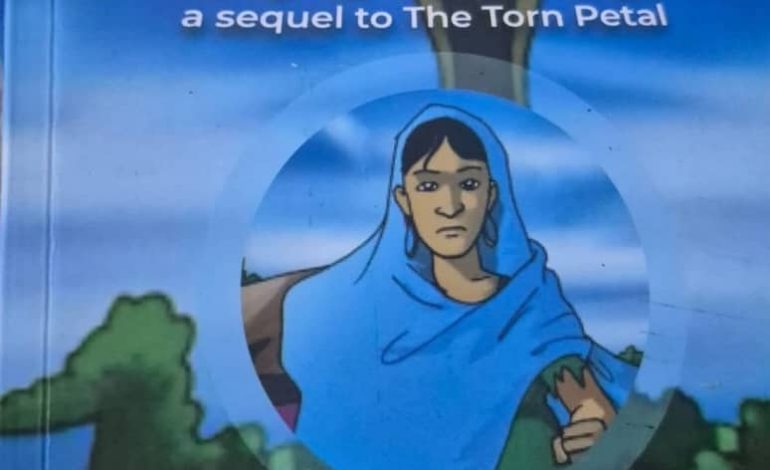
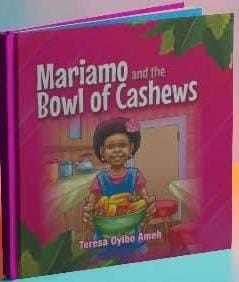
In 2025, she released two new children’s books: Mariamo and the Bowl of Cashews and The Rise of the Phoenix, a sequel to her well-received novella, The Torn Petal, all published by AMAB Books and Publishing. What is even more profound and charitable about Aunty Talatu is that she ends up distributing her works to children for free. Affirming her lifetime commitment to empowering children with the moral grounds to develop into functional adults. Her works are filled with rich moral lessons and are specifically intended for early readers. In her works, children are exposed to the social and cultural values that once held the moral fabric of African societies, which are fast eroding due to the influence of foreign values, aided by social media and internet access.
Thus, her books serve as sources for moral and life lessons necessary for the development of functional children. For example, in Mariamo and the Bowl of Cashews, Mariamo is taught the value of sharing and thinking of others—selflessness. The danger of greed is also highlighted. A society that neglects the feelings and welfare of others is destined for failure, the story further highlights. Mariamo is taught to contain her greed and consider the interests of others after she ate the bowl of cashew nuts her grandmother brought from the village, without leaving any for her siblings. Her mother and grandmother, after cautioning her over her bad behaviour, settle down in the kitchen to educate her calmly:
‘Mariamo, you cannot take what belongs to everyone. I brought three bowls of cashews, and you finished one bowl. That is greedy and selfish,’ Grandma Ooja said sternly. She wasn’t smiling.” Feeling sorry for her action, Mariamo apologies saying: “I am sorry, but the cashews were so delicious.’ Reinforcing her grandmother’s earlier caution, her mother explains the implications of Mariamo’s actions to her: ‘Yes, they were delicious, but you should have thought of other people in the house like Ejura and Arome who are not back from school yet, or mummy and daddy. Moreover, if you are a selfish child, you will grow to be a selfish adult who will not remain anything for others. Remember, a grab-grab child will grow to be a grab-grab adult.”
Beyond teaching little Mariamo about selflessness towards others, the larger society is brought into the conversation with many lessons for parents who often do not teach or correct their children when they do something wrong. Not correcting children when they do something bad encourages them to grow into irresponsible adults who do not care about others and are driven by greed. Therefore, Aunty Talatu teaches parents to be firm in correcting the wrongdoings of their children so that they will grow with the right moral values and become better adults in society. To echo this message, Mariamo’s promise to become a responsible adult becomes instructive: ‘I will not do that again. I don’t want to become a grab-grab adult when I grow up. I want to be an adult that will take good care of others. I want to be a good adult.’
In Mariamo’s pledge, we can detect the strong moral values that have underscored the life of Aunty Talatu: selflessness, philanthropy, and responsibility towards others. Aunty Talatu seems to stress that these values are not only critical in developing a conscientious individual but are essential in building an egalitarian society.
The Rise of the Phoenix highlights the plight of a widow and her daughters, who are dislocated by insurgency and life’s unforgiving rage. It traces the life of Khadija and her daughters, and their struggle to make meaning of a hostile world and the enormous grief of losing a husband and father to the cold hands of terrorists while living in a strange land far away from their home. The trauma of loss and displacement can only be understood by those who have truly experienced the cruelty of this world. But against the dwarfing fatalism of life, hope rises like a phoenix to heal the hearts of the afflicted.
Hussaina, Khadija’s teenage daughter, became pregnant after spending some time at a displaced persons’ camp and bore a child, which her dejected mother helped her raise while living in Gwagwa, Abuja, with her other daughter, Uwani, who, like her mother, has her own demons to deal with. Married for several years without a child, she certainly is not a happy woman. Confronted with the loss of her childhood and the dreams of furthering her education after the completion of her secondary school, Hussaina becomes a home teacher, teaching the neighbourhood children, starting with her son, Aliyu.
Hussaina’s dedication and selflessness earned the love and respect of everyone in the neighbourhood, and eventually, she met Dr. Timothy at the clinic where she took her son for treatment, and their friendship grew stronger, leading to her going back to school to study nursing with the help of Dr. Timothy. They eventually got married and lived happily ever after. Like her mother, who married Aliyu, a Christian, Hussaina ends up marrying Dr. Timothy and accomplishing her dreams of becoming a nurse. Although life was unfair to her family, her hope and determination prevailed as God’s protection never left her. Hussaina is an example of hope and the power of conviction.
She remained a good person, caring for others despite the harsh reality of life. She never gave up on herself or those who looked up to her, especially the children whom she nurtured at her homeschool, giving them purpose and hope. The story highlights the importance of kindness, determination, and perseverance even in the face of the most daunting obstacles. Because of her kindness and good deeds, God blessed her with a good husband, and she also achieved her dream of becoming a nurse, returning to head the community clinic in her village, thereby providing immense service to her people.
Ameh, in this story, like in the first, teaches young people to be of good behaviour and be kind to others despite the challenges that they may be facing. There is light at the end of the tunnel. Both books contain important social and moral lessons for children and adults alike. They are a manifest embodiment of the values that have characterized the life of Aunty Talatu, always looking out for the well-being of others. Aunty Talatu deserves her flowers now and not when she is no longer here with us.
* Liam is a poet and culture writer based in Abuja




1 Comment
Nice one Paul.
Beautiful read.