Jeyifo: He did not manufacture disciples — He manufactured thinkers

By Babafemi Ojudu
I was scheduled to participate in the panel discussion on my late teacher, Prof. Biodun Jeyifo. I had prepared carefully. However, early this morning, I was invited to an important meeting with the Ooni of Ife in Ile Ife. I had assumed it would last no more than an hour; it extended to five.
After the meeting, I reached out on my phone to apologize to the panel host, Prof. Toyin Falola. To my surprise, the discussion was still ongoing. I joined briefly to correct an impression that Prof. Jeyifo imposed his Marxist ideology on his students. I did not have the time to fully express my thoughts — partly because of time constraints, and partly because I was observing the Muslim fast and feeling its physical toll.
I have therefore decided to set down my reflections in this form, with apologies to the organizers.
Let me begin not with theory, but with memory.
When I first encountered Prof. Biodun Jeyifo in the early 1980s at the then University of Ife, I did not realize I was sitting before a man who would shape not only my intellect, but my moral architecture.
The University of Ife in those years was not merely a campus. It was an arena of ideas. The air itself felt argumentative. Debates were not extracurricular — they were oxygen. Literature was not ornamental — it was political. Scholarship was not neutral — it had consequences.
And at the center of that ferment stood BJ.
He belonged to that formidable Ife tradition shaped by giants like Wole Soyinka and Dr Segun Osoba — a tradition that insisted African literature must speak to power, interrogate injustice, and refuse silence.
Yet BJ was not anyone’s echo. He had his own intellectual signature.
What struck many of us was not only what he knew, but how he taught.
He did not intimidate.
He did not humiliate.
He did not impose conclusions.
He invited argument. He challenged assumptions. He asked questions that followed you back to your hostel room and refused to let you sleep.
He treated us not as empty vessels, but as minds under construction.
And that is rare.
Because true teachers do not manufacture disciples. They manufacture thinkers.
In his classroom, literature was alive. Marxism was not a slogan; it was an analytical discipline. African humanism was not romantic nostalgia; it was ethical grounding. He insisted that texts must be read in context — and that society itself was a text to be interrogated.
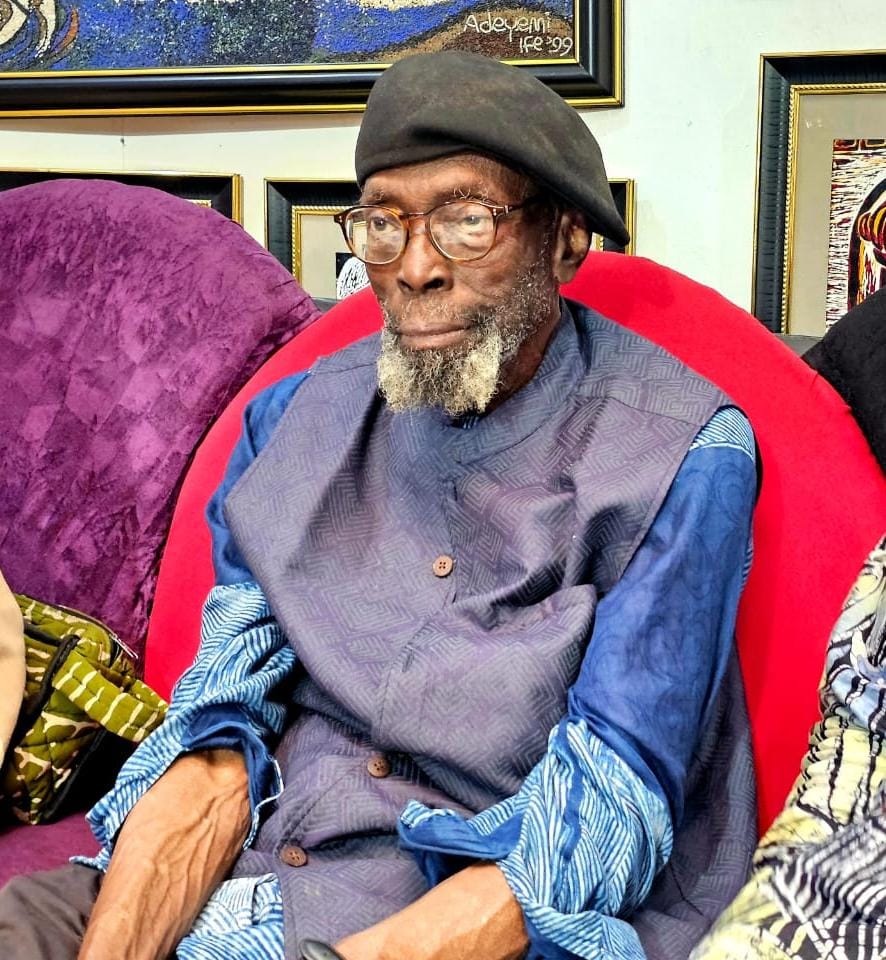
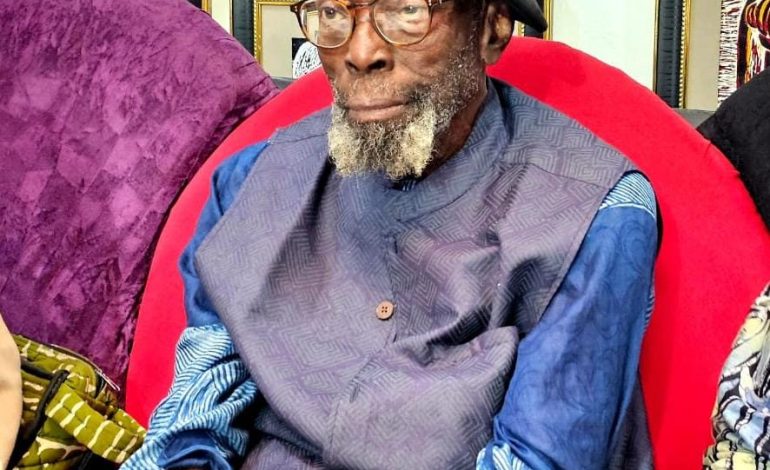
Prof. Biodun Jeyifo
Years later, when some of us found ourselves confronting authoritarian power — in journalism, activism, or public life — we realized that what BJ and his generation had given us was not merely literary theory. It was intellectual courage.
The courage to ask:
Who benefits?
Who is silenced?
Whose narrative is being normalized?
That training does not leave you.
BJ was never an ivory-tower academic. He embodied the scholar-activist tradition. He understood that ideas are not decorative — they are disruptive. They shape movements. They unsettle power. They equip citizens.
In those days at Ife, there was no artificial boundary between the classroom and the street. The campus was politically alive. Students were engaged. Faculty did not pretend that the world beyond the university gates did not exist.
BJ stood firmly in that tradition — rigorous in scholarship, unapologetic in conviction.
And yet, he was never doctrinaire.
He debated fiercely, but he listened.
He critiqued sharply, but he encouraged generously.
He held strong ideological commitments, but he respected intellectual seriousness wherever he found it.
That combination — conviction without arrogance — may well be his most enduring lesson.
As his scholarship traveled beyond Nigeria, he became a global intellectual voice. Yet he never lost his rootedness. He was cosmopolitan in reach, but African in his center of gravity.
That is important.
Because too often, intellectual migration becomes intellectual detachment. BJ did not detach. He carried Africa into global discourse without apology.
So what is his legacy?
Certainly, the books.
Certainly, the essays.
But beyond publication, his true legacy is the generations of students who learned to think critically, question authority, read power structures, and insist that ideas matter.
The tragedy of our present moment — and I say this gently — is that many of our universities are no longer ideological furnaces. They are quieter. More cautious. Less daring.
BJ belonged to a generation that believed the university was a moral site — not merely a credential factory.
If we truly wish to honor him, our tribute must not end in nostalgia. It must provoke renewal.
Are we still producing scholar-activists?
Are we nurturing dissenting thinkers?
Are we equipping students not only to pass examinations, but to interrogate society?
These are the questions his memory places before us.
On a personal note, I remain profoundly grateful.
In moments of public difficulty — when speaking truth came at a cost — I often found myself returning, almost subconsciously, to those early intellectual formations: the insistence on rigor, the discipline of thought, the refusal to accept easy narratives.
Teachers like BJ do not die.
They migrate.
They migrate into memory.
They migrate into argument.
They migrate into the moral reflexes of their students.
And as long as some of us still pause before speaking and ask, “Is this intellectually honest?” — he lives.