‘Close Encounters of the Tiered Kind’

By Emmanuel Frank-Opigo
CLOSE Encounters of the Third Kind is a blockbuster 1977 Steven Spielberg film about contact between humans and extraterrestrials. In a nutshell, the “first kind” is the mere sighting of UFOs from a distance; the “second kind” is seeing a physical effect of extraterrestrials on the environment while the “third kind” is direct contact between humans and extraterrestrials.
Fast forward
EVEN among humans there are different levels or tiers, synonymous with humans and extraterrestrials. In every sphere, there are the superstars and there are the fans, there are the leaders and there are the masses. In the creative arts, there are the readers or watchers (humans) and the read or watched (extraterrestrials). When persons from these two tiers meet by pure chance, it is a “close encounter of the tiered kind.”
I had quite a few of such encounters myself. Some were mere “sightings”, while others resulted in talk and extended association.
In the 1978 film, The Greek Tycoon, the daughter of Aristotle Onassis says of her father: “Some collect stamps, some collect coins. My father, he collects, well – people.”
Onassis was intentional about collecting people, including the widow of a slain United States President. I had my own modest collection of people in the literary and associated sphere – through chance encounters. Some were encounters of the first kind, some the second, and some the third. But they were all close encounters of the tiered kind.
Chinua Achebe
PROFESSOR Chinua Achebe stands out in African and world literature. When I enrolled at the University of Nigeria, Nsukka in 1979, I made it a point of duty to sight the office of this larger-than-life personality. It was a bit disappointing as his name was there conspicuously on a door that opened to the outside in a small building that served as the Department of English.
I attended a couple of public lectures he gave at the Margaret Ekpo Hall. On one particular occasion he was railing against the Government of Kenya for incarcerating Ngugi wa Thiongo. His words: “Sometime in the distant future Charles Njonjo would only be referred to as the Attorney-General of Kenya in ‘the time’ of Ngugi wa Thiongo.” That sank in.
One day I was at the University Bookshop. As I queued at the counter, I suddenly noticed that the familiar figure in front of me was Chinua Achebe. I observed that he was paying for just one little book, his own Chike and the River. I wondered why. He should have quite a number of copies at home, I thought. He left with his signature smile, and left me wondering why I didn’t at least blurt out a “good afternoon, sir.”
Gabriel Okara
GABRIEL Okara was my father’s contemporary and friend. But they met at places and not at home. So, my sightings of Gabriel Okara were only in newspapers and the back cover of his novel, The Voice. My first close encounter with him was sometime in the mid-seventies when he and my father were at the back seat of the car, and I was in the passenger seat in front. My father had by then seen my poetic bent, and told Okara so. When he became Writer-in-Residence at the Rivers State Council for Arts and Culture, I became part of the pioneer class.
The relationship continued to the creation of Bayelsa State in 1996 – he becoming Grand Patron of the Bayelsa State Chapter of the Association of Nigerian Authors in 2001, and I becoming Chairman between 2013 and 2015. We feted him up to his death in 2019.
Elechi Amadi
I also first met Elechi Amadi on the back cover of The Concubine. But sometime in the mid-seventies he moved into the building on Mbonu Street at the junction with Babbe Street where we lived. Amadi’s building was in the line of sight of my bedroom window, so I observed him whenever he was on the balcony. His daughter frequently passed in front of our house on her way to take the bus on Aba Road.
But it was around 1990 that we began to associate. Ken Saro-Wiwa, then President of the Association of Nigerian Authors (ANA), was eager for a Chapter to be formed in Rivers State, so he could bring the National Convention of the Association to his home State. Literary minds converged, Elechi Amadi became chairman and I had the honour of serving as Assistant Secretary. The convention did not hold because of Saro-Wiwa’s travails and subsequent execution, but the Chapter went from strength to strength, eventually hosting the Convention in 2001.
Ken Saro-Wiwa
KEN Saro-Wiwa attended our ANA Rivers Chapter meetings whenever he was in town, and that was about three or four times. As Assistant Secretary, it fell on me to deliver notices of meetings. I never met anyone at his Rumuibekwe Estate residence and had to stick the notices on the door each time. There were no mobile phones then.
He was on first name terms with everyone and called me Emma as if we were buddies – this man that was Commissioner for Education when I was but a junior student. On one occasion he proudly displayed his new Toyota Crown Saloon car saying, though it was going out of fashion, it remained his preferred car, and this model had a small fridge compartment behind the back seat that could contain – Freudian slip – four cokes of can. He was shortly after embroiled in the “Ogoni Four” saga that led to his framing and execution.
I.N.C. Aniebo
PROFESSOR I.N.C. Aniebo (The Anonymity of Sacrifice, The Journey Within, Of Wives, Talismans and the Dead) is one Nigerian writer I have not yet read, maybe because I had not stumbled on any of his works. But he was a constant feature in the listing of the African Writers Series edited by Chinua Achebe. With the establishment of the University of Port Harcourt in the late ‘70s, many writers gravitated towards this new citadel of learning. Professor I.N.C. Aniebo was one of these.
I had just the one close encounter with him. In the formative stages of the Rivers State Chapter of the Association of Nigerian Authors, he attended one of the meetings which held at the Cultural Centre in Port Harcourt, headed then by Comish Ekiye. Elechi Amadi, as Chairman, was presiding. But even before the meeting started there was small talk and Aniebo was very agitated, lambasting some professors in the University who had not written any creative work but were oppressing those who had, just because they were higher up in the pecking order. He mentioned the target of his ire, and the reader may scan through these close encounters and guess who it was.
Charles Nnolim
PROFESSOR Charles Nnolim is a famed literary critic. My first close encounter with him was when the Rivers State Chapter of the Association of Nigerian Authors celebrated the 80th birthday of Gabriel Okara at the Government Catering Rest House, Harley Street, Old GRA, Port Harcourt. He was invited to be Chairman of the occasion. Two surprises were sprung on that occasion.
The first was by me. We were doing readings, and when it came to my turn, I said I would rather do a literary quiz session. The Secretary and Master of Ceremonies, Miesoinuma Minima, was skeptical of this “innovation” and asked me to be brief. I was brief. I had a packet of 12 handkerchiefs as prizes, so there were only twelve questions. The exercise was a hit as everyone was raising his or her hand to answer the next question – including Professor Nnolim! I still remember clearly the question he answered. The quiz format was for whoever knew what work I was reading from, to stop me and give the answer. I started reading:
A man crossing the road
To greet a friend
Is much too slow…
“Stop!” It was Professor Nnolim. ‘”Air Raid’ by Chinua Achebe” he blurted gleefully and collected his prize.
This was the beginning of my quizzing at meetings, and this carried on to Bayelsa when I eventually relocated.
The second surprise was an unidentified but familiar personality that was approaching the hall as we looked through the window. As he got closer, we saw that it was Governor D. S. P. Alamieyeseigha of Bayelsa State, arriving unannounced. That made our day. Gabriel Okara got the promise of a brand-new car as birthday present, and Professor Nnolim also made a promise – that he would not wash his hands for one week after shaking hands with the Governor.
Ola Rotimi
PROFESSOR Ola Rotimi was also at the University of Port Harcourt, and the drama theatre The Crab is attributed to him. But where I saw him direct was at the Rivers State Cultural Centre at No. 74 Bonny Street, Port Harcourt. I recall he produced Elechi Amadi’s The Road to Ibadan, featuring the veteran actor, Columbus Irisoanga. I will not forget the line where the protagonist said life was so insecure during the ongoing Nigerian Civil War that “you could get up one morning only to find out you’ve been killed!”
Life imitating Art, or vice versa? Ola Rotimi would have been killed on his way to Ibadan at the beginning of the Nigerian Civil if he did not take the on-the-spot decision to face humiliation rather than widow his wife and orphan his children, who were watching from their Peugeot Station Wagon car. Wole Soyinka describes in his memoir, You Must Set Forth At Dawn how a soldier delivered twelve lashes of a “koboko” on him at a checkpoint. And Soyinka wonders: “In Ola Rotimi’s position, what would I have done? What was the right decision at such a moment?
By some curious coincidence, I stumbled on Ola Rotimi two or three times in front of the SUPABOD Stores, standing by his Peugeot 504 Station Wagon car (the same or another!), waiting for his family to conclude their shopping and join him back home. Does he also have an affinity for Peugeot Station Wagon cars as Ken Saro-Wiwa has for Toyota Crown cars?
Joseph Garba
THE mid-70s were truly remarkable times. When the band of Brigadiers overthrew General Yakubu Gowon in 1975, the key actor was Colonel Joseph Nanvem Garba, later author of Diplomatic Soldiering, which qualifies him for this collection. He had written that memoir after his stint as Foreign Minister in the Mohammed/Obasanjo regime.
My first sighting of Joseph Garba, who was in charge of the elite military team protecting the Head of State, was in Port Harcourt. It was announced that he was coming to town to commission the basketball court that had just been constructed on Niger Street, and that he would even play an exhibition game there. I found myself at the venue and enjoyed the game. As soon as he went back to Lagos, the coup happened, and Colonel Victor Malu, the Commander at Bori Camp, took charge till a Military Governor (Col. Zamani Lekwot) was announced for Rivers State. On the underlying reason for his coming to Port Harcourt, your guess is as good as mine.
Sometime in 1980 I was in Jos where my sister Helen was doing her National Youth Service. At the end of Ahmadu Bello Way was Kingsway Stores where I usually went for shopping. On this day, as I queued at the counter, I thought the figure in front of me was vaguely familiar. As he paid and turned to leave, I confirmed it. It was General Joseph Nanvem Garba, retired.
Onyeka Onwenu
Charles Ndiomu
GENERAL Charles Ndiomu (1934-2002) of Bayelsa State may or may not have some writing to his credit. But his approved biography by Deinbo Briggs, A Jolly Gentle General, tells his story. He was a household name even before he was given the dubious distinction of presiding over a controversial court martial.
But on December 31, 1994 I found myself on the same “high table” with him in the Main Hall of Shell Club, Port Harcourt. I had asked the Master of Ceremonies, my friend Wemimo Laniyonu, to also have a couple of other persons on the high table – notably Gabriel Okara – but he consigned Okara to the front row instead, arguing that wedding protocols were changing fast and even the General barely made it, not just because of his pedigree, but because he was also an in-law. I do not recall the General (then retired) having much conversation that day, or I didn’t notice. So, the table had the bride and groom, the four parents, a Chairman (Prof. Y. O. Beredugo) and General Ndiomu. Beredugo was from me, so Ndiomu, by the MC’s reckoning, “balanced” the family equation.
I never encountered him again. But his daughter became a neighbour in Yenagoa, visited often, and made it to the Bayelsa State House of Assembly.
Femi Osofisan
PROFESSOR Femi Osofisan was a regular feature in the literary review pages of the national dailies in the 1980s. I first met him at the International Convention of the Association of Nigerian Authors in Port Harcourt in 2001, where we were the hosts. It was an election year and we in the Rivers State Chapter urged Elechi Amadi to run for the Presidency of ANA. He reluctantly agreed at the last minute. In the first vote, he and Professor Olu Obafemi had a tie and there had to be a second vote, with Obafemi winning a close vote.
In the 1970s I wolfed every writing by Wole Soyinka I could lay my hands on, whether or not I understood what I was reading. But I thought The Jero Plays and The Lion and The Jewel were clear enough.
One day I saw a book in the Port Harcourt Library by one ‘Okinba Launko’ offering a literary appreciation of all Soyinka’s works. I grabbed it and read from cover to cover. I now saw how shallow my understanding was, even of the works I thought were “clear enough.” Later I got to know that Okinba Launko was a pen name of Femi Osofisan.
I have a photograph from the 2001 ANA Convention in Port Harcourt of Femi Osofisan, Elechi Amadi and myself. Why I was the one in middle, flanked by these greats, is something I still cannot fathom. Close encounter of the sandwiched kind?
Lindsay Barrett
THIS great journalist and writer from the West Indies came to Nigeria in the ‘60s and made Nigeria his home. He was easy to spot in a crowd – fair complexion, greying hair and moustache, with the vintage camera slung round his neck. After being there and done that, he made Bayelsa his final home and married from there. A veteran of the West Africa magazine, I admired him from a distance. We eventually got to connect, and these days we speak and share ideas – and our books.
Early on during a literary event in Yenagoa, I asked the MC to introduce him properly, but the MC said she did not quite know him. When I introduced him as Igoni Barrett’s father (Igoni is a poet) he wondered ruefully if the son should be the reference point, and not the father. Point.
Wole Soyinka
I got enamoured with Professor Wole Soyinka and his works from my secondary school days in the ‘70s. I got to read all his published works then. After he published You Must Set Forth At Dawn, Mrs. Koko Kalango of the Rainbow Book Club in Port Harcourt brought him to a reading event at Hotel Presidential. This lady is unbelievable, as she can bring just about any great writer to town. Although I had heard of the pedigree of Chief (now King) Seiyifa Koroye in literary criticism circles, his review of the book kept me spellbound, and my respect overflowed when he said he had just a couple of days to prepare for the review of this 600-page book.
In another event earlier, Soyinka was invited to give a lecture at the same venue. I again came from Yenagoa for the event, and made sure I had a copy of his book for him to autograph for me. After the lecture I tried to get close, but it was impossible as there was a ring of Seadogs around him.
Ironically, at the Port Harcourt World Book Capital event in 2011, I shared the front row with Wole Soyinka, J. P. Clark, Gabriel Okara, Elechi Amadi and E. J. Alagoa.
In 2010, I wrote an email to Wole Soyinka requesting him to give a lecture at my father’s first memorial event. His reply:
Hello Mr. Frank-Opigo,
I know the name. Of course, I’ve been to Bayelsa quite a few times. Unfortunately, this would not be another such occasion. My calendar for the remainder of the year is already over-charged, regretfully. Do accept my deepest condolences on your loss.
Wole Soyinka
Failing to get this high-profile guest lecturer, I tried another. Chinua Achebe, now in a wheelchair, was in the United States. His secretary replied that because of his condition and age, he had limited his travel engagements. The lecture was eventually given by then Ijaw National Congress (INC) President, Prof. Atuboyedia Wolf Obianime.
J. P. Clark
PROFESSOR J. P. Clark has a combative mien. This also underlies the publication of America, Their America. Even his friend Wole Soyinka said as much in his book You Must Set Forth at Dawn. In Femi Osofisan’s biography on Clark, we are told of how he eloped with his future wife and how he went across the river to build his home on a forbidden island and lived there in isolation.
I first encountered him at the Gabriel Okara Cultural Centre in Yenagoa where he came for an Ijaw National Congress event. When he learnt I was an Opigo (his friend’s son) and a writer, he drew me to himself, with the admonition to “keep writing.” As he held my hand, I couldn’t help noticing the possessive firmness of his grip.
The Niger Delta Heritage Society (NDHS) in Yenagoa was established to celebrate and sustain Ijaw heritage. King Seiyifa Koroye is the Chairman and I am the Secretary. We started simply as the Ozidi Festival Committee as we set out to celebrate this seminal work by Clark, with support promised by the Bayelsa State Government. When the support did not come, we diversified into NDHS to celebrate not just J. P. Clark, but others as well.
In the build-up to the Ozidi celebration which would have involved a boat regatta, we visited Clark at his isolated Funama home. It was a delight. He pointed to where he would be buried – a recess in the building – and I wrote this poem after his passing to relive that moment.
This Is Where I Rest
(On JP Clark)
This is where I rest, he said
Pointing to a recess in the wall.
I surmised it was where he sat
On rocking chair, to watch the river roll.
But when I saw the latch, I knew
It was his self-made sepulchre;
And in “My Last Testament”, three
Days was when he asked to be laid there.
Our Saviour rose in three;
And though he said nor church nor morgue
The aftermath is clear:
JP will thaw this unexpected fog.
Chimamanda Ngozi Adichie
I read Purple Hibiscus and was impressed. But the marks of a “first novel” were there. Then I read Half of a Yellow Sun and can confirm there are no half measures here. I have procured, but am yet to read, Americanah.
When I learnt Chimamanda was coming to Port Harcourt for an event at the Hotel Presidential, I made sure I was there. Her parents in tow, this was another scoop by Mrs. Koko Kalango, the Book-Lover-In-Chief of Rivers State.
Before the event started, someone spoilt my day. As we were seated, I spotted him up front, someone I knew from university, discussing with a chess-player friend of mine. I approached them and greeted both, telling this gentleman – a nephew of Gabriel Okara’s – that we were both at the University of Nigeria, Nsukka, though I know he left after the first year. His response shocked me: “I don’t know you.” Period. I couldn’t believe it. I went back to my seat.
Years later I was in the Literary Sub-Committee for the burial of Gabriel Okara. Though he was now a high functionary in the Government, when our Chairman, King Koroye, suggested bringing this Okara relation into the sub-committee to which I was secretary, I told him that was fine and natural, but I would recuse myself from the Sub-Committee, and I told him why. He was not co-opted.
Benjamin Zephaniah
Kaine Agary
WITH her novel, Yellow-Yellow, I am tempted to compare Kaine Agary of Bayelsa State with Chimamanda Ngozi Adichie. The only difference is that she decided to stop after the first novel – or am I not up to date? My only encounter with her was a phone call I put through to her as Chairman of the Association of Nigerian Authors, Bayelsa State Chapter, sometime during my tenure, 2013-2015. She was not free to oblige our invitation. I enjoyed her novel even more because I could relate to the setting in Port Harcourt. Familiar settings have an irresistible pull.
Helon Habila
PATIENCE Ezinwoke was head of the British Council Office in Port Harcourt for many years. She is a class act, and very innovative. She brought some important writers to Port Harcourt to associate with the local literati.
Habila had won some international laurels. He came and interacted with us and read from his works. Later I bought his Prison Stories and read at my leisure. His literary competence is not in doubt, but for the first time ever, I stopped reading a book midstream because the stories were utterly depressing. I have since consigned that book to an invisible corner of my study.
Benjamin Zephaniah
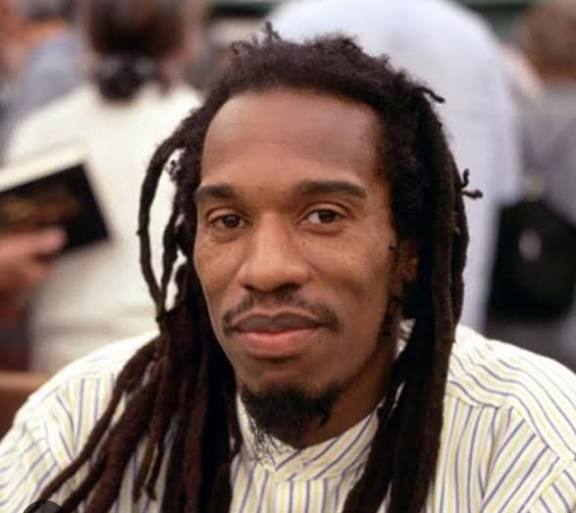
EZINWOKE also brought Benjamin Zephaniah from the United Kingdom. A spoken-word poet with some novels to his credit; he had publicly rejected an OBE from Her Majesty the Queen stating:
“I get angry when I hear that word ’empire’; it reminds me of slavery, it reminds of thousands of years of brutality, it reminds me of how my foremothers were raped and my forefathers, brutalised”.
A jolly good fellow, he delighted us with his poetry. Then he ended with his own rendition of Bobby McFerrin’s ‘Don’t Worry, Be Happy,’ ending with a twist when he suggested that, in another life situation I cannot recall now, we should be “Don’t happy, be worried!” I ensured I had a personal photograph with him, which now serves as a bookmark in my copy of his novel, Refugee Boy.
Comish Ekiye
COMISH Ekiye was synonymous with television drama in the Nigeria Television Authority, Port Harcourt and Rivers State Television in the 1970s. There was no cable TV and no Nollywood, so all of us were glued to the local stations. But his career started from The Village Headmaster series in Lagos in the late ‘60s and early ‘70s where he played the role of Chief Odunuga.
I would never have imagined that one day we would not just be buddies, but he would be calling me “his best friend”; we would be regularly going out for a drink together, and I would be assisting him to get his manuscripts published. But that is what happened progressively from when I became Chairman of ANA Bayelsa and beyond. When his eyesight failed, he asked me to help locate a good eye hospital and we did our best in that respect. We still do our best to take him on outing now and then to minimise the drudgery at home.
Ibidun Allison (Amebo)
IBIDUN Allison was on the cast of The Village Headmaster with Comish Ekiye. She played the ubiquitous and rumour-mongering Amebo. There was a reunion of the cast planned, and she somehow got to Comish Ekiye through me. I don’t know how she linked to me, but we spoke a number of times during that period.
Recalling their earlier days in The Village Headmaster, Comish Ekiye insists that, in spite of her perpetual youthful looks, she is significantly older than him. Take it from me, this is not idle gossip of the Amebo kind.
Patience Ozokwor
PATIENCE Ozokwor is a celebrated Nollywood actress known for acting the “wicked mother-in-law” and like parts. One day at the Abuja Airport she swept into the departure lounge and took a seat right in front of me. What struck me was her perpetual smile, as if inviting any of us around to strike up a conversation. The introvert that I am, I didn’t, and apparently no one else did. But incoming phone calls smothered the awkwardness. I don’t think I have watched any Nollywood film from the beginning to the end, with so much being served up these days on cable TV. Yet you cannot but take out some time to watch whenever Ozokwor was on screen.
Christie Essien Igbokwe
CHRISTY Essien Igbokwe was an actress before she became a star musician. The famed “Akpeno” of the NTA Aba The New Masquerade series, she was a delight on screen, just as about every actor in that cast. I was queuing up to board a plane from Lagos to Port Harcourt – I believe the last flight – when a diminutive lady swooped right past all of us to the front of the queue. No one complained as she literally sang, “Ah forgot ma ba-e-e-g.” The reader may try out various alternative accents here to approximate what I heard, but I was struck by the yawning difference between Christy and Akpeno.
Onyeka Onwenu
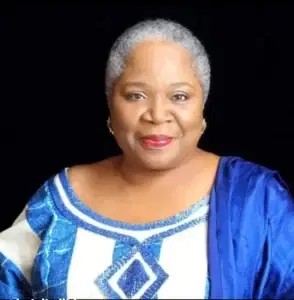
ONYEKA Onwenu and I have a connection neither of us was immediately aware of: our fathers were both staff of Enitonna High School in Port Harcourt in the mid-1950s – hers as Principal and mine as Vice Principal. Mr. D. K. Onwenu died in a car accident just after one year and my father became Principal.
I did not yet know this detail when Onyeka Onwenu started to feature on NTA as a reporter in the early ‘80s. I was particularly enamoured with her famed documentary on Nigeria’s economic recklessness, A Squandering of Riches. It was for me, therefore, a bit of a disappointment when I heard she was now a musician. This was not a negative on the music profession, but I did not see why a very successful journalist should switch. Eventually, however, she proved she could be equally good in music.
Fast forward to 2022. Enitonna High School was 90 years old and I was appointed Chairman of the Anniversary Committee. Onyeka was invited to come and receive an award on behalf of her father. And also, to sing. But I believe there was no clear understanding with regard to the singing bit. She was visited in Lagos by a team led by the Alumni President who reported that she was very emotional about the invitation. She gave out copies of her autobiography, My Father’s Daughter, which was very revealing in more ways than one.
Because performing was indicated, we paid her an honorarium upfront. But she did not turn up. When we called, she was indeed in Port Harcourt, but for another commercial event. A cordial relationship suddenly turned sour, in no small measure because of her sharp tongue. “How dare you!” was a phrase she frequently used, not just for us, but in other situations in her book, one being when her mother was manhandled while trying to reclaim their “abandoned property” house in Port Harcourt. It fell on me to try and mend fences with her, but she was adamant and would not let her father’s award be sent to her. Luckily, though, she returned the money while we were quietly mulling litigation. This does not diminish our respect for this departed legend – intelligent and indefatigable – who collapsed while performing at an event.
Because performing was indicated, we paid her an honorarium upfront. But she did not turn up. When we called, she was indeed in Port Harcourt, but for another commercial event. A cordial relationship suddenly turned sour, in no small measure because of her sharp tongue. “How dare you!” was a phrase she frequently used, not just for us, but in other situations in her book, one being when her mother was manhandled while trying to reclaim their “abandoned property” house in Port Harcourt. It fell on me to try and mend fences with her, but she was adamant and would not let her father’s award be sent to her. Luckily, though, she returned the money while we were quietly mulling litigation. This does not diminish our respect for this departed legend – intelligent and indefatigable – who collapsed while performing at an event.
Geraldo Pino
GERALD Pino was his stage name, but he was born Gerald Emeka Pine in Sierra Leone in 1934. This Port Harcourt-based musician was a master class entertainer in the mould of James Brown. With an aquiline face and Adonis build, he made no bones about imitating his mentor. I never tired of his entertainment and watched him perform live a number of times. What I particularly enjoyed – however often it was done – was his “exit act”. He would sing “I gat to go!” and his band would protest “No way!” and this would be repeated a number of times. Then he would do some James Brown footwork and exit.
In my very early days as Bayelsa State Commissioner for Works and Transport in 2007, I went to Radio Bayelsa for a live interview programme. When I finished, I exited the studio and stumbled on Geraldo Pino in the corridor. He complimented me with “Good voice, good presentation, well done.” A close encounter I really appreciated. Unfortunately, I had no way of knowing “He gat to go.” He died the following year.
Adiela Onyedibia
ANOTHER Rivers State television dramatist I encountered was Mr. Adiela Onyedibia. The play Ezeedor where he acted as the King won the second prize in the TV Drama competition of NTA in the early ‘80s. The first encounter came when he accompanied his son to take a wife from Sagbama in Bayelsa State in the new millennium. We did not really have any interaction then, but when we went to celebrate Elechi Amadi at Aluu during one of his birthdays, Onyedibia related with me as if we were old-time buddies! This was very touching. ANA Bayelsa was there in full force, including Chief Simon Ambakederemo.
Simon Ambakederemo
CHIEF Simon Ambakederemo is a cousin of J. P. Clark’s, and they have similar temperaments. A playwright and dramatist (author of the play, Isaac Boro), he was a Patron of ANA Bayelsa until his death. Just like Comish Ekiye, I would never have dreamed of working closely in friendship with this colossus. As Chairman, I would send my driver to pick him and bring him to meetings. He was actually one of those instrumental in persuading me to serve as Chairman of ANA Bayelsa. But I couldn’t help noticing that while others – Chief Otobotekere and Gabriel Okara – simply “requested”, Chief Ambakederemo “commanded” me to accept to serve.
His outbursts were legendary, but one stands out. During my father’s fifth year Memorial Lecture in 2015 he had attended in his usual ceremonial Ijaw attire and sat prominently in front. Before the main lecture, I had brought in a young friend, Henry Osoisi Agama, to read a piece I titled “Where is Chief Frank-Opigo Road?” At the end of the phantom search in Rivers and Bayelsa States, the piece ended with a line from the then National Anthem: “The labour of our heros past shall never be in vain.” Taking everyone by surprise, Chief Ambakederemo literally erupted from his seat like a volcano and thundered: “Never! Never!”
Tom Njemanze
I can’t now figure how it happened, but one evening while I was Commissioner for Works and Transport in Bayelsa State, I found myself in my study discussing with veteran actor Tom Njemanze on very friendly terms. He was in Bayelsa for an event and located me somehow. I never knew him before. But we started discussing collaboration. I had been dreaming of making a film out of my favourite Achebe novel, A Man of the People, and I told him he might just fit in to the Chief Nanga role. We agreed to move this further but did not. He succumbed to an ailment in 2025.
Christian Otobotekere
CHIEF Christian Otobotekere, Amananaowei of Tombia in Bayelsa State until his passing, loved poetry so much and wrote many collections. After Gabriel Okara passed, we made him Grand Patron. A more easy-going King you have not seen. A close friend and secondary school mate of my father’s, again, our close relationship defied any earlier predictions. You cannot visit him and he will not invite you to the dining table. And it is with the greatest reluctance that he would let you depart. Visitors from afar would be persuaded to spend the night – as he once did Mr. Camilus Ukah, then President of the Association of Nigerian Authors.
The family included me in the Burial Committee, and we designed and executed a marvellous Literary Night before the burial proper.
E. J. Alagoa
IN 2004, Emeritus Professor E. J. Alagoa woke me up one Sunday morning in Port Harcourt with a phone call. He wanted me to read a poem at his book launch in Yenagoa. I agreed, without knowing which poem I would read. When I came to, I realized I did not have any “Niger Delta” poem in my collection appropriate for the event. So I wrote one – my first – and titled it These Royal Thrown-Off Kings, a parody from Shakespeare’s Richard II. Another friend of my father’s, this soft-spoken but firm man became very close to us. Joint editor with Professors Tekena Tamuno and J. P. Clark of the compendium, The Izon of the Niger Delta, they included a literary section which contains a paragraph on me.
Tam David-West
IN 1975, I was a secondary school student and he was the Commissioner for Education in Rivers State. He was Special Guest of Honour at the End-of-Year Prize-Giving Day at Enitonna High School where I gave the Senior Prefect’s speech and also picked up a number of prizes. Professor David-West noticed. At another event at the Holy Rosary Secondary School, he was again Special Guest of Honour and we were there among the invited schools. Passing by me and my colleagues on the balcony he stopped, tapped his forehead and said, “Opigo”. I was flattered! The commissioner recognised little me. This happened yet again in another event.
Fast forward to 2012. He had retired from the University of Ibadan where he came close to being appointed Vice Chancellor. He had been Minister of Petroleum under General Buhari. He had compiled his Philosophical Essays which featured as a series in Nigerian Tide newspaper into a book. He was now billed to give a public lecture at the Civic Centre in Port Harcourt. I made sure I came from Yenagoa to attend. I came with a copy of my father’s memoir, Down River Nun, hoping I could give it to him, even if he wouldn’t remember me from 1975. With the security around the high table, the only way to do this successfully was to hand it through the Master of Ceremonies, Dr. Kudo Eresia-Eke, a former Commissioner for Information in Rivers State, a former Public Relations Manager of NLNG, Bonny. I had miscalculated the “airs” of this young man who was once a neighbour in the street and played football with us. He would not do this for me, and I didn’t get to deliver the book and the enclosed note. I wondered which of the sage’s philosophical essays would placate me on this.
Wale Okediran
DR. Wale Okediran, a medical doctor, was first General Secretary of ANA and later President. He later went on to be the Secretary-General of the Pan African Writers Association (PAWA). But between the last two roles he pushed for the celebration of Chinua Achebe’s Arrow of God in 2016 during the 50th anniversary of the novel. This was to be held at the Federal University, Otuoke in Bayelsa State where his former classmate was Vice Chancellor. Okediran contacted me and I hosted him for a few days in my house. A joint committee was formed and we had a very successful outing. The members of the Committee that came from ANA were Comish Ekiye, Simon Ambakederemo and myself. The others came from the University.
Seiyifa Koroye
HE is now HRM King Seiyifa Koroye, the Pere of Tarakiri Kingdom. A retired lecturer in English from the University of Port Harcourt, I first met him at a British Council event in Port Harcourt. Because he was wearing the T-shirt of the event, I concluded he was a staff of the Council, but later discovered he was just a resource person.
He blazed the trail early by winning the nationwide John F. Kennedy Essay Competition in 1967. After he retired from the university, his former students, now lecturers themselves, published a festschrift in his honour titled Ripples of Genius, and it was presented to the public in his hometown, Toru Orua. He got a few of us to celebrate J. P. Clark’s Ozidi, but when funding sources did not respond, we evolved to the Niger Delta Heritage Society (NDHS), with him as Chairman and I as Secretary.
Godini Darah
PROFESSOR Godini (G.G.) Darah and King Koroye were classmates in secondary school. Darah was therefore naturally in NDHS from inception, and was the most prominent member from the Delta State axis. In the first minutes of meeting I wrote, I had listed him as Professor Godiani Darah, believing that exotic name had something to do with the Gordian knot of Greek mythology. He promptly corrected me. Professor Darah corrects misconceptions whenever he gives a public lecture, and that is quite often. His lectures never cease to excite. My first sighting of him was at one of such lectures in Yenagoa.
And so long as the subject matter is the Niger Delta, he will accept an invitation to give a lecture, no matter the magnitude of the audience. He had been invited by the Ijaw Youth Council to deliver a lecture in Yenagoa, and he called me from Warri to be present. Although the hall was of modest size, the seats were also mostly empty. I admonished the organisers of insufficient sensitsation, but Prof. Darah said it did not matter. The government official who was to be chairman of the occasion did not turn up, so Professor Darah conscripted me into that role. This positive attitude to circumstance really impressed me.
Areoye Oyebola
WHEN Chief Areoye Oyebola (1935-2020), Editor of Daily Times newspaper from 1972 to 1975 published his controversial book, Black Man’s Dilemma (1976), I was one of the first to pick up a copy. I have since quoted from it in public lectures.
I invented a Nigerian elections game right after secondary school in 1976 and got it patented in Nigeria in 1980 while I was in the university. There were no games manufacturing companies in Nigeria, so I tried my luck with book publishers. I visited Ighodaro Road in Ibadan – the headquarters of publishing in Nigeria – to see if I could be lucky with any of the big names: Heinemann, Oxford, Evans, Macmillan. They were all right next to each other – Number 1, Number 2, Number 3, Number 4 Ighodaro Road. I did not get beyond the reception in each case. But Heinemann had the courtesy of sending a delectable woman editor to see me at the reception and politely tell me it was not their line of business.
From my Youth Service post in Ondo Town in 1985, I also went in company of my service mate to Lagos, to the offices of John West Publications, owned by Lateef Jakande. Nothing doing. Then I went to Ibadan again when I saw somewhere that Board Publications Ltd was owned by Chief Areoye Oyebola. On arrival they told me the Chief would soon be around, so I should wait. When he came, I told him my mission and I showed him my unusual product. I was hoping for traditional publishing with royalties, but he rather said I could pay for it. The rough estimate he gave was five thousand naira. If you divide that by the two hundred naira that was my NYSC allowance then, you can guess the value today. I left and never came back.
Chief Ilesanmi
THERE was a publishing boom in the mid-1980s. Macmillan Publishers were very successful with their Pacesetter series and many other publishers sought a piece of the pie. I wrote my first (and still only) novel in 1986 and sent it off to Delta Publications, Enugu, owned by Dilibe Onyeama (author of Nigger at Eton, Sex Is A Nigger’s Game, etc). I got rejection slip.
A year later, Ilesanmi Press, Akure advertised for novel manuscripts and I sent mine in. It was successful and I was invited to Akure to sign the contract. I met Chief Ilesanmi in person, publisher of most of the textbooks we used in school in the ‘70s and ‘80s. I noted, however, that though the premises was quite large with Warehouses, machinery and an Administrative Block, there were hardly any workers around at that time and the mill was not grinding. He gave me the good news that my manuscript was one of just 20 chosen out of 800 entries. We signed the contract, but as I was about to leave, he withheld my copy and said it would be mailed to me only after his lawyer had witnessed the agreement.
My copy never came and the book was never published. The mills were not grinding, remember? The economy was groaning, so I understood why.
Nnamdi Azikiwe (Zik)
I bought Dr. Nnamdi Azikiwe’s autobiography, My Odyssey, in the late ‘70s and started reading. I stopped at a point but will resume someday. I flashed through his collection of poems at the University of Nigeria, Nsukka bookshop but did not buy a copy (I wonder why, since I loved them). “Headlines” was a monthly Daily Times historical publication in the mid-‘70s, and I memorised their description of Zik to this day, a paragraph that was a treasure trove of new words for a secondary school student:
He was the new messiah. But his message had impact only among the hoi polloi and the residuum, who heard and read Zik through the mesmerism of his charisma, rhetoric and sheer grandiloquence.
I wasn’t there in the ‘50s and was barely aware in the ‘60s and so, with this tip of the iceberg, nothing would stop me from attending his campaign in Port Harcourt in 1979 on the platform of the Nigerian People’s Party, NPP. I wanted to experience the mesmerism firsthand. Port Harcourt was in infrastructural flux at the time as the Liberation Stadium had been demolished for conversion into Isaac Boro Recreation Park. Since the Elekahia Stadium was not yet in existence, the Port Harcourt Club football field was the temporary State Stadium and was used for events like this.
I tasted a bit of Zik’s wit and grandiloquence. Chief Obafemi Awolowo of the Unity Party of Nigeria (UPN) had campaigned somewhere and announced that if he became President, he should not be addressed as “His Excellency”, but simply as “Papa”. In Port Harcourt, Zik took a swipe at this stance when he said:
“When – not if – I become President, I should be addressed as ‘His Excellency’ because I will excel everyone in humility.”
Shortly after, another candidate came calling at the same venue. No, not Awolowo, but Alhaji Waziri Ibrahim of the Great Nigeria People’s Party (GNPP), a breakaway from the NPP after Zik came in midway and drowned his ambition. Ibrahim (that’s the surname, though many make the mistake) was the proponent of “politics without bitterness” in spite of his evident dictatorial tendencies. He was dressed as a Kalabari man, complete with wrapper and walking stick. In his melodious voice, he started his pitch with these words:
“Mei name is Weziri Ibrehim, end Ei em from Keleberi.”
The doting crowd applauded.
Andrew Young
IN 2009, I went to the United States to attend a Conference on Aviation with a Bayelsa State delegation. Other States like Delta were also there, and I recall sitting on the same table with the Minister of Transport of Uganda. The minister referred to me as a colleague, but I told him he was a minister and I was only a commissioner. He still insisted we were colleagues.
Our tourist schedule took us to the Carter Presidential Library in Atlanta, Georgia. I actually hoped they had arranged for former President Jimmy Carter to be there. He apparently wasn’t available, but he sent Ambassador Andrew Young – the first African-American U.S. Ambassador to the United Nations – to represent him.
I got to experience first-hand the boast that “Warri no dey carry last”. Much as I tried to take a picture with Andrew Young, the Delta contingent – Commissioner for Information, the Manager for their Airport project and others – always got in the way. In the end I just did a vicarious selfie with Young in the background and moved on to other sections of the centre. Which was just as well. In the books section I picked up a couple of books by Jimmy Carter – his memoir, Why Not the Best? and his collection of poems, Always A Reckoning (I didn’t know he was a poet till then). The latter was a great delight to read and also produced the titles of my two collections of essays: Vowels in the Air and Random Consonants, both taken from the same poem, ‘On Using Words.’ I also picked up miniature busts of President Jimmy Carter and Reverend Martin Luther King Jnr.
But the most interesting read is his memoir, Why Not the Best? If you think Nigeria is the capital of election rigging, think again. Read Jimmy Carter’s account of how he was rigged out of the Georgia State Senate election in the 1960s. Nothing comes close.
The End of the Close!
‘CLOSE Encounters of the Tiered Kind’ is one of 35 essays in my forthcoming collection, Random Consonants, planned for publication in Quarter 1, 2026. It is the sequel to my first volume, Vowels in the Air, published in 2016.