‘Brand or Bland’: Ebbi’s journey to making a great brand

By Anote Ajeluorou
BEFORE the professionals in the room like Mr. Kenn Ebbi charm us with their ‘brand’ fancy words, let us break it down so that laymen and women alike are carried along in this journey: that brand is the same as that company, firm or business concern that is making a certain product or rendering a service next-door. It’s that bread maker, that courier company, that tailor down the street, that shoemaker or that bank you love to bank with or that insurance company that hasn’t resettled your claims or that school that your children attend. In fact, just about any going concern that renders a service or makes a product that you love to have or use – that is a brand.
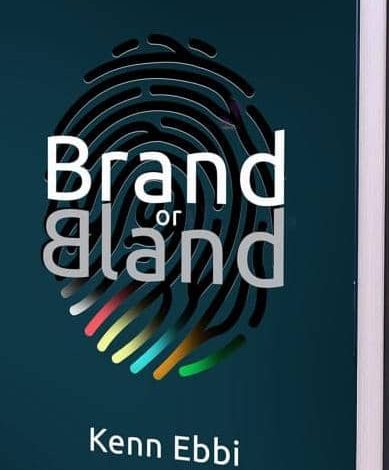
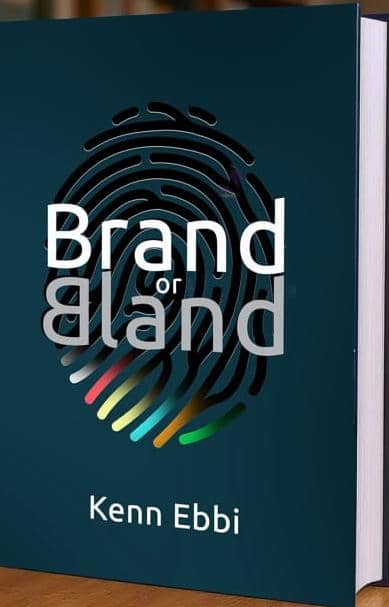
But the essential question is, how do you see that business concern? How did that business manage to steal your attention and patronage, so much so that you’re not ready to try alternatives being proposed to you as currently rendering better services in the same niche market? How did the brand manage to steal into your emotional side like a jealous lover? So, is it a brand on a bland? Mr. Ebbi answers this question in his new book, Brand or Bland (Whitedove Publicity Ltd, Lagos; 2025).
And don’t think that brand is some esoteric essence that you’re excluded from. No! Even you that is listening now, you’re a brand! Yes, you’re a brand; just let Mr. Ebbi and his fellow professionals give you the required touch. You might perhaps not know yourself again. Well, not as makeover artists, but as personality and reputational managers to bring out the right values you have always taken for granted.
So perhaps, the next question to ask is, why is there a need for a brand, another brand? In other words, why is there need for another company, another firm, another business concern? Why do you need to start a business at all even in a niche you know others are already operating? There are hardly any new businesses anyway, or are there? People just fine-tune what’s already in existence and make it better. That ‘make it better’ is perhaps where branding comes in.
In Chapter Three titled ‘Before You Start’ holds a very important key to the branding process in my reckoning and as laid out by the author. Without it we might just go home and be contented with whatever we’re being served by existing business entities. Of course, a need to do something, to have a business often propels individuals or groups to starting a business. But more often it is to fill noticeable gaps one observes in a particular industry or market. What are those gaps that you observe and think you can fill? That is the first step towards starting a new business or redirecting efforts to entering a particular market. An example of the telecoms market will suffice here.
In the 2000s when the telecom sector was liberalised and GSM started in Nigeria, one pioneer company said billings per second was not possible. The brand made us pay for a full minute even if we used only 10 seconds in a call. But another brand soon came and used the half banana metaphor to tell Nigerians that per second billing is possible. Bang! Nigerians rushed to it. That was a price gap an existing company created, and another one saw it and cashed in. Today, Nigerians are better for it. That’s what pricing gap does to create a new market opportunity waiting for the observant person or company to fill.
It could be changes in trends. Apart from those special weekend aso-ebi headgears for weddings and parties, most ladies’ headgears these days are won like caps or hats. No more struggling with head-tying problems any for most ladies. That is change in trend. Whoever invented that wearable headgear style has been smiling to the bank since.
What about culture and lifestyle? They also help create gaps that need to be filled. Are you smart or observant enough to recognise business gaps as something to plug in? Your brand is well on its way, and you would have hit gold. What about government policies that serve as powerful drivers of market direction? Gaps in the market could occur because of disruptions or a company going moribund, like we have witnessed in NIgeria’s eatery business in recent years. One pioneer company’s inefficiency created opportunity for the explosion of a whole industry. You will agree that we’re the better for the failure of one company for the many options we have today. It saved us monopoly mess.
All the above would not happen, however, if there is no awareness, as Mr. Ebbi’s first chapter informs. Awareness, not just about finding gaps in the market, but in the actual process of building a brand. Awareness leads to perception. No doubt, observation drives awareness and awareness drives branding with its accompaniment of environmental, physical and social forms. Awareness is a strategic advantage and asset in the brand building process.
What about how the mind works as the core of branding mechanism. Mr. Ebbi informs in his book that the mind is key to how “a brand navigates changes overtime, adapts to cultural shifts, responds to disruptions, innovates meaningfully and forms alliances that strengthen the brand without compromising its identity.” This is why, though brands or companies or firms have people inhouse who manage and communicate their brands to the public, they still seek professionals like Mr. Ebbi to help in sharpening their brand focus. A big bank like Sterling made a blunder of its Easter message a few years ago. The brand was forced to eat its own words even though it made its apology in an arrogant manner. But that is how essential branding is to modern businesses such that you cannot afford to ignore its role and harness it to your advantage.
Mr. Ebbi’s approach in Brand or Bland is somewhat unique and unorthodox. Not until you get to chapter four before he tells you what the definition of a brand is! So what has he been doing since, you’d ask? Of course laying the foundation for your understanding of the concept of brand or branding. So what is a brand? I will tell you in a moment after you have a copy of the book in your hand. Not fair? How do the Chinese say it in a proverb?: give a man fish, you feed him in a day. But teach him how to fish, you feed him for life! That is it.
In managing a brand, you need to define and clarify for the brand the three ‘whos’, according to Mr. Ebbi. The first is ‘who you are’. So, ‘Who are you’ as a brand? This is where you create a personality for your brand. Yes, your brand is a person, and as a person with ‘personality’, Mr. Ebbi tells us, “your brand must have ‘behavioural’ patterns such as sincerity, excitement, competence or confidence, sophistication and ruggedness.” And to define who you are as a brand, you must define “your brand theme, brand drivers and brand personality as foundation for all communication, culture, service delivery, customer interaction and brand expression.”
And then, ‘Who do you say you are’? A product or service must define itself from start. It’s this definition that people will know you by. That is, what does the brand set out to do? How does it intend to ingratiate itself into the psyche or emotions of the consuming public? “It’s the beginning of brand communication externally and internally,” Mr. Ebbi says. “To communicate externally, a brand must know its target audience through what is known as market segmentation that enables the brand to identify the demographic, geographic, behaviour and attitudinal (psychographic) patterns of the market.”
Then the third one is ‘Who people say you are’. So, what is the public’s perception of your brand or you as a brand? Does the market’s perception match your intention, the who you say you are? A brand is healthy when who you are matches who you say you are which also matches who people say you are! When these three align, the brand, according to Mr. Ebbi, becomes “consistent, trustworthy, differentiated and loved.”
Of course, there are many important nuggets in Mr. Ebbi’s Brand or Bland that will enrich your understanding of the concept of brand and branding where making the brand visible will be a priority, because as Mr. Ebbi says, “Visibility is a journey, not a destination. You don’t gain it overnight, you sustain it continually in a never-ending process.” Also, certain human factors influence brands and their longevity or otherwise. The brand has to “be rare, have integrity, deliver on time, be innovative and associated with consistency in the market.” These qualities endear the brand to the market and ensure its lifespan.
In a unique way, the author uses recent and memorable examples to drive home his points at every turn in the book such that you recognise at once what is being said. He has deployed brands that we all relate with or even consume to point out lessons that we need to learn in the branding journey. Brands like Guinness, God is Good Motors (GIG) and its courier brand, the musician, R. Kelly, Sterling Bank, that tomatoes paste brand of trouble, etc. These are brands we all know and recognise easily. This makes the book properly grounded in a way that makes it memorable and relatable.
Therefore, Brand or Bland by Ebbi is not just for brand strategists like Mr. Ebbi and some people in this room alone. It’s for everyone who wishes to start a business journey some day. For emerging brand strategists, this is a handbook you will find compelling in your brand building and communication journey. For those already deep in the brand strategy business, this book will provide further impetus and help you fill gaps in your brand strategy business. And for the average or would-be brand owners, or layman or woman wishing to start a business, this book will set you on an entrepreneurial journey of building a successful brand.
Indeed, what is a brand? It’s simply a new product, a new business organisation, a new start-up and what you need to get an already existing one going better, stronger, because a brand is a company, a firm, a business that someone needs to open to provide a service or product. Brand is the communication’s esoteric name or language for the business next-door. And for a country like Nigeria which economy needs all the help it can get, we all need to be brand builders one time or the other. Otherwise, we risk the temptation of being among the japaing gang!
* Ajeluorou presented this review at the virtual launch of Kenn Ebbi’s book, Brand or Bland