Lassa: A different history

By Bukar Usman
FIFTY years after Jordi Casals-Ariet, the epidemiologist who discovered the Lassa fever virus – and nearly died doing so – made Lassa a globally-known town after naming and announcing his finding in 1969, Abdulkadir G. Gadzama told a different story of Lassa when he published A History of Lassa (Solstice Technologies Nigeria Limited, Abuja; 2018), his home town, in 2018. While the zoonotic side of the story tends to stigmatize Lassa town, Gadzama’s narrative tries to redirect attention to Lassa town’s glorious past and to the spritely Lassa town of today.
Lassa was a “small settlement” in 1904 when its story as a geographical location began but has grown to become by 2018, when Gadzama’s chronicle was published, “a sprawling town of two districts” whose “population has exploded”. Writing the history of Lassa, the town of his childhood and setting for many of his treasured experiences, has been Gadzama’s long-time desire. His 27-chapter book was, however, written not merely to serve nostalgic purposes but, primarily, to portray Lassa’s rich customs and traditions, and the uniqueness of its amiable but resilient Margi (Marghi) indigenous stock.
A two-part story
Gadzama’s A History of Lassa has two inter-related parts: the Marghi part and the Lassa part, the latter being a geographical aspect of the former. The Marghi are an ethnic group found primarily in Adamawa and Borno States of Nigeria, with some populations residing in Cameroon and Chad. Known for their Gumbara cotton-woven attire and unique cuisine, notably Kifi Kubakuba (a fish and vegetable dish), the Marghi, though a minority group, has a cherishable history dating back to the 13th century. Margi tribe, to which the author’s Gadzama (Mingi) clan belongs, in 1250 AD found their way into Borno, which was then part of the larger Kanem Empire. They were there well before the Kanuri that became the dominant tribe. It was Kanem-Borno Empire under Mai Idris Alooma that launched campaign against the Margi between 1564 and 1576 for economic reasons and for conversion to Islam. That was well before Nigeria came into being in 1914.
According to the author, the Margi being a sizeable ethnic group originated from Ethiopia, which he considered to be the cradle of the human race, and headed to the Lake Chad region. To escape constant threats of insecurity arising from slave raiders and bandits, as well as to preserve their identity, Margi tribesmen, including the Gadzama clan, continued to move southwards in search of land for a final settlement.
The author said that his tribesmen occupied Mafoni Ward and parts of the Government Residential Area (GRA) of Maiduguri, the capital of present Borno State, where they were displaced by Kanuri invaders and subsequently by French and British colonial forces that mounted campaigns against Rabeh Fadel Allah and his son Fadarallah (Fadel Allah) that succeeded him. It was in 1907 that the main stream of the displaced Margi tribesmen headed further south with a stopover here and there while some of them chose to stay put or join other communities where they got assimilated and lost some of their identity.
The main Margi stream, undeterred, continued their flight in search of a suitable abode, in keeping with their supreme objective of securing a safe place where they could maintain their identity in its purity. That was not easy. They encountered difficulties here and there. The last holding place before their final settlement at Lassa was Dilli (Dille).
As to how the name of the settlement came about, the author explained that when a search team set out from Dilli to locate a new place, a Margi elder, Abana Tami Abau-kumi, who refused to go with them, warned in their native tongue, ‘la sa’, meaning they risked going there ‘to-get-lost’. Hence, upon deciding to settle at the new place, they named it ‘La sa’, which the British Colonial administrators corrupted, as they did in other places, and called ‘Lassa’.
The exploratory journey from Dilli was led by one of the Margi elders, Dzarma Abana Yelima Gadzama. He was in the company of his servant and others when he sighted in a forest a standing guinea corn stock with an unusually large corn head. How the guinea corn got there he did not know. Aside from that, the soil in the forest was covered with earthworm discharges. He cut the corn head and showed his people back home in Dilli. The large corn head and the worm discharges were held as clear evidence of fertility of the area and the area was therefore chosen as a suitable settlement to which the Margi at Dilli migrated in 1904 and which was named Lassa by the Gadzama clan founders and early settlers. As it turned out, south east of the settlement was a vast fertile alluvial soil by the River Yedzaram whose source is from the Mandara Mountains and whose water is discharged into Lake Chad.
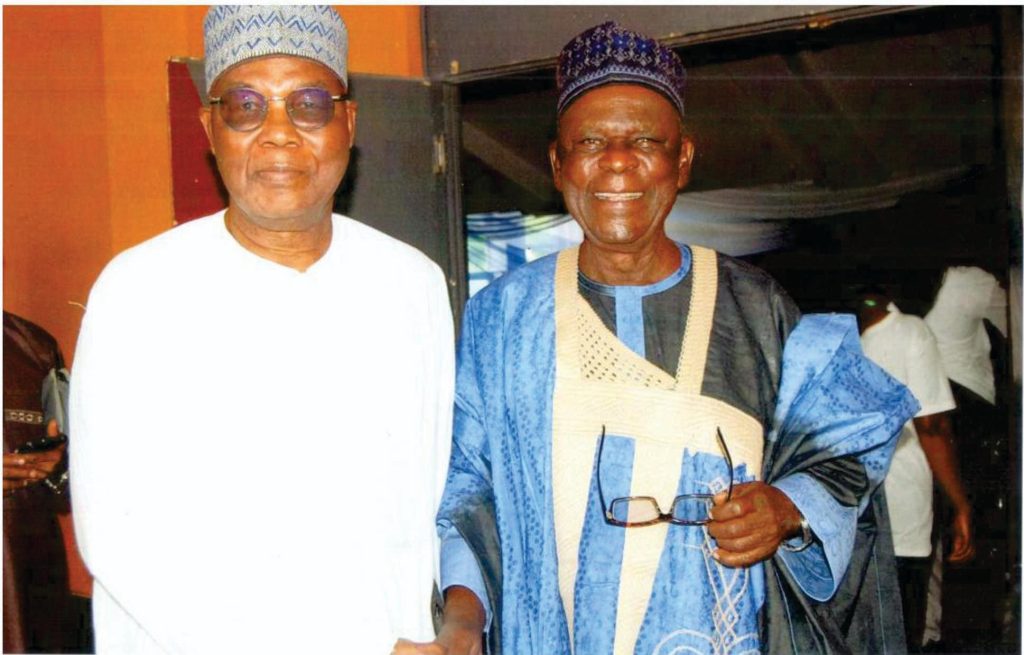
Book reviewer, Dr. Bukar Usman (left) and the author of A History of Lassa, Mr. Abdulkadir G. Gadzama at the launch of the book at the Maryam Babangida National Centre for Women Development, Central Business District, Abuja on 27 June 2026
According to the author, Lassa had been part of German territory before coming under British colonial rule. Having settled finally at Lassa, the rest of the story is about the efforts made by successive Margi leadership to consolidate their independence, sustain peace with their neighbours and improve their livelihood.
The author said that although there have been several successions to the Margi chieftaincy stool of Lassa, occupants of the throne have come mainly from the Gadzama lineage. The author began by narrating how the Margi traditional chieftaincy title, Ptil (King), was officially recognized in 1911. In colonial times, appointments to that traditional office were subject to the approval of the overall suzerainty of the Lamido at Yola and the British Colonial administrators under the Indirect Rule System. Although there were abdications, depositions and reinstatements, with some personalities holding the post twice, the Ptil stool has survived to this day. The author narrated notable achievements made and challenges encountered under successive Lassa kings.
Notable contributions made by Lassa indigenes to the development of Lassa, especially inputs by diverse pioneers, were also recognized. Of the two Appendices to the book, early Margi people, numbering 51, who rendered exceptional services as teachers and hospital staff in Margi land were listed and appreciated in Appendix I. Appendix II, which contained pictures of several notable properties in Lassa destroyed in December 2014, recorded the negative contributions made by the notorious Boko Haram insurgents.
Contributions of the missionaries
One of the notable major events that left a lasting positive impact on the socio-economic and, to some extent, political life of Lassa and Margi land in general was the arrival of missionaries of the Church of the Brethren Mission (CBM) from the United States of America. The pioneer US missionaries comprising Mr. (later Rev.) H. Stover Kulp (a Medical Doctor) and Mr. (later Rev.) Albert D. Helser upon arrival in North-Eastern Nigeria in 1923 first established a post at Garkida after securing government approval. It was from there that they established other posts at Dille (Dilli) in 1927 and subsequently relocated to Lassa in 1928.
Along with evangelism they set up schools and taught in those schools, established hospitals and treated patients from far and near, taught the natives various craftsmanship and modern agricultural practices, including the introduction of new crop varieties and tilling methods. They promoted teaching and learning in Margi language. For grinding, they introduced machines to reduce the drudgery of human labour.
In recognition of their selfless contributions to the development of Margi land and surrounding areas, the author paid glowing tributes to the missionaries. He further appreciated them by publishing 46 pictures of foreign individuals and couples from the American home Church who rendered sacrificial services to the mission field in Nigeria generally and to Lassa and Margi people in general. He said they more than deserve a payback.
The Lassa Fever incident
Unfortunately, in 1969, one of the foreign missionaries, a nurse, lost her life to the mysterious and dreaded disease subsequently named ‘Lassa Fever’. She caught the virus while attending to patients, and was taken to Jos, where she died. That incident aroused the interest of Dr. Jordi Casals-Ariet, an American epidemiologist, who began to conduct research with the goal of finding the cause of the unknown disease which, at that time, had no cure. In 1969, Dr. Casals-Ariet discovered the virus responsible for the disease and named it Lassa, after the place where the first patient was seen, in accordance with the tradition of naming hemorrhagic fever viruses.
Although naming the virus Lassa has continued to have a stigmatizing effect upon the town, which many people are not happy about, naming hemorrhagic fever viruses after the places of their first discovery, unfortunately, seems to be a common practice.
Hemorrhagic fever viruses named after their places of discovery include Guanarito virus (which causes Venezuelan hemorrhagic fever), named after the region of Guanarito in Venezuela; Junin virus (which causes Argentine hemorrhagic fever), named after the Junin province in Argentina; Machupo virus (which causes Bolivian hemorrhagic fever), named after the Machupo River in Bolivia; and Lujo virus, named after Lusaka in Zambia and Johannesburg in South Africa (two cities involved in the 2008 outbreak of the disease).
The only exception to this rule happened in 1976 when the Ebola research team, determined to avoid associating it with a specific town, a practice which historically had stigmatized communities, like Lassa, where index cases had been recorded, decided to name it after a geographical feature, instead of a specific place. So, though the first major Ebola virus disease outbreak occurred in 1976 in the Democratic Republic of the Congo (DRC) village of Yambuku, the research team decided to name it Ebola virus, after the nearby Ebola River.
What the Ebola story shows is that the norm of naming hemorrhagic fever virus after the place of its first discovery can be discarded on humanitarian and social grounds. That a town is afflicted with a viral disease is bad enough; to insist on naming the disease after that town, thereby stigmatizing it, is an awful idea epidemiologists need to change. They can coin a name based on a unique feature of the disease or some other consideration that excludes stigmatizing the town where a virus’ first victim was found.
Cultural and social issues
Although the geographic boundary of the Lassa of 1911, according to the author, has remained the same, its cultural landscape has changed. While some efforts have been made to preserve aspects of Margi culture, migration of people from different ethnic groups into Lassa has made the town culturally diverse.
The opening up of Margi land to outside influences was not without its consequences. While it brought about a general uplift of the society, there were noticeable changes on some Margi traditions and culture, particularly in form of observance of certain traditional festivals, mode of dressing, rites of passage, and naming, marriage and burial ceremonies.
The changes were mainly due to religious influence and effects of modernization. As should be expected, interactions with those outside the community could not take place without leaving traces, negatively and positively. Indeed, maintenance of self-identity of any community would be much harder now, given the growing impact of globalization. Today, most Margi people, in and outside Lassa, are bilingual or trilingual.
The author stressed the need for cultural revival; in particular, he appealed to his people to revive the Yawal Festival, a religio-cultural event, hitherto staged annually to ward off death in the community. It was modified by Ptil Girama Madu and staged simply as annual cultural festival stripped of its fetish and idolatrous garb. Even then, it was displaced by Christmas celebration as the major annual religious festival. The author advocates its revival and wants it to become an annual cultural festival to be known as the Founders Day.
On the growing alarming threat to the extinction of Margi language, he passionately called for the implementation and enforcement of the policy of teaching primary school pupils in the language of the immediate community. He charged his Margi tribesmen to rise to the challenge of language transmission to safeguard their culture. I share the author’s concern as his Margi and my Babur/Bura languages are of the Chadic stock. I could pick in the book some common vocabulary: ‘mdurtaku’ (horseman); ‘kadaka’ (corn stalks fence); ‘kindai/pili’ (raffia bowl and plate); ‘kwatam’ (wooden bowl) and ‘mdurki’ (the landlord).
It should be noted that of the 500 or more Nigerian languages nearly two thirds are within the eastern parts of the country and all are in serious danger of extinction. Immediate attention is required to salvage the deteriorating situation. Apparently, the Mandara/Cameroon Mountain range running from North to South of Nigeria serves as a wedge that stops the streams of Nigerian minority tribes from further retreat as they seek refuge from whatever was worrying them. So, they congregate there.
On other social issues, the author appealed to State and Local Governments and his privileged tribesmen to arrest the inadequacies in the provision of social amenities, including education, health, roads, potable water supply, markets, power supply, and the resuscitation of cottage industries for which Margi land was noted. He acknowledged that Lassa was fortunately connected to the National Grid but at the time of writing there was no power supply. He noted that effort was made by the Borno State Government in the 1980s to supply potable water from the nearby Yedzaram River, unfortunately, the project was not sustained, and the reservoir dried up. He suggested that a dam could be constructed on the Yedzaram River to meet the water needs of the people.
Conclusion
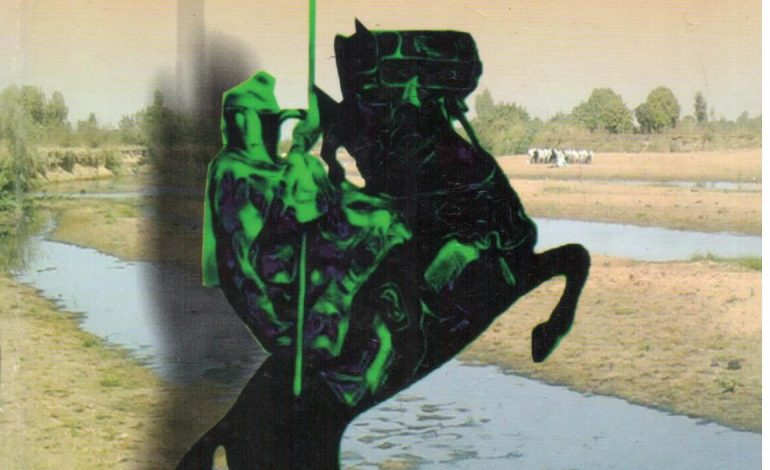
Some readers may wonder what the front-cover image of horsemanship depicted against a background of water actually mean. I did, too, and asked the author the significance of his book cover design. He explained that the horse symbolized the expertise of Margi cavalrymen. The patches of water represented the nearby River Yedzaram during the dry season.
Like many ethnic minorities, the Margi had fought hard to remain a people and to preserve their cultural identity. Abdulkadir G. Gadzama, who has made a commendable effort to tell their story, says in one of the concluding chapters of his book:
Lassa was the final stop for that small group of the Gadzama (Mingi) clan of the Margi Tribe who were forced to leave their homeland in Kanem-Borno Empire two centuries ago. They refused to compromise their cherished tradition and culture and held tenaciously to their integrity as Margi people. They dreamt of a new homeland and diligently sought for one. When at last they found it, it was EUREKA! The Founding Fathers fought tooth and nail to defend and keep their new homeland and ensured that no adventurer, both then and in the future, would dare occupy or claim an inch of this God-given estate.
Rooted in and emboldened by this spirit and resolve, Margi had warded off slave raids and banditry from Margi land in the early days and has continued to confidently resist incessant attacks and destruction by the latest formidable enemy, Boko Haram. The author expresses grave concern that Sambisa Forest in their neighborhood remains a stronghold of the insurgents and wondered why the gallant Nigerian soldiers that fought and won the 30-month Civil War could not in 15 years defeat a rag-tag army of insurgents holed up in a miniature area as the Sambisa Forest.
Gadzama’s A History of Lassa is a celebration of the fighting spirit of Margi people. In celebrating the Margi heroes of the past, the book boosts the determination of contemporary Margi people of Lassa to rise above the challenges of the present to preserve and consolidate their collective future. The author, in his concluding remarks, charged other ethnic groups to write down their stories in order to gain strength from their past. As he put it:
There is wisdom in recording the story of every community as each of them has a history that defines what it is, who the inhabitants are, as well as what potentials it holds for the benefit of humanity. Every one of them was started by a man or some men of courage. These people made sacrifices, met challenges and surmounted them. Of course, some lost their lives in the process so that others could live. Such men deserve to be celebrated because it is them who make history.
* Dr. Usman is a former Permanent Secretary in the Presidency, Abuja and current President of the Nigerian Folklore Society; June 27, 2026
* Dr. Usman is a former Permanent Secretary in the Presidency, Abuja and current President of the Nigerian Folklore Society; June 27, 2026