REPRONIG deepens Nigeria’s copyright knowledge at book fair 2026

By Olufemi Timothy Ogunyejo
ON Wednesday, May 13, 2026, the revered halls of the Wole Soyinka Centre for Culture and Creative Arts became more than bricks, beams and architectural elegance. The centre transformed into a living parliament of ideas, a sacred meeting ground where intellect met policy, creativity encountered protection, and the future of Nigeria’s knowledge economy was carefully examined like a precious manuscript preserved against the erosion of time.
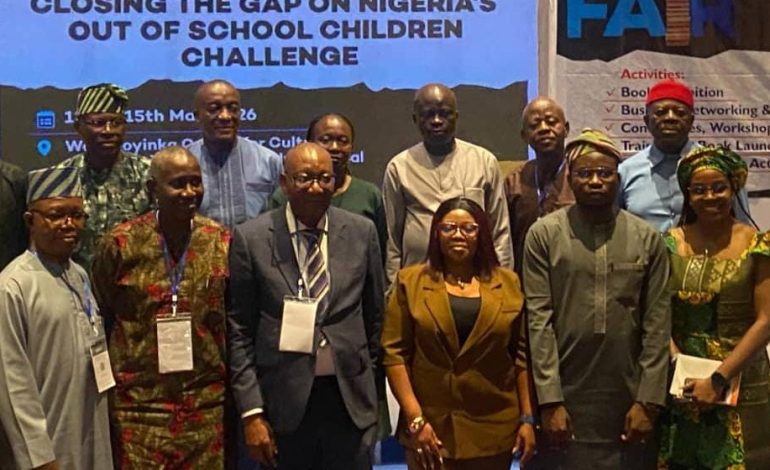
It was the occasion of the National Awareness and Advocacy Programme of Reproduction Rights Society of Nigeria (REPRONIG), held as part of activities at the Nigeria International Book Fair 2026 under the compelling theme ‘Reproduction Rights and the Future of Nigeria’s Knowledge Economy: Policy, Protection and Prosperity.’
From the very entrance of the venue, there was a visible aura of intellectual significance. Distinguished personalities from academia, government institutions, publishing, bookselling, copyright administration, librarianship, research, business and the wider creative industry gathered like custodians of an ancient treasury determined to preserve the future of Nigerian knowledge production.
Professors, scholars, researchers, authors, publishers, booksellers, librarians, policymakers, copyright administrators and business leaders occupied the hall with uncommon purpose and shared conviction. Among the distinguished personalities present were Emeritus Prof. Olu Obafemi; Prof. Chinwe Veronica Nwakaego Anunobi, the National Librarian and Chief Executive Officer of the National Library of Nigeria; Dr. Lawal Umar, President of the Nigerian Library Association; Dr. John Asein, Director-General of the Nigerian Copyright Commission; Prof. Clement Adeniyi Akangbe; and Prof. K. I. Nwalor, who led other scholars and educators from the University of Ibadan to the event.
Also present were members of the REPRONIG Board including the Chairman, Mr. Gbadega Adedapo, Alhaji Lukman Dauda, Dr. Wale Okediran, Chief Uchenna Anioke, Mrs. Yomi Ogunlari, Dr. Camillus Ukah and Mr. Tosin Akeredolu, among other respected stakeholders within the copyright ecosystem.
The event further attracted notable industry leaders including Alhaji Lukman Dauda, who also doubled as the newly elected Chairman of the Nigerian International Book Fair Trust; Mr. Olugbemi Malomo; Mr. Oluwadare Oluwatuyi; alongside members of the Nigerian Booksellers Association led by its President, Mr. Dapo Fisayo and host of other industry leaders and stakeholders.
The symbolism of the venue itself was impossible to ignore. Named after Nobel Laureate Wole Soyinka, the Centre stands not merely as a physical structure but as a monument to literary resistance, cultural memory and intellectual freedom.
Hosting a conversation on copyright, reprographic rights and the future of the knowledge economy within that space was profoundly symbolic almost like discussing the future of books beneath the watchful spirit of African literature itself.
The Centre became a metaphorical lighthouse standing at the edge of Nigeria’s creative coastline, guiding policymakers, creators and institutions away from the dangerous waters of piracy, intellectual theft and creative exploitation toward the safer shores of professionalism, protection and prosperity.
Moderating the session was Kunle Kasumu of the Channels Television Book Club, whose calm composure and articulate moderation gave the event the rhythm of a carefully conducted orchestra.
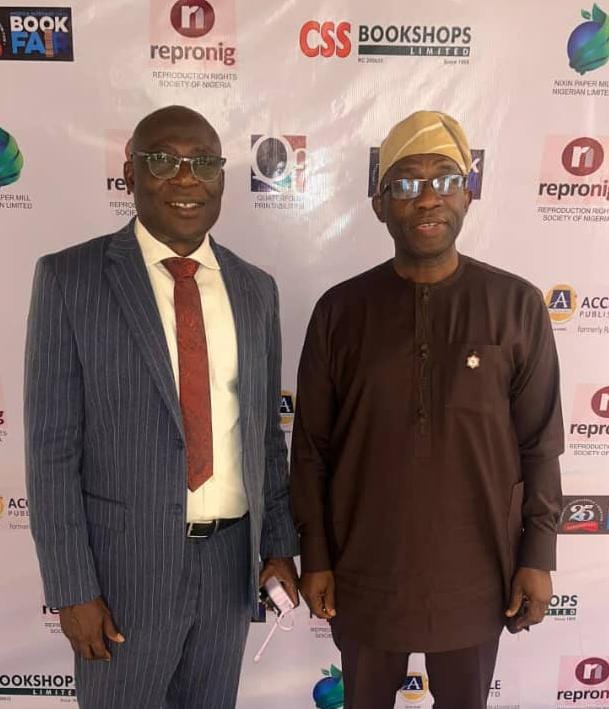
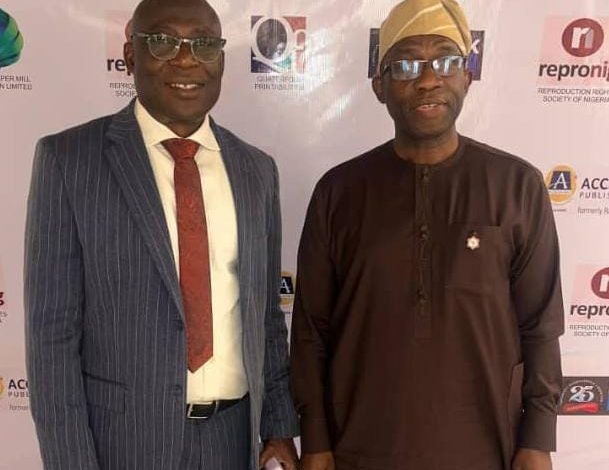
Chairman of REPRONIG, Mr. Gbadega Adedapo (left) and the former Executive Director of REPRONIG and Director-General of Nigerian Copyright Comission (NCC), Dr. John Asein at the seminar
With journalistic elegance and literary sensitivity, he navigated discussions, presentations and interventions with clarity and depth, allowing every contributor to illuminate different dimensions of the copyright conversation.
In his welcome address, the Chairman of REPRONIG, Mr. Gbadega Adedapo, delivered not merely a speech but a passionate philosophical defence of intellectual labour and creative dignity. His remarks painted REPRONIG as a bridge connecting creators and users of knowledge through lawful, ethical and sustainable licensing systems. With clarity and accessible imagery, he explained the mandate of REPRONIG as Nigeria’s licensed collective management organisation responsible for administering reprographic and digital reproduction rights on behalf of authors and publishers.
He described how textbooks, academic materials, literary works and research publications are often reproduced without compensation to creators, stressing that REPRONIG exists to restore fairness within the knowledge ecosystem. His speech carried the moral urgency of a nation standing at the crossroads between creative sustainability and intellectual disorder. According to him, copyright protection is not merely a legal obligation but an economic strategy capable of transforming Nigeria into a globally competitive knowledge-driven nation.
He emphasised that nations that protect intellectual property ultimately attract investment, strengthen publishing industries, inspire innovation and build enduring educational systems.
One of the intellectual highpoints of the programme was the remarks delivered by the Director-General of the Nigerian Copyright Commission, Dr. John Asein, who served as the Special Guest of Honour. Asein eulogised the REPRONIG Council under the leadership of Mr. Gbadega Adedapo for its strategic vision, institutional coordination and unwavering commitment to strengthening copyright administration in Nigeria. His commendation reflected recognition of REPRONIG’s growing role in building a structured and sustainable copyright ecosystem.
With analytical precision, he further illuminated the role of the Nigerian Copyright Commission as the nation’s regulatory and supervisory agency responsible for protecting intellectual property rights and ensuring fairness within the creative economy. He stressed that professionalism must become a national culture across institutions, businesses and creative engagements if Nigeria hopes to compete effectively in the global knowledge economy. His message carried the resonance of both warning and hope: that no nation can profit sustainably from creativity when intellectual labour is neglected, undervalued or unlawfully exploited.
The programme’s keynote presentation by Mr. Joseph Baffour Gyamfi, Executive Director of CopyGhana, expanded the discourse beyond Nigeria into the broader African copyright landscape. His presentation examined the relationship between reproduction rights and the knowledge economy, highlighting how economies across the world are increasingly driven not by physical commodities alone, but by ideas, research, innovation and information systems.
Using comparative economic insights from Nigeria and Ghana, he demonstrated how service industries powered largely by intellectual property and information systems have become major contributors to national GDP. He warned that digital piracy and unauthorised reproduction continue to threaten fair compensation for creators while weakening the sustainability of educational and publishing systems.
Like a scholar mapping the anatomy of a modern economy, he argued that copyright systems and collective licensing frameworks are no longer optional bureaucratic instruments but strategic foundations for national development.
Another profound contribution came from Dr. Sam Owokoniran of Microbits Consultancy Limited, whose presentation on “The Importance of Data Collection in Managing Reprographic Rights” introduced a futuristic dimension to the discourse. His presentation revolved around the global transition into data-driven economies and the urgent need for Nigeria to build reliable systems capable of tracing, tracking and managing intellectual assets.
With striking clarity, he declared: “A nation that does not trace and track knowledge cannot profit from knowledge.” This statement lingered in the hall like a philosophical inscription carved into stone. Owokoniran argued that Nigeria does not lack creativity, intelligence or innovation; rather, the nation lacks efficient systems capable of capturing, organising and protecting intellectual data. His conclusion reflected the painful paradox of many developing economies rich in talent but poor in systems.
The unveiling of REPRONIG’s Digital Rights Management Platform by Mr. Moses Adetola, CEO of Big Field Digitals, further reinforced the event’s central message that the future of copyright administration lies in technological adaptation, transparency and structured digital governance.
Beyond speeches, presentations and formalities, the programme represented something larger, a quiet but powerful awakening within Nigeria’s intellectual ecosystem. There were robust comments, insightful remarks and engaging contributions from industry experts, scholars, librarians, publishers and copyright professionals that enriched the discourse and made the event exceptionally engaging, intellectually stimulating and thrilling.
Every intervention appeared to add another brick to the emerging architecture of Nigeria’s knowledge future. It became evident that the battle for the future of the nation’s economy may no longer be fought merely in oil fields or stock markets, but increasingly within classrooms, libraries, publishing houses, digital platforms and copyright institutions.
The atmosphere throughout the event carried the fragrance of collaboration and the promise of institutional renewal. Conversations flowed like rivers of possibility among scholars, publishers, librarians, booksellers and policymakers. Old partnerships were strengthened while new alliances quietly emerged beneath the intellectual energy of the gathering.
Indeed, the REPRONIG programme resembled a giant architectural blueprint for the future of Nigeria’s knowledge economy, one carefully drawn with the ink of policy, the pillars of professionalism and the foundation of intellectual protection.
As participants departed the Wole Soyinka Centre at the close of the programme, one truth remained unmistakably clear: nations that protect creativity ultimately protect civilisation itself.
And in that historic hall in Lagos, beneath the symbolic shadow of Wole Soyinka’s enduring literary legacy, REPRONIG and its partners once again reminded Nigeria that knowledge is not merely power; when protected, professionally managed and ethically shared, knowledge becomes prosperity.