A rejoinder to Duke of Shomolu: On preview shows, criticism and the future of Nigerian theatre

By Adeniran Makinde
How it began: Why I don’t do preview shows for my plays
“I’m currently in a long, boring session, struggling not to sleep.
So as the speaker drones, I start scouring IG and fell on a post asking why Nigerian theatre producers don’t do preview shows.
Instantly, I woke up and responded. They are a bloody waste of time and an opportunity for arrogant people who pretend to know one or two things about the art form to watch the show for free.
My people, there are two reasons why one could consider a preview show.
The first to get critics into the room and get them to watch very critically and offer insights.
The second reason is to get a media set so that their reviews could boost ticket sales.
Both don’t work for me. The first, is the funniest.
So in theatre, we have a huge population of people who like to think that they are gatekeepers.
They would bandy years of being in the business, bandy academic credentials and then climb the high pedestal and begin to critique.
Most times, when I listen, I ask myself what I’m even listening to.
Every play has a direction and a vision, the director interprets the vision of the Producer and works with the resources available.
The armchair critique not bothering to interrogate either the producer or the director will take a pen or verbally begin to annoy the people who are sweating tears and blood.
Directors are notoriously very sensitive to the show and a wrong word or wrong comment can topple everything.
Prof. (Ahmed) Yerima had once threatened to walk away a few days before the show cos I had said something that didn’t sit well with him.
William Benson had once burst out in tears cos one actress came late and missed her lines.
Prof. (Bakare) Ojo had resigned simply because we were arguing abt cast welfare.
So subjecting these geniuses to a retinue of so-called critiques would surely amount to a great disaster for the production.
Secondly, in my about 10 years in this space, I have not seen anybody whose words drove ticket sales or killed it.
All these critics lack the followership to affect outcomes.
So I now see a rash of theatre reviews all over the place citing one flaw after the other and I laugh cos they all drop duds that do not affect outcomes.
Now is this looking like one does not want his work to be appraised?
Far from it. What I am saying is that that extra N5 million, I would put on a preview show and gain almost nothing, I will kuku throw it into the production and gain a better outcome.
Now the post-event review is better aligned, as it doesn’t risk derailing the production but gives a post-mortem that could either make sense or not.
So for me and to answer the question that I saw in IG, the preview show is a No No as I see it as a bloody waste of time.
The day I can tie a critic’s voice to serious ticket sales that day I will do the preview show in his house.
Till then, my advice to the critic is to go and buy your ticket and watch the show instead of looking for a free show under the guise of a preview show.“
–Duke of Shomolu
Dear Duke of Shomolu,
YOUR post was passionate, provocative, and predictably entertaining. But beneath the swagger, sarcasm, and chest-thumping bravado lies a deeply troubling argument—one that dismisses criticism, undervalues artistic dialogue, and risks shutting the door behind you after benefiting from the very ecosystem that helped build your name.
Let us be clear from the outset: disagreement with preview shows is your right. But contempt for critics, disdain for emerging voices, and the reduction of artistic feedback to “free show seekers” is not only unfair—it is intellectually lazy.
Preview shows are bigger than your personal convenience
A preview show is not charity. It is not a handout. It is not a conspiracy by broke intellectuals to watch theatre for free.
A preview is part of a long-standing professional tradition in global theatre practice. It serves as a laboratory—a final space where performance meets audience before official opening night. It allows producers, directors, actors, designers, marketers, and yes, critics, to test rhythm, pacing, audience response, technical flow, and public perception.
To reduce that process to “waste of time” simply because it does not suit your current model is to mistake personal preference for universal truth.
Your experience is valid. It is not absolute.
Criticism is not an attack
YOU describe critics as arrogant gatekeepers who know little and contribute less. Certainly, bad criticism exists. There are shallow reviewers in every industry. But bad criticism does not invalidate criticism itself.
By that logic, bad producers should invalidate production. Bad actors should invalidate acting. Bad scripts should invalidate writing.
Serious criticism is not about insulting artists. It is about contextualizing work, preserving standards, documenting growth, and challenging complacency. Theatre without criticism becomes applause without thought.
An artist who wants only praise does not seek excellence—he seeks worship.
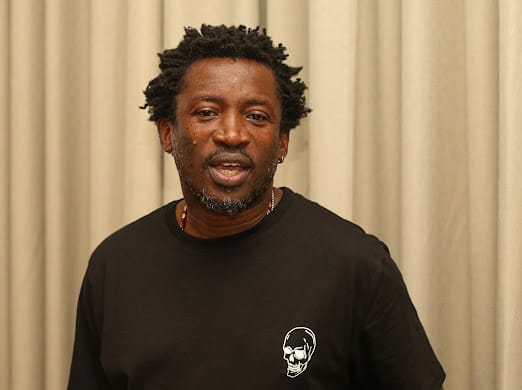
Joseph Edgar, self-styled ‘Duke of Shomolu‘
If feedback can “Topple Everything,” then something is already broken
YOU argue that directors are sensitive and a wrong word can derail a production. With respect, if one comment can collapse months of work, then the issue is not criticism—it is fragility.
Professional artists must develop emotional discipline. Theatre is collaborative, public, and interpretive. Once a show enters the public square, it belongs not only to its creators but to its audience and the larger discourse around it.
Shielding creators from feedback does not strengthen them. It infantilizes them.
Ticket sales are not the only measure of value
You repeatedly ask what critic has ever sold tickets. This is the wrong question. Criticism is not merely a marketing tool. Its purpose is not to become your sales agent. It is to shape conversation, build archives, educate audiences, inspire students, preserve history, and refine taste.
Many works that failed commercially became culturally important because critics documented them. Many commercial successes vanished without trace because no one engaged them seriously.
Box office is important. It is not the sole measure of artistic worth.
The incoming generation needs more than ego and gatekeeping
PERHAPS the most disappointing part of your position is what it teaches younger practitioners: That questioning art is disrespectful, that experience is beyond examination, that money matters more than discourse, that criticism is hostility and that established figures owe nothing to the next generation.
This is dangerous.
The younger generation needs mentorship, structure, honest feedback, and access to critical culture. They need to learn how to create work and how to defend it, revise it, debate it, and improve it.
If elders in the industry silence criticism, they do not protect theatre—they weaken its future.
Confidence does not need contempt
There is nothing wrong with saying, “Preview shows are not part of my strategy.” That would have been a respectable position. But to sneer at critics, mock engagement, and end with insults may win social media laughter, yet it contributes little to serious discourse.
Strength does not require scorn. Experience does not require arrogance. Success does not require hostility.
A final word
Duke, no one is asking you to host a preview in your living room. No one is demanding free access to your labour. But please do not confuse your business choices with principles of theatre practice. Theatre grows through rehearsal, performance, criticism, revision, documentation, and dialogue. Remove any of these, and the ecosystem shrinks.
You may reject preview shows. Fine.
But do not reject the culture of engagement that keeps the art form alive long after the curtain falls.
Because one day, the next generation will inherit this stage.
And they deserve more than “buy your ticket and keep quiet.”
They deserve a theatre culture mature enough to welcome both applause and critique.
* Makinde is the President of National Association of Nigerian Theatre Arts Practitioners (NANTAP)