
* An in Memoriam and a Meditation on an Unfinished Life
By Sola Adeyemi
THIS essay reflects on the life, work, and unfinished intellectual trajectory of Pius Adebola Adesanmi (1972–2019), seven years after his death in the Ethiopian Airlines Flight 302 tragedy. It traces the formation of his distinctive voice from his early education in Isanlu and Ilorin to the crucible of Ibadan’s Thursday Poetry Group, and follows his development into a scholar of remarkable breadth whose work bridged Yoruba cultural memory, Francophone studies, postcolonial theory, and digital public culture. The essay examines his influence across Nigeria, Africa, and the diaspora, highlighting his role as a public intellectual, satirist, mentor, and institution builder. It argues that Adesanmi’s satire functioned as a moral practice rooted in democratic commitment, ethical citizenship, and a refusal to separate scholarship from civic responsibility. The essay also considers the intellectual paths he might have pursued had he lived — from theorising Africa’s digital public sphere to shaping higher education reform and producing further major works. Through this retrospective meditation, the essay contends that Adesanmi’s legacy endures not as static memory but as a living presence in the ideas, institutions, and intellectual networks he shaped. His life, though brief, remains a steady light illuminating the ongoing struggles for democratic accountability, cultural renewal, and imaginative possibility across Africa and its diaspora.
Introduction: The Shock That Refuses to Fade
SEVEN years have passed since the death of Pius Adebola Adesanmi, yet the shock of his loss has not softened into distance. If anything, the intervening years have sharpened our sense of what was taken: a voice of rare clarity, a mind of restless generosity, a scholar who refused the safety of academic abstraction. His death on 10 March 2019, aboard Ethiopian Airlines Flight 302, was a global tragedy; for many across Africa and its diaspora, it was also a personal rupture — the sudden silencing of a companion in thought, a provocateur of conscience, and a reminder that scholarship could still be a public act of service.
To write about him now is to reckon with both the fullness of his life and the ache of its incompletion. It is to trace the arc of a mind that travelled widely — geographically, linguistically, intellectually — and to imagine the paths it might have taken had time been kinder. It is also to acknowledge that his work, though finite, continues to circulate with the urgency of unfinished business.
Origins: The Formation of a Restless Intellect
BORN on 27 February 1972 in Isanlu, Kogi State, Adesanmi grew up in a Nigeria negotiating the promises and betrayals of postcolonial nationhood. His early education at Titcombe College, a Baptist mission school, laid the foundations of a disciplined intellectual life. The school’s ethos — moral clarity, academic rigour, and a sense of service — shaped him profoundly. Former classmates recall a boy always reading, always arguing, always reaching for a larger frame of reference. He was the kind of student who turned classrooms into arenas of inquiry, who treated learning not as a task but as a vocation.
From Titcombe he moved to the University of Ilorin to study French — an unusual choice but one that revealed something essential about him: a refusal to be confined by linguistic or disciplinary boundaries. French opened the door to Francophone African literature, European philosophy, and Caribbean intellectual traditions. It sharpened his comparative instincts — an ability to see Africa not in isolation but in conversation with the world.
Ibadan: The Crucible of a Voice
HIS postgraduate studies at the University of Ibadan deepened this orientation in ways that were both intellectual and profoundly personal. Ibadan — with its storied history in African letters, its corridors still echoing with the voices of Wole Soyinka, J. P. Clark-Bekederemo, Christopher Okigbo, Chinua Achebe, and the generations that followed — offered him not only rigorous academic training but a living, breathing community of thinkers reimagining the continent’s intellectual future.
It was at Ibadan that we first met, in the now legendary Thursday Poetry Group convened by the late Harry Garuba in Room 32 of the Faculty of Arts, and where I occasionally lurked, when engagements at the Arts Theatre permitted. Those Thursday gatherings were not merely workshops; they were rites of passage. Room 32, with its mismatched chairs, chalk dust haze, and louvres that opened onto the restless hum of campus life, became a crucible for a generation of writers and scholars who would go on to shape African literature and criticism in the decades that followed.
Garuba presided with his characteristic blend of gentleness and intellectual ferocity — part mentor, part provocateur, part griot of modernity. He encouraged us to read widely, argue boldly, distrust easy answers, and treat poetry not as ornament but as a mode of thinking. Into this space walked Pius: sharp eyed, quick witted, already carrying the unmistakable air of someone apprenticed to ideas.
He was not yet the global public intellectual he would become, but the signs were unmistakable — the restless curiosity, the ability to move effortlessly between Yoruba proverbial wisdom and French philosophical abstraction, the instinct for satire that could deflate pretension with a single well aimed phrase. In Room 32, he was both participant and catalyst. He challenged, teased, provoked, and, in the way of true intellectual companions, sharpened the wits of others.
Those Thursday sessions were where many of us first glimpsed the contours of his emerging voice: the blend of humour and seriousness, the refusal to separate scholarship from lived experience, the conviction that African intellectual life must be both self critical and self affirming. Ibadan gave him a community, but he also gave something back — a sense of urgency, a refusal to let complacency settle, a belief that ideas mattered because they shaped the world outside the seminar room.
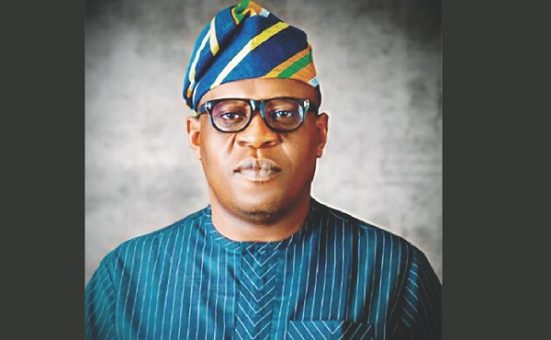
Prof. Pius Adesanmi
Vancouver: Refining the Tools
FROM Ibadan, he travelled, via South Africa, to the University of British Columbia, where he completed a PhD in French Studies. These years abroad expanded his intellectual repertoire, exposing him to postcolonial theory, diaspora studies, and the politics of global knowledge production. Yet even in Vancouver, the spirit of Room 32 travelled with him — the insistence on intellectual generosity, the commitment to rigorous debate, the sense that scholarship must remain porous to the world.
UBC refined his theoretical tools, but Ibadan had given him his intellectual temperament. The two together produced the scholar he became: cosmopolitan yet grounded, critical yet compassionate, fiercely analytical yet always attentive to the textures of lived experience.
By the time he completed his doctorate, Adesanmi had become a scholar of unusual breadth — rooted in Yoruba cultural memory, fluent in multiple intellectual traditions, and committed to the idea that African scholarship must speak both to the academy and to the public sphere.
Academic Life: A Scholar of Pan African Reach
ADESANMI’S academic career began at Pennsylvania State University, where he taught French and Francophone literature. But it was at Carleton University in Ottawa — where he became Professor of English and African Studies and later Director of the Institute of African Studies — that his intellectual influence reached its full expression.
At Carleton, he was not merely a lecturer; he was a phenomenon. His classes were known for their energy, their humour, and their refusal to separate rigorous analysis from moral urgency. Students recall lectures that felt like performances — part seminar, part sermon, part political rally. He had the rare ability to make theory feel alive, to connect the abstractions of postcolonial critique to the lived realities of African societies.
His scholarship was equally expansive. His book You’re Not a Country, Africa! (2011), winner of the inaugural Penguin Prize for African Writing, established him as one of the continent’s most incisive essayists. The collection blended satire, political commentary, and cultural criticism, offering a panoramic view of Africa’s postcolonial condition. It was a book that refused despair even as it confronted the failures of governance, the betrayals of leadership, and the contradictions of modernity.
Beyond the book, his essays — published in Sahara Reporters, Premium Times, and various academic journals — became essential reading for anyone seeking to understand the moral and political crises of contemporary Africa. He wrote with the precision of a literary critic and the urgency of a citizen who believed that ideas must intervene in the world.
Intellectual Networks and Associations
ADESANMI belonged to a generation of African thinkers who refused the old binaries: home versus diaspora, scholarship versus activism, tradition versus modernity. He was part of that late 20th century cohort shaped by military rule, democratic yearning, and the intellectual ferment of Nigerian universities in the 1990s — a generation that understood instinctively that African thought could no longer afford to be provincial, nor could it surrender its cultural specificity in the name of global relevance.
He moved fluidly between Yoruba cultural memory and global intellectual debates, drawing on proverbs, biblical allusions, and postcolonial theory with equal ease. His writing could pivot from a Soyinka turn of phrase to a Derridean aside, from the cadences of Yoruba oríkì to the clipped irony of French satire. This hybridity was not affectation; it was the natural register of a mind trained in multiple traditions and committed to the idea that African intellectual life must be capacious, porous, and unafraid of complexity.
Nigeria: Literary Circles, Civic Spaces, and the Public Square
IN Nigeria, Adesanmi was a beloved figure in literary and civic circles — not merely admired, but claimed. He belonged to the informal republic of Nigerian public intellectuals who wrote across genres and platforms, who treated the essay as both a literary form and a civic instrument. He was a regular presence in public debates, especially during the years when online platforms such as Nigerian Village Square, AfricanWriter.com, Sahara Reporters, Premium Times, and various blogs and Facebook groups became the new agora of Nigerian political discourse.
His essays circulated widely, often going viral long before “virality” became a formal metric. He wrote with a clarity that cut through the noise, and with a humour that made even the bitterest truths bearable. Younger writers and activists gravitated towards him. He mentored generously — sometimes formally, often informally, through long email exchanges, late night phone calls, or the kind of impromptu conversations that happen at literary festivals, conferences, and campus visits. He encouraged boldness, intellectual honesty, and a refusal to settle for mediocrity. Many of today’s emerging Nigerian scholars and commentators speak of him as one of the first people who took their work seriously, who insisted that their voices mattered.
He also maintained close ties with Nigerian academics, especially those working in the humanities. Even from Canada, he remained part of the intellectual rhythms of the country — the debates, the quarrels, the solidarities, the shared sense of responsibility for the nation’s cultural and political future. He was, in the best sense, a diasporic Nigerian: physically distant, intellectually present.
Across Africa: Continental Conversations and Pan African Solidarity
ACROSS Africa, Adesanmi’s influence was equally pronounced. He collaborated with scholars, journalists, and cultural practitioners committed to democratic accountability and cultural renewal. He was part of a continental conversation that stretched from Dakar to Nairobi, from Accra to Johannesburg — a network of thinkers who believed that Africa’s future required both rigorous critique and imaginative reconstruction.
He lectured widely across the continent, often invited to speak at universities, literary festivals, and policy forums. His talks were known for their energy, their wit, and their refusal to flatter. He challenged complacency wherever he found it — in governments, in institutions, in intellectual circles. Yet he did so with a deep affection for the continent and a profound belief in its possibilities.
He was also part of the Pan African scholarly networks that emerged in the early 2000s, as African Studies began to reassert itself as a field shaped by African voices rather than merely studied from afar. He worked with colleagues in South Africa on questions of decolonisation; with scholars in Kenya on the politics of language and identity; with West African journalists on the ethics of public commentary. His intellectual friendships were wide ranging, sustained by a shared commitment to the continent’s democratic and cultural renewal.
The Diaspora: Bridging African Studies and the Global Humanities
IN the diaspora, Adesanmi built bridges between African Studies and the global humanities. He challenged the marginalisation of African knowledge systems in Western academia, insisting that African intellectual traditions were not supplementary but foundational to any serious understanding of the modern world.
At Carleton University, he became a central figure in the reimagining of African Studies as a field that must be both academically rigorous and publicly engaged. He supervised students from across the world, many of whom went on to careers in academia, journalism, diplomacy, and civil society. He encouraged them to think critically about the politics of knowledge production — who gets to speak, who gets cited, whose histories are foregrounded, whose experiences are erased.
He also forged alliances with scholars working in postcolonial studies, diaspora studies, and global literature. His work circulated in conferences, seminars, and reading groups across North America and Europe. He was invited to keynote major gatherings, to contribute to edited volumes, to participate in roundtables on the future of the humanities. His voice carried weight not because he sought authority, but because he embodied a rare combination of intellectual depth, moral clarity, and rhetorical brilliance.
A Pan African Citizen: Rooted, Mobile, Generous
HE was, in every sense, a Pan African citizen — rooted, mobile, and intellectually generous. His life traced a map of the contemporary African intellectual: born in Nigeria, educated across continents, teaching in Canada, writing for a global audience, yet always anchored in the cultural and moral frameworks of home.
He understood that African intellectual life was no longer confined to geography. It lived in the digital sphere, in transnational networks, in the movement of people and ideas across borders. He embraced this mobility without losing his grounding. His Yoruba heritage was not a nostalgic attachment but a living resource — a way of thinking, a moral vocabulary, a cultural compass.
His generosity was legendary. He shared drafts, offered feedback, wrote recommendations, made introductions, and championed younger scholars with a zeal that was almost pastoral. He believed that intellectual life was a collective endeavour, that ideas grew best in community, and that the work of one generation must prepare the ground for the next.
Satire as Moral Practice
ONE of the most distinctive features of Adesanmi’s work was his use of satire — not as ornament, not as a literary indulgence, but as a disciplined moral practice. For him, satire was a way of thinking, a method of civic engagement, and a form of ethical intervention. He understood, instinctively and intellectually, that humour could be a form of resistance: a way of puncturing the pretensions of power, exposing the absurdities of political life, and restoring dignity to those who lived under the weight of misrule.
His satire was never cruel. It did not punch down. It emerged from a deep affection for the people whose struggles he chronicled and a profound frustration with the leaders who failed them. He wrote as someone who loved Nigeria — not sentimentally, but fiercely, in the way one loves a place that has shaped one’s moral imagination. His humour was the humour of the disappointed patriot, the wounded optimist, the citizen who refuses to surrender the possibility of a better polity.
The Craft of His Satire
ADESANMI’S satirical voice was unmistakable. It combined the quicksilver wit of Yoruba oral performance, the structural precision of French satirical prose, the moral urgency of biblical lamentation and the analytical sharpness of postcolonial critique.
He could move from a proverb to a punchline, from a philosophical aside to a devastating indictment, all within the span of a paragraph. His essays often began with a seemingly light anecdote — a scene from an airport, a conversation overheard, a memory from childhood — only to unfold into a searing critique of governance, corruption, or the failures of the postcolonial state.
He understood the power of irony: how it could illuminate contradictions that straightforward argument might miss. He understood the power of exaggeration: how it could reveal truths that polite discourse often obscured. And he understood the power of laughter: how it could disarm, unsettle, and ultimately provoke reflection.
A Lineage of Satirists
IN his satirical practice, Adesanmi stood in a distinguished lineage of Nigerian truth tellers — figures such as Wole Soyinka and Fela Anikulapo Kuti, artists who wielded wit and irony as instruments of moral clarity. Like Soyinka, he possessed a theatrical instinct, a flair for turning syntax into performance. Like Fela, he deployed humour as political defiance, a way of naming the unnameable and shaming the shameless. Yet he brought something distinctly his own: a diasporic vantage point that allowed him to see Africa’s political crises in global context.
He understood how local failures were entangled with international systems of power — how corruption, authoritarianism, and inequality were shaped not only by domestic actors but by global economic structures, diplomatic hypocrisies, and the lingering architectures of empire. His satire therefore operated on multiple registers: national, continental, global. He could indict a Nigerian governor and, in the same breath, expose the complicity of Western institutions that enabled the very failures he critiqued.
This multi layered perspective gave his writing a rare depth. He was not merely mocking the absurdities of the postcolonial state; he was mapping the structural forces that produced those absurdities. His satire was a form of analysis — sharp, incisive, and unflinching.
Digital Fluency and the New Public Sphere
ADESANMI was also one of the early architects of what we might now call the African digital public sphere — that vast, unruly, vibrant space where essays, tweets, Facebook posts, and WhatsApp forwards circulate with astonishing speed. Long before scholars began theorising the political implications of digital culture, he recognised that online platforms were remaking the texture of African public life.
He understood the rhythms of online discourse: the speed, the volatility, the performativity, the hunger for clarity in a landscape saturated with noise. He knew how to craft a paragraph that would travel, how to shape an argument that would spark debate, how to use humour to cut through the cacophony of the digital age. His essays were shared across continents, translated into multiple languages, debated in classrooms, quoted in parliaments, and forwarded endlessly in family WhatsApp groups.
He was, in many ways, the quintessential 21st century public intellectual: grounded in scholarship, fluent in digital culture, and committed to the idea that intellectual work must be accessible, provocative, and socially engaged. He refused the notion that academic writing must be obscure to be rigorous. For him, clarity was not simplification; it was a moral stance.
His digital fluency also enabled him to reach audiences far beyond the academy. He wrote for readers who might never enter a university classroom but who were hungry for analysis that respected their intelligence. He treated the digital sphere not as a distraction but as a democratic space — imperfect, volatile, but full of possibility.
Satire as Ethical Witness
WHAT made his satire so powerful was its ethical core. He did not mock for the sake of mockery. He mocked to reveal, to challenge, to awaken. His humour was a form of witness — a way of standing with the oppressed, the marginalised, the forgotten. He used satire to articulate what many felt but could not say, to name the contradictions that ordinary citizens navigated daily, to expose the moral bankruptcy of leaders who had betrayed the public trust.
In this sense, his satire was a form of love — tough, unsentimental, demanding, but love nonetheless. It was the love of someone who believed that Nigeria, and Africa more broadly, could be better than it was. It was the love of someone who refused to give up on the possibility of transformation.
He understood that satire, in contexts of political fragility, is an act of courage. It invites backlash, misunderstanding, and sometimes danger. He had seen what happened to journalists, activists, and artists who dared to speak truth to power. Yet he persisted. He wrote with a boldness that was both intellectual and moral, refusing to temper his critique for the sake of comfort or safety.
His courage was not performative. It was grounded in conviction — the conviction that silence was complicity, that laughter could be a form of liberation, and that the role of the public intellectual was not to flatter power but to hold it accountable.
A Satirist of the Diaspora, a Citizen of the World
ULTIMATELY, Adesanmi’s satire was shaped by his position as a diasporic African intellectual. He wrote from Canada, but his heart remained tethered to Nigeria. This distance gave him perspective; it allowed him to see patterns that might be invisible from within. But it also gave him longing — a longing that infused his satire with poignancy, with the ache of someone who loves a place from afar.
He was, in the fullest sense, a citizen of the world — but a citizen who never forgot where he came from, who never abandoned the moral responsibilities of belonging. His diasporic position sharpened his critique but also deepened his empathy. He understood the complexities of living between worlds, of carrying multiple allegiances, of navigating the tensions between home and elsewhere.
He refused the simplistic narratives that often accompany diasporic commentary. He did not romanticise Nigeria, nor did he dismiss it. He wrote with the clarity of someone who loved a place enough to see it clearly — its failures, its possibilities, its contradictions, its beauty.
The Final Message: A Verse That Became a Benediction
ON the morning of 10 March 2019, only hours before boarding the flight that would claim his life, Adesanmi posted a verse from Psalm 139:9 on his Facebook page: “If I take the wings of the morning, and dwell in the uttermost parts of the sea…”
It was a line of haunting beauty, a meditation on divine presence in the farthest reaches of existence, a reminder that no journey — geographical, intellectual, or spiritual — lies beyond the gaze of the eternal. At the time, it seemed simply another of his reflective scriptural musings, the kind he often shared when travelling, teaching, or preparing for a demanding week of work.
Yet in retrospect, the verse has taken on the resonance of a benediction — unintended, but profoundly moving. It captured something essential about him: a man who travelled widely, thought deeply, and carried within him a sense of purpose that was at once intellectual and spiritual. The verse spoke to his restlessness, his curiosity, his willingness to cross borders of geography and thought. It also spoke to his trust in something larger than himself — a trust that steadied him through the demands of scholarship, the turbulence of public life, and the constant movement that defined his career.
In that final scriptural gesture, he left behind a line that now reads like a quiet farewell, a luminous echo of a life lived in motion and in meaning.
- * *
Seven Years On: What Might Have Been
TO reflect on Adesanmi’s legacy seven years after his death is to confront the question of what his trajectory might have been had he lived. It is, of course, a speculative exercise, but one grounded in the patterns of his life and the unfinished conversations he left behind. His work was always in motion — intellectually, geographically, morally — and the years since 2019 have only underscored how much his voice would have mattered in a world increasingly defined by democratic fragility, digital turbulence, and the struggle for ethical citizenship.
A Leading Voice in Africa’s Democratic Struggles
IN the years since his passing, Africa has witnessed both democratic backsliding and renewed civic activism — a paradoxical landscape of hope and regression, of youthful mobilisation and entrenched authoritarianism. It is impossible to survey this terrain without sensing the absence of Pius Adesanmi, whose voice would have been one of the clearest, sharpest, and most morally insistent in these turbulent times.
He was, by temperament and conviction, a democrat in the deepest sense: not merely someone who preferred elections to coups, but someone who believed that citizenship was a moral vocation, that governance required accountability, and that the dignity of ordinary people must be the measure of political life. He understood that democracy was not a technical arrangement but a cultural practice — a way of imagining the relationship between power and responsibility.
Had he lived, he would have been at the forefront of the continent’s most urgent debates — challenging authoritarianism, critiquing corruption, and offering frameworks for ethical citizenship. His interventions would not have been abstract. He had a gift for making political theory feel intimate, for showing how the failures of the state seeped into the daily lives of citizens: the queues at embassies, the potholes on the roads, the indignities of bureaucracy, the quiet despair of young people whose futures were being mortgaged by leaders without vision.
A Moral Critic of Power
ADESANMI’S critique of power was never merely oppositional. He was not interested in scoring points or performing outrage. His political writing was animated by a moral seriousness that refused to treat governance as a game. He believed that leadership carried ethical weight, that public office was a trust, and that the betrayal of that trust was a form of violence — slow, corrosive, but devastating.
In the years since his passing, as several African countries have slid into authoritarianism or constitutional manipulation, his voice would have been a necessary counterweight. He had the rare ability to call out leaders without lapsing into cynicism, to expose the failures of the state without surrendering the possibility of renewal. His satire, his essays, his public lectures — all would have provided a vocabulary for resistance, a grammar for democratic aspiration.
He would have reminded readers that democracy is not self sustaining; it requires vigilance, courage, and a refusal to normalise the erosion of rights. He would have insisted that the measure of a society is not the rhetoric of its leaders but the lived experience of its citizens.
A Companion to Civic Movements
ACROSS the continent, young people have taken to the streets in Nigeria’s #EndSARS protests, in Sudan’s revolution, in Senegal’s youth led uprisings, in Uganda’s struggles against repression, in South Africa’s student movement and in Kenya’s battles over corruption and inequality.
Adesanmi would have been a companion to these movements — not as a distant commentator, but as a participant in the moral and intellectual labour of protest. He understood the power of youth, the urgency of their demands, and the structural forces arrayed against them. His essays would have offered both encouragement and critique, reminding activists of the long arc of democratic struggle while challenging them to imagine new forms of political community.
He would have insisted that protest must be accompanied by thought, that anger must be disciplined by analysis, that the work of democracy is both emotional and intellectual. He would have urged movements to resist the seductions of populism, to avoid reproducing the very hierarchies they sought to dismantle, and to remain attentive to the ethics of collective action.
A Pan African Democratic Imagination
ONE of Adesanmi’s great strengths was his ability to see African politics in continental perspective. He refused the narrow nationalism that often constrains political commentary. For him, the crisis of democracy in one African country was part of a larger pattern — a shared history of colonial extraction, postcolonial authoritarianism, and global economic pressures.
He would have been a leading voice in articulating a Pan African democratic imagination: one that recognised the interconnectedness of struggles across borders, one that understood the role of regional bodies and global institutions and one that insisted that Africa’s future must be shaped by Africans themselves.
His diasporic vantage point would have been invaluable here. From Canada, he saw the continent with both intimacy and distance — close enough to feel its pulse, far enough to discern its patterns. He would have used this position to challenge Western paternalism, to critique the hypocrisies of international diplomacy, and to insist that African democracy must not be judged by standards that ignore historical and structural inequalities.
A Framework for Ethical Citizenship
PERHAPS his most enduring contribution would have been his articulation of ethical citizenship. He believed that democracy was not merely a system of government but a way of being in the world — a commitment to truth, accountability, and communal responsibility. He challenged citizens to examine their own complicities, to resist the small corruptions of everyday life, to refuse the fatalism that often accompanies political disappointment.
In a time when misinformation, political manipulation, and digital propaganda have become pervasive, his insistence on ethical citizenship would have been a vital counterforce. He would have urged readers to think critically, to question narratives, to resist the seductions of ethnic chauvinism and populist rhetoric.
He would have reminded us that democracy is not only about institutions but about habits of mind — the willingness to listen, to argue in good faith, to imagine the world from another’s perspective.
A Voice for Moments of Crisis
HIS voice would have been particularly vital in moments of crisis — the kind of moments that have proliferated across the continent in the past seven years. When soldiers marched into parliaments, when courts were compromised, when elections were disputed, when citizens were beaten in the streets, when hope seemed fragile, he would have spoken with clarity and courage.
He had a gift for naming the stakes of a crisis without inflaming it, for offering perspective without minimising pain, for reminding readers that democracy is always a work in progress, always vulnerable, always in need of defenders.
In the absence of his voice, the silence is instructive. It reveals how much he mattered, how much he shaped the moral vocabulary of public life, how much he challenged us to think, to question, to hope. His death created a void in the democratic conversation — a void that has not been filled.
Yet his work endures. His essays continue to circulate. His words continue to provoke. His example continues to inspire. And in the ongoing struggles for democracy across Africa, his spirit — restless, incisive, generous — remains a guiding presence.
A Major Theorist of the African Digital Public Sphere
ADESANMI understood, long before it became fashionable to say so, that digital platforms were remaking the texture of African public life. He recognised that blogs, social media, and online forums were not peripheral spaces but emerging arenas of citizenship, where new forms of debate, dissent, and solidarity were taking shape.
Had he lived, he would almost certainly have become one of the foremost theorists of Africa’s digital public sphere — analysing its democratic possibilities, its vulnerabilities to manipulation, and its capacity to amplify both truth and falsehood. His insights would have offered a vital compass in this rapidly evolving landscape.
He would have been particularly attentive to the ethical challenges of digital culture: the speed with which misinformation spreads, the ease with which outrage can be manufactured, the ways in which digital platforms can both empower and endanger citizens. He would have insisted that digital literacy was not merely a technical skill but a civic responsibility.
A Builder of Institutions
AS Director of the Institute of African Studies at Carleton, Adesanmi had already begun the work of institutional transformation — the slow, patient labour of reshaping curricula, mentoring scholars, and insisting that African Studies must be both intellectually rigorous and socially engaged. But his commitment to institution building did not begin in Canada. It had deep Nigerian roots, most notably in his collaboration with Professor Abdul Rasheed Na’Allah during the foundational years of Kwara State University (KWASU).
When Na’Allah became Vice Chancellor, he set out to create a university that would break with the complacencies of the Nigerian higher education system — a university that would be outward looking, globally connected, and grounded in African intellectual traditions. Adesanmi was one of the early thinkers he drew into this ambitious project. Though based abroad, Pius became a crucial intellectual partner: advising on curriculum design, helping to conceptualise the humanities programmes, and shaping the philosophical ethos that would distinguish KWASU from its peers.
He believed that universities should not merely reproduce knowledge but generate it; that they should not be bureaucratic machines but living communities of inquiry. His contributions to KWASU reflected this conviction. He encouraged the development of programmes that foregrounded African literature, culture, and political thought, while also insisting on global relevance and interdisciplinary breadth. He championed the idea that students in Malete should feel connected to debates in Dakar, Nairobi, Johannesburg, Ottawa, and beyond.
Under Na’Allah’s leadership, KWASU became a site of experimentation — a place where new pedagogies could be tested, where African intellectual traditions could be centred rather than marginalised. Adesanmi’s fingerprints were on many of these innovations. He helped articulate the university’s commitment to community engagement, ethical citizenship, and cultural literacy. He advised on the creation of academic units that would nurture critical thinking, creativity, and civic responsibility. He encouraged young scholars to see themselves not merely as lecturers but as public intellectuals in training.
This work at KWASU was emblematic of his broader vision for African higher education. He believed that universities must be engines of democratic culture, spaces where students learn not only to analyse the world but to imagine it differently. He saw institution building as a form of activism — a way of intervening in the structural conditions that shape knowledge production. And he understood that the future of African scholarship depended on strong, imaginative, well resourced institutions capable of nurturing the next generation of thinkers.
Had he lived, one can imagine him leading major initiatives in African higher education: establishing research networks across the continent, building partnerships between African and diasporic universities, advocating for the decolonisation of curricula, and mentoring the scholars who would carry this work forward. His collaboration with Na’Allah at KWASU was a glimpse of what might have been — a model of how visionary leadership and intellectual generosity can converge to create institutions that honour Africa’s past while preparing for its future.
In this sense, Adesanmi was not only a critic of institutions; he was a builder of them. He understood that ideas need homes — structures, programmes, communities — in which they can take root and flourish. His legacy in this regard is quieter than his essays, less visible than his satire, but no less profound. It is the legacy of someone who believed that the work of transformation must be done not only on the page but in the world.
A Mentor to a New Generation
PERHAPS his most enduring impact would have been on the students and young writers he mentored. He had a gift for recognising promise long before it fully emerged, and he nurtured it with a mixture of generosity, humour, and uncompromising intellectual rigour. His feedback was exacting but never crushing; his encouragement sincere rather than sentimental. In countless classrooms, emails, and late night conversations, he shaped a generation of African thinkers who still carry his voice in their work.
He believed that mentorship was not an act of charity but a responsibility — a way of honouring the teachers who had shaped him, from Titcombe College to Room 32. He understood that intellectual life is sustained not only by books and ideas but by relationships, by the quiet labour of guidance, by the willingness to invest in others.
His mentees speak of him with a mixture of affection and awe. They recall his humour, his impatience with mediocrity, his insistence that they read widely, think boldly, and write with clarity. They recall the emails that arrived at odd hours, full of suggestions, provocations, and encouragement. They recall the way he made them feel seen — not as apprentices but as emerging colleagues.
A Writer of Further Books
IT is almost certain that he would have produced more books — not merely additional collections of essays, but works that marked new stages in his intellectual evolution. One can imagine a memoir that braided together his childhood in Isanlu, his formation in Ibadan’s Room 32, his diasporic years in South Africa and North America, and the spiritual undercurrents that shaped his worldview.
Equally plausible is a major theoretical intervention on Africa’s shifting place within the global order, drawing on his command of postcolonial theory, political satire, and cultural analysis. His writing, already marked by confidence, stylistic agility, and moral clarity, was entering a phase of deeper synthesis, where scholarship, humour, and ethical reflection converged with increasing force.
The world has been deprived not only of the books he had yet to write, but of the intellectual directions he was poised to explore — directions that might have reshaped debates in African Studies and beyond.
Legacy: A Light That Refuses to Dim
SEVEN years after his passing, Pius Adesanmi’s legacy refuses to dim. It persists not as a static memory but as a living presence, continually renewed in the spaces where his voice once sounded and where his influence still quietly works. His essays continue to circulate in classrooms, civic forums, and digital communities, read by those seeking clarity in moments of confusion and courage in moments of despair. They remain touchstones for readers who recognise in his prose a rare combination of wit, scholarship, and moral insistence.
His legacy endures in the students he mentored — many now scholars, journalists, activists, and public thinkers in their own right — who carry fragments of his voice into their own work. It lives in the intellectual networks he nurtured across continents, networks that continue to generate new conversations, new solidarities, new possibilities. It is present in the moral clarity he modelled: the refusal to flatter power, the insistence that citizenship is a responsibility, the belief that truth telling is a civic duty. And it lingers in the laughter he provoked, even in the midst of critique — a laughter that disarmed, unsettled, and ultimately illuminated.
He lived as though ideas mattered, because to him they did. He believed that scholarship must serve the living world, that satire could be a form of resistance, and that Africa’s future required both imagination and accountability. His life was a bright, brief flame — incandescent, urgent, impossible to ignore. His work remains a steady light, guiding those who continue the conversations he began and illuminating paths he did not live long enough to walk.
* Adeyemi teachers English at the University of East Anglia, UK