Biodun Jeyifo: The last dance

By Kolade Mosuro
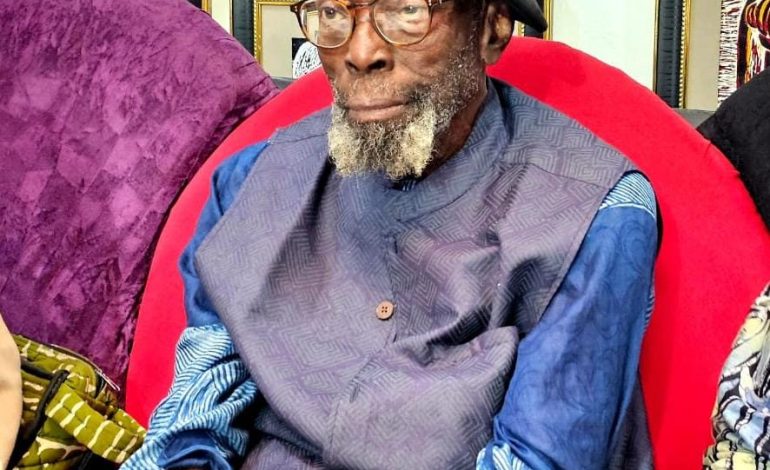
FOR three decades, he was away from his roots, engaged as an itinerant teacher at Oberlin, Cornell, Harvard, Cambridge, Berlin and Beijing. Everywhere he went, he left his mark, leaving his colleagues and students wondering about his high intellect. He was quick to let the world know that he was from Ibadan. Ibadan here refers to his upbringing and schooling. Ibadan is as good as any great city in the world, and its university is—some may say was, but perhaps we should leave that argument for another day and simply say — the university is good enough to hold itself in the universe. Biodun Jeyifo, BJ as he was fondly called, was one of Ibadan’s intellectual ambassadors, and so he criss-crossed the globe, particularly the Ivy League schools in the US, to share his towering academic gift.
Every year, he would return to his roots for its sun, smell, and people. This is where our paths crossed. He was conjoined to Prof. Femi Osofisan in the waist, and I knew Osofisan. I was bound to know BJ. If you saw him in Ibadan, you did not have to look far before you saw Osofisan. They both mixed friendship with scholarship, producing an intellectual alchemy that fed on itself, thereby yielding conversations, studies, texts, and papers of very high seminal content.
BJ’s eyes gave him away. They sank or appeared pierced with rigour. Well, what distinguished him the most was that he was a very deep thinker. I have often wondered whether the circumstance of birth played a role in giving us Prof. Abiola Irele, Prof. Dan Izevbaye, Prof. Ben Elugbe and Prof. Biodun Jeyifo; all acclaimed literary critics, all hailing from the same axis, all interweaving their native tongue with Yoruba and going on to a university that set them aglow with critical thinking.
BJ struggled with his health. However, no matter how ill he felt, the sun, the food, and the people sufficiently invigorated him, enough to carry him back and forth, and sustain him through the wintry North America for a while until his next visit. While overseas, his heart never left Nigeria. You knew this because he kept a weekly column in one of the Nigerian dailies. He successfully combined rigorous academic work with periodic literature, reaching multitudes. Through this organ, he was one of the social links between the government and the ordinary man, offering counsel to the government and bringing their sores to the fore, proffering solutions to knotty issues or unbundling their double-talk. BJ wrote prodigiously, but his language was thick. You needed to read his essays twice or more to get a handle on them. He wrote as his mind told him to, and his mind was often high up there in the celestial.
One day, we got in the car, and we were off to see Wole Soyinka in his kingdom at Ijegba. I looked at Jeyifo and Osofisan. Their fiery youthful academic relationship with Soyinka had thawed. Maturity had brought some convergence to ideologies. BJ had become arguably the pre-eminent scholar on Soyinka. Cambridge University stated clearly of BJ’s works that ‘no existing study of Soyinka’s works and career has attempted such a systematic investigation of their complex relationship to politics.’ Our conversation in the car that day drifted from literature into old age, its manifestations and how we now readily forget things. Osofisan said that but for his neck, he would have long lost his head. Jeyifo indicated that he was always searching for his keys far afield when they were in his pockets. I said that I would sometimes get in the bathroom to shave, lather my chin and then discover it was toothpaste. We all laughed at one another. We couldn’t really complain about age because we were going to see the ageless king. Nevertheless, it was telling because we discovered we were each nursing one pathology or the other under our skin. In the case of BJ, the skin no longer concealed his pathology; it revealed it.
At 80, just recently, BJ deserved a bash. We were going to celebrate his birthday, so his friends threw a party for him at Odunlade’s Art Gallery in Ibadan. This was on the 9th of January. He was born on the 5th of January, and so he was christened Biodun as his birthmark to herald the new year. On the 9th, the year was still new enough, but more importantly, BJ was 80. It really was worthy of celebration. At the party, glowing tributes were paid to him in acknowledgement of his outstanding scholarship, his activism and his compassionate care for his fellow man—his general kindliness. Speaker after speaker spoke of the gratification of their intercourse with him.
Prof. Adenike Osofisan spoke deviantly but most poignantly from the rest of us. I had said BJ bore his illness with equanimity and courage. Which was a lesson for all of us. Adenike went further. She said: ‘BJ, you have not been fair to yourself; you have not been fair to your body. Now at 80, you must stop to look after yourself as much as you tirelessly and compassionately look after others.’ When she took her seat, you could hear a pin drop. She spoke to BJ and indirectly to the rest of us. Adenike is a teacher and a caring mother; her admonishment may well apply to those of us whom BJ left behind.
Dr. Kolade Mosuro is a Publisher and Bookseller.
Let us not forget that we were gathered to celebrate BJ’s 80th. So the band struck a note. It was ‘Easy Motion’. The music motioned to BJ, lifting him off his feet. He was in a buoyant mood. Prof. Adenike Osofisan joined him in a dance; Prof. Tunde Adeniran joined him on the dance floor; Prof. Niyi Osundare couldn’t resist the music, and so he got up and held the left flank; Tunde Odunlade and Osofisan swivelled in the back while I flanked on the right. BJ was in the middle; he said that, as much as the party was very good, it was the best he’d ever had. He swayed to the left and right, nodding his head to the beat of the music. It was his last dance. Adieu, BJ.
* Dr. Mosuro, a publisher and bookseller, wrote from Ibadan