
Biodun Jeyifo: Ifowodo pays tribute, highlights scholar’s rigor, intellectual self-reflection

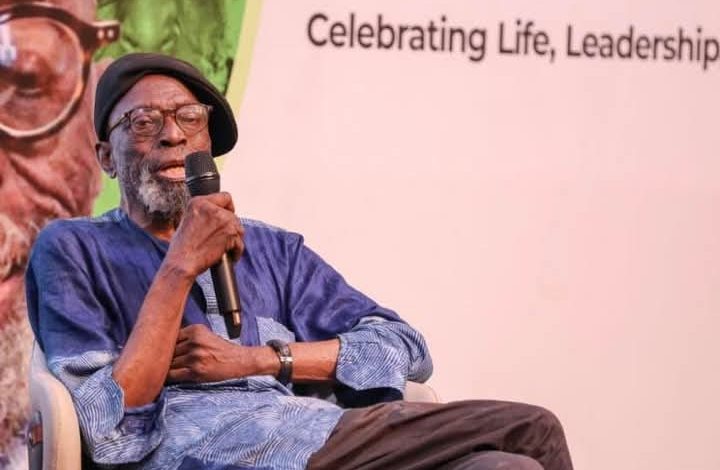
By Godwin Okondo
POET, scholar, lawyer and politician, Dr. Ogaga Ifowodo, has paid glowing tribute to renowned literary critic and scholar, Prof. Biodun Jeyifo, describing him as a “renaissance man” whose influence on literature, intellectual thought and activism spans decades. Ifowodo spoke during Toyin Falola Interview Series hosted by historian Prof. Toyin Falola, where he reflected on Jeyifo’s scholarly legacy, mentorship and humanistic outlook.
Jeyifo is widely regarded as one of Africa’s most influential literary critics and cultural theorists. A professor of African and African American Studies and Comparative Literature at Harvard University, he wrote extensively on African literature, postcolonial theory, drama and Marxist cultural criticism. His scholarship also explored the works of leading African writers, particularly Nobel laureate Wole Soyinka.
Beyond academia, Jeyifo was active in intellectual and labour activism. He once served as president of Academic Staff Union of Universities (ASUU), during which he travelled across Nigeria to mobilise academics and advocate for university reforms and improved conditions for lecturers.
According to Ifowodo, Jeyifo’s contributions extend beyond literary criticism into activism, social organisation and intellectual engagement with culture and society.
“It’s hard to find one specific place to start from with talking about Prof. Biodun Jeyifo,” Ifowodo said. “He was a renaissance man, a man of so many parts whose abilities seemed to know no bounds wherever he turned his attention.”
He said the defining quality that best captured Jeyifo’s scholarly method was “rigor,” noting that the professor demanded intellectual depth from his students and colleagues alike.
Ifowodo recounted how Jeyifo’s insistence on critical rigour shaped his own academic journey while he was working on his doctoral research at Cornell University, New York, where Jeyifo also taught before heading to Harvard University. He recalled that Jeyifo posed what he described as the toughest question during discussions of his dissertation proposal on post-colonial literature.
“He asked me a simple question: how does this paradigm you’re proposing respond to texts that resist realist readings?” Ifowodo said. “That single question made me realise I had a load of work ahead of me.”
The question pushed him to rethink his approach to analysing works such as Death and the King’s Horseman by Wole Soyinka, Beloved by Toni Morrison and Omeros by Derek Walcott, which explore trauma and history in ways that complicate conventional realist interpretation.
Ifowodo said the intellectual challenge eventually led him to engage psychoanalytic theory and other approaches that helped him complete his dissertation, which was later published as History, Trauma, and Healing in Postcolonial Narratives: Reconstructing Identities.
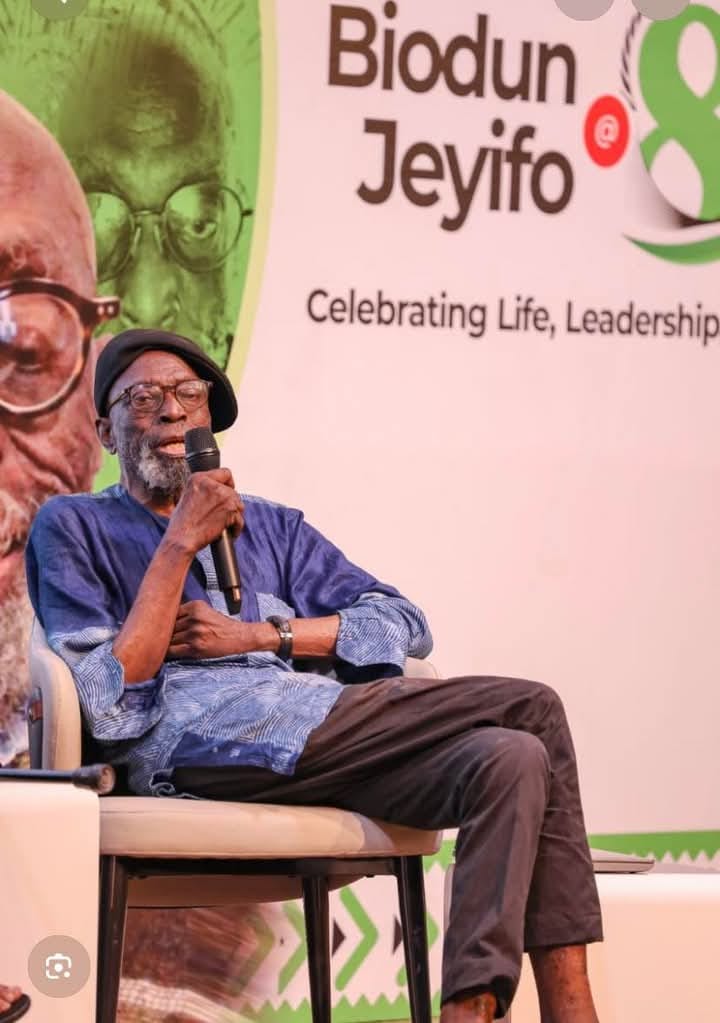
Prof. Biodun Jeyifo
Beyond academic rigor, Ifowodo said Jeyifo distinguished himself through a rare willingness to revisit and revise his own intellectual positions. He noted that the scholar’s early Marxist criticism of Soyinka evolved significantly over time. In his earlier writings, Jeyifo sharply criticised Soyinka’s aesthetics as reflective of bourgeois artistic concerns with his accliamed monograph on Soyinka’s ouevre, Wole Soyinka: Politics, Poetics and Postcolonialism.
“In BJ’s often quoted work, Soyinka’s theory of art and being reflected the predicament of bourgeois aesthetics,” Ifowodo recalled, citing a passage where Jeyifo argued that such art risked becoming detached from the realities of social life.
However, Ifowodo said Jeyifo later reassessed those positions, particularly in his introduction to Soyinka’s essay collection Art, Dialogue and Outrage and in subsequent works including Freedom and Complexity and Poetry, Poets and Postcolonialism.
According to him, this intellectual shift demonstrated Jeyifo’s belief that knowledge is provisional and must remain open to revision.
“He was willing to subject everything to review, even his own earlier work,” Ifowodo said. “All
knowledge is contingent, and in the light of new understanding we must be prepared to revise our positions.”
He added that this reflective openness was a defining feature of Jeyifo’s scholarship and a quality that distinguished thoughtful intellectual inquiry.
Ifowodo also highlighted Jeyifo’s humanistic side, recalling his humour, warmth and dedication to mentoring younger scholars. Despite his demanding intellectual standards, Ifowodo said Jeyifo remained approachable and encouraging to younger writers and students.
Recalling their first interaction, Ifowodo said he once showed Jeyifo a poem he had published in The African Guardian. “He looked at it and said, ‘Congratulations, but don’t think you have arrived,’” Ifowodo said.
The remark, he explained, captured Jeyifo’s mentoring philosophy—encouraging promise while reminding students that scholarship and creativity require continuous growth.
“For BJ,” Ifowodo said, “you could make a first impression that showed promise, but you were only just beginning. You must never get carried away.”