When CORA Youth Creative Club explored AI’s place in the creative industry

By Nathaniel Olawoyin
FOR two days, October 6 ad 7, members of the CORA Youth Creative Club (CYCC) and some members of the public converged in GRA Ikeja for an immersive training-cum-workshop to explore how Artificial Intelligence, recently renamed Superior Intelligence by the US President Donald Trump, interfaces with the process of creating and distributing an artistic or cultural product. Organised by the CORA Library & Resource Centre, the two-day intense session tagged ‘AI Initiative Forum,’ was conceived as a prelude to the 2026 edition of the annual Lagos Book & Art Festival, LABAF, which since 1999 holds every November in Lagos and globally – as its events have virtual contributions and participations from around the world.
With the theme curated as ‘AI & the Creative Industry,’ the training, held was at Duo Hub, 53, Oladipo Bateye, Ikeja GRA, and it brought together more than 30 participants, both virtual and physical from different creative fields, including acting, writing, dance, fashion, content creation, music and media.
Facilitator for the workshop was a renowned digital intelligence expert, Pastor (Dr.) Adeoye Abodunrin, who is described as “Futurist, Foresight Architect, Master Strategist of Economic Power.” He is the author of Fintech Black Box: The Silent Code Replacing Global Power, and has worked across technology, finance, governance, security, leadership and innovation.
The session began with participants sharing their experiences and knowledge of Artificial Intelligence and how they have leveraged various AI tools in their creative work. The conversation also raised concerns about the possibility of AI replacing human labour and taking away jobs, with some participants expressing fears about the technology eventually taking over significant aspects of their professions and the possibilities of it making people lazy.
Cultural curator and communicator and Programme Chairman of CORA, Jahman Anikulapo, expained why CORA came up with the training programme by jokingly saying he was also concerned that AI might replace him as a culture consultant. He expressed the fact that AI has, indeed, come to stay as part of modern living culture, and urged participants to set aside what they knew of AI for the duration of the workshop, so they could open their minds and brains to learn new tricks on how AI could assist in making their work better. He praised the facilitator for taking time off his hectic schedules in the UK to mentor the participants. He reiterated that CORA was passionately committed to the objective of deepening intellectual development and capacity building of the young ones through its various programmes targeted at spreading literacy.
While addressing concerns raised by some participants in the pre-workshop interactions, Abodunrin commended CORA for creating such platform to help people know what they didn’t know already and train them on how to go about it. He urged participants both on-site and virtually to see AI as an assistant that can be strategically fashioned to support their creativity rather than something to fear. He explained that creatives must first identify their creative gifts and understand what they want to create before adapting tools such as ChatGPT, Gemini and Meta AI to their individual fields.
Emphasising that “creatives create,” the mentor highlighted productivity and audience as essential elements of the creative process. He challenged participants to ask: What are you creating? Who is buying it? How many have bought it? He further urged them to research how AI could be effectively applied within their respective creative fields.
The highly interactive training session lasted some four to five hours each day, with participants actively engaging the mentor through questions and contributions. All the creatives from actors to writers, dancers, fashion designers, content creators, event planners and others described the training as enlightening, educative and eye-opening.
At the end of each session, workshop coordinator, Mercy Kelani expressed appreciation to Abodunrin for the engaging and insightful training. The first day ended with participants looking forward to the concluding session the next day.
Day Two of CORA Youth Creative Club AI Initiative Forum took the conversation further, shifting from understanding AI and its possibilities within the creative industry to exploring creative intelligence, personal strengths, skill development and enterprise. Participants moved from asking how AI could serve their creativity to examining how they could develop their gifts into valuable, sustainable and impactful creative practices.
After reviewing the results from an online Creative Intelligence and Archetype Assessment developed by Abodunrin, participants discussed their individual results and explored the different creative archetypes, including Explorers, Craftsmen, Curators, Builders and Architects, and gained insight into their traits, abilities and the kinds of professionals they were becoming.
Then the training moved into a more practical and interactive session, with Abodunrin asking participants personal and thought-provoking questions designed to help them better understand their creative strengths and how to develop them. He emphasised the importance of having a focused skill, an evidence-based development plan, a useful offer tested with real people, and a cost pilot supported by a delivery system and a 90-day scorecard.
He also challenged participants to think beyond talent towards enterprise and sustainability. He stressed the importance of having contracts, building an enterprise and putting the right expertise to take charge of it while noting that creatives must learn to distinguish kindness from enabling irresponsibility.
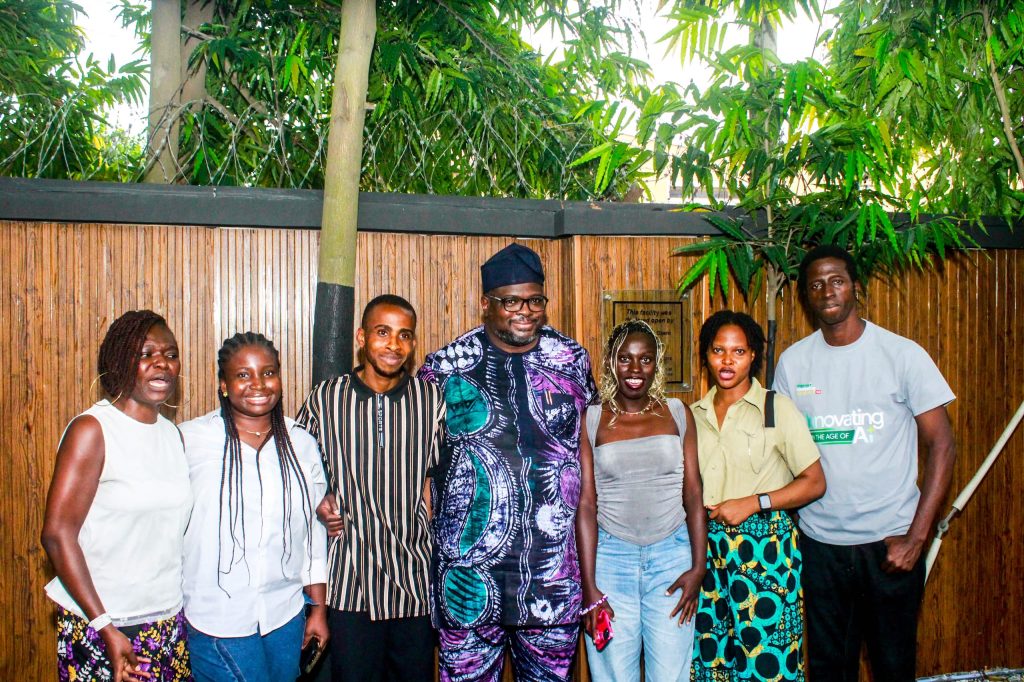
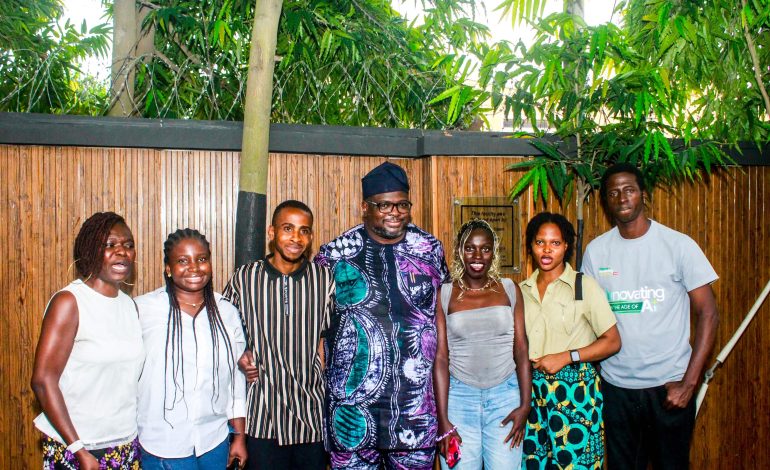
Agnes Johnson (left); Chinelo Nwora; Olakunle Fadairo; lead instructor, Pastor (Dr.) Adeoye Abodunrin; Bitrus Blessing Mercy Kelani and Segun Olaleye after the CORA Youth Creative Club train… in Lagos
A key part of the session was the development pathway, which Abodunrin presented as moving from ‘gift’, demonstrated through useful behaviour, to ‘expertise’, defined by repeatable quality on a specific task, then ‘distinctive contribution’, where a recognisable method solves a real problem. He moved to ‘enterprise’, where customers pay for reliable outcomes. and ultimately ‘legacy’, where others can use, teach and continue the work.
Participants were also challenged to consider how much they were willing to invest in their talents and gifts over the coming year. While some mentioned financial investments, others identified time as an equally important resource. The discussion reinforced the need for creatives to invest deliberately in their skills through learning, exposure and continuous development.
Under ‘Creative Intelligence in Practice,’ participants explored how to generate multiple approaches, judging ideas against useful standards, improving ideas through evidence and feedback, and understanding processes and mental syntax. The session also examined internal experiences through thoughts, feelings, emotions and imagination.
The second day was notably more interactive, with participants contributing more personal responses, asking questions and reflecting on their individual creative journeys. The session ended with participants providing feedback on what they had gained from the training.
Before closing, workshop Lead Coorditnaor, Olakunle Fadairo, expressed gratitude to CORA for creating a platform where volunteers could learn and develop skills that could contribute to their personal and professional growth. He also commended Abodunrin for his time and energy, noting that the training would continue during LABAF (scheduled from November 16 – 22, 2026), and provide an opportunity for those who were unavailable for the current sessions to participate.