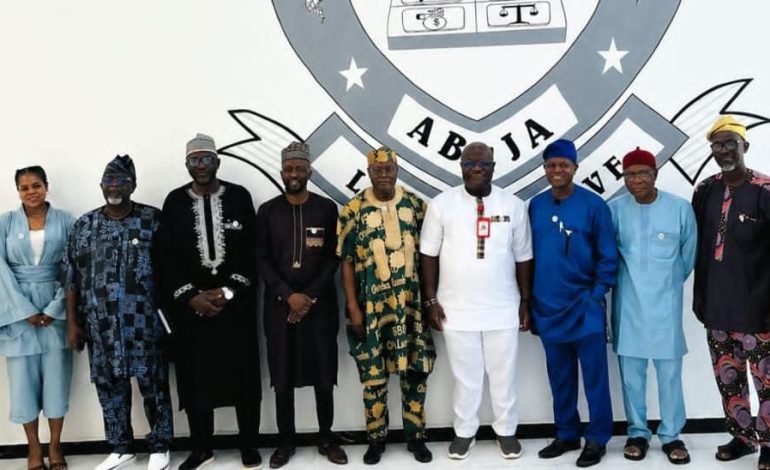
Hamzat’s theatre of promises: Lagos, culture and the politics of neglect

By Adeniran Makinde
POLITICS is theatre. Lagos politics, perhaps, is grand theatre: elaborate productions, magnificent scenery, persuasive dialogue, enthusiastic audiences, and promises of a spectacular finale. Unfortunately, the people are often left wondering whether they have watched a drama of development or simply purchased tickets to another season of political illusion.
Yesterday, Deputy Governor of Lagos State and the All Progressives Congress (APC) governorship candidate, Dr. Obafemi Hamzat, brought his campaign of promises to the National Theatre, Lagos. The choice of venue was inspired. What better place to unveil a vision for the future than a monument to the creative imagination of a nation?
There was, however, a curious omission in the production. The performing arts industry that gives the building its soul was conspicuously absent from the candidate’s vision.
Hamzat came to the National Theatre to speak about the future of Lagos. Apparently, the future of theatre in Lagos was not part of that future. It would be tempting to dismiss this as an oversight. But in politics, omissions are sometimes more revealing than declarations. And this particular omission raises an uncomfortable question: Does Lagos intend to develop its creative industry, or merely continue to exploit its glamour?
Lagos: A City That Consumes Culture but Neglects Its Creators
Lagos is Nigeria’s creative capital. Its music travels the world. Its films command audiences across continents. Its theatre practitioners, dancers, writers, visual artists, and cultural entrepreneurs contribute to the city’s identity, tourism, commercial activity, and international visibility.
Yet, for all its celebrated dynamism, Lagos has not quite translated this cultural abundance into a comprehensive, sustainable framework for the development of the performing arts. The familiar pattern is almost comical. Government remembers the arts when it needs entertainment, cultural colour, or an impressive opening ceremony. It remembers artistes when a festival must be launched, a dignitary entertained, or an anniversary celebrated.
But when the conversation shifts to employment, infrastructure, investment, professional welfare, and economic policy, the creative industry suddenly becomes an optional extra. The artistes are invited to perform at the government’s table, but never quite invited to participate in designing the menu.
The Gospel of Government Projects
Lagos, like many Nigerian states, has perfected a curious political vocabulary in which projects are presented as policy, occasional grants as investment, and cultural festivals as industry development. A festival here. A workshop there. A modest grant distributed with considerable fanfare. A handful of productions supported. A few artistes engaged for government functions. Then comes the press statement announcing the administration’s commitment to the creative economy.
And the artistes are expected to applaud. Perhaps, the word empowerment has acquired a special meaning in the corridors of government. Perhaps it means giving an industry a little assistance and expecting it to generate an economic revolution in return.
Meanwhile, the structural challenges remain. Performance spaces are expensive and inaccessible. Independent theatre productions struggle to secure financing. Practitioners lack adequate professional support. Cultural infrastructure remains uneven. There is no sufficiently robust, sustained framework to make theatre a viable and rewarding profession for the thousands of people whose livelihoods depend on it.
The tragedy is that government appears to expect the creative industry to flourish through sheer talent, resilience, and prayer.
Hamzat and the Missing Cultural Agenda
This is where Hamzat’s visit becomes politically significant. As deputy governor and governorship candidate, he is not merely a private citizen expressing personal opinions about the arts. He represents an administration seeking continuity and a political party asking Lagosians to entrust it with another term of governance through its next candidate.
His promises at the National Theatre therefore invite a legitimate question: Where is the performing arts industry in the Lagos development agenda he is proposing? Where is the Lagos State Performing Arts Development Fund? Where is the commitment to affordable and accessible theatres across the state? Let me not just talk about those four performing spaces built across the state pretending to be the Lagos State Theatre! Where are the incentives for private investment in theatre productions and creative enterprises? Where is the framework for professional training, indigenous theatre development, cultural tourism, and the welfare of practitioners? Where is the deliberate policy to transform Lagos’s enormous creative talent into sustainable jobs, businesses, and economic value?
These are not unreasonable demands from a sector that contributes so much to the cultural identity and commercial attractiveness of Lagos. Hamzat cannot reasonably expect the creative industry to provide the cultural glamour of Lagos while its practitioners remain largely excluded from the economic architecture of the state. A governorship campaign is precisely the time to answer these questions. If not now, when? If not from the candidate seeking the highest political office in the state, from whom?
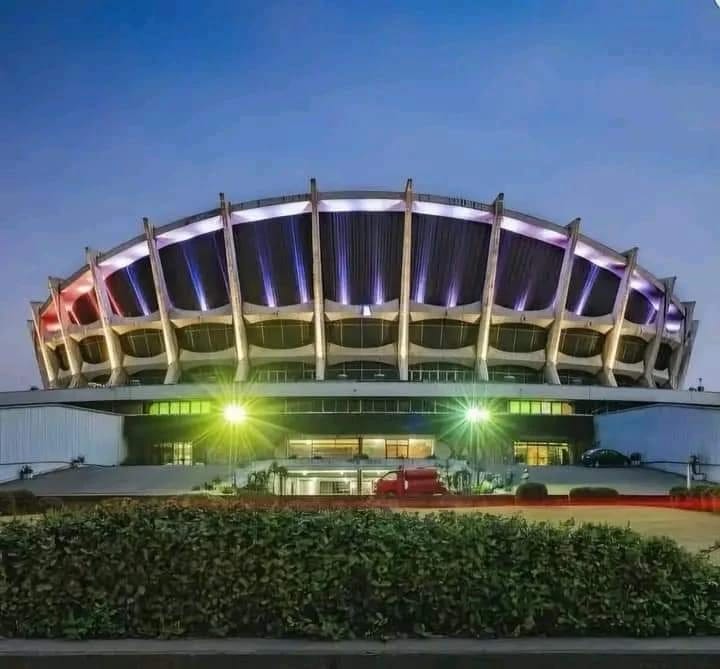
National Theatre, Lagos
The National Theatre: A Monument Is Not a Manifesto
The transformation of the National Theatre is welcome. Lagos and Nigeria deserve a functional, world-class cultural centre. But the refurbishment of a building is not the same thing as the development of an industry. A renovated theatre without a sustainable ecosystem for productions is like constructing a magnificent stadium without investing in the players, coaches, leagues, or the business of football.
The real questions are not simply about the building. Who will perform there? What will it cost practitioners to access its facilities? What production support will be available? How will Lagos-based theatre companies be sustained? What audience development strategies will be implemented? What opportunities will exist for young professionals? What is the economic model for ensuring that the theatre becomes a living institution rather than an occasional venue for official ceremonies?
These are matters of policy, not architecture. It would be a national embarrassment if the National Theatre became a beautifully renovated monument to an industry that government has neglected. And it would be an even greater political embarrassment if Lagos, with all its creative sophistication, failed to demonstrate a better model of cultural governance.
The Artiste and the Unpaid Standing Ovation
The performing arts are not a charitable hobby. They are an economic enterprise. A single stage production creates employment for actors, playwrights, directors, designers, lighting and sound technicians, costume makers, musicians, stage managers, marketers, and numerous other professionals. It stimulates commerce, develops audiences, generates revenue, and creates opportunities for investment.Other sectors receive policy frameworks, financing mechanisms, infrastructure, and incentives. The creative industry too often receives a handshake, a photograph, and the assurance that its concerns will be looked into.
The artiste goes home with the photograph. The politician goes home with the applause. And the economy loses the jobs and revenue that a properly developed performing arts industry could generate.
There is something deeply troubling about a government that understands the commercial value of entertainment but struggles to appreciate the economics of the industry producing it.
Lagos Must Change the Script
Hamzat and the APC have an opportunity to correct this omission. But that correction must go beyond adding a paragraph about culture to a manifesto or promising another festival.
Lagos needs a comprehensive performing arts and cultural development policy with measurable commitments. Such a policy must include sustained funding, accessible performance infrastructure, private-sector investment incentives, professional development, cultural tourism, intellectual property protection, and structured engagement with practitioners and professional associations.
It must also recognise theatre as a source of employment, enterprise, education, and social development. Nothing would be wrong in creating a policy direction that guarantees minimum wage for performing artists.
Most importantly, it must transcend political administrations. Cultural development cannot begin and end with the tenure of a governor. The industry requires continuity, institutional stability, and a long-term vision.
The creative community, for its part, must stop accepting token gestures as transformative achievements. Political candidates must be challenged to explain their commitments, identify their priorities, and demonstrate how those promises will translate into budgetary allocations and practical outcomes.
A political promise without a budget is merely dialogue. A project without continuity is merely an episode. And a cultural policy without the participation of practitioners is simply another performance.
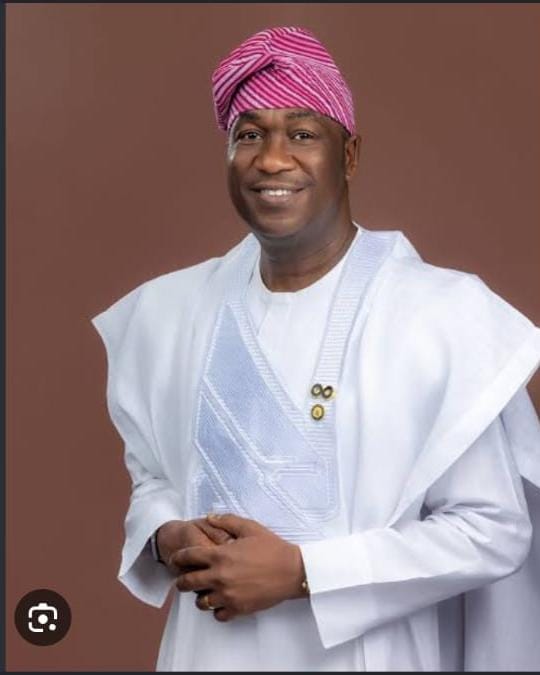
Lagos State Deputy Governor and governorship candidate, Dr. Femi Hamzat
The Tragedy Behind the Satire
This is deliberately a Lagos conversation. The wider Nigerian experience only makes the indictment more compelling.
Lagos has the talent. Lagos has the audience. Lagos has the market. Lagos has the commercial ecosystem. What it desperately needs is the political will to recognise that culture is not an ornament to governance but an essential component of development.
Hamzat’s visit to the National Theatre offered a perfect opportunity to articulate such a vision. Instead, the creative industry was left to interpret its silence. Perhaps, that silence was accidental. But for practitioners who have endured years of neglect, it sounded remarkably familiar.
A government that renovates the theatre but neglects the theatre industry has merely improved the scenery of a tragedy.
Hamzat is asking Lagosians to trust him with the future of their state. The creative industry is entitled to ask what place it occupies in that future. It does not need political sympathy. It needs policy, investment, infrastructure, and respect.
And Lagos must decide whether its artistes will continue to be invited to provide the entertainment, excluded from the budget, and expected to give the government a standing ovation. Because even in theatre, there is a limit to how long an audience can be expected to applaud a performance that promises everything and delivers nothing.
The curtain is rising on another political season. Lagos’s creative industry deserves more than a supporting role.
Makinde is the President of National Associations of NIgerian Theatre Arts Practitioners (NANTAP)