UI’s Institute of African Studies hosts prize-winning play ‘The Great Delusion’ for Black History Month

By Editor
THE Institute of African Studies (IAS), University of Ibadan, in collaboration with the Institute of Episteresurrecist Arts (IEA) and the African Studies Students’ Association (ASSA), will host a panel discussion and live reading of The Great Delusion, winner of the 2025 Association of Nigerian Authors (ANA) Prize for Drama, as part of activities marking Black History Month 2026. The event is scheduled for February 26, 2026, from 9:00am to 12:30pm at Drapers Hall, IAS, University of Ibadan, Oyo State.
The Vice Chancellor of the University of Ibadan, Prof. Kayode O. Adebowale, will serve as chief host, while IAS Director Prof. Sola Olorunyomi will host the gathering. The session will be moderated by Matilda Adegbola.
Featured discussants include literary critic and Pan-Africanist Hajia Olabisi Adegoke, poet and dramatist Kunle Wizeman Ajayi, President of the African Studies Students’ Association (ASSA), Mr. Alimi Quadril Ifayomi and the playwright, Majekodunmi Oseriemen Ebhohon, whose play The Great Delusion has been described by renowned scholar of African literature, Prof. G. G. Darah as “a major contribution to the literature of diaspora civilisation.”
Adding a diaspora perspective, Dr. Vibert Issa White, Professor of History at the University of Central Florida, described the work as urgent in its restorative vision. “The most urgent contribution of The Great Delusion is its act of restoration,” he wrote. “For Black children—those too often robbed of their rightful heroes—this work is nothing short of an intellectual resurrection.”
The Great Delusion is an epic theatrical tragedy and socio-political satire that interrogates the consequences of historical erasure, anti-Black racism, and epistemic theft — the systematic appropriation and suppression of African knowledge and labour.
Set against a speculative global crisis, the play imagines a dramatic turning point: a mass withdrawal of Black intellectual, economic, and cultural participation from white supremacist systems — a conceptual movement described within the text as ‘Afrocession.’ The resulting collapse exposes the deep structural reliance of global modernity on Black labour and ingenuity.
Rather than recount specific dramatic turns, the work situates itself within broader debates on diaspora civilisation, reparative justice, global African unity, and socio-economic solidarity. Through satire and tragedy, it asks what happens when the world is forced to confront the foundations it has long denied.
By invoking figures such as Katherine Johnson, Daniel Hale Williams, Lewis Latimer, and George Stinney — alongside unnamed Black builders whose labour shaped iconic Western institutions — the play expands its scope beyond national discourse to a transnational reckoning.
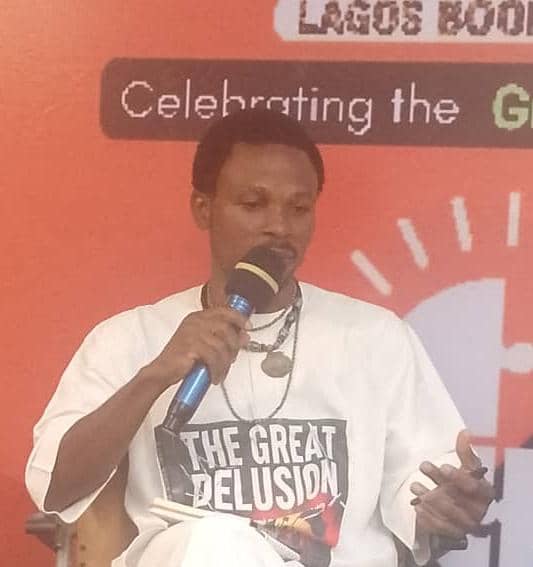
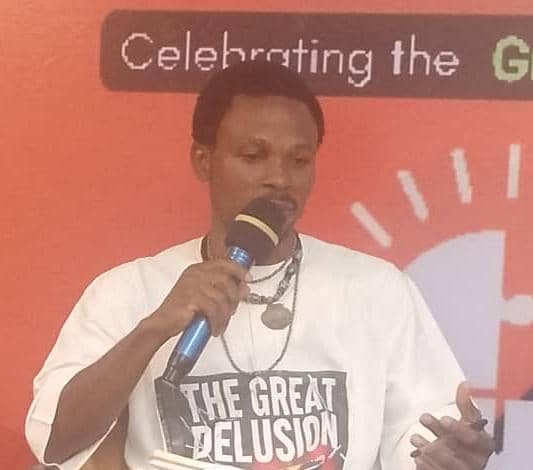
Majekodunmi Ebhohon
Organizers say the choice of The Great Delusion for Black History Month is deliberate. The play’s exploration of global African interdependence, diaspora consciousness, and economic self-determination aligns with renewed conversations around Pan-African solidarity and postcolonial futures.
Black History Month, increasingly observed in academic institutions across Nigeria, has evolved beyond commemoration to critical reflection on structures of inequality and global Black contributions. The Institute of African Studies (IAS) noted that the panel and reading aim to foster “engaged dialogue, scholarly interrogation, and artistic reflection” on the play’s ideological and historical dimensions.
The February 26 programme will feature a live reading and review, followed by a critical panel conversation examining the work’s literary structure, political and economic philosophy, and implications for African studies and diaspora scholarship.
Attendance is open to scholars, students, theatre practitioners, and members of the public.
ASSA President, Mr. Alimi Ifayomi describes the event as “an invitation to reconsider history, agency, and the architecture of global dependence” — a conversation he says is particularly urgent in the current geopolitical climate.