
Impact of Bukar Usman’s interventions in water supply to Biu Town and environs


By Mohammed Umar Midala
HISTORY of water supply in Biu Town and its environs is a journey from natural/traditional sources including springs, wells, streams, pools and rivers to modern water supply infrastructure. It is also a story of the resilience of the people and the contributions of individuals who responded to the basic needs of their communities. According to the oral history of Kuthli Maribiya, the twenty-second Kuthli of Biu Emirate (1873-1891), the people relied mainly on natural/traditional water sources as far back as 1873. These natural/traditional sources served generations for drinking, household activities, farming, and livestock. They formed an important part of the history, culture, and daily life of the communities.
Among the important natural/traditional sources of water supply to Biu Town and its environs were Jibir Thlema (well), Jibir Mambila (well), Jibir Yapana Yero (well), Jibir Kuthli (well), Mandra Abdu (stream) and Whu (river).
Jibir Thlema is one of the ancient traditional wells of Biu Town. It is a historic water source that has been in continuous use since the founding of the present Biu settlement. Jibir Thlema is situated in Garuwashina Ward, in the valley on the way to Viukuthla, the royal cemetery of Biu. The well lies in a lowland area that collects water, making it reliable for the surrounding communities.
According to oral tradition, Jibir Thlema was discovered and dug by the ancient people known as Hona and Gwi. These were the early settlers who never migrated. They were already living in the present Biu Capital area since 1873, before the arrival of the Kuthli from Pelaminta. The Hona and Gwi people dug the well by hand to provide water for drinking, farming, and livestock. Because the water was dependable year-round, the settlement around it grew. The well was named Thlema after Thlerma, who was a chief of the Hona and Gwi people before the coming of the Kuthli from Pelaminta. Therma was respected for his leadership and for organizing the community to develop water sources. In his honor, the well was called Jibir Thlema.
The name has been preserved by the people of Garuwashina for over 150 years. The well is still functional today. Despite the development of modern water systems, the residents of Garuwashina Ward continue to use Jibir Thlema, especially during dry seasons or water shortages. The community maintains the well and regards it as part of their heritage.
Jibir Mambila is one of the oldest surviving traditional water sources in Biu Town. It is a natural spring water that has served the people for over 150 years. Jibir Mambila is situated in Zarawuyaku Ward along the valley on the way to Waka, just after Biu Central Primary School. The spring collects underground water and remains active even in the dry season. It was discovered when Biu Kingdom migrated from Pelaminta to present Biu Town in 1873.
According to oral history passed down by elders, when the early settlers arrived, finding reliable water was their first priority. As they settled in the Zarawuyaku valley, they discovered this spring flowing from the rocks. The water was clean, cold, and constant. It quickly became the main source of drinking water for the new community and their livestock.
The name ‘Jibir Mambila’ comes from two words: ‘Jibir’ meaning spring/well in Babur/Bura language and ‘Mambila.’ The area was named Mambila because of a spiritual event. Tradition holds that a spiritual dead body was found on the ground a small distance after the spring. To the early settlers, this was a sign and a landmark. From that day, the place was called Mambila and the spring became known as Jibir Mambila meaning spring at Mambila. The name has remained unchanged since 1873 and the spring is still in use by the people of Zarawuyaku and Waka Road.
Jibir Mambila stands today as a living witness to the 1873 migration from Pelaminta and the resilience of the founding people of Biu. It is both a water source and a historical landmark that connects present-day Biu to its origins. Jibir Mambila spring water continues to provide water to residents. The Zarawuyaku community still protects and maintains the area.
The history of one of Biu Town’s oldest traditional water sources, Jibir Yapana Yero, is being preserved by community leaders as part of ongoing efforts to document the cultural and historical heritage of Biu. Located in Garuwashina Ward, Jibir Yapana Yero is believed, according to community oral history, to be more than 220 years old. The traditional water source is no longer in use today.
According to oral accounts from elders, Jibir Yapana Yero originally emerged as a natural spring, with water flowing from the rocks. As the settlement expanded, members of the Garuwashina community developed the natural spring into a well by digging and protecting the source, making it easier and safer for residents to obtain water for their daily needs. For generations, the well became an important source of water for the community.
One of the distinctive features of Jibir Yapana Yero was the traditional system established for managing access to the water. According to community elders, a female elder was appointed as caretaker of the well. Residents were permitted to fetch water during the designated morning period. At exactly 7:30 p.m., the caretaker, known as Yapana Yero, would close the well with a wooden covering. The well would remain closed until 7:30 a.m. the following morning. Community elders explained that the system was designed to prevent unnecessary wastage, reduce conflicts, protect the water source from contamination and ensure fair access among households.
Oral tradition holds that the well was named after Yapana Yero, described by elders as a strong, disciplined and influential woman who served as its caretaker for many years. She was remembered for her fairness, courage and determination in enforcing the community’s rules. In recognition of her service and leadership, the people of Garuwashina associated her name permanently with the traditional water source. The name Jibir Yapana Yero has consequently survived through generations.
For more than two centuries, according to oral tradition, Jibir Yapana Yero played an important role in the life of the Garuwashina community by providing spring water for drinking and domestic purposes, promoting discipline and fairness in access to community water, demonstrating the important role women played in managing community resources and forming part of the traditional water sources associated with Biu during the era of Kuthli-Maribiya.
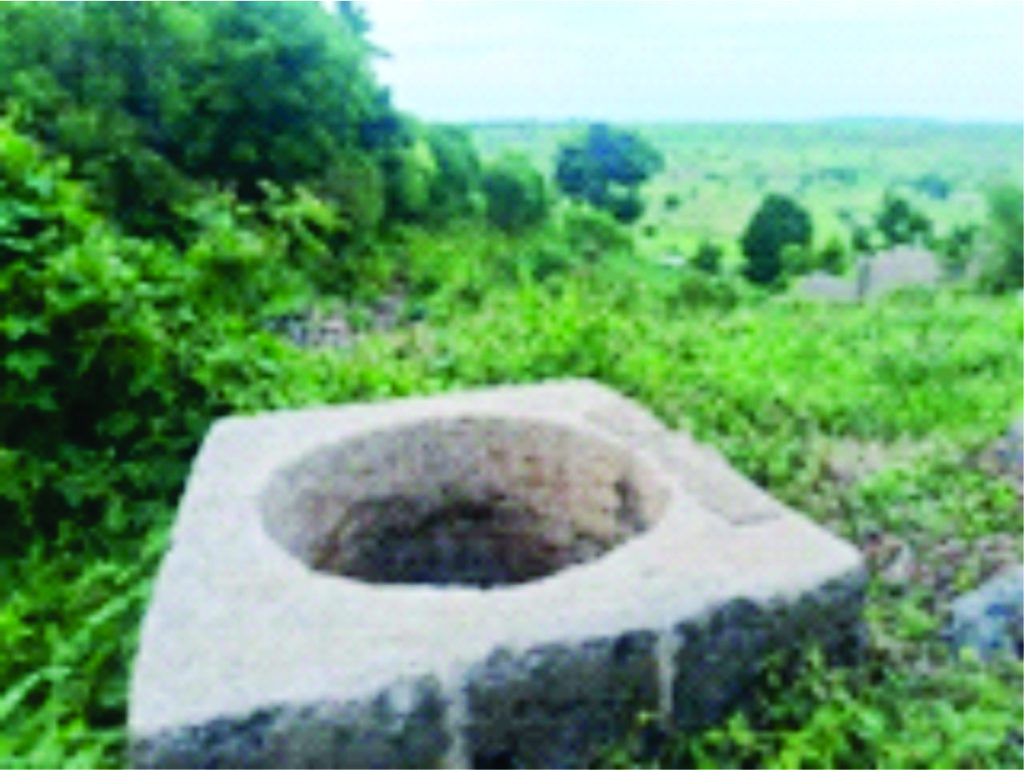
Jibir Mambila well located near Zarawuyaku Ward along the valley way to Waka, just after Biu Cnetral Primary School PHOTOS: MOHAMMED UMAR MIDALA
Jibir Yapana Yero is also being documented alongside other ancient natural/traditional water sources, including Jibir Mambila and Jibir Thlema, as part of the wider history of water supply in Biu Emirate. With the introduction of modern boreholes, Biu Dam and pipe-borne water systems, the traditional well gradually ceased to serve as a major source of water. Although Jibir Yapana Yero is no longer in use, the site remains important to the Garuwashina community. The surrounding land has subsequently been utilized as a community cemetery.
The Jibir Kuthli/Gadina Kuthli of the 1908 Royal Well is still serving Biu community today. One of the historic water sources of Biu Town, Jibir Kuthli, also known as Gadina Kuthli, continues to serve the community more than a century after its development during the reign of Kuthli Ari Dogo, the 24th Kuthli of Biu (1908-1935). Located around the palace area, the historic well is believed to have started as a natural spring before it was converted into a well in 1908 during the administration of Kuthli Ari Dogo.
According to local oral history, Kuthli Ari Dogo developed the natural spring into a well to support activities around the palace. At the same period, the Kuthli established an orchard and cultivated trees and plants around the area. The water from the well was used to irrigate the orchard and support agricultural activities. The development reflected the importance attached to water management and agriculture in the palace during that period.
The well had a specific role in maintaining the royal orchard. According to community accounts, prison inmates were assigned to fetch water from the well during the morning hours and use it to water the trees and crops around the orchard. This arrangement provided a regular supply of water for the agricultural activities and helped maintain the garden during the early twentieth century.
The historical connection between the well, the Kuthli and the orchard gave rise to its two commonly used names. It became known as ‘Jibir Kuthli,’ meaning the Kuthli’s well, because of its direct association with the palace. It was also known as ‘Gadina Kuthli,’ reflecting its association with the Kuthli’s garden or orchard. The two names have continued to survive in the oral history of Biu. Unlike several traditional water sources that have been abandoned following the introduction of modern water infrastructure, Jibir Kuthli remains in use today. Its continued use makes Jibir Kuthli not only a historical landmark but also a living natural/traditional water source connecting present-day Biu with its past, the well represents an important part of Biu’s natural/traditional water heritage and deserves preservation and proper documentation for future generations.
‘Mandra Abdu’ stream at Sil-Umthla Ward is one of the notable natural/traditional sources of water supply in Biu Town and its environs. Manda Mean stream is located at Sil-Umthla Ward to the south of Biu Town. It is now popularly known as Mandra Abdu. According to local historical accounts, ‘Manda Mean’ referred to the original or main stream, which flowed throughout the year and served residents of Sil-Umthla and neighbouring settlements for drinking, cooking, washing and other domestic purposes.
Recognising its importance, the defunct Biu Native Authority placed the protection of the stream under its Health Division. Among those responsible for safeguarding the water source was Audu Gasi, a Health Sanitary Officer (HSO). He monitored the stream, promoted hygiene and sanitation, and helped protect its surroundings from contamination. Indeed, Audu Gasi made a name for his strict enforcement of sanitary rules not only at Mandra Abdu but also against open defecation and environmental pollution of the entire Biu Town and its environs.
Over time, the stream became popularly known as ‘Mandra Abdu,’ with local accounts linking the name to Audu Gasi’s dedicated service. ‘Mandra’ is regarded as a local adaptation of ‘Manda,’ while ‘Abdu’ became associated with Audu Gasi, giving rise to the interpretation ‘Abdu’s Stream.’ For decades, Mandra Abdu remained a lifeline for Sil-Umthla. Women and children regularly travelled there to fetch water, particularly during the dry season when other sources became unavailable.
Although modern water-supply systems have reduced dependence on the stream, Mandra Abdu remains an important part of the oral history of Sil-Umthla and Biu. Its history preserves the memory of a time natural water sources sustained communities and dedicated public servants helped to protect them. For the people of Sil-Umthla, Mandra Abdu is more than a stream; it is a lasting symbol of water, community life, public service and Biu’s historical heritage.
Whu river divides almost into two halves the old Biu Town and the new settlement Galdimare Ward. It is the main drain of Biu Township. Its waters drain down the valley to Piku stream near Waka, the missionary settlement. Water creatures including crocodiles lived in it. It was source of water for the community and their animals; the water for drinking and washing as well. It has since dried up living patches of water here and there. Houses have been built over its course. Damaturu -Mubi trunk road runs over it. Hence a wooden bridge was constructed by the colonial authorities.
The history of modern water supply in Biu dates back to 1954, when the town’s first mechanized borehole was drilled under the initiative of Mr. J. G. Davies, the then District Administrative Officer during the colonial administration. Mr. Davies was the last colonial District Officer of Biu who wrote The Biu Book in 1956.
As Biu developed, particularly from around 1954, the population increased and the need for more reliable and accessible water supply became greater. Natural/traditional sources continued to serve the people, but there was an increasing need for modern water supply facilities. Hence Mr. Davies sank a borehole that supplied pipe borne water to Biu Town and its environs. The 1954 borehole was the first borehole that transformed the water supply system in Biu Town. Before the project, residents largely depended on natural/traditional wells, streams and ponds, many of which became scarce during the dry season.
The borehole introduced the first known pipe-borne water supply in Biu, serving the Government Residential Area (GRA), the Emir’s Palace, and a public fetching point at Dole in the Palace Square. Elders continue to remember Dole as the town’s first public water point. The historic water supply reportedly stopped in 2019 during the construction of the Biu-Gombi dual-carriage road, following damage to underground pipes. The 1954 borehole remains an important landmark in the history of Biu Emirate. Community members and stakeholders have called for its history to be properly documented and, where technically feasible, for the facility to be rehabilitated and preserved as part of Biu’s historical heritage.
The borehole drilled in 1975 by Brigadier Musa Usman, the then Military Governor of the North-Eastern State (1967-1975), remains an important public water project in the history of Biu. By the mid-1970s, the population of Biu was growing, while many residents still depended on natural/traditional wells and distant streams. In response to the needs of the people, the State Government provided a public borehole at Sil’umthla, which supplied water to Galdimare and Zarawuyaku, areas associated with the old Biu capital. The project provided clean and accessible water, reduced the burden of travelling long distances to fetch water, and contributed to public health and sanitation.
According to local accounts, the Sil’umthla borehole has remained functional for almost 50 years and continues to serve residents of the ward and surrounding communities. The borehole stands as a lasting legacy of Brigadier Musa Usman’s administration and demonstrates the importance of providing and maintaining public infrastructure for the benefit of future generations.
The Borno State Government also made efforts, including the construction of the Biu Dam, initiated during Governor Mohammed Goni’s Administration in 1982, aimed at augmenting water supply for the town. Unfortunately, the Dam construction encountered some delays and the project remains uncompleted to this day (August 2026). The background to the project recounted in Bukar Usman’s A History of Biu is as follows:
Designed to provide portable water to Biu and 35 other towns and villages within a radius of 3 miles or 4 km (an estimated population of 300,000), the dam is yet to go beyond its first phase, more than 30 years after its commencement. Contract for the construction of the dam was awarded to an Ibadan-based company which completed the job within three years.
The delay has been with the water extension which involves laying pipelines to connect the towns and villages. The project remained abandoned until about 1990-1991 when President Ibrahim Badamasi Babangida, while on a state visit to Borno State, visited the Alau (Alo) and Biu dams. He promised to continue with the development of both dams. For a start, he offered N30 million and N10 million grants respectively, which were more like advances repayable from the monthly statutory allocations to the State and local government to revive the projects. There was no evidence that the N10 million was applied to the Biu Dam.
The project remained abandoned until 2000 when the then vice president, Alhaji Atiku Abubakar, visited the site and promised to make a recommendation to President Olusegun Obasanjo to visit the dam to see by himself how the precious water remained unutilised. The President visited two years after. The president who was stunned by the fact that the project had been on for 15 years promised to do something. Soon after president Obasanjo’s return to Abuja, it was announced that the federal government had awarded two contracts worth N800m as part of the estimated N4.5bn cost of Phase one to Mothercat Nig Limited and Nalado Nig Limited, owned by the current Vice President (Arch. Namadi Sambo). It involves the provision of the water processing plant, the laying of pipes and the erection of overhead tank for Biu and its environs. The contracts were to be completed within two years.
Unlike President Obasanjo’s government, which was out to ensure early completion of the dam, successive governments further delayed the process. The project became a victim of partisan politics. While Alhaji Muhtari Shagari, the federal minister (2001-2007) for water resources was on a visit to Biu, it was alleged that he responded to questions from members of the public to the effect that as Biu voted ANPP, they should go to ANPP for the development of the dam. Thereafter, the meagre annual allocation in the federal budget was used to pay the contractors who, in addition to the cost escalation, also claimed to have performed in excess of the N800m paid to them initially.
The new administration of Governor Kashim Shettima has resolved to continue with the development of the dam. However, due to cost escalation of N4.5bn (2002) of Phase one alone, it is of interest to see how the authorities could mobilize funds to complete this project begun some 29 years ago. It has suffered the same fate like Zobe dam in Katsina State which was conceived in the 1970s and scheduled for completion in 1983; as well as Kafin Zaki dam which was conceived in 1974. All of them are yet to be completed. “Federal government budget proposal of N160million in 2012 for Biu dam was reduced to N20 million” as observed by northern senators. (Source: A History of Biu: Klamidas 2015, Pp 290-291).
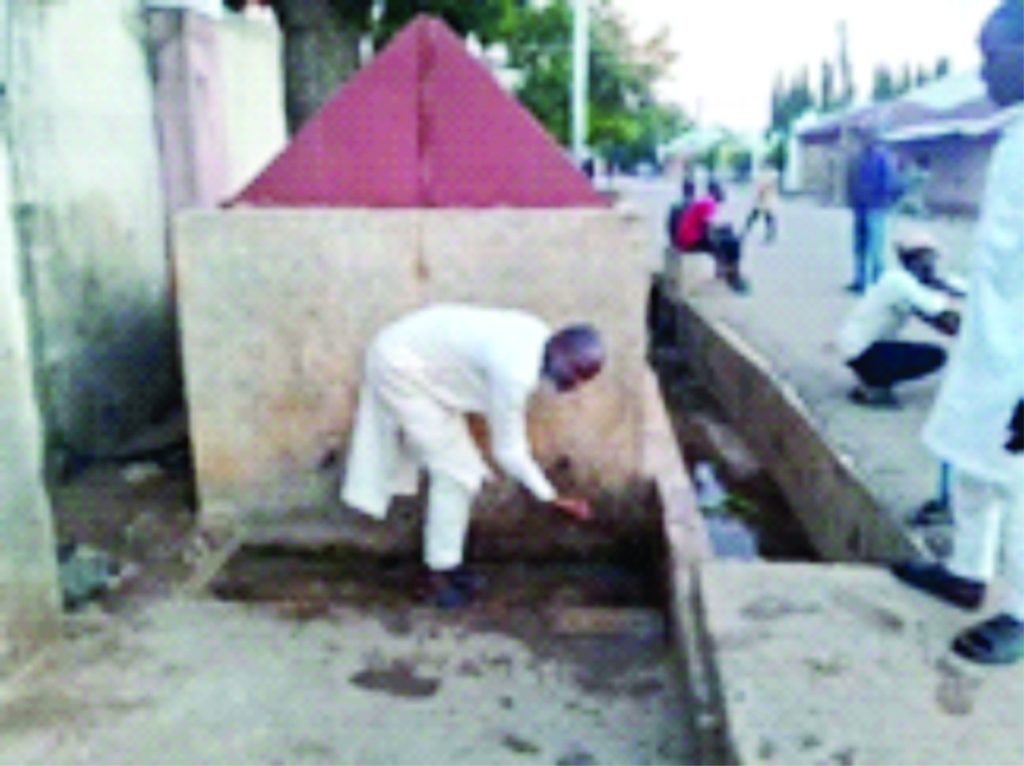
Borehole constructed by Dr. Bukar Usman at Yamusa Kelkel residence near Zarawuyaku ward
One of the most significant private interventions in modern water supply in Biu Town and its environs came in1992, when Usman, a proud son of Biu, responded to the acute water scarcity by funding and facilitating the drilling of several motorized boreholes across Biu Town and its immediate environs. His intervention was driven by a desire to ease the hardship faced by residents who walked long distances to fetch water, especially during the dry season. The boreholes were sited strategically to serve densely populated areas, public institutions, and vulnerable communities.
Boreholes attributed to Dr. Usman, drilled in 1992, are around his family house, Zarawuyaku Ward, his private residence, GRA Biu, former Biu Community Bank, Gombe Road Biu, Emir’s Palace, Biu, General Hospital Biu, ‘Charge Office’, Divisional Police Headquarters, Nasarawa Area, Biu Oil Mill, Damaturu Road, Near Yamusa Kelkel’s house, at Zarawuyaku Ward, Dugja Dizza Ward, Galdimare Primary School, Garuwashina Community and Near Kachalla Madu Rama’s house, Zarawuyaku Ward (not functional as at August 2026 when this report was compiled. All the others are functional).
These boreholes were equipped with hand pumps and were later upgraded to solar/motorized systems in some locations by the community and government. They immediately reduced the burden on women and children and improved hygiene and health outcomes in the benefiting areas. The 1992 water intervention by Usman, should therefore be properly documented, maintained, and preserved as part of the developmental history of Biu Emirate. Beyond providing water, it demonstrated leadership, philanthropy, and commitment to public service.
Dr. Bukar Usman, an Officer of the Order of the Niger (OON) award recipient, deserves the appreciation and recognition of the people of Biu Emirate for this important contribution to humanity. His gesture remains a reference point for community-driven development and a challenge to present and future leaders to invest in basic services.