Guardians of the word: Writers as champions sustaining Nigeria’s trade book publishing

By Godwin Okondo
FOR a country with a long and distinguished literary tradition, Nigeria’s contemporary book industry has often had to fight for survival. The country that produced some of Africa’s most celebrated writers like Wole Soyinka, Chinua Achebe, Christopher Okigbo, JP Clark, Ben Okri, Chimamanda Ngozi Adichie has, for decades, struggled with the less glamorous but equally important business of getting books from authors’ desks into readers’ hands.
The decline of major publishing infrastructure, weak distribution networks, inadequate public libraries, book piracy, rising production costs and dwindling purchasing power have combined to make trade publishing one of the most difficult segments of Nigeria’s creative economy. Yet, against that difficult background, a new generation of independent publishers has emerged, keeping the business of publishing fiction, poetry, drama, essays and other forms of creative writing alive.
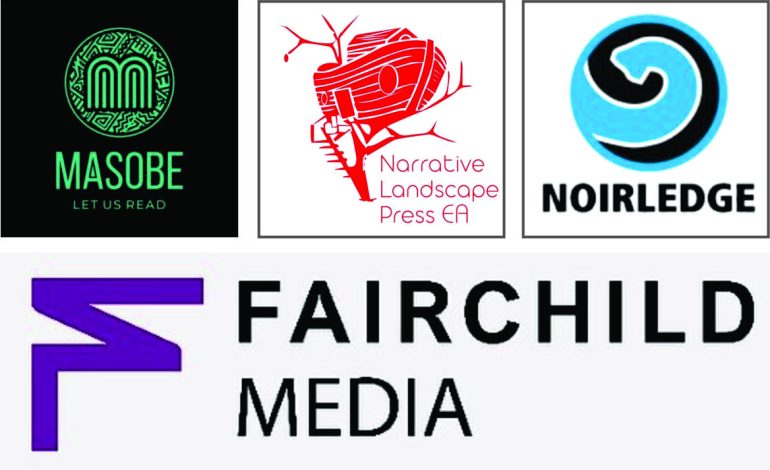
Among the most prominent of these independent houses are Masobe Books, Narrative Landscape Press, Noirledge Publishing and Fairchild Media. Operating from different cities in Nigeria, with different philosophies and publishing models, the four presses have become giants in the Nigerian trade book publishing. They are indeed putting their money, talent and passion where their mouth is!
Their emergence reflects a fundamental shift in the Nigerian literary ecosystem, with publishers increasingly taking responsibility for discovering writers, developing manuscripts, creating attractive and appealing books, building audiences and finding new routes to readers.
For the early decades of Nigeria’s independence, international publishing houses and their Nigerian subsidiaries played an important role in shaping the country’s literary culture. Heinemann’s African Writers Series, for instance, helped introduce generations of African writers to readers across the continent and beyond. Longman Nigeria, University Press, Cambridge, Mcmillan and other established publishers also played significant roles in educational and literary publishing.
But the changing economic realities have gradually altered the landscape. As publishing companies concentrated increasingly on the more commercially predictable educational and textbook markets, trade book publishing was left with fewer institutional champions. Fiction, poetry, drama and creative non-fiction became increasingly difficult propositions in an environment where production costs were rising and distribution remained inefficient.
The collapse, or weakening, of the public library system further narrowed access to books, while piracy keeps depriving publishers and authors of their legitimate income. At the same time, the economic difficulties faced by Nigerian households meant that books are often regarded as optional purchases.
It was in this environment that independent publishers began to demonstrate that the Nigerian reader had not disappeared, rather, the reader needed books that were properly produced, effectively marketed, readily available and connected to modern realities.
Masobe Books, founded in 2018 by writer and publisher Othuke Ominiabohs, became one of the most visible expressions of this new publishing culture. The name Masobe, derived from an Isoko expression meaning ‘Let Us Read,’ captures the philosophy behind the company. From the beginning, the press sought to make books more accessible and appealing, particularly to younger Nigerians who are increasingly consuming culture and lifestyle information through digital platforms.
Masobe understood that publishing could no longer depend solely on bookstores. Attractive covers, social media campaigns, book launches, pop-up sales and direct engagement with readers became part of its strategy. The result has been a publishing house whose books increasingly occupy a space between literary culture and popular culture.
Titles such as A Broken People’s Playlist by Chimeka Garricks, Nearly All the Men in Lagos are Mad by Damilare Kuku, The Mechanics of Yenagoa by Michael Afenfia, The Road to the Country by Chigozie Obioma and When We Were Fireflies by Abubakar Adam Ibrahim have helped establish Masobe as a recognisable name in contemporary Nigerian publishing. The company has also expanded beyond its core publishing activities, with Oremaha serving children’s literature and Makere, also Isoko meaning ‘Let Us Write,’ providing a structured assisted route for self-publishing.
At the heart of Masobe’s growth is Ominiabohs, whose experience as a writer has influenced the company’s relationship with authors. Having written and published works, such as Odufa and Daughters of Tomorrow, he approached publishing with an understanding of the vulnerability involved in placing a manuscript in the hands of another person.
That writer’s perspective has helped Masobe develop an author-centred identity, while its emphasis on presentation and marketing has demonstrated that literary books can compete for attention in an increasingly crowded entertainment market.
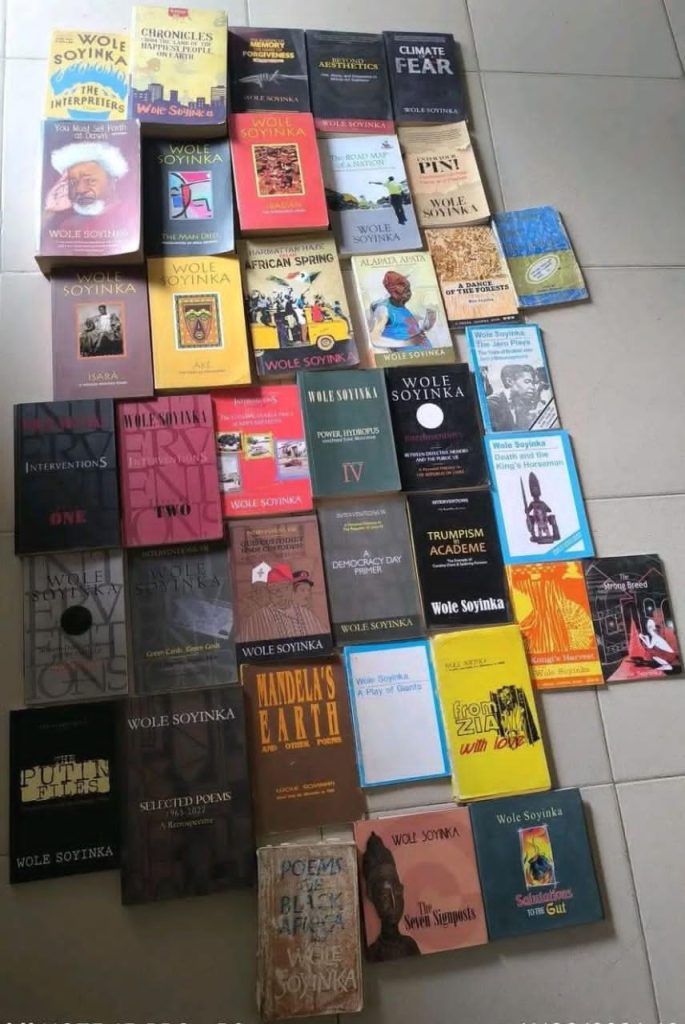
Titles of Wole Soyinka’s works
If Masobe represents the populist face of the new Nigerian publishing movement, Narrative Landscape Press represents its infrastructural dimension. Founded in 2016 by editor and communications specialist Anwuli Ojogwu and writer Dr. Eghosa Imasuen, Narrative Landscape emerged from the need to provide professional editorial, production and distribution support within a fragmented publishing ecosystem. The company subsequently developed into a significant book trade publisher in its own right. Their work together at Farafina Books, an imprint of Kachifo Ltd, has been instrumental in shaping their clear-sighted publishing vision.
One of its most significant involvement has been the local publication of major international Nigerian literary titles, including works from Chimamanda Ngozi Adichie’s catalogue of titles. The move demonstrated that books by internationally recognised Nigerian writers could be effectively produced and distributed within Nigeria rather than relying exclusively on publishing infrastructure in foreign countries or other international centres.
For the Nigerian book industry, such developments carry significance beyond the individual titles involved. They point to the possibility of strengthening local publishing capacity and retaining more of the value generated by Nigerian literature within the domestic ecosystem.
Narrative Landscape has also published works by writers including Lizzie Damilola Blackburn, Oyinkan Braithwaite, an anthology by 15 Nigerian culture journalists titled Moonbeam, Yejide Kilanko and Leye Adenle, combining literary quality with a clear understanding of commercial readership.
Ojogwu’s editorial experience has been central to the company’s emphasis on production standards. Her work with leading African writers and publishing professionals has given Narrative Landscape an approach that treats editing, typography, design and manufacturing as essential parts of the literary process rather than afterthoughts.
Imasuen, meanwhile, brings the perspective of both writer and publishing executive. The author of To Saint Patrick and Fine Boy, moved from medicine into literature and publishing, including experience with Kachifo’s Farafina imprint. His dual understanding of creative production and business has positioned Narrative Landscape to engage not only with manuscripts but also with the broader structural problems affecting the Nigerian book trade. Eghosa’s recently published creative non-fiction The Challengers is testament to this innovative publishing vision.
While Masobe has built much of its identity around accessibility and popular appeal, Narrative Landscape has demonstrated the importance of owning and strengthening the infrastructure through which books reach readers.
In the city of Ibadan, Noirledge Publishing has taken a different route. Founded by writer, poet, critic and cultural producer, Servio Gbadamosi, Noirledge has established itself as an important home for literary experimentation and forms of writing that commercial publishers can sometimes consider difficult to sell.
Its location is itself significant. Ibadan has a rich history as the centre of Nigerian intellectual and publishing activity, and Noirledge operates within that tradition while developing a contemporary identity. Its publishing programme encompasses prose, poetry, drama, memoir, children’s literature and critical writing. At a time when poetry and drama are frequently regarded as commercially challenging genres, Noirledge has continued to invest in them.
The company’s multi-imprint structure has enabled it to serve different categories of writers and readers. Noirledge functions as the flagship imprint, while Winepress provides a self-publishing platform and Frangipani focuses on children’s and young adult literature. The strategy has allowed the company to combine literary seriousness with flexibility.
Its catalogue includes titles such as Boom Boom and The Road Does Not End, two children’s books that won The NIgeria Prize for literature in 2019 and 2024 respectively, alongside poetry collections, short stories, anthologies and critical works. The recognition received by some of its books has strengthened the argument that serious literary publishing can survive outside the traditional commercial centres.
Gbadamosi’s own background as a poet and cultural producer is central to the company’s philosophy. As the author of works including A Tributary in Servitude, Where the Light Enters You and Entropy, Gbadamosi approaches publishing not simply as a commercial activity but as part of the broader work of preserving and expanding literary culture in Nigeria. His involvement in literary programming, including the Ibadan Book and Arts Festival, has also connected publishing with the wider ecosystem of festivals, readings, criticism and cultural exchange.
For Noirledge, the business of publishing therefore extends beyond selling books. It involves creating a space for voices and genres that might otherwise struggle to find institutional support.
Fairchild Media represents a somewhat different model of independent publishing in Nigeria. Rather than emerging solely as a conventional publishing company, it has operated at the intersection of media, public relations, content development, cultural programming and publishing, with Baron’s Café serving as one of its publishing imprints.
The company is closely associated with writer, publisher, journalist, media consultant and arts curator, Femi Fairchild Morgan, whose career has moved between literature, cultural production, journalism and creative communications.
The breadth of that background has shaped Fairchild Media’s approach to publishing. Rather than treating the book as an isolated product, the company has operated within a wider cultural ecosystem in which books, writers, literary events, publicity and audience engagement reinforce one another.
Baron’s Café has published works across poetry, fiction, social commentary and other forms of literary and public discourse. Bibliographic records identify Whispers by Tokunbo Dada and ’Femi Morgan as a 2019 Baron’s Café publication under Fairchild Media, while Renegade, another Morgan poetry collection, is also listed as a Baron’s Café/Fairchild Media publication. The Year of Fire, Morgan’s collection exploring rage and anxiety in Nigerian social spaces, was likewise published by Baron’s Café.
The imprint’s catalogue has not been confined to poetry. The Call by Chinedum Akiti-Diego, for instance, was published by Baron’s Café in 2020 and deals with an American-Nigerian family returning to Africa and confronting the realities of the society they hoped to transform.
Fairchild Media has also participated in collaborative publishing. Saving Mungo Park, a children’s book by Onyeka Nwelue and Ikenna Chinedu Okeh, was published by Hattus Books in collaboration with Baron’s Café, with the project seeking to challenge the conventional colonial framing of Mungo Park and the River Niger.
More recently, Baron’s Café published Friday Aja’s London Tailors, a novel dealing with boyhood, hardship, migration, internet fraud and the pressures of postcolonial Nigerian society. At the book’s unveiling in Lagos in 2024, Fairchild Media’s Chief Operating Officer, Oluwasogo Faloye, described the novel as a work whose originality and relevance to post-colonial realities informed the decision to publish it. The company’s contribution to the literary ecosystem, however, goes beyond the books appearing under its imprint.
Morgan has also been closely associated with Artmosphere, a literary and cultural platform that provided space for writers, artists, thinkers and other cultural practitioners to engage audiences. His work in literary programming and cultural production has helped create an environment in which publishing can be connected to conversations, readings, festivals and other forms of public engagement.
This makes Fairchild Media particularly relevant to the changing economics of Nigerian publishing. In a market where publishers must increasingly compete for attention, publishing a book is only the beginning. Writers and publishers must find ways to create conversations around books, establish communities of readers and make literary culture visible beyond conventional bookstores. Fairchild’s broader media and cultural orientation provides one response to that challenge.
The company’s publishing activities have also unfolded within the difficult realities of the Nigerian book trade. Years ago, Morgan publicly discussed the financial difficulties confronting publishers and booksellers, including debts owed to publishers by distributors and booksellers. The problem illustrates one of the central framework flaws of Nigerian trade book publishing: producing a book is not enough when the systems for getting it to readers and recovering revenue remain fragile.
Fairchild Media therefore represents not simply another independent publisher but an example of how cultural entrepreneurship can intersect with publishing. Its model places publicity, content, cultural programming and books within the same ecosystem, demonstrating that independent publishing can survive by building relationships with readers beyond the traditional retail chain.
Taken together, the four indie presses demonstrate that there is no single model for sustaining Nigeria’s trade book publishing industry. Masobe has shown the power of popular appeal, branding and audience engagement. Narrative Landscape has demonstrated the importance of professional infrastructure, production quality and local ownership of major literary catalogues. Noirledge has kept literary experimentation, poetry and other less commercially secure forms in circulation. Fairchild Media has shown how publishing can be integrated with cultural programming, publicity, media and audience development. Their differences are important because the Nigerian book ecosystem requires all of these functions.
The country does not merely need publishers capable of producing books. It needs publishers willing to discover new writers, editors able to shape manuscripts, designers able to make books attractive, distributors capable of reaching readers outside major cities and marketers and publishers, who understand how contemporary audiences consume culture.
The economic obstacles remain formidable. Inflation has increased the cost of paper, printing, transportation and warehousing. Foreign-exchange has made imported materials more expensive. Poor roads and unreliable supply chain continue to complicate distribution. For readers, the rising cost of living has also made books compete with numerous other household priorities. Yet the continued activity of independent presses suggests that the market is not without potential.
The growth of literary festivals, book clubs, reading communities, online bookstores and social-media literary platforms has created new opportunities for publishers to find and cultivate audiences. Also, direct communication with readers has reduced some of the distance between publishers and the people buying their books.
The most important lesson from the rise of these publishing houses may therefore be that Nigeria’s reading culture was never simply waiting to be rescued. It required investment, imagination and a better understanding of how readers want to discover and purchase books.
These publishers have made authors more visible, transformed book launches into cultural events and helped move Nigerian literature beyond the narrow perception of books as academic objects.
They have also contributed to the preservation of contemporary Nigerian memory. Every novel, collection of poetry, memoir, essay or short-story anthology published by these houses records something about the society from which it emerged. The books preserve experiences of cities, families, politics, relationships, migration, class, identity and everyday Nigerian life that might otherwise disappear from the national record. That cultural function makes independent trade publishing more than a commercial enterprise, but heritage and memory preservation.
The challenge now is to ensure that the ecosystem becomes sturdy enough to support the next generation. Publishers need improved distribution infrastructure, stronger enforcement of copyright laws, better access to finance and more sustainable relationships with bookstores, libraries, schools, festivals and international partners.
Government intervention can help, but the industry cannot be built entirely around government support. The experience of these independent presses demonstrates the importance of private initiative and entrepreneurial resilience.
After years of uncertainty, Nigeria’s contemporary publishing landscape has therefore acquired a new confidence. The old giants may have changed their publishing priorities, but they did not take the country’s stories with them. Instead, independent publishers stepped into the gap and ran away with it.
Masobe Books, Narrative Landscape Press, Noirledge Publishing and Fairchild Media have shown, in different ways, that Nigerian literature can be produced locally, marketed ambitiously and consumed by readers, home and abroad.
Their greatest achievement may not be any individual bestseller or award-winning title. It is the fact that they have helped preserve the machinery through which Nigerian writers continue to be published.
In an industry where survival itself is often an achievement, these presses have become more than businesses. They are custodians of the printed word, keeping alive a literary economy that remains essential to how Nigeria tells its story to itself and to the world.