Coffee is about freedom of expression, relationship, soulfullness, art, says MD of ‘Everything But Coffee’

By Godwin Okondo
EVERYTHING But Coffee (EBC), a Nigerian coffee brand owned by Miyagi Nigeria Ltd, is seeking to change the way Nigerians consume and perceive coffee by making quality coffee more accessible, affordable and suited to the Nigerian market. While many Nigerians see coffee as an imported lifetyle, makers of EBC think otherwiswe, insisting that coffee had been farmed in large scale in the Mambilla and Plateau, but abandoned since the discovery of oil.
The company’s Managing Director, Nnenna Samuila, disclosed this while speaking ahead of the brand’s activities to mark International Coffee Day that started on monday, September 28 and runs till Thursday, October 1, 2026 at Purple Mall Freedom Way, Lekki Phase 1, Lagos, explaining that EBC was created around the understanding that coffee consumption extends beyond the coffee itself to include the equipment, accessories and infrastructure required to prepare it. She said the name, Everything But Coffee, was deliberately conceived from the idea of creating an ecosystem around coffee, ensuring that consumers do not have to spend excessively on equipment before enjoying quality coffee.
“The whole point of Everything But Coffee came around that we need to make sure that we as a brand are not just making coffee,” she said. “If you have nothing to make it or what you need to make it is expensive, then we are dead on arrival,” and recalled the historical role of early coffee houses as meeting places for thinkers and people discussing ideas, liberation and society. For her, coffee is ultimately about relationships and shared experiences.
“Almost everybody is okay with meeting over coffee, so it’s more about relationships, soufullness. Coffee is very sentimental,” she said.
Samuila said the company’s approach was also informed by the economic and infrastructural realities of the Nigerian market, particularly the purchasing power of consumers and the country’s electricity challenges.
She explained that while consumers in Europe could rely on credit facilities to spread the cost of expensive espresso machines, the situation was different in Nigeria, where purchasing power and access to reliable electricity had to be taken into consideration.
“The average espresso machine has a boiler, so even if I have a generator, my KVA might not be strong,” she said, adding that EBC had therefore paid attention to the environment in which it was investing.
Rather than insisting that consumers purchase expensive machines, the company encourages simpler methods of preparing coffee, including the use of French presses and filter papers. Samuila said EBC’s 250-gramme coffee is available in ground form as well as whole beans, allowing consumers to prepare it without sophisticated equipment.
“You take your two scoops, boil your water on your stove, pour it, let it steep for three minutes and then make the coffee. In all this, there was no electricity,” she said, noting that this philosophy would form a major part of the company’s International Coffee Day activities, where consumers would be shown that enjoying quality coffee does not necessarily require expensive gadgets.
The event, she disclosed, will begin on Monday and run throughout the week, culminating in a masterclass, with activities taking place at Purple Mall, Lekki, on Freedom Way. She said the programme would be free to participants, although registration would be encouraged because the available space was limited.
“It’s not like if you don’t register, we will bounce you. Registration lets us know how many people indicated interest, so if we need to get more hands, it’s more about that than saying no to people,” she said.
Samuila said EBC’s customer database currently showed that its dominant consumers were working-class Nigerians between the ages of 35 and 55. She, however, noted growing interest among younger Nigerians, particularly as a result of exposure to international coffee culture through social media and brands such as Starbucks.
“The younger people are coming in, but they still don’t have the spending capacity of the working class. So currently, I would say that our customers are basically working people,” she said.
She explained that many of the company’s customers consumed coffee at their workplaces and also visited coffee shops with their families during weekends. According to her, one of the major barriers to wider coffee consumption in Nigeria is the price of coffee sold at retail outlets and coffee shops. She argued that although coffee is relatively inexpensive in some foreign markets, Nigerians could pay significantly more for a cup locally, partly because of the operational costs associated with running coffee shops.
“What we are trying to achieve is that if we can get more retail spaces and more sign-ups with coffee shops with better pricing for our coffee, hopefully it will transmit to the average person,” she said.
Samuila illustrated the challenge with the example of a family of four going out for coffee, noting that the cost should not be prohibitive simply because two adults want to have coffee while their children eat something else. She also spoke about the company’s efforts to improve retail accessibility and create different price points for distributors and retail partners.
Beyond affordability, Samuila said the company was responding to what she described as a misconception that coffee was inherently an expensive or exclusively foreign beverage. She said part of her motivation for establishing the business came from discovering that Nigerians were paying significantly more for imported coffee products than consumers in some European markets.
“I was bothered so much about the abuse of the average person, and this made it seem like coffee was a very expensive drink to have, whereas it’s actually not true,” she said. “I wanted to fix this problem first of all, in terms of giving the Nigerian people good coffee at great price.”
The company is also positioning itself around the theme of “African excellence in every cup”, a phrase Samuila said was intended less as a literal description of the origin of the coffee and more as an expression of African identity and heritage.
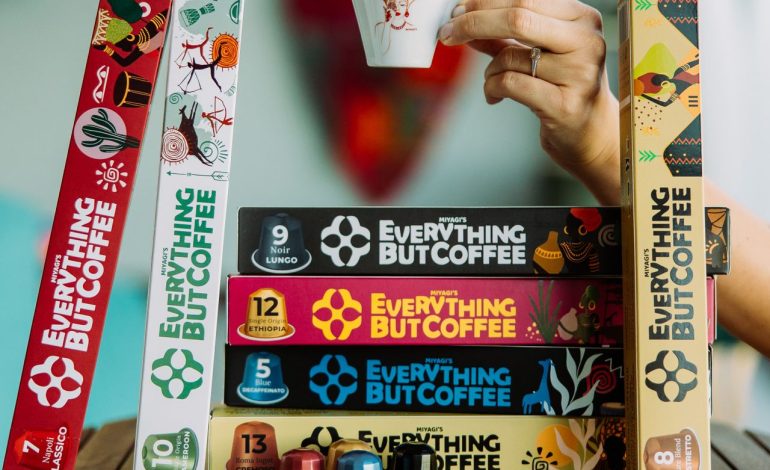
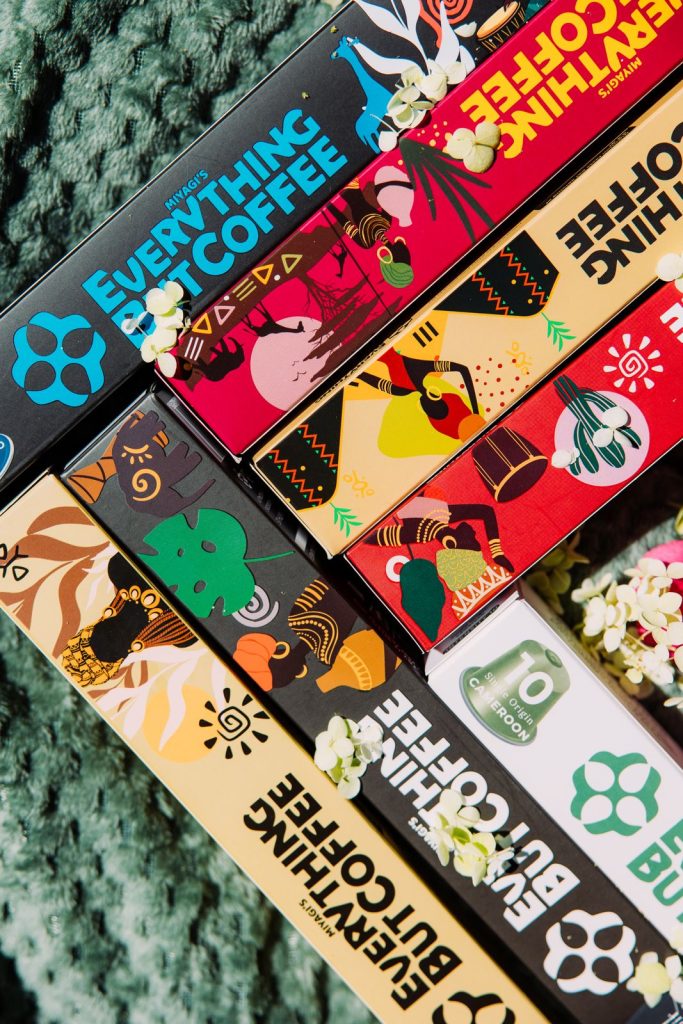
She said the company’s packaging was deliberately designed around African cultural imagery, including drums, arrows, eagles, traditional head masks, headgear, gele and scarves.
“When you pick up a brand in your hand that promotes African heritage, that promotes us as a people and it’s not promoting the West, I would like for us to be proud looking at it and seeing that which reflects us as a people,” she said.
Samuila also disclosed that EBC had recently secured registration with the National Agency for Food and Drug Administration and Control (NAFDAC), describing the milestone as an important step towards building consumer confidence as the company expands into more retail outlets. She said the registration was particularly significant because of the perception among some Nigerians that coffee was an exclusively foreign product. According to her, NAFDAC registration provided another way of communicating to consumers that the company was legitimate, compliant and committed to meeting the required standards. “We wanted to build confidence in the brand. It wasn’t a cheap investment for us, but we felt that it needed to be done,” she said.
She also disclosed that EBC’s International Coffee Day programme would be heavily focused on education, with the company seeking to reconnect Nigerians with coffee culture and dispel misconceptions surrounding the beverage.
She recalled that Nigeria once had a stronger coffee-producing tradition, particularly around Jos and the Plateau axis, but said much of the knowledge required for coffee cultivation had been lost over time. Although coffee is still being cultivated in Plateau, she said domestic production was currently insufficient to meet the company’s needs. For now, EBC sources coffee from major producing countries, including Cameroon, Kenya and Ethiopia, while looking towards developing local production in the future. She explained that coffee cultivation requires a long gestation period, with newly planted coffee taking approximately five years before becoming productive.
“A lot of knowledge in the North has been lost… they didn’t pass this knowledge (on to young ones),” she said.
Samuila stressed that EBC was not currently claiming that its coffee was locally grown, noting that the company was being transparent about its sourcing.
“None of the coffee that I have is actually from here because the harvest is not ready. So we are starting this journey outside in, because the infrastructure is not there,” she said.
She said the long-term objective was to develop local coffee production as plantations mature, particularly in areas with the appropriate altitude and environmental conditions.
“For now, this journey is basically outside-in,” she said, adding that the ultimate trajectory was to reduce dependence on imported coffee as local production became viable.
On pricing, Samuila said the current price of a 250-gramme pack of EBC coffee starts at about N12,000, although she would ideally like the price to settle between N9,000 and N10,000. She estimated that a 250-gramme pack could last an individual approximately two to three weeks, depending on consumption.
While coffee is often promoted globally for its potential health benefits, Samuila said EBC deliberately avoids making health claims because she is not a medical professional. Instead, she said the company prefers to promote coffee as a product associated with social interaction, freedom, expression of art and human connection.
“I try not to push the narrative of health benefits because I’m not a doctor,” she said. “Coffee, historically, is synonymous with freedom of expression, soulfullness, art.”
At the ongoing International Coffee Day event, EBC has provided consumers with a hands-on experience, allowing participants to learn about coffee, taste different varieties, prepare the beverage themselves and ask questions.
Samuila said the objective was to educate Nigerians of different age groups about coffee and demonstrate that it was neither an inaccessible luxury nor a product that required complicated equipment to enjoy.
“We are trying to re-educate the current generation of people of all ages, from young to older. Anything you want to know about coffee, how it tastes, how you can make it — it’s not this myth,” she said, adding that the company hoped participants would leave the event with enough knowledge and experience to introduce others to coffee.
As EBC expands its retail footprint, develops relationships with coffee shops and looks towards eventually sourcing more of its raw materials from Nigerian farms, Samuila said the company’s immediate priority remained simple: making quality coffee accessible to Nigerians while building a coffee culture that reflects the country’s own identity.