Nwakanma’s ‘Indigo Streets’ charts a trickster’s journey across Black Atlantic


By Editor
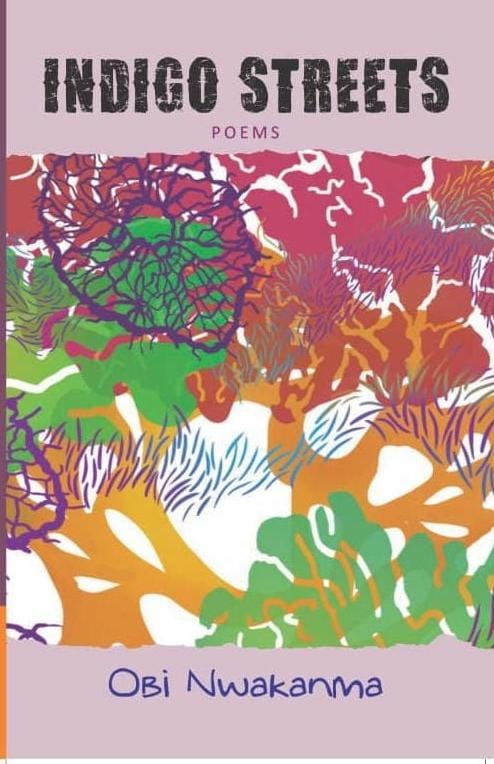
LITERARY scholar and poet Obi Nwakanma has unveiled Indigo Streets, an ambitious and expansive poetic work that reimagines myth, migration, and modern identity through the figure of Hermes, cast here as an African immigrant navigating the cultural and political terrain of contemporary America.
Described as an “epic of the self,” the collection adopts a fluid, multi-layered narrative structure in which Hermes serves as both protagonist and symbolic alter ego. Drawing from a wide spectrum of mythological traditions, Hermes appears as emissary, trickster, and chronicler, a figure who transcends physical and metaphysical boundaries while embodying the tensions of exile, belonging, and transformation. Nwakanma traces the character’s lineage across civilizations, linking him to African spiritual archetypes such as Thoth and Agwu, while also invoking his classical identity within Greek mythology.
Organised into five books and a short epilogue, Indigo Streets unfolds not in strict chronology but in episodic movements that mirror the instability of migration and memory. Book I introduces Hermes as a restless figure returning from the sea to a morally fraught city, where an illicit affair with a young bride sets off a chain of events culminating in violence and exile. This opening sequence establishes the central motif of transgression, echoing classical narratives such as Don Giovanni, in which desire, defiance, and fatal consequence intertwine.
In Book II, Hermes is shipwrecked on American shores and rescued by Mirabai, a mystical and transformative figure who recognises his true nature. Through this relationship, the narrative deepens into an exploration of Black diasporic identity and memory. Hermes revisits key sites of African American history and reflects on the condition of exile, drawing parallels with the trickster protagonist of Middle Passage. The section also introduces the looming spectre of war, as Hermes is captured, tortured, and eventually conscripted, only to desert and assume the role of a war correspondent observing conflicts from a distance.
The third book marks a philosophical and spiritual turning point, inspired by Hermetic texts such as The Discourse on the Eighth and Ninth. Here, Hermes undergoes a process of inner transformation, embracing pacifism while embarking on a metaphysical ascent through the “hebdomad,” or seven spheres of consciousness. His encounter with the exiled Roman poet Ovid provides a reflective lens through which the nature of empire and power is interrogated, particularly in relation to America’s global posture.
Book IV extends the thematic concerns of exile and resistance, transporting Hermes to Alexandria, where he confronts the memory of Hypatia and reflects on the long history of intellectual and political persecution. This section broadens into a meditation on revolutionary defiance, drawing connections between figures such as Spartacus, Toussaint Louverture, Malcolm X, and Muhammad Ali, all framed as inheritors of a broader Hermetic tradition of dissent against orthodoxy and power.
In the final section, Hermes returns once more to America in pursuit of a symbolic “fruit of knowledge,” only to be captured and subjected to trial before a tribunal led by Cotton Mather. Through wit and rhetorical dexterity, he negotiates his release and is sent on a state-sponsored journey through the American metropolis. His eventual return to Africa, bearing a mystical drum capable of feeding multitudes, echoes Igbo trickster folklore and reinforces the cyclical nature of his odyssey. The drum’s eventual failure and the people’s rejection of Hermes underscore the fragile relationship between heroism, sacrifice, and collective expectation.
Nwakanma’s poetic vision is enriched by a dense intertextual network, drawing on influences from Christopher Okigbo’s modernist lyricism and Derek Walcott’s epic reimagining of history, to the political rhythms of Fela Kuti and the diasporic poetics of Linton Kwesi Johnson. Yet, despite these resonances, the work maintains a singular voice anchored in Hermes as a contemporary immigrant figure—witty, subversive, and perpetually in motion.
With Indigo Streets, Nwakanma offers a bold and layered meditation on the Black Atlantic experience, blending myth, history, and lived reality into a modern epic that interrogates identity, displacement, and the enduring quest for meaning in a fractured world.