‘Nolywood’s children series’: If we don’t grow that segment, we surrender influence over children to foreign content ecosystems

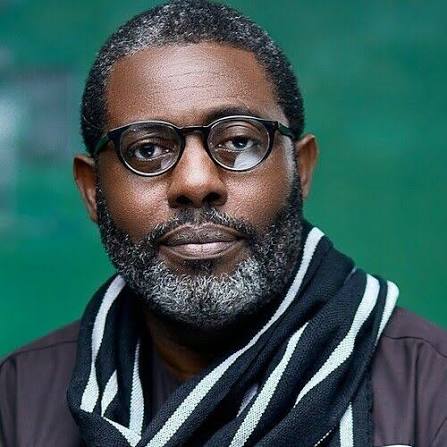
By Femi Odugbemi
THE observation by the National Film and Video Censors Board (NFVCB) about the absence of children in Nollywood movies is important because it’s inviting the industry to reflect not just on volume, but what you might call responsibility to all parts of the audience. You might even call it a cultural responsibility, because there are parts of this that has to do with how we preserve our value systems by having agency in what kind of material we expose our children to.
Well, in many developing film industries like our own there are certain structural realities that shape the output. First, you have to know that child performance is a very specialized craft. If you are working with minors, you require the industry to provide professional acting training tailored to children. You need emotional and psychological experts, so that you can safeguard the impact of that workspace on children. You need a different kind of onset welfare structures — where do you keep them? Can they still get some sleep? While waiting, who is watching them and providing safety? How do they continue their education while filming?
There is an education continuity system that is in places that have this sort of film engagement by young people. There’s also a strong parental engagement and supervision for that. So, you have to understand that Nollywood is still an industry in progress, but we’re got there. We’re still building on different frameworks; we are putting in different frameworks that would allow different levels of participation. Of course, we need to have the guardrails that would keep those young people safe and catered for, which is very important. But those frameworks are expensive and require a certain institutional maturity that Nollywood, for all it’s global success, is still evolving, and you know that most of its growth is entrepreneurial; we are only trying to build the institutions now.
Secondly, you have to know that financing would also influence the kind of stories that are told. Most Nigerian films are self financed, and investors would often prioritize the sort of films that they perceive to be commercially safe and rewarding like romance, family drama, crime, social conflict. Most of these stories are largely targeted at adult audiences who you can assume have spending power, control their own spending power.
The third thing also concerns the censors board. Of course, and I’m glad they’re the ones bringing this up; there has to be regulatory and legal framework around child labour in entertainment. It’s a specialized space, and I’m not sure if we have that structure in place for now. There has to be clear legislation, clear insurance structures, enforcement mechanisms that protect children from exploitation, because without them it would be difficult for many serious producers to have the complexity of having a lot of children on set altogether. It’s not like Nollywood has not had child actors, but they have to be chaperoned by their parents; there has to be a structure that can be independently balanced and managed.
In any case, several constraints come into play here. Children’s films are often long term brand investments rather than quick commercial returns. There’s also distribution — a lot of cinemas tend to programme content that is based on adult audience. There’s also the question of specialized crew. You have to have people that know how to direct children; you have to have people who write authentically for children. All of these require very different training, narrative sensibilities and awareness.
Femi Odugbemi
It is a specialized space, and children with continue with their education – the tutors and welfare officers – all of these will increase the production budget. Of course, Nollywood is a growing industry; it’s a work in progress. So, all of these are conversations to be had. There are no permanent barriers because it also opens opportunities for people entering into the industry to find their niche, to find the kind of training that they can offer as value within the ecosystem.
If we really don’t grow that segment, you find that we surrender influence over children to foreign content ecosystems. It is that simple. When you see young kids who’ve never travelled abroad speaking an American accent, that’s because they’ve grown up watching American content, been taught language by American content, been taught logic and thinking through foreign content. And not just American, some of them are Chinese and even Korean, and it’s very important that part of our identity and cultural sovereignty is that we take control of our narrative influence over our children.
So children’s programme is not something that is optional. It’s something that we have to be intentional about and really fund in a way that helps us grow the skill set and the capacities of our industry to create them. Of course, part of the drawback of not taking children’s films seriously is that we also weaken our cultural knowledge in children in terms of history, language, folklores, values. All of that used to be in the stories that we told to children in Yoruba land – the stories about the tortoise, the lion – all of these were part of passing down history, language, values, and I think that’s very important.
From a cultural perspective, we must start early with the children; we can also to begin to build an identity formation, but also to shape imagination about the country. How do we create a sense of patriotism and a sense of appreciation for the many parts of the country? A sense of values for our culture and worldview? How do we create heroes that have a Nigerian identity? The big risk is that if we don’t tell the stories that are centred around our culture to our children, someone else will. That is why we have children talking in that accent that is entirely alien to us, and they haven’t even travelled yet. The capacity for us to develop that sense of identity and connection to culture has to start very early and very young. We must be intentional in knowing this, and funding this segment specifically is the most important part.
We have to be grateful to the censors board, because they have put it on the table and conversations around it has begun.
And to correct this creative imbalance the gaps creates, there has to be an intention of strategy in policy and incentives. Government agencies can introduce grants, create festival categories for children films, because we have so many. We can be specific about supporting those who are creating children’s content. Of course, we need that training ecosystem to kick in. We need to develop child actor academies. I’m aware that Uthma Dan Fodio University used to have some of that. I think Society for Performing Arts (SPAN) is a space where, during the summer, children are actually trained in acting. We have to be able to have those systems to actually identify children that have talent and begin to see how we can create a training system for them and harness their basic skills.
You may also want to think about creating partnerships with schools. A lot of schools have drama, singing and dance groups. Those are places where we have to begin to look and say that parts of their curriculum should be acting. Technology is also a very important space for us to develop. Technology offers all kinds of alternatives like animations, teen series; there are many games and interactive storytelling Apps; Artificial Intelligence (AI) is doing that. They are scalable. They are culturally adaptable. There is nothing wrong with providing specialized grants for Nigerians who can bring intellectual property in this space. We need to grow storytellers who undertake child psychology, culture. All these things need to be embedded in the stories their parents are watching.
Ultimately, it’s really a conversation for us, locally. It is more than just a genre, and it’s about how we grow intentionally to build a feeder system that has training, capacity, a talent system that goes all the way to the schools. So, it’s no longer just entertainment for us. I always say that Nollywood has responsibility to do more. It’s a stewardship that comes with a creative economy. So, every country must manage how her young people understand history, culture, values and aspirations. We have to figure out the right architecture for adding this to what Nollywood is already doing.
Nollywood has already proven that it can beat the global scale, so maybe the next phase of maturity is focusing on this genre, this possibility, so that children are not just background characters but they become protagonists of stories and films as well. In the end, funding, creating child perform infrastructure, creating legal clarity around child protection on set and distribution systems that protect children are important.
* Odugbemi, a filmmaker, is Festival Director of iREP that opens on March 18 at Ecobank HQ, Victoria Island, Lagos